
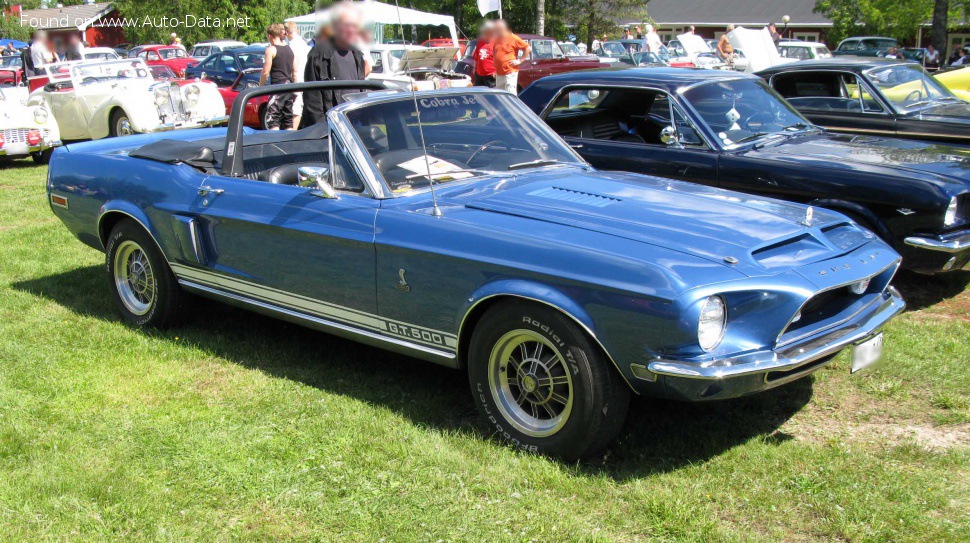
The Ford Shelby I Cabrio Cobra GT 500 7.0 V8 (365 Hp): An American Icon
The Ford Shelby I Cabrio Cobra GT 500 7.0 V8 (365 Hp), produced between 1968 and 1970, stands as a quintessential symbol of American muscle and performance. Born from the legendary collaboration between Ford Motor Company and racing icon Carroll Shelby, this vehicle represents the pinnacle of the Shelby Mustang program during its first generation. Positioned at the top of the performance pony car segment, the GT500 convertible combined raw power, aggressive styling, and the exhilaration of open-air driving, cementing its place as an automotive legend. It was more than just a modified Mustang; it was a bespoke, high-performance machine engineered for enthusiasts who demanded the ultimate in street-legal horsepower and presence.
The “Cobra” designation further underscored its racing heritage, connecting it directly to Shelby’s earlier, dominant AC Cobra sports cars. While the GT350 models were often seen as track-focused, the GT500, particularly in its 7.0-liter V8 configuration, was designed for immense straight-line speed and a commanding road presence, making it one of the most desirable and recognizable cars of its era. This particular iteration, the Shelby I Cabrio, offered an unparalleled driving experience, blending the visceral thrill of a massive V8 with the freedom of a convertible top, making every journey an event.
Engine and Performance: The Heart of the Ford Shelby I Cabrio Cobra GT 500 7.0 V8 (365 Hp)
At the core of the Ford Shelby I Cabrio Cobra GT 500 7.0 V8 (365 Hp) was its formidable powertrain: a massive 7.0-liter (6997 cm3 or 426.98 cubic inch) V8 engine. This naturally aspirated, front-longitudinal powerplant was a true marvel of American engineering for its time, designed to deliver overwhelming power and torque. With an impressive output of 365 horsepower at 5400 rpm, the engine provided exhilarating acceleration and a thunderous exhaust note that was unmistakably Shelby.
The engine’s torque figures were equally impressive, producing 569 Nm (equivalent to 419.67 lb.-ft.) at a relatively low 3200 rpm. This meant that immense pulling power was available almost instantly, making the GT500 convertible incredibly responsive and capable of effortless high-speed cruising or rapid bursts of acceleration. The engine featured an overhead valve (OHV) design with two valves per cylinder, a common and robust configuration for performance V8s of the period. Fuel was delivered via a carburetor system, a testament to the era’s technology, which, despite being less precise than modern fuel injection, was expertly tuned by Shelby’s team to extract maximum performance.
Power was routed to the rear wheels through a robust 4-speed manual transmission, offering drivers direct control over the engine’s prodigious output. This drivetrain architecture, combined with a curb weight of 3631.01 lbs (1647 kg), resulted in a potent weight-to-power ratio of 4.5 kg/Hp (221.6 Hp/tonne) and a weight-to-torque ratio of 2.9 kg/Nm (345.5 Nm/tonne). These figures highlight the car’s exceptional performance capabilities, making it one of the fastest and most powerful production vehicles of its time. The engine’s cylinder bore of 4.13 inches (104.9 mm) and piston stroke of 3.98 inches (101.19 mm) contributed to its large displacement and the characteristic deep rumble that defined American V8s. A compression ratio of 10.5:1 further ensured efficient combustion and high power delivery, solidifying the GT500’s reputation as a true performance machine.
Design and Features: Iconic Styling and Open-Air Thrills
The design of the Ford Shelby I Cabrio Cobra GT 500 7.0 V8 (365 Hp) was as impactful as its performance. As a Cabriolet, it offered the ultimate expression of freedom, allowing occupants to experience the roar of the 7.0-liter V8 directly. The body type featured a classic 2-door, 4-seat configuration, providing space for a driver and three passengers, though the focus was undoubtedly on the driver’s experience.
Visually, the Shelby GT500 stood apart from its standard Mustang brethren with a host of distinctive styling cues. The aggressive front fascia, often featuring large, centrally mounted driving lights, a prominent grille, and a functional hood scoop, immediately signaled its high-performance pedigree. Side scoops, unique badging, and a distinctive rear spoiler further enhanced its muscular stance. The overall length of 186.61 inches (4740 mm), width of 70.91 inches (1801 mm), and a relatively low height of 51.42 inches (1306 mm) gave the car an imposing and dynamic profile. The wheelbase of 107.99 inches (2743 mm) contributed to both its stable handling characteristics and its sleek proportions.
Inside, the GT500 convertible maintained a driver-centric focus. While not luxurious by modern standards, the interior featured sport-oriented bucket seats, a specific instrumentation cluster, and Shelby badging that reminded occupants of the car’s special lineage. The manual transmission shifter was often a prominent feature, inviting engagement. For its era, safety features were relatively basic, with the driving experience emphasizing direct feedback and mechanical connection over electronic aids. The open-top design, however, added an element of sensory engagement that few other vehicles could match, making it ideal for cruising and making a statement. The large 16.91 US gallon (64-liter) fuel tank capacity ensured a decent range for those long, scenic drives.
Technical Specifications
| General Information | |
|---|---|
| Brand | Ford |
| Model | Shelby |
| Generation | Shelby I Cabrio |
| Type (Engine) | Cobra GT 500 7.0 V8 (365 Hp) |
| Start of Production | 1968 year |
| End of Production | 1970 year |
| Powertrain Architecture | Internal Combustion engine |
| Body Type | Cabriolet |
| Seats | 4 |
| Doors | 2 |
| Performance Specs | |
| Fuel Type | Petrol (Gasoline) |
| Weight-to-Power Ratio | 4.5 kg/Hp, 221.6 Hp/tonne |
| Weight-to-Torque Ratio | 2.9 kg/Nm, 345.5 Nm/tonne |
| Engine Specs | |
| Power | 365 Hp @ 5400 rpm. |
| Power per Liter | 52.2 Hp/l |
| Torque | 569 Nm @ 3200 rpm (419.67 lb.-ft. @ 3200 rpm) |
| Engine Layout | Front, Longitudinal |
| Engine Displacement | 6997 cm3 (426.98 cu. in.) |
| Number of Cylinders | 8 |
| Engine Configuration | V-engine |
| Cylinder Bore | 104.9 mm (4.13 in.) |
| Piston Stroke | 101.19 mm (3.98 in.) |
| Compression Ratio | 10.5:1 |
| Number of Valves per Cylinder | 2 |
| Fuel Injection System | Carburetor |
| Engine Aspiration | Naturally aspirated engine |
| Space, Volume and Weights | |
| Curb Weight | 1647 kg (3631.01 lbs) |
| Fuel Tank Capacity | 64 l (16.91 US gal) |
| Dimensions | |
| Length | 4740 mm (186.61 in.) |
| Width | 1801 mm (70.91 in.) |
| Height | 1306 mm (51.42 in.) |
| Wheelbase | 2743 mm (107.99 in.) |
| Front Track | 1476 mm (58.11 in.) |
| Rear (Back) Track | 1476 mm (58.11 in.) |
| Minimum Turning Circle (Turning Diameter) | 11.6 m (38.06 ft.) |
| Drivetrain, Brakes and Suspension Specs | |
| Drivetrain Architecture | The Internal combustion engine (ICE) drives the rear wheels of the vehicle. |
| Drive Wheel | Rear wheel drive |
| Number of Gears and Type of Gearbox | 4 gears, manual transmission |
| Front Brakes | Disc |
| Rear Brakes | Drum |
Legacy and Market Impact
The Ford Shelby I Cabrio Cobra GT 500 7.0 V8 (365 Hp) carved out an indelible legacy in the annals of American automotive history. Its production run from 1968 to 1970 marked a period when muscle cars reached their zenith, and the GT500 convertible stood as a formidable contender in this highly competitive arena. It was a direct competitor to other high-performance machines of its time, including the Chevrolet Corvette, Pontiac GTO, Plymouth Barracuda, and Dodge Charger/Challenger R/T models. What set the Shelby apart, however, was its unique blend of Mustang roots, Shelby’s racing pedigree, and its distinct, aggressive styling.
Carroll Shelby’s influence transformed the already popular Mustang into a true performance icon. The Cobra GT500 was not just about brute force; it was about presenting a complete package of speed, sound, and undeniable presence. The “Cobra” moniker, directly linking it to Shelby’s legendary race cars, imbued the GT500 with an aura of exclusivity and a winning spirit that resonated deeply with enthusiasts. Its reputation as a “King of the Road” muscle car was well-earned, capable of dominating drag strips and turning heads on boulevards.
Today, the Shelby GT500, particularly the convertible variants like the Shelby I Cabrio, are highly sought-after collector’s items. Their historical significance, coupled with their rarity and the enduring appeal of the Shelby name, ensures their status as blue-chip classics. They represent a golden age of American automotive design and engineering, where horsepower was king and driving was a visceral, unfiltered experience. The GT500’s impact extends beyond its own production, influencing subsequent generations of Ford performance vehicles and solidifying the Mustang’s place as an enduring symbol of American automotive prowess. Its roar continues to echo, a testament to a time when cars were built with passion and designed to thrill.
