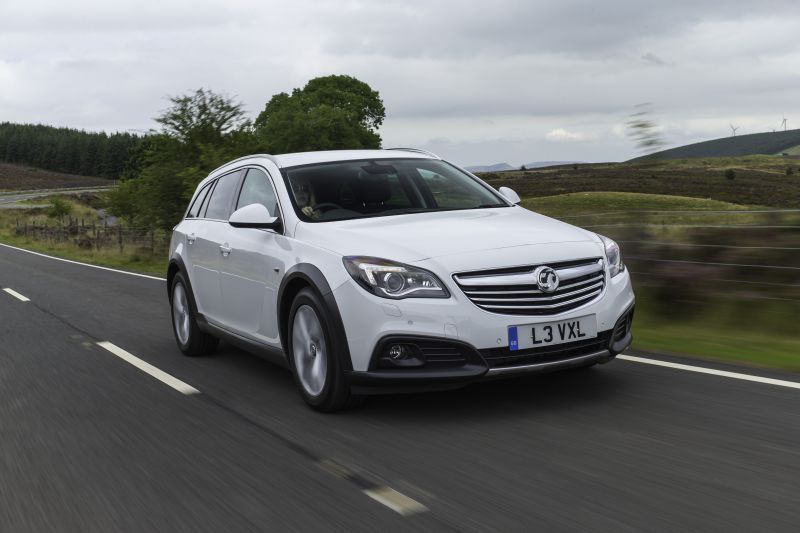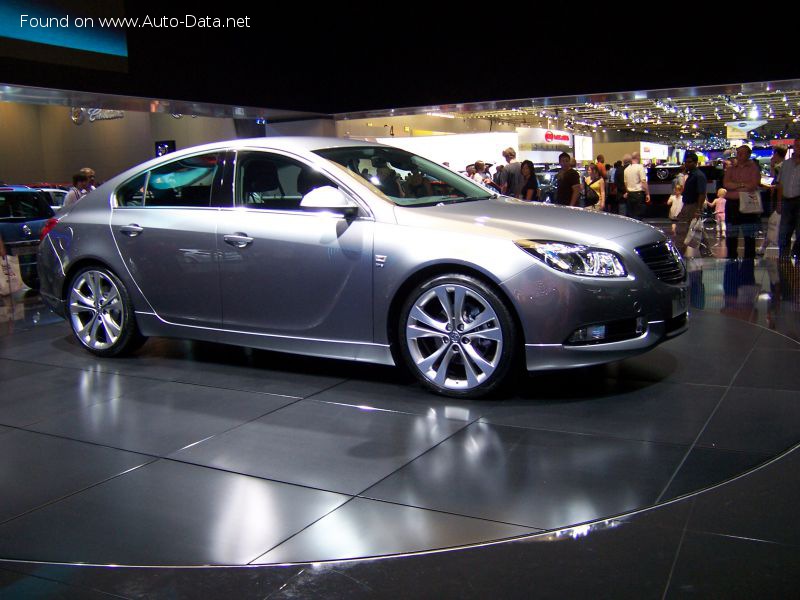
The Vauxhall Insignia I Saloon (facelift 2013) 1.8i ecoTEC (140 Hp): A European Mainstay
The Vauxhall Insignia I Saloon (facelift 2013) 1.8i ecoTEC (140 Hp) represents a significant chapter in the history of Vauxhall, General Motors’ UK-market brand, and its European counterpart, Opel. Launched in 2008 as the successor to the long-running Vectra, the Insignia quickly established itself as a formidable competitor in the highly contested D-segment (mid-size car category) across Europe. The first generation, known internally as the Insignia A, received a substantial facelift in 2013, bringing refreshed styling, updated technology, and refined powertrains to maintain its appeal. This particular variant, the 1.8i ecoTEC with 140 horsepower, was a popular choice, balancing everyday usability with reasonable efficiency for families and fleet buyers alike from its production start in 2013 until its conclusion in 2017. While never officially sold in the United States, the Insignia’s global underpinnings and design ethos reflect General Motors’ worldwide automotive strategy, making it a relevant example of international automotive engineering.
Engine and Performance of the Vauxhall Insignia I Saloon (facelift 2013)
At the heart of this specific Insignia variant lies the 1.8-liter (1796 cm³) ecoTEC gasoline engine, an inline four-cylinder unit designed for a blend of performance and economy. This naturally aspirated engine, identified by codes A18XER or B18XER, features a Dual Overhead Camshaft (DOHC) valvetrain with Variable Valve Timing (VVT), a technology that optimizes valve lift and duration for improved power delivery across the RPM range and enhanced fuel efficiency. It is equipped with a multi-port manifold injection system, a robust and proven method for precise fuel delivery.
The engine produces a respectable 140 horsepower at 6300 rpm, providing ample power for daily driving and highway cruising. Torque output stands at 129.07 lb.-ft. (175 Nm) available at 3800 rpm, ensuring decent pulling power from lower engine speeds. This powertrain configuration, coupled with a six-speed manual transmission, drives the front wheels, offering a traditional and engaging driving experience.
In terms of acceleration, the Insignia 1.8i ecoTEC achieves 0 to 60 mph in a computed 10.9 seconds (0-100 km/h in 11.5 seconds), with a top speed of 126.76 mph (204 km/h). While not a performance leader, these figures are competitive for a non-turbocharged mid-size sedan of its era. Fuel economy was a key consideration, with the ecoTEC designation signifying an emphasis on ecological technology. The combined fuel consumption is rated at 33.6 US mpg (7.0 l/100 km), with urban figures around 24 US mpg (9.8 l/100 km) and extra-urban figures reaching an impressive 43.6 US mpg (5.4 l/100 km). CO2 emissions were rated at 164 g/km, adhering to Euro 5 emission standards, which were current at the time of its release. The engine’s design aimed to strike a balance between reliable power, acceptable performance, and responsible fuel consumption, making it a practical choice for a wide range of buyers.
Design and Features
The 2013 facelift brought a more sophisticated and contemporary aesthetic to the Vauxhall Insignia I Saloon (facelift 2013). The sedan body style, with its four doors and seating for five occupants, retained its sleek, coupe-like silhouette, a design hallmark of the original Insignia. The facelift introduced revised front and rear fascias, including a wider, lower grille, updated headlamps with available LED daytime running lights, and restyled taillights that gave the car a broader, more planted appearance. These changes helped keep the Insignia looking fresh and competitive against newer rivals.
Inside, the Insignia offered a spacious and comfortable cabin, designed with an emphasis on ergonomic functionality. The instrument panel was redesigned, featuring a cleaner layout and often incorporating a large, customizable digital display between the analog gauges. A new infotainment system, often with an 8-inch touchscreen, improved connectivity and user experience, supporting features like navigation, Bluetooth, and various media inputs. Material quality was generally good for the segment, with soft-touch plastics and thoughtful trim accents contributing to an upscale feel.
Practicality was a strong suit for the Insignia sedan. The trunk offered a generous 17.66 cubic feet (500 liters) of cargo space, which could be expanded to 35.84 cubic feet (1015 liters) with the rear seats folded down, making it highly adaptable for various hauling needs. The overall dimensions—190.63 inches long, 73.07 inches wide (82.05 inches including mirrors), and 58.98 inches high, with a wheelbase of 107.76 inches—contributed to a commanding road presence and a stable ride.
Underneath, the Insignia featured an independent front suspension with McPherson struts, coil springs, and an anti-roll bar, paired with an independent multi-link rear suspension. This setup provided a comfortable ride quality and capable handling characteristics. Braking duties were handled by ventilated discs at the front and solid discs at the rear, supplemented by an Anti-lock Braking System (ABS) for enhanced safety. The vehicle rolled on 215/60 R16 tires mounted on 16-inch wheel rims, a common specification for the base models that prioritized ride comfort and affordability.
Technical Specifications
| Vauxhall Insignia I Saloon (facelift 2013) 1.8i ecoTEC (140 Hp) | |
|---|---|
| General Information | |
| Brand | Vauxhall |
| Model | Insignia |
| Generation | Insignia I Saloon (facelift 2013) |
| Engine Type | 1.8i ecoTEC (140 Hp) |
| Production Start | 2013 |
| Production End | 2017 |
| Architecture | Internal Combustion Engine |
| Body Type | Sedan |
| Seats | 5 |
| Doors | 4 |
| Performance Specifications | |
| Fuel Consumption (Urban) | 24 US mpg (9.8 l/100 km) |
| Fuel Consumption (Extra Urban) | 43.6 US mpg (5.4 l/100 km) |
| Fuel Consumption (Combined) | 33.6 US mpg (7.0 l/100 km) |
| CO2 Emissions | 164 g/km |
| Fuel Type | Gasoline (Petrol) |
| Acceleration 0-60 mph | 10.9 seconds |
| Acceleration 0-62 mph (0-100 km/h) | 11.5 seconds |
| Maximum Speed | 126.76 mph (204 km/h) |
| Emission Standard | Euro 5 |
| Weight-to-Power Ratio | 10.8 kg/Hp (92.5 Hp/tonne) |
| Weight-to-Torque Ratio | 8.6 kg/Nm (115.7 Nm/tonne) |
| Engine Specifications | |
| Power | 140 Hp @ 6300 rpm |
| Power per Liter | 78 Hp/l |
| Torque | 129.07 lb.-ft. (175 Nm) @ 3800 rpm |
| Engine Layout | Front, Transverse |
| Engine Model/Code | A18XER, B18XER |
| Engine Displacement | 1.8 liters (1796 cm³ / 109.6 cu. in.) |
| Number of Cylinders | 4 |
| Engine Configuration | Inline |
| Cylinder Bore | 3.17 inches (80.5 mm) |
| Piston Stroke | 3.47 inches (88.2 mm) |
| Valves per Cylinder | 4 |
| Fuel Injection System | Multi-port manifold injection |
| Engine Aspiration | Naturally Aspirated |
| Valvetrain | DOHC, VVT |
| Engine Oil Capacity | 4.76 US qt (4.5 l) |
| Coolant Capacity | 5.92 US qt (5.6 l) |
| Dimensions, Volume, and Weights | |
| Curb Weight | 3335.59 lbs (1513 kg) |
| Trunk Space (Minimum) | 17.66 cu. ft. (500 l) |
| Trunk Space (Maximum) | 35.84 cu. ft. (1015 l) |
| Fuel Tank Capacity | 18.49 US gal (70 l) |
| Permitted Trailer Load (with brakes 12%) | 3086.47 lbs (1400 kg) |
| Permitted Trailer Load (without brakes) | 1653.47 lbs (750 kg) |
| Length | 190.63 inches (4842 mm) |
| Width | 73.07 inches (1856 mm) |
| Width (including mirrors) | 82.05 inches (2084 mm) |
| Height | 58.98 inches (1498 mm) |
| Wheelbase | 107.76 inches (2737 mm) |
| Front Overhang | 40.43 inches (1027 mm) |
| Rear Overhang | 42.44 inches (1078 mm) |
| Minimum Turning Circle | 37.4 ft (11.4 m) |
| Drivetrain, Brakes, and Suspension | |
| Drivetrain Architecture | Front-wheel drive, Internal Combustion Engine |
| Drive Wheel | Front Wheel Drive |
| Gearbox Type | 6-speed Manual Transmission |
| Front Suspension | Independent, McPherson with coil spring and anti-roll bar |
| Rear Suspension | Independent multi-link suspension |
| Front Brakes | Ventilated Discs |
| Rear Brakes | Disc |
| Assisting Systems | ABS (Anti-lock Braking System) |
| Tire Size | 215/60 R16 |
| Wheel Rims Size | 16 inches |
Legacy and Market Impact
The Vauxhall Insignia, particularly the Vauxhall Insignia I Saloon (facelift 2013) 1.8i ecoTEC (140 Hp), carved out a significant niche in the highly competitive European mid-size sedan market. It served as a direct rival to established players such as the Ford Mondeo (known as the Fusion in North America), Volkswagen Passat, Skoda Superb, and even offerings from Asian manufacturers like the Mazda6 and Hyundai i40. Its primary role was to provide a comfortable, spacious, and well-equipped family car or a reliable and economical option for business fleets.
The Insignia’s reputation was built on its solid build quality, refined ride comfort, and a perception of good value for money. The 2013 facelift helped to prolong its appeal by addressing some of the earlier model’s criticisms, particularly with interior ergonomics and infotainment, while refreshing its exterior to keep it visually competitive. The 1.8i ecoTEC engine, while not the most powerful in the lineup, was a popular choice due to its balance of cost, fuel efficiency, and adequate performance for the typical buyer. Its Euro 5 compliance also made it an environmentally responsible choice for the time.
The Insignia’s success underscored General Motors’ ability to produce a globally competitive D-segment vehicle, even if specific branding and market strategies varied by region. For Vauxhall in the UK, the Insignia maintained a strong presence in the fleet market, a crucial segment for volume sales. It was seen as a dependable workhorse and a comfortable long-distance cruiser. Its independent suspension system, both front and rear, contributed to a composed ride, a characteristic highly valued by European drivers who often navigate varied road conditions.
Ultimately, the first-generation Insignia, including its facelifted iteration, successfully carried the torch from the Vectra, demonstrating Vauxhall’s commitment to the mid-size segment. It showcased advancements in design, technology, and efficiency that were relevant to its market and era. Its legacy is one of a practical, stylish, and competent sedan that provided a strong offering in a segment that, while shrinking in later years due to the rise of SUVs, remained vital during its production run. The Insignia continued to evolve, eventually being replaced by the second-generation model (Insignia B) in 2017, which further refined its design and technology, building on the solid foundation laid by this impactful first generation.