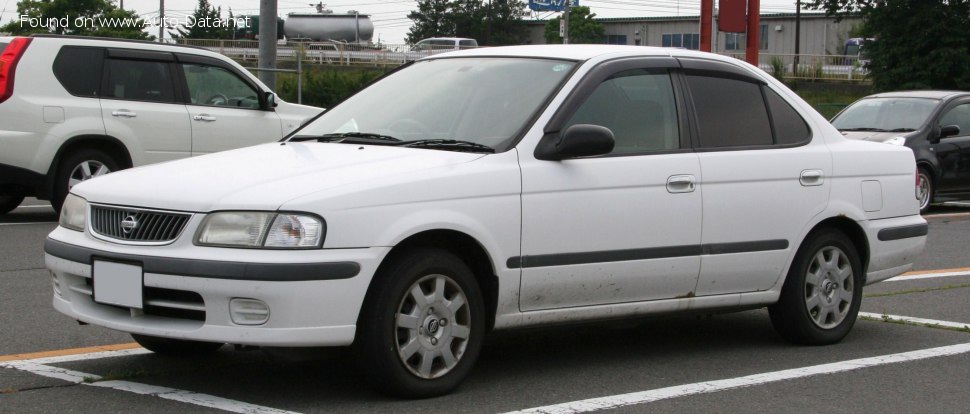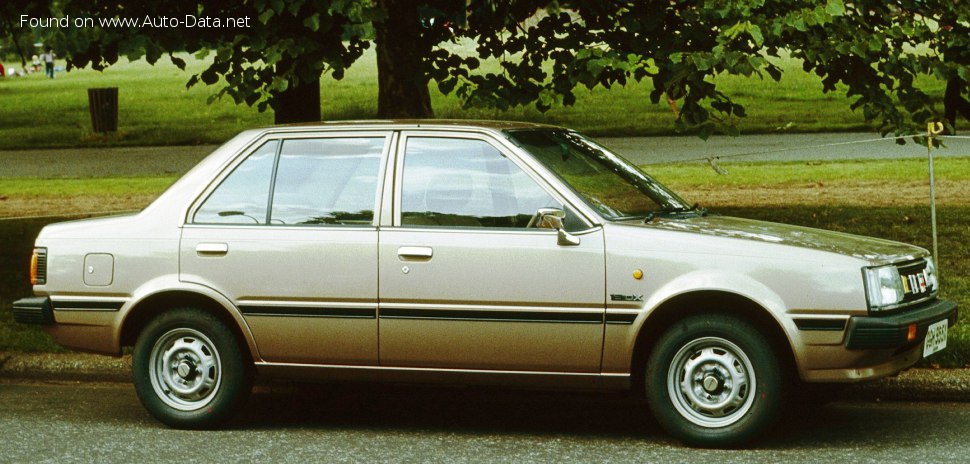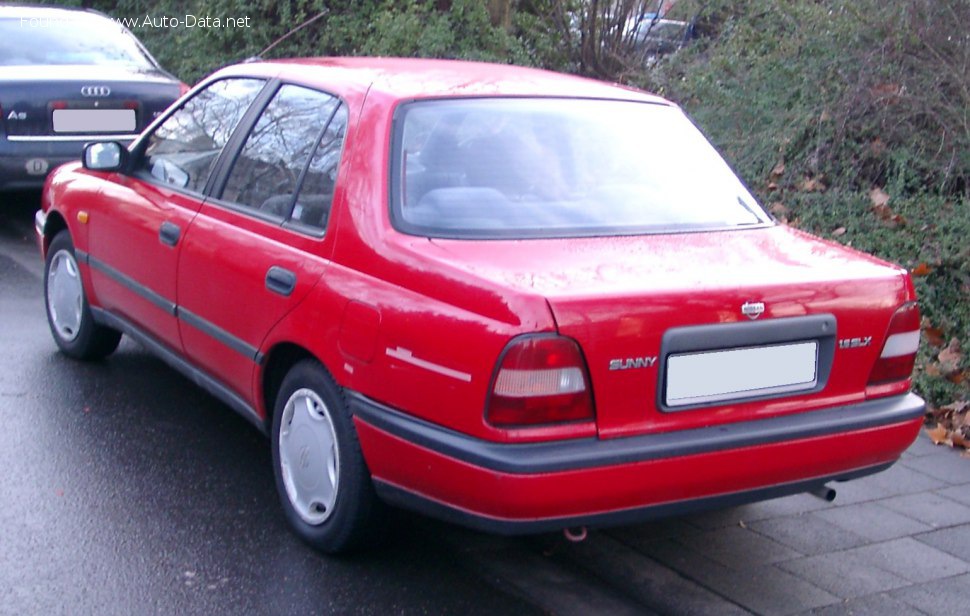
Introduction to the Nissan Sunny III (N14)
The Nissan Sunny III (N14) represents a significant chapter in the history of Nissan’s global compact car offerings. Introduced in 1990, the N14 generation of the Sunny, known as the Pulsar in some markets, was a crucial model for the Japanese automaker, particularly in Europe and Asia. This particular variant, the 1.4 i 16V with 75 horsepower, produced between 1992 and 1995, exemplified the practical, reliable, and economical attributes that the Sunny nameplate had come to embody. While not directly sold in the United States under the “Sunny” moniker, the N14 platform shared DNA with vehicles like the Sentra, which was a familiar sight on American roads. The Sunny III (N14) 1.4 i 16V was positioned as a sensible choice for families and commuters seeking a no-frills, dependable compact sedan in its primary markets, offering a blend of efficiency, adequate performance, and a robust build quality characteristic of Nissan during this era.
Engine and Performance: The Heart of the Nissan Sunny III (N14)
Powering the 1992-1995 Nissan Sunny III (N14) 1.4 i 16V was the GA14DE engine, a 1.4-liter (1392 cm³ or 84.95 cu. in.) inline-four cylinder unit. This engine featured a Double Overhead Camshaft (DOHC) valvetrain with 16 valves, a relatively advanced setup for a compact car in the early 1990s, enhancing both efficiency and power delivery. With a compression ratio of 9.5:1 and multi-port manifold injection, the naturally aspirated engine produced a respectable 75 horsepower at 6000 rpm. Torque output stood at 85.56 lb.-ft. at a relatively accessible 4000 rpm, providing sufficient grunt for daily driving and urban maneuvers.
The powertrain architecture of the Sunny III (N14) was a conventional, yet highly effective, front-engine, transverse layout driving the front wheels. This configuration maximized interior space and offered predictable handling characteristics. Mated to a standard 5-speed manual transmission, the 1.4 i 16V variant delivered a balanced performance profile. It could accelerate from 0 to 60 mph in a measured 11.9 seconds, with a top speed of 106.25 mph. While not designed for outright speed, these figures were competitive for its class and market segment, providing adequate performance for highway cruising and overtaking.
Fuel economy was a strong suit for the Sunny III (N14) 1.4 i 16V. Nissan engineers optimized the engine for efficiency, resulting in a combined fuel consumption rating of 36.2 US mpg (6.5 liters per 100 km). This made it an attractive option for budget-conscious buyers and those facing rising fuel costs, reinforcing its reputation as an economical daily driver. The modest 3.2-liter engine oil capacity and 5.7-liter coolant capacity further highlighted its practical and low-maintenance design.
Design and Features of the Nissan Sunny III (N14) Sedan
The Nissan Sunny III (N14) adopted a clean, unpretentious design language that prioritized functionality and interior space. As a 4-door sedan with seating for five, its body type was a staple of the compact car segment worldwide. The N14 generation featured a more aerodynamic and rounded aesthetic compared to its predecessors, reflecting the evolving design trends of the early 1990s. Its dimensions—a length of 166.54 inches, a width of 66.54 inches, and a height of 54.92 inches—contributed to a compact footprint that was easy to maneuver in congested city environments, yet offered a surprisingly spacious cabin for its class. The wheelbase measured 95.67 inches, providing a stable ride and contributing to the interior volume.
Inside, the Sunny III (N14) offered a straightforward and ergonomic cabin. While not luxurious, the interior was built to withstand the rigors of daily use, with durable materials and a logical layout of controls. The trunk space was generous for a compact sedan, offering a minimum of 15.54 cubic feet (440 liters), making it practical for groceries, luggage, or family trips.
In terms of features and chassis, the Sunny III (N14) was equipped with a robust and conventional setup. The front suspension utilized a wishbone design, while the rear featured a spring strut system, providing a comfortable ride quality balanced with predictable handling. Braking duties were handled by ventilated discs at the front and drum brakes at the rear, a common configuration for vehicles in this segment at the time. An important safety enhancement for the era was the inclusion of an Anti-lock Braking System (ABS) as an assisting system, providing improved control during emergency stops. The steering system was a hydraulic rack and pinion setup, offering direct feedback to the driver and easing parking maneuvers. Standard tire size was 175/70 R13, emphasizing comfort and efficiency.
Technical Specifications
| Category | Specification | US Equivalent / Notes |
|---|---|---|
| General Information | ||
| Brand | Nissan | |
| Model | Sunny | |
| Generation | Sunny III (N14) | |
| Type (Engine) | 1.4 i 16V (75 Hp) | |
| Start of production | 1992 year | |
| End of production | 1995 year | |
| Powertrain Architecture | Internal Combustion engine | |
| Body type | Sedan | |
| Seats | 5 | |
| Doors | 4 | |
| Performance Specs | ||
| Fuel consumption (combined) | 6.5 l/100 km | 36.2 US mpg |
| Fuel Type | Petrol (Gasoline) | |
| Acceleration 0 – 60 mph | 11.9 sec | |
| Maximum speed | 171 km/h | 106.25 mph |
| Weight-to-power ratio | 13.8 kg/Hp | 72.5 Hp/tonne |
| Weight-to-torque ratio | 8.9 kg/Nm | 112.1 Nm/tonne |
| Engine Specs | ||
| Power | 75 Hp @ 6000 rpm | |
| Power per liter | 53.9 Hp/l | |
| Torque | 116 Nm @ 4000 rpm | 85.56 lb.-ft. @ 4000 rpm |
| Engine layout | Front, Transverse | |
| Engine Model/Code | GA14DE | |
| Engine displacement | 1392 cm³ | 1.4 liters / 84.95 cu. in. |
| Number of cylinders | 4 | |
| Engine configuration | Inline | |
| Cylinder Bore | 73.6 mm | 2.9 in. |
| Piston Stroke | 81.8 mm | 3.22 in. |
| Compression ratio | 9.5:1 | |
| Number of valves per cylinder | 4 | |
| Fuel injection system | Multi-port manifold injection | |
| Engine aspiration | Naturally aspirated engine | |
| Valvetrain | DOHC | |
| Engine oil capacity | 3.2 l | 3.38 US qt |
| Coolant | 5.7 l | 6.02 US qt |
| Space, Volume and Weights | ||
| Kerb Weight | 1035 kg | 2281.78 lbs. |
| Max. weight | 1545 kg | 3406.14 lbs. |
| Max load | 510 kg | 1124.36 lbs. |
| Trunk (boot) space – minimum | 440 l | 15.54 cu. ft. |
| Fuel tank capacity | 50 l | 13.21 US gal |
| Dimensions | ||
| Length | 4230 mm | 166.54 in. |
| Width | 1690 mm | 66.54 in. |
| Height | 1395 mm | 54.92 in. |
| Wheelbase | 2430 mm | 95.67 in. |
| Front track | 1445 mm | 56.89 in. |
| Rear (Back) track | 1430 mm | 56.3 in. |
| Drivetrain, Brakes and Suspension Specs | ||
| Drivetrain Architecture | Internal combustion engine (ICE) drives the front wheels. | Front-wheel drive |
| Drive wheel | Front wheel drive | |
| Number of gears and type of gearbox | 5 gears, manual transmission | |
| Front suspension | Wishbone | |
| Rear suspension | Spring Strut | |
| Front brakes | Ventilated discs | |
| Rear brakes | Drum | |
| Assisting systems | ABS (Anti-lock braking system) | |
| Steering type | Steering rack and pinion | |
| Power steering | Hydraulic Steering | |
| Tires size | 175/70 R13 | |
Legacy and Market Impact of the Nissan Sunny III (N14)
The Nissan Sunny III (N14) 1.4 i 16V, like its siblings in the N14 range, carved out a significant niche in the global automotive landscape, particularly in markets outside of North America. Its reputation was built on unwavering reliability, cost-effectiveness, and practical utility. In Europe, Asia, and other key markets, the Sunny N14 competed fiercely with established compact cars such as the Toyota Corolla, Honda Civic (also known as the Concerto in some markets), Opel Astra, Ford Escort, and the Volkswagen Golf/Jetta. What set the Sunny apart was its consistent delivery of a straightforward, dependable driving experience without unnecessary frills.
The N14 generation, including the 1.4 i 16V sedan, was praised for its robust build quality and low running costs. Its efficient GA14DE engine, combined with a manual transmission, offered a compelling package for buyers prioritizing fuel economy and longevity. The car’s relatively simple mechanical components made it easy and affordable to maintain, a crucial factor for many consumers in its target markets. This practical approach fostered a loyal customer base and contributed to strong resale values for well-maintained examples.
Historically, the Nissan Sunny has been one of Nissan’s longest-running and most successful nameplates globally, with the N14 generation playing a vital role in upholding that legacy through the early to mid-1990s. While it might not have been a groundbreaking design icon, its impact was profound in its segment, serving as a reliable workhorse for millions of drivers. The Sunny III (N14) showcased Nissan’s engineering prowess in creating dependable, mass-market vehicles that met the real-world needs of consumers, cementing its place as an integral part of Nissan’s international automotive heritage. It stands as a testament to the era’s focus on practicality, efficiency, and durability in the compact sedan category.