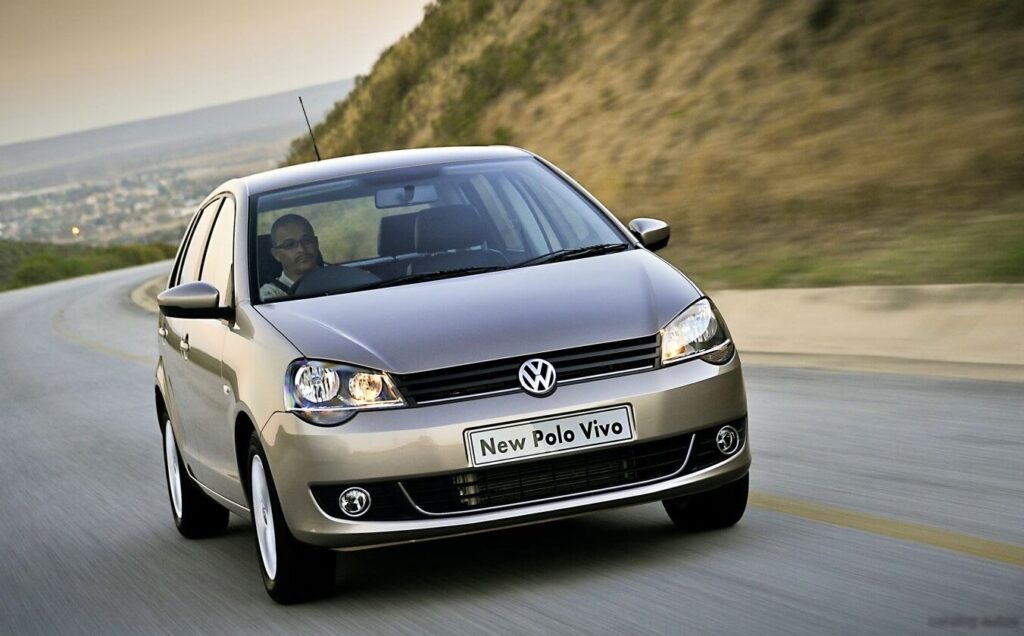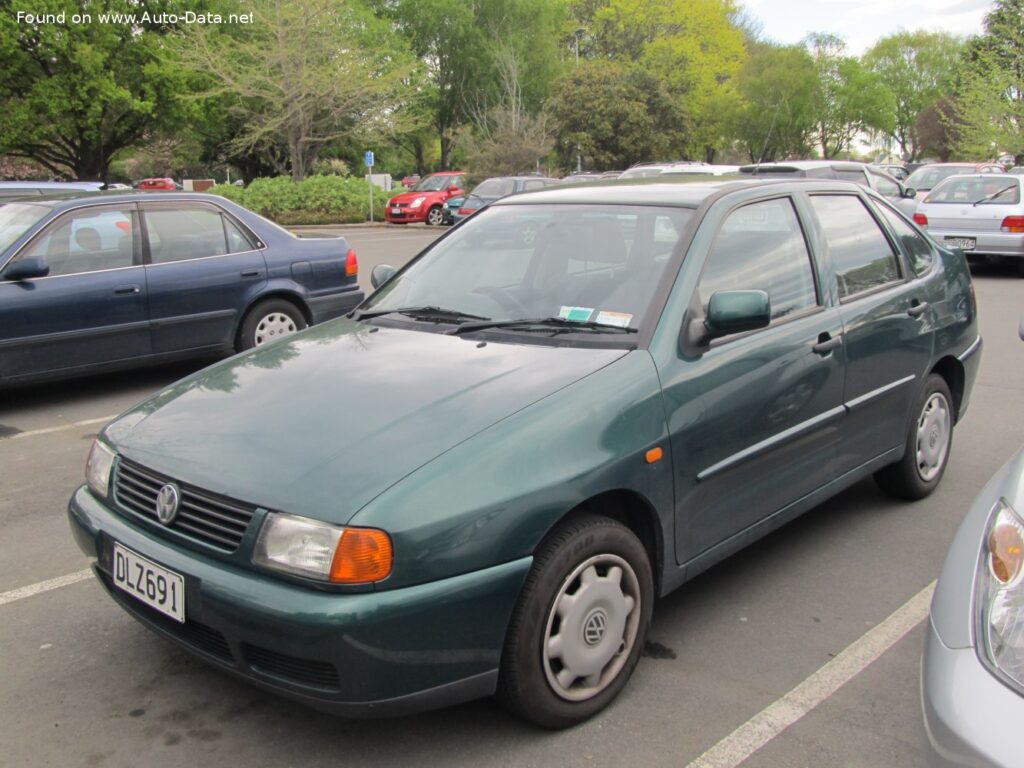
The Volkswagen Polo III Classic 1.6 (100 Hp): A Practical European Sedan
The Volkswagen Polo III Classic, specifically the 1.6-liter variant producing 100 horsepower, represents a significant chapter in the history of Volkswagen’s compact car offerings. Launched in 1994 and produced until 2000, this vehicle was part of the third generation of the venerable Polo lineup. While the Polo is a household name across Europe and many other global markets, the “Classic” designation typically referred to the sedan or notchback variant, a body style less common for the Polo in its primary European market, which predominantly favored hatchbacks. This iteration of the Polo was engineered as a reliable, economical, and practical compact sedan, catering to buyers who sought the versatility of a larger trunk than its hatchback sibling, without stepping up to the Golf or Jetta segments. It was a key player in the highly competitive European B-segment, offering Volkswagen’s renowned build quality and engineering in a more accessible package.
Engine & Performance of the Volkswagen Polo III Classic
At the heart of the Volkswagen Polo III Classic 1.6 (100 Hp) was a robust and well-regarded 1.6-liter (1595 cm3 or 97.33 cu. in.) naturally aspirated inline-four gasoline engine, internally designated AFT. This powerplant delivered a respectable 100 horsepower at 5600 revolutions per minute, providing ample motivation for the compact sedan. Torque output stood at 145 Newton-meters (approximately 106.95 lb.-ft.) at a relatively low 3800 rpm, ensuring good low-end and mid-range pulling power, which was beneficial for city driving and overtaking maneuvers. The engine featured a multi-port manifold injection system and an OHC (Overhead Camshaft) valvetrain with two valves per cylinder, a common and reliable configuration for its era.
Performance figures for the 1.6-liter Polo Classic were quite competent for its class. It could accelerate from 0 to 62 mph (100 km/h) in 11.5 seconds, with a calculated 0-60 mph time of 10.9 seconds, making it sprightly enough for daily commutes. The maximum speed was rated at 188 km/h (116.82 mph). Power was delivered to the front wheels via a smooth-shifting 5-speed manual transmission, a setup that prioritized efficiency and driver engagement. Fuel economy was a strong suit, with a combined cycle rating of 7.6 liters per 100 kilometers, translating to an estimated 30.9 US miles per gallon. Urban consumption was reported at 10.9 l/100 km (21.6 US mpg), while extra-urban driving could achieve an impressive 6 l/100 km (39.2 US mpg), making it an economical choice for both city dwellers and those undertaking longer journeys.
Design & Features
The Volkswagen Polo III Classic adopted a traditional four-door sedan body type, differentiating it from the more common hatchback versions of the Polo. Its design was understated and functional, characteristic of Volkswagen’s aesthetic during the 1990s. With a length of 4164 mm (163.94 in.), a width of 1640 mm (64.57 in.), and a height of 1414 mm (55.67 in.), the Polo Classic maintained a compact footprint, making it maneuverable in urban environments while still offering a practical interior. The wheelbase measured 2441 mm (96.1 in.), contributing to stable handling and a comfortable ride for its size.
Inside, the Polo Classic was designed to comfortably accommodate five occupants, with a focus on durability and straightforward ergonomics. The real highlight for the Classic variant was its trunk space. It offered a generous minimum trunk capacity of 455 liters (16.07 cu. ft.), which could expand to 762 liters (26.91 cu. ft.) with the rear seats folded down. This ample cargo volume was a key differentiator from its hatchback counterpart and a major selling point for families or individuals requiring more luggage capacity. Standard features for the era included power steering (hydraulic), front disc brakes, and rear drum brakes, with an Anti-lock Braking System (ABS) often available as an option or standard on higher trims, enhancing safety. The car rode on 185/60 R14 tires fitted to 6J x 14 wheel rims, providing a balanced blend of grip and ride comfort.
Technical Specifications
| Category | Specification | US Equivalent |
|---|---|---|
| General Information | ||
| Brand | Volkswagen | |
| Model | Polo | |
| Generation | Polo III Classic | |
| Type (Engine) | 1.6 (100 Hp) | |
| Start of production | 1994 year | |
| End of production | 2000 year | |
| Powertrain Architecture | Internal Combustion engine | |
| Body type | Sedan | |
| Seats | 5 | |
| Doors | 4 | |
| Performance Specs | ||
| Fuel consumption (economy) – urban | 10.9 l/100 km | 21.6 US mpg |
| Fuel consumption (economy) – extra urban | 6 l/100 km | 39.2 US mpg |
| Fuel consumption (economy) – combined | 7.6 l/100 km | 30.9 US mpg |
| Fuel Type | Petrol (Gasoline) | |
| Acceleration 0 – 62 mph (0 – 100 km/h) | 11.5 sec | |
| Acceleration 0 – 60 mph (Calculated) | 10.9 sec | |
| Maximum speed | 188 km/h | 116.82 mph |
| Weight-to-power ratio | 10.8 kg/Hp | 92.6 Hp/tonne |
| Weight-to-torque ratio | 7.4 kg/Nm | 134.3 Nm/tonne |
| Engine Specs | ||
| Power | 100 Hp @ 5600 rpm | |
| Power per liter | 62.7 Hp/l | |
| Torque | 145 Nm @ 3800 rpm | 106.95 lb.-ft. @ 3800 rpm |
| Engine layout | Front, Transverse | |
| Engine Model/Code | AFT | |
| Engine displacement | 1595 cm3 | 97.33 cu. in. |
| Number of cylinders | 4 | |
| Engine configuration | Inline | |
| Cylinder Bore | 81 mm | 3.19 in. |
| Piston Stroke | 77.4 mm | 3.05 in. |
| Compression ratio | 10.5:1 | |
| Number of valves per cylinder | 2 | |
| Fuel injection system | Multi-port manifold injection | |
| Engine aspiration | Naturally aspirated engine | |
| Valvetrain | OHC | |
| Engine oil capacity | 3.8 l | 4.02 US qt |
| Coolant | 5.5 l | 5.81 US qt |
| Space, Volume and Weights | ||
| Kerb Weight | 1080 kg | 2380.99 lbs. |
| Max. weight | 1480 kg | 3262.84 lbs. |
| Max load | 400 kg | 881.85 lbs. |
| Trunk (boot) space – minimum | 455 l | 16.07 cu. ft. |
| Trunk (boot) space – maximum | 762 l | 26.91 cu. ft. |
| Fuel tank capacity | 45 l | 11.89 US gal |
| Dimensions | ||
| Length | 4164 mm | 163.94 in. |
| Width | 1640 mm | 64.57 in. |
| Height | 1414 mm | 55.67 in. |
| Wheelbase | 2441 mm | 96.1 in. |
| Front track | 1429 mm | 56.26 in. |
| Rear (Back) track | 1410 mm | 55.51 in. |
| Drivetrain, Brakes and Suspension Specs | ||
| Drivetrain Architecture | The Internal combustion engine (ICE) drives the front wheels of the vehicle. | |
| Drive wheel | Front wheel drive | |
| Number of gears and type of gearbox | 5 gears, manual transmission | |
| Front suspension | Wishbone | |
| Rear suspension | Suspension with traction connecting levers | |
| Front brakes | Disc | |
| Rear brakes | Drum | |
| Assisting systems | ABS (Anti-lock braking system) | |
| Steering type | Steering rack and pinion | |
| Power steering | Hydraulic Steering | |
| Tires size | 185/60 R14 | |
| Wheel rims size | 6J x 14 |
Legacy & Market Impact of the Volkswagen Polo III Classic
The Volkswagen Polo III Classic 1.6 (100 Hp) carved out a significant niche in its primary European market, particularly in countries where sedans were still highly valued over hatchbacks, or where buyers appreciated the added security and formality of a separate trunk. While the hatchback Polo was Volkswagen’s volume seller in the compact segment, the Classic offered an alternative for those needing enhanced practicality and a more traditional aesthetic. Its direct competitors included sedan variants of other popular European compacts, such as the Ford Fiesta sedan (often sold as the Ford Ikon in some markets), Opel Corsa sedan, and the Fiat Punto sedan. In some regions, it also competed with entry-level offerings from Japanese manufacturers.
The Polo Classic was renowned for embodying Volkswagen’s core values: solid build quality, reliability, and sensible engineering. Its 1.6-liter engine was known for its durability and relatively low running costs, contributing to its appeal as a practical family car or a dependable daily driver. The car’s conservative styling ensured it aged gracefully, and its robust mechanicals meant many examples remained on the road for years after production ceased. While it may not have been a trendsetter in terms of design or groundbreaking technology, its consistent performance, spacious trunk, and economical operation ensured its status as a highly respected and successful model within its segment. Its legacy is one of quiet competence and enduring practicality, serving as a testament to Volkswagen’s ability to cater to diverse market needs within a single model line.