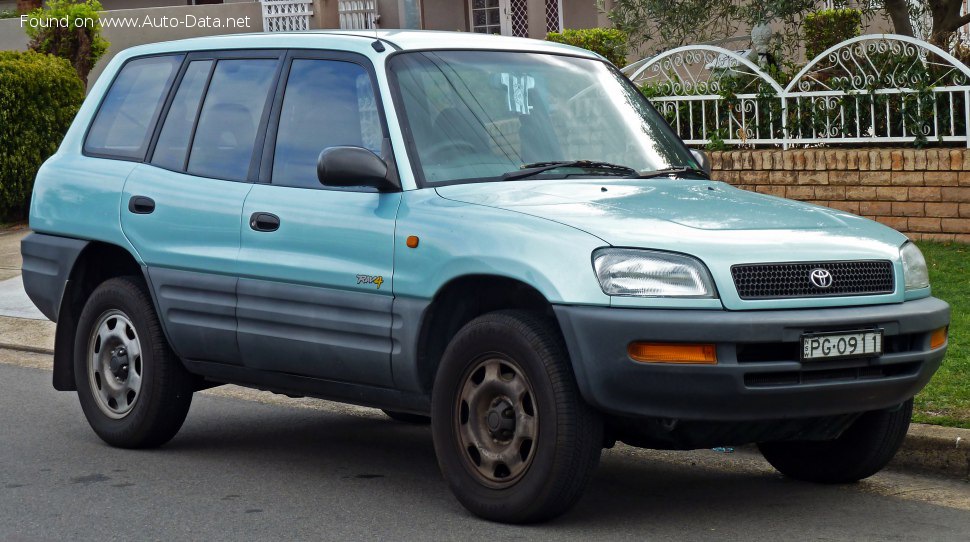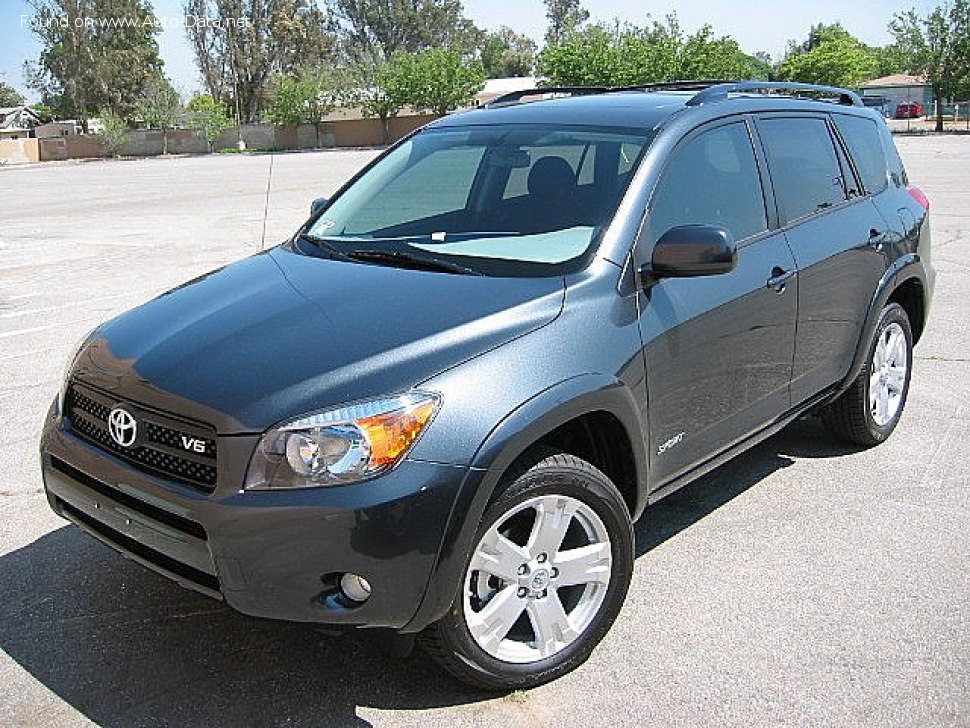
Toyota RAV4 III (XA30) Long 3.5 V6 (269 Hp) 4WD Automatic: A Potent Crossover Evolution
The Toyota RAV4, a pioneer in the compact crossover SUV segment, underwent a significant transformation with its third generation, internally designated XA30. Launched in November 2005, this iteration marked a departure from the more utilitarian, compact roots of its predecessors, evolving into a larger, more sophisticated vehicle designed to appeal to a broader audience, particularly in the North American market. Among the various powertrain options offered, the Toyota RAV4 III (XA30) Long 3.5 V6 (269 Hp) 4WD Automatic variant stood out as a performance leader, combining robust power with Toyota’s renowned reliability and the added capability of all-wheel drive. This specific model, produced until 2009, represented a strategic move by Toyota to cater to consumers desiring more power and interior space than typically found in the compact SUV class, without fully committing to a larger, less fuel-efficient mid-size SUV.
The XA30 generation was designed on a new platform, distinct from the Corolla and Camry underpinnings of previous generations, allowing for greater interior volume and improved ride dynamics. The “Long” designation of this particular model refers to its extended wheelbase, which facilitated the option of a third row of seating, transforming the RAV4 into a versatile 5-7 passenger family hauler. This expansion in size and capability, especially with the introduction of a potent V6 engine, positioned the RAV4 III (XA30) as a compelling choice in an increasingly competitive crossover market, bridging the gap between compact and traditional mid-size SUVs.
Engine & Performance: The Power of the 3.5 V6 (269 Hp)
At the heart of this formidable RAV4 variant was Toyota’s acclaimed 2GR-FE engine, a 3.5-liter V6 unit. This naturally aspirated, multi-port manifold injected engine delivered a robust 269 horsepower at 6200 rpm, a figure that was exceptionally strong for a vehicle in its class during the mid-2000s. Complementing this impressive power output was a healthy 245.61 lb.-ft. of torque, peaking at 4700 rpm, ensuring responsive acceleration and ample passing power. The engine’s configuration, a V-engine with 6 cylinders and DOHC (Double Overhead Camshaft) valvetrain featuring VVT-i (Variable Valve Timing with intelligence), contributed to its smooth operation and efficient power delivery.
Power was seamlessly transferred to all four wheels via a 5-speed automatic transmission and a sophisticated All-Wheel Drive (4×4) system. This combination provided confident traction in various driving conditions, from inclement weather to light off-road excursions, enhancing the RAV4’s versatility. Despite its powerful V6 engine and all-wheel-drive system, the Toyota RAV4 III (XA30) Long 3.5 V6 (269 Hp) 4WD Automatic maintained respectable fuel economy for its era. It achieved an estimated 21 US mpg in urban driving and 28 US mpg on the highway, making it a relatively efficient choice for a family-oriented SUV with such performance capabilities. Its weight-to-power ratio of 6.2 kg/Hp (162.2 Hp/tonne) further underscored its spirited performance, allowing for a dynamic driving experience not always associated with compact crossovers.
Design & Features: Form Meets Function in the XA30 Long
The third-generation RAV4, particularly the “Long” wheelbase version, represented a more mature and refined design language for Toyota’s popular crossover. Its exterior styling adopted smoother lines and a less angular profile compared to its predecessors, contributing to a respectable drag coefficient of 0.33. With a length of 181.1 inches and a width ranging from 71.46 to 73.03 inches, the XA30 Long offered a commanding presence on the road. The increased wheelbase of 104.72 inches was instrumental in providing improved ride comfort and, crucially, the option for a third row of seating, expanding the vehicle’s capacity from 5 to 7 passengers.
Inside, the RAV4 XA30 focused on practicality and comfort. The spacious cabin provided ample headroom and legroom for front and second-row occupants, while the optional third row offered flexibility for larger families or occasional extra passengers. Cargo versatility was a strong suit, with a minimum trunk space of 12.29 cubic feet, which could be expanded significantly to an impressive 73 cubic feet with the rear seats folded down. Standard features included modern amenities for its time, designed to enhance convenience and safety. The vehicle was equipped with an independent McPherson strut front suspension with coil springs and an anti-roll bar, paired with a double wishbone rear suspension, providing a balanced ride and handling characteristics. Braking duties were handled by ventilated discs at the front and disc brakes at the rear, supported by an Anti-lock Braking System (ABS) for enhanced stopping power and control. The steering system utilized a rack and pinion setup, offering precise and responsive feedback. The 17-inch wheels, shod with 225/65 R17 tires, contributed to both aesthetics and handling stability.
Technical Specifications
| Category | Specification |
|---|---|
| Brand | Toyota |
| Model | RAV4 |
| Generation | RAV4 III (XA30) Long |
| Type (Engine) | 3.5 V6 (269 Hp) 4WD Automatic |
| Start of production | November, 2005 |
| End of production | 2009 |
| Powertrain Architecture | Internal Combustion engine |
| Body type | SUV |
| Seats | 5-7 |
| Doors | 5 |
| Performance Specs | |
| Fuel consumption (urban) | 11.2 l/100 km (21 US mpg) |
| Fuel consumption (extra urban) | 8.4 l/100 km (28 US mpg) |
| Fuel Type | Petrol (Gasoline) |
| Weight-to-power ratio | 6.2 kg/Hp (162.2 Hp/tonne) |
| Weight-to-torque ratio | 5 kg/Nm (200.8 Nm/tonne) |
| Engine Specs | |
| Power | 269 Hp @ 6200 rpm |
| Power per liter | 77.8 Hp/l |
| Torque | 333 Nm (245.61 lb.-ft.) @ 4700 rpm |
| Engine layout | Front, Transverse |
| Engine Model/Code | 2GR-FE |
| Engine displacement | 3456 cm3 (210.9 cu. in.) |
| Number of cylinders | 6 |
| Engine configuration | V-engine |
| Cylinder Bore | 94 mm (3.7 in.) |
| Piston Stroke | 83 mm (3.27 in.) |
| Compression ratio | 10.8:1 |
| Number of valves per cylinder | 4 |
| Fuel injection system | Multi-port manifold injection |
| Engine aspiration | Naturally aspirated engine |
| Valvetrain | DOHC, VVT-i |
| Engine oil capacity | 6.1 l (6.45 US qt) |
| Coolant | 8.9 l (9.4 US qt) |
| Space, Volume and Weights | |
| Kerb Weight | 1658 kg (3655.26 lbs.) |
| Max. weight | 2141 kg (4720.1 lbs.) |
| Max load | 483 kg (1064.83 lbs.) |
| Trunk (boot) space – minimum | 348 l (12.29 cu. ft.) |
| Trunk (boot) space – maximum | 2067 l (73 cu. ft.) |
| Fuel tank capacity | 60 l (15.85 US gal) |
| Permitted trailer load without brakes | 907 kg (1999.59 lbs.) |
| Dimensions | |
| Length | 4600 mm (181.1 in.) |
| Width | 1815-1855 mm (71.46 – 73.03 in.) |
| Height | 1745-1755 mm (68.7 – 69.09 in.) |
| Wheelbase | 2660 mm (104.72 in.) |
| Front track | 1560 mm (61.42 in.) |
| Rear (Back) track | 1560 mm (61.42 in.) |
| Ride height (ground clearance) | 190 mm (7.48 in.) |
| Drag coefficient (Cd) | 0.33 |
| Minimum turning circle | 11.4 m (37.4 ft.) |
| Approach angle | 29.3° |
| Departure angle | 25.4° |
| Drivetrain, Brakes and Suspension Specs | |
| Drive wheel | All wheel drive (4×4) |
| Number of gears and type of gearbox | 5 gears, automatic transmission |
| Front suspension | Independent, type McPherson with coil spring and anti-roll bar |
| Rear suspension | Double wishbone |
| Front brakes | Ventilated discs |
| Rear brakes | Disc |
| Assisting systems | ABS (Anti-lock braking system) |
| Steering type | Steering rack and pinion |
| Tires size | 225/65 R17 |
| Wheel rims size | 7J x 17 |
Legacy & Market Impact of the Toyota RAV4 III (XA30)
The third-generation Toyota RAV4, particularly the powerful V6 variant, played a pivotal role in shaping the perception and capabilities of compact crossover SUVs in the North American market. Prior to the XA30, many crossovers were seen as glorified station wagons, lacking the power or space of traditional SUVs. The introduction of the Toyota RAV4 III (XA30) Long 3.5 V6 (269 Hp) 4WD Automatic challenged this notion, offering a level of performance that rivaled, and often surpassed, many larger V6-equipped SUVs of its time. This made it an attractive option for consumers who desired SUV utility and power but preferred the maneuverability, car-like ride, and relatively better fuel economy of a crossover.
In its segment, the RAV4 XA30 competed fiercely with established players like the Honda CR-V, Ford Escape, and Nissan Rogue, as well as emerging rivals such as the Hyundai Santa Fe. The RAV4 distinguished itself with its optional V6 engine, a feature not commonly found in its direct competitors, which often relied solely on four-cylinder powertrains. This powerful engine option, combined with the availability of a third-row seat in the “Long” wheelbase model, provided a unique selling proposition that appealed to growing families and those seeking more versatility.
The XA30 generation solidified the RAV4’s reputation as a reliable, practical, and capable family vehicle. It continued Toyota’s legacy of building durable and low-maintenance cars, contributing to strong resale values. The V6 model, in particular, demonstrated that a crossover could offer genuinely strong performance without sacrificing too much in terms of efficiency or everyday usability. Its success paved the way for future generations of RAV4s to grow further in size and sophistication, ultimately making it one of the best-selling vehicles in North America. The Toyota RAV4 III (XA30) Long 3.5 V6 (269 Hp) 4WD Automatic remains a significant chapter in the evolution of the modern crossover SUV, remembered for its blend of power, practicality, and Toyota’s enduring commitment to quality.