The Rover 800 Coupe 820i (136 Hp): A British Executive Grand Tourer
The
Rover 800 Coupe 820i (136 Hp)
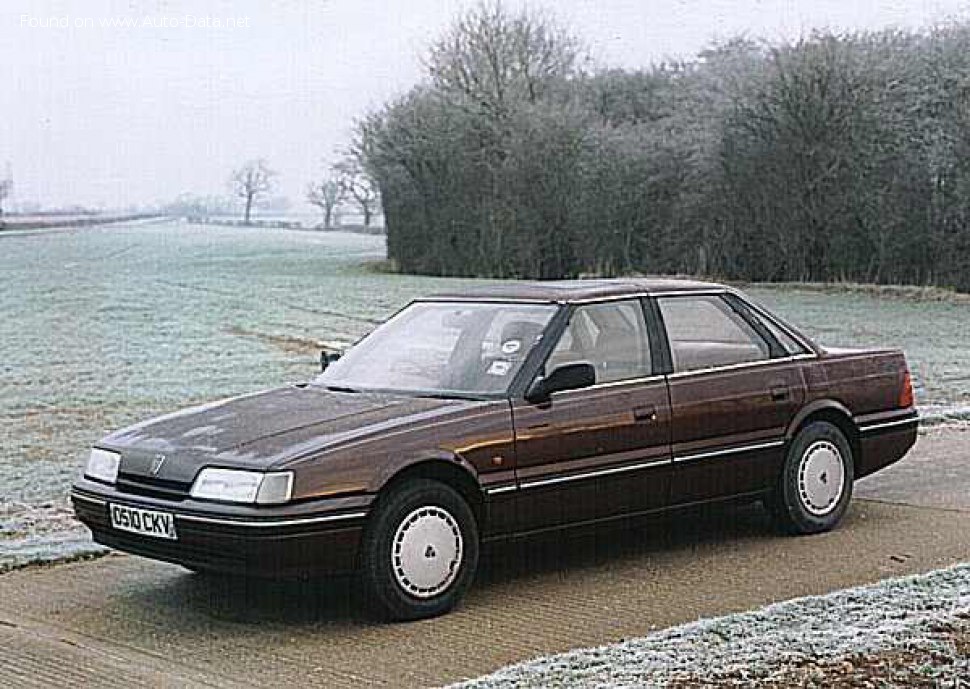
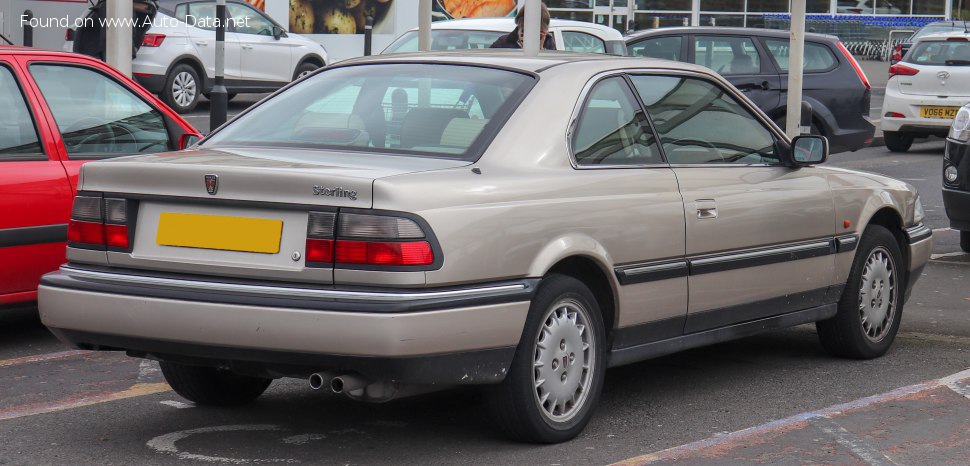
represents a distinctive chapter in the history of the British automotive manufacturer, Rover. Launched in 1992 as part of the second generation of the Rover 800 Series, the Coupe variant was the pinnacle of Rover’s executive lineup, offering a blend of traditional British luxury and contemporary styling in a two-door grand touring package. Designed primarily for the European market, particularly the United Kingdom, where Rover held significant brand recognition, the 800 Coupe aimed to compete in a niche segment against more established German and Japanese premium offerings. It was a statement car for Rover, showcasing a commitment to design elegance and a more exclusive driving experience compared to its sedan and fastback siblings. Produced until 1999, the 800 Coupe, especially in its 820i guise, provided a refined, comfortable, and uniquely British alternative for discerning buyers.
Engineering and Performance of the Rover 800 Coupe
At the heart of the
Rover 800 Coupe 820i (136 Hp)
was Rover’s M16i engine, a naturally aspirated 2.0-liter (1994 cm³) inline-four powerplant. This DOHC (Double Overhead Camshaft) engine featured four valves per cylinder and multi-port manifold injection, a relatively advanced setup for its time, ensuring efficient fuel delivery and respectable performance. The engine produced 136 horsepower at 6000 rpm, which, while not overtly sporty, was sufficient for the car’s grand touring aspirations. Torque figures stood at 135.71 lb.-ft. (184 Nm) at a relatively low 2500 rpm, providing good pulling power in urban environments and relaxed cruising on highways.
Power was delivered to the front wheels via a 5-speed manual transmission, a common configuration for European cars in this class. The powertrain architecture, with its front, transverse engine layout and front-wheel drive, contributed to a spacious interior and predictable handling characteristics. Performance metrics for the 820i Coupe included an acceleration from 0 to 60 mph in a respectable 9.7 seconds, with a maximum speed of 124.9 mph (201 km/h).
Fuel efficiency, while not the primary concern for a luxury coupe, was competitive for its era. The combined fuel economy was rated at 32.2 US mpg (7.3 l/100 km), breaking down to 20.5 US mpg (11.5 l/100 km) in urban driving and an impressive 39.9 US mpg (5.9 l/100 km) on the extra-urban cycle. These figures highlighted the engine’s balance between performance and economic operation, particularly for longer journeys. The 17.96 US gallon (68-liter) fuel tank provided a substantial cruising range.
Design and Features: The Elegance of the Rover 800 Coupe
The design of the
Rover 800 Coupe
was its most distinguishing feature. Unlike its sedan counterpart, the Coupe boasted a unique, pillarless two-door body, giving it a sleek and elegant profile. Measuring 192.2 inches (4882 mm) in length, 68.11 inches (1730 mm) in width, and 54.84 inches (1393 mm) in height, with a generous 108.9-inch (2766 mm) wheelbase, the Coupe commanded a significant road presence. The styling was characterized by smooth lines, a distinctive grille, and a gracefully sloping roofline that culminated in a spacious trunk offering 16.07 cu. ft. (455 liters) of cargo space. Despite its two-door configuration, the Rover 800 Coupe was designed to comfortably seat five occupants, upholding its executive grand tourer credentials.
Underneath its elegant skin, the Coupe featured a sophisticated chassis setup. The front suspension utilized a double wishbone design, renowned for its ability to provide precise handling and a comfortable ride. The rear featured a coil spring setup. Braking performance was handled by ventilated discs at the front and solid discs at the rear, augmented by an Anti-lock Braking System (ABS), a crucial safety feature for vehicles of this class in the 1990s. Steering was managed by a hydraulic rack and pinion system, offering direct feedback and ease of maneuverability. The car rode on 195/65 R15 tires, providing a good balance of grip and ride comfort. The kerb weight of the 820i Coupe was 2965.22 lbs. (1345 kg), contributing to a weight-to-power ratio of 9.9 kg/Hp.
Technical Specifications
| Category | Specification |
|---|---|
| Brand | Rover |
| Model | 800 Coupe |
| Type (Engine) | 820i (136 Hp) |
| Production Years | 1992 – 1999 |
| Body Type | Coupe, 2 Doors, 5 Seats |
|
Performance |
|
| Power | 136 Hp @ 6000 rpm |
| Torque | 135.71 lb.-ft. (184 Nm) @ 2500 rpm |
| Acceleration 0-60 mph | 9.7 seconds |
| Maximum Speed | 124.9 mph (201 km/h) |
| Fuel Type | Petrol (Gasoline) |
| Fuel Economy – Urban | 20.5 US mpg (11.5 l/100 km) |
| Fuel Economy – Extra Urban | 39.9 US mpg (5.9 l/100 km) |
| Fuel Economy – Combined | 32.2 US mpg (7.3 l/100 km) |
|
Engine |
|
| Engine Layout | Front, Transverse |
| Engine Model/Code | M16i |
| Engine Displacement | 2.0 liters (1994 cm³ / 121.68 cu. in.) |
| Number of Cylinders | 4, Inline |
| Valves per Cylinder | 4 |
| Valvetrain | DOHC |
| Compression Ratio | 10:1 |
| Fuel Injection System | Multi-port manifold injection |
| Engine Aspiration | Naturally aspirated |
| Engine Oil Capacity | 4.76 US qt (4.5 l) |
| Coolant Capacity | 10.57 US qt (10 l) |
|
Dimensions & Weights |
|
| Length | 192.2 in. (4882 mm) |
| Width | 68.11 in. (1730 mm) |
| Height | 54.84 in. (1393 mm) |
| Wheelbase | 108.9 in. (2766 mm) |
| Front Track | 58.54 in. (1487 mm) |
| Rear Track | 57.09 in. (1450 mm) |
| Kerb Weight | 2965.22 lbs. (1345 kg) |
| Max. Weight (GVWR) | 4210.83 lbs. (1910 kg) |
| Max Load | 1245.61 lbs. (565 kg) |
| Trunk Space | 16.07 cu. ft. (455 l) |
| Fuel Tank Capacity | 17.96 US gal (68 l) |
|
Drivetrain, Brakes & Suspension |
|
| Drivetrain Architecture | Internal Combustion engine drives the front wheels |
| Drive Wheel | Front-wheel drive |
| Gearbox Type | 5-speed manual transmission |
| Front Suspension | Double wishbone |
| Rear Suspension | Coil spring |
| Front Brakes | Ventilated discs |
| Rear Brakes | Disc |
| Assisting Systems | ABS (Anti-lock braking system) |
| Steering Type | Steering rack and pinion |
| Power Steering | Hydraulic Steering |
| Tires Size | 195/65 R15 |
Legacy and Market Impact
The Rover 800 Coupe was a relatively low-volume, specialist model for Rover, designed to enhance the brand’s image and offer a more exclusive product. In its primary markets, it competed with a diverse range of executive coupes, including the BMW 3 Series Coupe (E36), Mercedes-Benz E-Class Coupe (W124), and even some offerings from Japanese brands like the Honda Legend Coupe (which shared some underpinnings with the 800 Series due to the Rover-Honda collaboration). The 800 Coupe differentiated itself through its distinctively British styling, an emphasis on interior comfort, and a slightly more understated luxury appeal compared to its German rivals.
While it might not have broken sales records, the 800 Coupe played a crucial role in Rover’s lineup during the 1990s. It represented Rover’s ambition to maintain a presence in the premium segment and to offer a car that evoked traditional British craftsmanship and elegance. The car garnered a reputation for its smooth ride, refined interior (often featuring wood and leather trim, typical of Rover), and its quiet cruising ability, making it a capable long-distance tourer.
In hindsight, the Rover 800 Coupe stands as one of the last truly distinctive models from the independent Rover Group before its eventual acquisition and subsequent challenges. Its unique design, particularly the pillarless windows, and its comfortable, unhurried driving experience, have earned it a cult following among classic car enthusiasts and Rover aficionados. Today, examples of the Rover 800 Coupe 820i (136 Hp) are appreciated for their blend of period luxury, British charm, and their position as a significant, albeit niche, part of automotive history. It remains a testament to Rover’s efforts to produce a stylish and sophisticated executive coupe for the European market.