The Renault Espace IV (Phase IV, 2012): A European Minivan Icon
The Renault Espace IV (Phase IV, 2012) represents the final iteration of the fourth generation of Renault’s pioneering multi-purpose vehicle (MPV), or minivan as it is known in American English. Introduced in 2012 and produced until 2014, this specific variant, powered by a 2.0 dCi (150 Hp) automatic powertrain, served as a testament to the Espace’s enduring commitment to family-friendly versatility, comfort, and efficiency in the European market. While the Espace nameplate holds significant historical weight in Europe as one of the original and most successful large minivans, it was never officially sold in the United States, where different market preferences and regulatory requirements shaped the family vehicle landscape. This Phase IV refresh aimed to keep the Espace competitive in a segment increasingly challenged by the rise of SUVs and crossovers, offering a refined driving experience coupled with ample interior space.
Engine and Performance: The 2.0 dCi Powertrain
At the heart of the Renault Espace IV (Phase IV, 2012) lies the M9R 2.0-liter dCi (direct common-rail injection) diesel engine, a powerplant renowned for its balance of efficiency and robust performance. This inline four-cylinder engine, configured with a DOHC (Double Overhead Camshaft) valvetrain and four valves per cylinder, delivers a respectable 150 horsepower at 4000 rpm. Its strength, however, is truly evident in its torque output: a substantial 250.77 pound-feet (340 Nm) available from a low 2000 rpm. This ample low-end torque is crucial for a vehicle of the Espace’s size and intended use, ensuring confident acceleration and effortless cruising, even when fully loaded with passengers and cargo.
The engine’s advanced common-rail fuel injection system, combined with a turbocharger and intercooler, optimizes combustion for both power delivery and fuel economy. Furthermore, the inclusion of a particulate filter ensured compliance with the stringent Euro 5 emission standards of its time, reflecting Renault’s commitment to environmental responsibility. Power is efficiently transmitted to the front wheels via a smooth 6-speed automatic transmission, a choice that prioritizes driving comfort and ease, particularly in urban environments and during long-distance journeys.
In terms of raw performance, the Espace 2.0 dCi (150 Hp) Automatic is a capable, if not overtly sporty, performer. It accelerates from 0 to 60 mph in a measured 11.8 seconds, with a top speed of 116.82 mph. These figures are entirely appropriate for a family minivan, emphasizing practicality and safety over outright speed. Fuel efficiency was a key selling point in Europe, and this Espace delivered commendable numbers: an estimated combined fuel economy of 36.8 US miles per gallon (6.4 liters per 100 km), with highway figures reaching an impressive 43.6 US mpg (5.4 l/100 km). This made it an economically sensible choice for European families facing high fuel prices.
Design and Features: Prioritizing Space and Comfort
Exterior and Dimensions
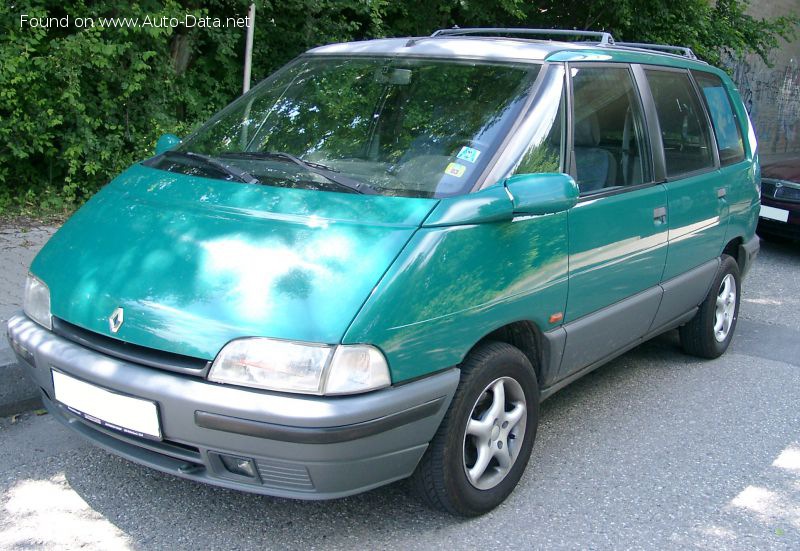
The fourth-generation Espace, even in its Phase IV guise, retained the distinctive, almost monolithic design language that set it apart from more conventional minivans. Its sleek, aerodynamic profile, characterized by a steeply raked windshield and a relatively short hood, maximized interior volume. Measuring 183.27 inches in length, 74.57 inches in width (including mirrors), and 70.91 inches in height, the Espace commanded a significant road presence. A substantial 110.35-inch wheelbase contributed directly to its impressive interior space and stable ride quality. The design, while mature by 2012, emphasized functionality and a timeless aesthetic, shying away from overly aggressive styling in favor of practicality.
Interior Versatility and Comfort
Where the Renault Espace IV (Phase IV, 2012) truly shone was its interior. As a 7-seater minivan with five doors, it was engineered for maximum flexibility and passenger comfort. The seating arrangement was highly adaptable, allowing for individual removal or sliding of seats to reconfigure the cabin for various passenger and cargo needs. Minimum trunk space stood at 10.28 cubic feet (291 liters), which is respectable even with all seven seats in place. However, with the rear seats removed or folded, the cargo capacity expanded dramatically to an cavernous 101 cubic feet (2860 liters), transforming the Espace into a veritable cargo hauler. This versatility was a cornerstone of its appeal to large families and those requiring adaptable transport solutions.
Standard features for a vehicle of this segment in 2012 included an Anti-lock Braking System (ABS) for enhanced safety, and an electric power steering system that provided light and precise control, particularly useful in urban maneuvering. The Espace rode on 17-inch wheels fitted with 225/55 R17 tires, offering a good balance of ride comfort and grip. The suspension setup featured an independent MacPherson strut system with coil springs and an anti-roll bar at the front, paired with a semi-independent coil spring rear suspension, tuned for a compliant and comfortable ride characteristic of family vehicles. Braking was handled by ventilated discs at the front and solid discs at the rear, providing confident stopping power for a vehicle of its weight and size.
Technical Specifications
| Category | Specification |
|---|---|
| General Information | |
| Brand | Renault |
| Model | Espace |
| Generation | Espace IV (Phase IV, 2012) |
| Engine Type | 2.0 dCi (150 Hp) Automatic |
| Production Start | 2012 |
| Production End | 2014 |
| Powertrain Architecture | Internal Combustion Engine, Front-Wheel Drive |
| Body Type | Minivan, MPV |
| Seats | 7 |
| Doors | 5 |
| Performance Specifications | |
| Fuel Consumption (Urban) | 28.7 US mpg (8.2 l/100 km) |
| Fuel Consumption (Extra Urban) | 43.6 US mpg (5.4 l/100 km) |
| Fuel Consumption (Combined) | 36.8 US mpg (6.4 l/100 km) |
| CO2 Emissions | 169 g/km |
| Fuel Type | Diesel |
| Acceleration 0-60 mph | 11.8 sec |
| Maximum Speed | 116.82 mph (188 km/h) |
| Emission Standard | Euro 5 |
| Weight-to-Power Ratio | 12.9 kg/Hp |
| Weight-to-Torque Ratio | 5.7 kg/Nm |
| Engine Specifications | |
| Power | 150 Hp @ 4000 rpm |
| Power per liter | 75.2 Hp/l |
| Torque | 250.77 lb.-ft. (340 Nm) @ 2000 rpm |
| Engine Layout | Front, Transverse |
| Engine Model/Code | M9R |
| Engine Displacement | 121.74 cu. in. (1995 cm³) |
| Number of Cylinders | 4 |
| Engine Configuration | Inline |
| Cylinder Bore | 3.31 in. (84 mm) |
| Piston Stroke | 3.54 in. (90 mm) |
| Compression Ratio | 16:1 |
| Valves per Cylinder | 4 |
| Fuel Injection System | Diesel Commonrail |
| Engine Aspiration | Turbocharger, Intercooler |
| Valvetrain | DOHC |
| Engine Oil Capacity | 6.97 US qt (6.6 l) |
| Engine Systems | Particulate filter |
| Space, Volume, and Weights | |
| Kerb Weight | 4261.54 lbs. (1933 kg) |
| Max. Weight | 5820.2 lbs. (2640 kg) |
| Max Load | 1558.67 lbs. (707 kg) |
| Trunk Space (Minimum) | 10.28 cu. ft. (291 l) |
| Trunk Space (Maximum) | 101 cu. ft. (2860 l) |
| Fuel Tank Capacity | 21.93 US gal (83 l) |
| Permitted Trailer Load with Brakes (12%) | 4409.25 lbs. (2000 kg) |
| Permitted Trailer Load without Brakes | 1653.47 lbs. (750 kg) |
| Dimensions | |
| Length | 183.27 in. (4655 mm) |
| Width (including mirrors) | 74.57 in. (1894 mm) |
| Height | 70.91 in. (1801 mm) |
| Wheelbase | 110.35 in. (2803 mm) |
| Front Overhang | 40.16 in. (1020 mm) |
| Rear Overhang | 32.76 in. (832 mm) |
| Ride Height (Ground Clearance) | 4.72 in. (120 mm) |
| Minimum Turning Circle | 37.07 ft. (11.3 m) |
| Drivetrain, Brakes, and Suspension | |
| Drivetrain Architecture | Front-wheel drive |
| Drive Wheel | Front-wheel drive |
| Number of Gears/Gearbox Type | 6 gears, automatic transmission |
| Front Suspension | Independent, McPherson with coil spring and anti-roll bar |
| Rear Suspension | Semi-independent, coil spring |
| Front Brakes | Ventilated discs |
| Rear Brakes | Disc |
| Assisting Systems | ABS (Anti-lock braking system) |
| Steering Type | Steering rack and pinion |
| Power Steering | Electric Steering |
| Tires Size | 225/55 R17 |
| Wheel Rims Size | 17 inches |
Legacy and Market Impact in Europe
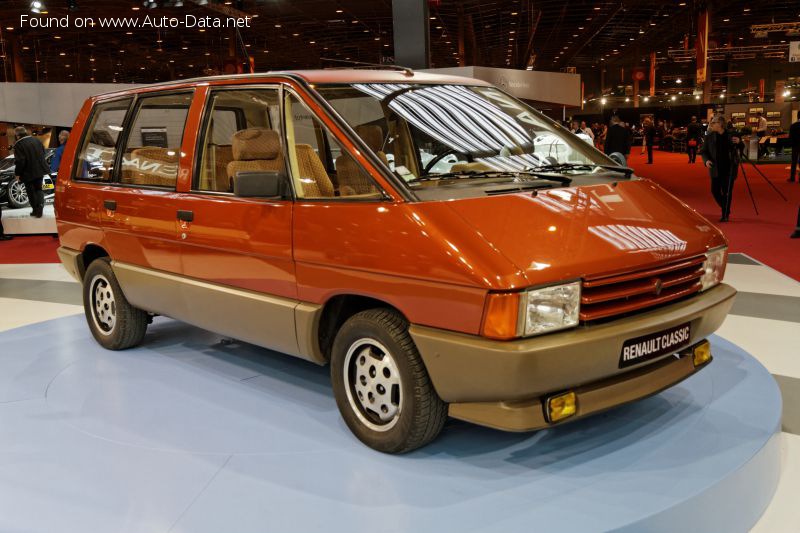
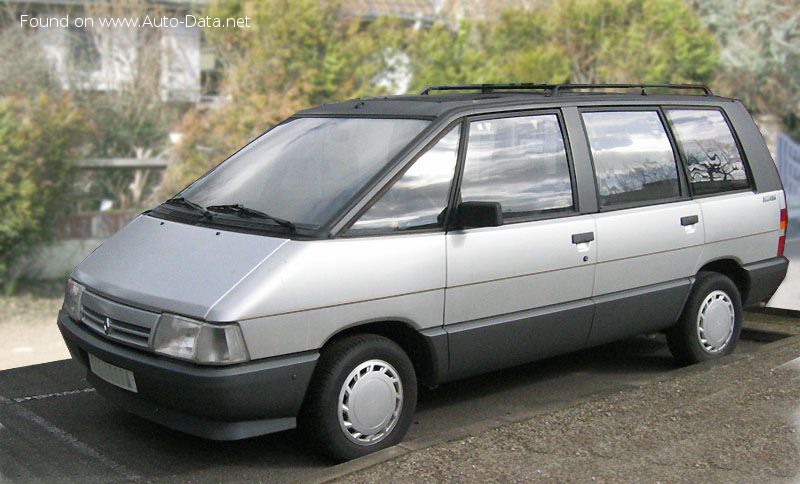
The Renault Espace holds a significant place in automotive history, particularly in Europe, as one of the pioneers of the modern minivan segment. Launched in 1984, the original Espace was revolutionary, offering car-like driving dynamics with unparalleled interior space and modularity. The fourth generation, introduced in 2002, continued this legacy, evolving the concept with more sophisticated design, improved refinement, and enhanced safety features. The Phase IV refresh, available from 2012 to 2014, represented the culmination of this generation’s development, providing a final push for a model that had been a staple of European family transport for a decade.
In its primary European market, the Espace IV (Phase IV) competed against a strong field of rivals in the large MPV segment. Key competitors included the Ford S-Max and Galaxy, the Volkswagen Sharan (and its rebadged sibling, the SEAT Alhambra), and French stablemates like the Citroën C4 Grand Picasso and Peugeot 807. While some of these rivals offered slightly different takes on the minivan concept – some leaning more towards sportiness, others emphasizing sheer passenger capacity – the Espace consistently stood out for its unique blend of comfort, distinctive styling, and practical versatility. Its diesel engine options, like the 2.0 dCi, were particularly crucial in appealing to European buyers who valued fuel efficiency and lower running costs for long-distance family travel.
The reputation of the Espace IV was generally positive, lauded for its comfortable ride, quiet cabin (especially with the diesel engine), and excellent highway manners. Families appreciated the ease of access, the elevated driving position, and the sense of security it offered. However, by the early 2010s, the traditional minivan segment was beginning to wane in popularity across Europe, as consumer preferences shifted increasingly towards SUVs and crossovers. These newer vehicle types offered a similar elevated driving position and often comparable interior space, but with a more rugged, aspirational image.
The Renault Espace IV (Phase IV, 2012) therefore represents a significant point in the Espace’s history: the swan song of its traditional minivan form factor. It successfully upheld the model’s core values of space, comfort, and adaptability during a period of intense market transformation. Its production run concluded in 2014, paving the way for the fifth-generation Espace, which dramatically reinvented itself as a crossover-SUV, adapting to the changing tastes of the European automotive landscape. Despite this evolution, the Espace IV remains a classic example of a large, family-focused European minivan, embodying the practical and comfortable spirit that defined its segment for decades.