The Volkswagen Transporter (T5) Panel Van: A European Workhorse
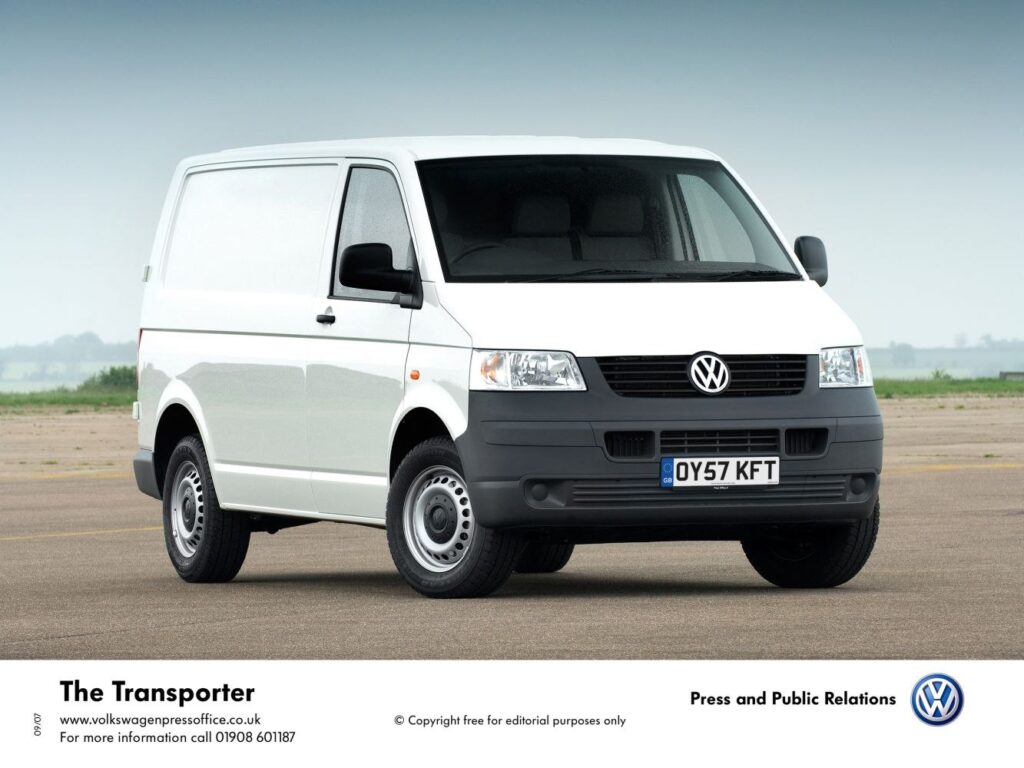
The Volkswagen Transporter, an iconic nameplate in the realm of light commercial vehicles, entered its fifth generation (T5) in 2003, continuing a legacy that began with the original Type 2 in 1950. The variant under scrutiny, the Volkswagen Transporter (T5) Panel Van 2.5 TDI (174 Hp) Tiptronic L2H3, represents a powerful and versatile iteration designed primarily for the demanding European and international commercial markets. Unlike its passenger-oriented sibling, the Multivan or California, the Panel Van was engineered from the ground up as a dedicated cargo hauler, offering robust construction, ample carrying capacity, and a focus on operational efficiency. This specific model, produced between 2003 and 2006, combined a potent diesel engine with an automatic transmission, catering to businesses requiring both strength and ease of use in their fleet.
While the Volkswagen Transporter series has achieved legendary status globally, its direct presence as a dedicated commercial van in the United States market was limited, often supplanted by larger, domestically-focused vans or other Volkswagen Group products adapted for the region. Nonetheless, the T5 Transporter, particularly in its Panel Van configuration, solidified its reputation as a benchmark in its segment across Europe, Asia, and other key markets, renowned for its build quality, durability, and a driving experience that often transcended its utilitarian purpose. The L2H3 designation signifies a long wheelbase (L2) and a high roof (H3), indicating its substantial capacity for cargo, making it a favored choice for logistics, trades, and various service industries.
Engine and Performance of the Volkswagen Transporter (T5) Panel Van
At the heart of this particular Volkswagen Transporter (T5) Panel Van was a formidable 2.5-liter TDI (Turbocharged Direct Injection) engine, a five-cylinder inline unit (Engine Model/Code: EA153 / AXE) that was a hallmark of Volkswagen’s diesel engineering prowess during this era. This powerplant delivered an impressive 174 horsepower at 3500 rpm, a significant output for a commercial vehicle of its time, ensuring ample power for hauling heavy loads or navigating challenging terrains. More critically for a work van, the engine produced a robust 295.02 lb.-ft. of torque, available across a broad and usable range of 2000-2300 rpm. This low-end torque was essential for strong acceleration from a standstill, effortless cruising, and confident towing capabilities.
The engine’s design featured a Single Overhead Camshaft (SOHC) valvetrain with two valves per cylinder, a configuration chosen for its reliability and efficiency in a high-stress commercial application. Fuel delivery was managed by a pump-nozzle (unit injector) system, a sophisticated technology for its time that allowed for precise fuel metering and atomization, contributing to both power output and fuel economy. Mated with a turbocharger and an intercooler, the engine benefited from forced induction, maximizing air intake for combustion and mitigating heat, which is crucial for sustained performance.
Power was sent to the front wheels via a 6-speed Tiptronic automatic transmission. This automatic gearbox provided smooth and efficient power transfer, reducing driver fatigue, especially in urban stop-and-go traffic or during long-haul journeys. While the 0-60 mph acceleration time of 12.1 seconds might seem modest by passenger car standards, it was highly respectable for a fully laden commercial van, underlining the engine’s strong performance. The top speed of 105.01 mph further demonstrated its capability for highway travel. Despite its power, the 2.5 TDI engine maintained reasonable fuel efficiency for its class, with an extra-urban consumption rate of 32.7 US mpg, and met the Euro 3 emission standard, reflecting a balance between performance and environmental considerations for its production period.
Design and Features
The Utilitarian Elegance of the Volkswagen Transporter (T5) Panel Van
The Volkswagen Transporter (T5) Panel Van was designed with a clear purpose: to be a highly functional and durable cargo carrier. Its body type is a traditional van, featuring 4-5 doors for optimal access and a 2-3 seat configuration, prioritizing cargo space over passenger accommodation. This specific L2H3 variant boasted significant dimensions, measuring 208.27 inches in length, 74.96 inches in width (88.27 inches including mirrors), and an imposing 96.85 inches in height. The long 133.86-inch wheelbase contributed to enhanced stability, especially under heavy loads, and maximized the internal volume.
The exterior design of the T5 Transporter was characterized by its clean, unfussy lines, reflecting its utilitarian nature while retaining a modern and professional aesthetic that was typical of Volkswagen. Its robust construction was evident in its wide stance and practical features. The high roof (H3) was a defining characteristic, providing an exceptional maximum cargo volume of 9300 liters (328.43 cubic feet), allowing for the transport of bulky items or enabling extensive internal racking and customization for various trades. The kerb weight ranged from 4310.04 to 4821.51 lbs., with a maximum permissible weight of 6172.94 to 7054.79 lbs., underscoring its impressive payload capacity of 1862.91 to 2233.28 lbs.
Inside, the cabin was designed for durability and functionality, with hard-wearing materials and an ergonomic layout tailored for long hours behind the wheel. While not luxurious, it offered a comfortable and practical workspace for drivers. Standard features for the era included power steering, ensuring ease of maneuverability despite its size, and an Anti-lock Braking System (ABS) for enhanced safety. The independent McPherson strut front suspension and independent coil spring rear suspension with trailing arms and transverse stabilizers contributed to a car-like driving experience, minimizing harshness and improving handling, even when fully loaded. Ventilated disc brakes on both front and rear axles provided strong and consistent stopping power, an essential safety feature for a commercial vehicle. The 215/65 R16 tires and 6.5J x 16 wheel rims were chosen for their load-bearing capacity and durability.
Technical Specifications
| Category | Specification |
|---|---|
| Brand | Volkswagen |
| Model | Transporter |
| Generation | Transporter (T5) Panel Van |
| Type (Engine) | 2.5 TDI (174 Hp) Tiptronic L2H3 |
| Start of production | 2003 year |
| End of production | 2006 year |
| Powertrain Architecture | Internal Combustion engine |
| Body type | Van |
| Seats | 2-3 |
| Doors | 4-5 |
| Fuel consumption (extra urban) | 7.2 l/100 km (32.7 US mpg) |
| Fuel Type | Diesel |
| Acceleration 0 – 60 mph | 12.1 sec |
| Maximum speed | 105.01 mph |
| Emission standard | Euro 3 |
| Power | 174 Hp @ 3500 rpm. |
| Torque | 295.02 lb.-ft. @ 2000-2300 rpm. |
| Engine layout | Front, Transverse |
| Engine Model/Code | EA153 / AXE |
| Engine displacement | 2460 cm3 (2.5 liters / 150.12 cu. in.) |
| Number of cylinders | 5 |
| Engine configuration | Inline |
| Cylinder Bore | 3.19 in. |
| Piston Stroke | 3.76 in. |
| Compression ratio | 18.5:1 |
| Number of valves per cylinder | 2 |
| Fuel injection system | Pump-nozzle (Unit Injector) |
| Engine aspiration | Turbocharger, Intercooler |
| Valvetrain | SOHC |
| Engine oil capacity | 7.4 l (7.82 US qt) |
| Coolant capacity | 7.1 l (7.5 US qt) |
| Kerb Weight | 4310.04 – 4821.51 lbs. |
| Max. weight | 6172.94 – 7054.79 lbs. |
| Max load | 1862.91 – 2233.28 lbs. |
| Trunk (boot) space – maximum | 9300 l (328.43 cu. ft.) |
| Fuel tank capacity | 80 l (21.13 US gal) |
| Permitted trailer load with brakes (8%) | 5511.56 lbs. |
| Permitted trailer load with brakes (12%) | 5511.56 lbs. |
| Permitted trailer load without brakes | 1653.47 lbs. |
| Permitted towbar download | 220.46 lbs. |
| Length | 208.27 in. |
| Width | 74.96 in. |
| Width including mirrors | 88.27 in. |
| Height | 96.85 in. |
| Wheelbase | 133.86 in. |
| Front track | 64.09 in. |
| Rear (Back) track | 64.09 in. |
| Front overhang | 35.2 in. |
| Rear overhang | 39.21 in. |
| Ride height (ground clearance) | 6.5 in. |
| Minimum turning circle (diameter) | 43.31 ft. |
| Approach angle | 22° |
| Departure angle | 16° |
| Wading depth | 11.81 in. |
| Drivetrain Architecture | Front wheel drive (ICE drives front wheels) |
| Drive wheel | Front wheel drive |
| Number of gears and type of gearbox | 6 gears, automatic transmission Tiptronic |
| Front suspension | Independent, type McPherson with coil spring and anti-roll bar |
| Rear suspension | Independent coil spring, Transverse stabilizer, Trailing arm |
| Front brakes | Ventilated discs, 308×29.5 mm |
| Rear brakes | Ventilated discs, 294×22 mm |
| Assisting systems | ABS (Anti-lock braking system) |
| Steering type | Steering rack and pinion |
| Power steering | Hydraulic Steering |
| Tires size | 215/65 R16 |
| Wheel rims size | 6.5J x 16 |
Legacy and Market Impact
The Volkswagen Transporter (T5) Panel Van, and specifically the 2.5 TDI (174 Hp) Tiptronic L2H3 variant, carved out a significant legacy in the light commercial vehicle segment. It successfully continued the Transporter’s tradition of being a versatile, reliable, and durable workhorse, building upon the strengths of its predecessors. In markets where it was sold, primarily Europe, Australia, and parts of Asia, the T5 was regarded as a premium offering among its competitors, known for its superior driving dynamics, robust build quality, and the efficiency of its TDI engines.
Its primary competitors included the Ford Transit, Mercedes-Benz Sprinter (though the Sprinter often occupied a slightly larger segment), Fiat Ducato, Renault Trafic, and Opel/Vauxhall Vivaro. Against these rivals, the T5 often distinguished itself with a more refined driving experience, interior ergonomics that felt more car-like, and the strong reputation of Volkswagen engineering. The powerful 2.5 TDI engine, coupled with the Tiptronic automatic transmission, provided a compelling package for businesses that required both significant load-carrying capabilities and ease of operation, particularly for long-distance deliveries or frequent urban stops.
The T5’s historical significance lies in its role as a modern interpretation of a beloved icon. It maintained the Transporter’s identity as a versatile platform, capable of serving as a panel van, passenger shuttle (Multivan/Caravelle), or even a camper van (California). The L2H3 panel van, with its extensive cargo volume and robust powertrain, became a backbone for countless small and medium-sized enterprises, logistics companies, and tradespeople. Its ability to handle substantial payloads and tow heavy trailers (up to 5511.56 lbs. with brakes) further enhanced its appeal as a genuine workhorse.
Even after its production run concluded in 2006 for this specific variant (with the T5 generation continuing until 2015), these vehicles maintained strong resale values due to their reputation for longevity and reliability. Many continue to operate in fleets and private businesses today, a testament to their enduring quality and design. The Volkswagen Transporter (T5) Panel Van 2.5 TDI (174 Hp) Tiptronic L2H3 is remembered as a highly capable, efficient, and well-engineered commercial vehicle that upheld the Transporter lineage with distinction, setting high standards for its class and contributing significantly to the commercial transport landscape across global markets.