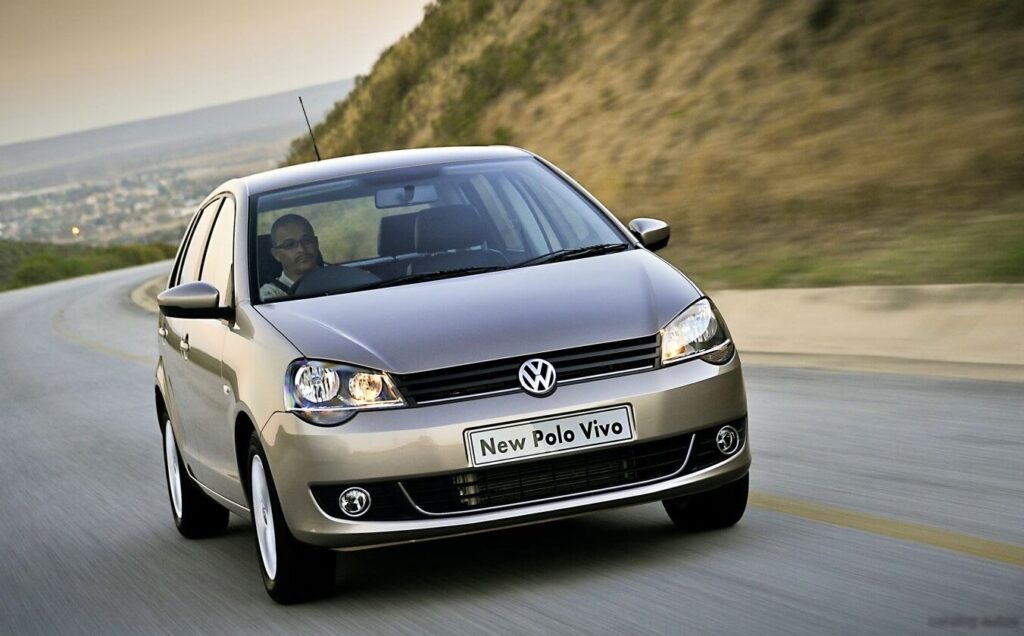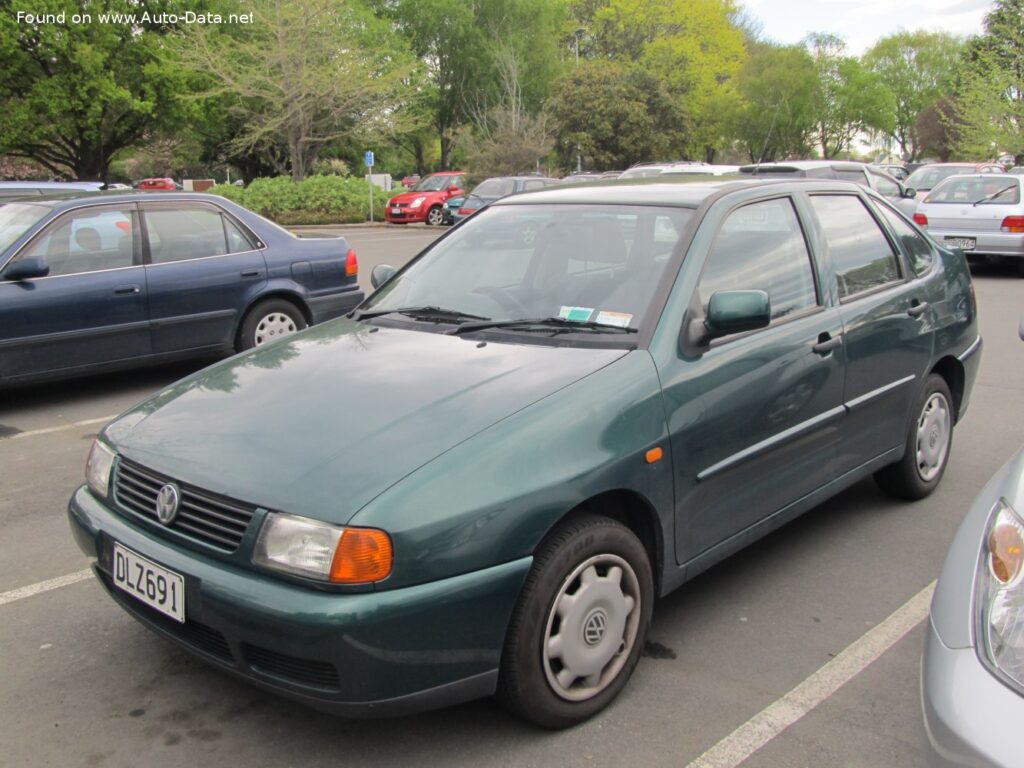
The Volkswagen Polo III Classic 1.6 (100 Hp) Automatic: A European Mainstay (1994-2000)
The Volkswagen Polo III Classic 1.6 (100 Hp) Automatic represents a significant chapter in the history of Volkswagen’s subcompact segment, particularly within European and other global markets where the Polo nameplate held considerable weight. Produced from 1994 to 2000, this specific variant of the third-generation Polo was offered as a four-door sedan, a body style often referred to as “Classic” by Volkswagen, distinguishing it from the more common hatchback versions of the Polo III. While the Volkswagen Polo itself has never been officially sold in the United States, its influence and engineering principles are reflective of the brand’s global strategy for compact, efficient, and well-built vehicles.
The Polo III, internally designated Typ 6N for the hatchback and Typ 6V for the sedan and wagon variants, marked a substantial leap forward from its predecessors. It shared its platform with the contemporary SEAT Ibiza and Cordoba, showcasing Volkswagen Group’s modular approach to vehicle development. The Classic sedan, in particular, aimed to cater to customers seeking the practicality of a four-door sedan with a separate trunk, often appealing to families or those requiring more formal styling and cargo security than a hatchback could offer. The 1.6-liter engine paired with an automatic transmission provided a balance of usable power and driving convenience for urban and highway commuting.
Engine and Performance of the Volkswagen Polo III Classic
At the heart of the Volkswagen Polo III Classic 1.6 (100 Hp) Automatic lies a naturally aspirated 1.6-liter (1595 cm³ or 97.33 cu. in.) inline four-cylinder gasoline engine, identified by the engine code AFT. This powertrain was engineered for reliability and efficiency, delivering a respectable 100 horsepower at 5600 rpm. Its power output of 62.7 horsepower per liter was competitive for its class and era, providing ample motivation for the compact sedan.
The engine produced 145 Nm (106.95 lb.-ft.) of torque at a relatively low 3800 rpm, ensuring decent pulling power in everyday driving scenarios. This torque characteristic, combined with the multi-port manifold injection system and OHC (Overhead Camshaft) valvetrain with two valves per cylinder, contributed to a smooth and responsive power delivery. The engine’s compression ratio of 10.5:1 further optimized combustion efficiency.
Power was transmitted to the front wheels via a conventional 4-speed automatic transmission. While not as sophisticated as modern multi-speed automatics, this gearbox offered a convenient and effortless driving experience, particularly in congested city traffic. Performance figures for the Polo III Classic 1.6 Automatic were adequate for its segment: it accelerated from 0 to 60 mph in a calculated 10.9 seconds (0-100 km/h in 11.5 seconds) and reached a top speed of 116.82 mph (188 km/h). These numbers placed it firmly in the mainstream compact sedan category, suitable for a range of driving needs across Europe and beyond.
Fuel economy for this variant was rated at 17.8 US mpg (13.2 l/100 km) in urban driving, improving to 35.1 US mpg (6.7 l/100 km) on the extra-urban cycle. The combined consumption stood at 30.9 US mpg (7.6 l/100 km), which was considered reasonable for a gasoline-powered automatic compact car of the mid-to-late 1990s. The 11.89 US gallon (45 liter) fuel tank provided a practical cruising range.
Design and Features
The Volkswagen Polo III Classic adopted a more mature and conventional design compared to its hatchback sibling. As a four-door sedan with seating for five, it measured 163.94 inches (4164 mm) in length, 64.57 inches (1640 mm) in width, and 55.67 inches (1414 mm) in height. Its wheelbase of 96.1 inches (2441 mm) provided a stable ride and contributed to a surprisingly spacious interior for its class. The design was understated and functional, characteristic of Volkswagen’s pragmatic approach, featuring clean lines and a classic three-box silhouette.
Inside, the Polo III Classic offered a straightforward and ergonomic cabin. While specific trim levels and features varied by market, the car typically came equipped with essential amenities for comfort and convenience. The 455 liters (16.07 cu. ft.) of trunk space was a significant advantage over the hatchback, expanding to 762 liters (26.91 cu. ft.) with the rear seats folded, making it a highly practical choice for small families or individuals needing substantial cargo capacity. The hydraulic power steering system, employing a rack and pinion setup, provided ease of maneuverability, particularly in city driving and parking.
Safety features for the era included standard ABS (Anti-lock Braking System), a crucial technology that improved braking control under hard stopping conditions. The car featured disc brakes at the front and drum brakes at the rear, a common and cost-effective setup for vehicles in this segment. The suspension system comprised a wishbone setup at the front and a suspension with traction connecting levers at the rear, designed to offer a comfortable ride and predictable handling. The vehicle rode on 185/60 R14 tires mounted on 6J x 14 wheel rims, a practical size for ride comfort and replacement cost.
Technical Specifications
| Category | Specification |
|---|---|
| Brand | Volkswagen |
| Model | Polo III Classic |
| Type (Engine) | 1.6 (100 Hp) Automatic |
| Production Years | 1994 – 2000 |
| Body Type | Sedan |
| Doors | 4 |
| Seats | 5 |
| Powertrain Architecture | Internal Combustion Engine (ICE) |
| Performance Specs | |
| Fuel Consumption (Urban) | 13.2 l/100 km (17.8 US mpg) |
| Fuel Consumption (Extra Urban) | 6.7 l/100 km (35.1 US mpg) |
| Fuel Consumption (Combined) | 7.6 l/100 km (30.9 US mpg) |
| Fuel Type | Petrol (Gasoline) |
| Acceleration 0-60 mph | 10.9 sec |
| Acceleration 0-100 km/h | 11.5 sec |
| Maximum Speed | 116.82 mph (188 km/h) |
| Weight-to-Power Ratio | 10.8 kg/Hp (92.6 Hp/tonne) |
| Weight-to-Torque Ratio | 7.4 kg/Nm (134.3 Nm/tonne) |
| Engine Specs | |
| Power | 100 Hp @ 5600 rpm |
| Power per liter | 62.7 Hp/l |
| Torque | 145 Nm (106.95 lb.-ft.) @ 3800 rpm |
| Engine Layout | Front, Transverse |
| Engine Model/Code | AFT |
| Engine Displacement | 1595 cm³ (97.33 cu. in.) |
| Number of Cylinders | 4 |
| Engine Configuration | Inline |
| Cylinder Bore | 81 mm (3.19 in.) |
| Piston Stroke | 77.4 mm (3.05 in.) |
| Compression Ratio | 10.5:1 |
| Valves per Cylinder | 2 |
| Fuel Injection System | Multi-port manifold injection |
| Engine Aspiration | Naturally aspirated |
| Valvetrain | OHC |
| Engine Oil Capacity | 3.8 l (4.02 US qt) |
| Coolant Capacity | 5.5 l (5.81 US qt) |
| Dimensions, Volume, and Weights | |
| Kerb Weight | 1080 kg (2380.99 lbs) |
| Max. Weight | 1480 kg (3262.84 lbs) |
| Max Load | 400 kg (881.85 lbs) |
| Trunk Space (Minimum) | 455 l (16.07 cu. ft.) |
| Trunk Space (Maximum) | 762 l (26.91 cu. ft.) |
| Fuel Tank Capacity | 45 l (11.89 US gal) |
| Length | 4164 mm (163.94 in.) |
| Width | 1640 mm (64.57 in.) |
| Height | 1414 mm (55.67 in.) |
| Wheelbase | 2441 mm (96.1 in.) |
| Front Track | 1429 mm (56.26 in.) | Rear Track | 1410 mm (55.51 in.) |
| Drivetrain, Brakes, and Suspension Specs | |
| Drivetrain Architecture | Front-wheel drive (ICE drives front wheels) |
| Drive Wheel | Front-wheel drive |
| Gearbox Type | 4-speed automatic transmission |
| Front Suspension | Wishbone |
| Rear Suspension | Suspension with traction connecting levers |
| Front Brakes | Disc |
| Rear Brakes | Drum |
| Assisting Systems | ABS (Anti-lock braking system) |
| Steering Type | Steering rack and pinion |
| Power Steering | Hydraulic Steering |
| Tire Size | 185/60 R14 |
| Wheel Rims Size | 6J x 14 |
Legacy and Market Impact
The Volkswagen Polo III Classic, particularly the 1.6 (100 Hp) Automatic variant, carved out a significant niche for itself in various international markets, especially in Europe, South America, and parts of Asia. As a compact sedan, it was positioned to compete against a broad array of rivals, including the Ford Fiesta/Escort sedan derivatives, Opel Corsa/Astra sedans (e.g., Vauxhall Astra in the UK), Renault Clio/Mégane sedans, and Japanese offerings like the Toyota Corolla and Nissan Sunny in certain markets. Its key selling points were its robust Volkswagen build quality, practical sedan body style, and the brand’s reputation for reliability.
While the Polo hatchback was often seen as a youthful and nimble city car, the Polo Classic aimed at a slightly different demographic – customers who valued traditional sedan proportions, a more formal appearance, and the added security and luggage capacity of a separate trunk. The automatic transmission further broadened its appeal to drivers seeking convenience, particularly in congested urban environments or for those who preferred not to shift gears manually. This made it a popular choice for rental fleets, company cars, and families looking for an affordable yet dependable secondary vehicle.
The Polo III generation, in general, received positive reviews for its improved refinement, solid road manners, and enhanced safety features compared to its predecessors. The Classic sedan benefited from these advancements, offering a comfortable and predictable driving experience. Its impact on the market was to solidify Volkswagen’s presence in the compact segment, demonstrating the brand’s ability to offer diverse body styles to cater to specific regional preferences and consumer demands. Although never reaching North American shores, the Polo III Classic exemplifies Volkswagen’s strategy of developing versatile platforms to meet global automotive needs, providing a reliable and practical transportation solution for millions of drivers worldwide during its production run.