
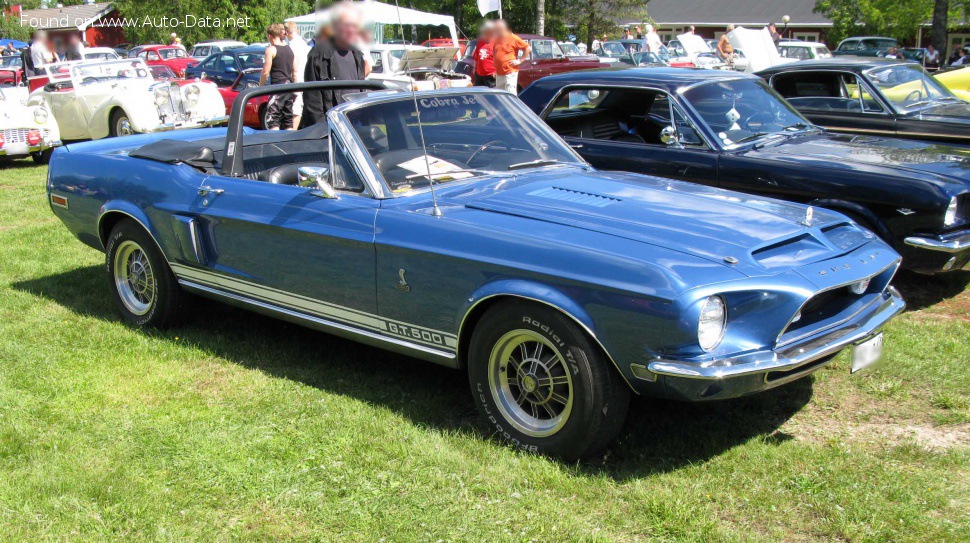
The Iconic Ford Shelby I Cabrio GT 350 4.7 V8 (310 Hp): An American Performance Legend
The Ford Shelby I Cabrio GT 350 4.7 V8 (310 Hp) represents a pivotal chapter in American automotive history, encapsulating the raw power, distinctive styling, and motorsport pedigree that defined the muscle car era. Introduced in 1966, this convertible variant of the legendary Shelby GT350 was a high-performance derivative of the Ford Mustang, meticulously re-engineered by automotive titan Carroll Shelby and his team at Shelby American. It wasn’t just a Mustang with a bigger engine; it was a race-bred machine adapted for the street, offering an exhilarating open-top driving experience with a potent V8 heart. This generation, often referred to as the Shelby I, cemented the GT350’s status as an automotive icon, blending classic American aesthetics with serious performance credentials.
Engine and Performance: The Heart of the Beast
At the core of the Ford Shelby I Cabrio GT 350’s formidable reputation was its engine: a heavily modified version of Ford’s 289 cubic inch (4.7-liter) Windsor V8. While the standard Mustang GT offered a respectable 271 horsepower, Shelby American engineers took the already robust small-block V8 and unleashed its true potential. Through a series of enhancements, including a high-rise aluminum intake manifold, a larger four-barrel carburetor, and often revised camshafts and cylinder heads, the engine in the GT 350 Cabrio was rated at an impressive 310 horsepower at 6000 rpm. This power output was a significant leap for the era, translating into thrilling acceleration and a distinctive, aggressive exhaust note that became synonymous with Shelby vehicles.
The engine’s torque figures were equally impressive, delivering 328.95 lb.-ft. (446 Nm) at 4200 rpm. This ample torque, available lower in the rev range, provided strong off-the-line performance and formidable mid-range pull, making the GT 350 a force to be reckoned with on both the street and the track. Power was sent to the rear wheels via a robust 4-speed manual transmission, offering drivers direct control over the engine’s output and contributing to the car’s engaging driving dynamics. The powertrain architecture, featuring a front, longitudinally mounted V-engine, was a classic layout for American performance cars, ensuring optimal weight distribution for its time. With a compression ratio of 10.5:1 and a naturally aspirated fuel delivery system relying on a carburettor, the GT 350 exemplified the mechanical simplicity and raw power delivery of classic muscle cars.
Considering its curb weight of 2932.15 lbs. (1330 kg), the GT 350 Cabrio boasted an excellent weight-to-power ratio of 4.3 kg/Hp (233.1 Hp/tonne), highlighting its exceptional performance capabilities. This was a car designed not just for cruising, but for spirited driving and demonstrating American engineering prowess.
Design and Features: Open-Top American Muscle
The Ford Shelby I Cabrio GT 350 carried the unmistakable styling cues of the first-generation Ford Mustang, but with Shelby’s aggressive enhancements. As a two-door cabriolet, it offered the exhilarating experience of open-air motoring, a desirable feature for enthusiasts wanting to fully immerse themselves in the sound and sensation of its powerful V8 engine. The car’s dimensions — a length of 181.61 inches (4613 mm), a width of 68.19 inches (1732 mm), and a height of 51.18 inches (1300 mm) — gave it a powerful stance, while the 107.99-inch (2743 mm) wheelbase provided a stable platform for its performance capabilities.
Aesthetically, the GT 350 Cabrio typically featured distinctive Shelby styling elements. While the convertible models were produced in much smaller numbers than their fastback counterparts, they shared many of the visual and functional upgrades. These included unique badging, often side stripes, and functional scoops or vents. Inside, the GT 350 retained much of the Mustang’s interior but often featured Shelby-specific instrumentation, a wood-rimmed steering wheel, and upgraded seating to better support spirited driving. The 4-seat configuration made it a practical, albeit high-performance, option for those wanting to share the thrill.
In terms of its chassis and braking, the GT 350 received significant upgrades over a standard Mustang. While the rear brakes remained drums, the front was equipped with more effective disc brakes, a crucial enhancement for managing the car’s increased performance. The suspension was also revised for improved handling, making the GT 350 more agile and responsive than the typical muscle car of its era. These modifications transformed the Mustang from a pony car into a true sports car contender, capable of holding its own against more established European marques.
Technical Specifications: Ford Shelby I Cabrio GT 350 4.7 V8 (310 Hp)
| Category | Specification | Value |
|---|---|---|
| General Information | ||
| Brand | Ford | |
| Model | Shelby | |
| Generation | Shelby I Cabrio | |
| Type (Engine) | GT 350 4.7 V8 (310 Hp) | |
| Start of production | 1966 year | |
| End of production | 1970 year | |
| Powertrain Architecture | Internal Combustion engine | |
| Body type | Cabriolet | |
| Seats | 4 | |
| Doors | 2 | |
| Performance Specs | ||
| Fuel Type | Petrol (Gasoline) | |
| Weight-to-power ratio | 4.3 kg/Hp, 233.1 Hp/tonne | |
| Weight-to-torque ratio | 3 kg/Nm, 335.3 Nm/tonne | |
| Engine Specs | ||
| Power | 310 Hp @ 6000 rpm. | |
| Power per liter | 65.6 Hp/l | |
| Torque | 446 Nm @ 4200 rpm. (328.95 lb.-ft. @ 4200 rpm.) | |
| Engine layout | Front, Longitudinal | |
| Engine displacement | 4727 cm3 (288.46 cu. in.) | |
| Number of cylinders | 8 | |
| Engine configuration | V-engine | |
| Cylinder Bore | 101.6 mm (4 in.) | |
| Piston Stroke | 72.89 mm (2.87 in.) | |
| Compression ratio | 10.5:1 | |
| Number of valves per cylinder | 2 | |
| Fuel injection system | Carburettor | |
| Engine aspiration | Naturally aspirated engine | |
| Space, Volume and Weights | ||
| Kerb Weight | 1330 kg (2932.15 lbs.) | |
| Fuel tank capacity | 61 l (16.11 US gal) | |
| Dimensions | ||
| Length | 4613 mm (181.61 in.) | |
| Width | 1732 mm (68.19 in.) | |
| Height | 1300 mm (51.18 in.) | |
| Wheelbase | 2743 mm (107.99 in.) | |
| Front track | 1435 mm (56.5 in.) | |
| Rear (Back) track | 1448 mm (57.01 in.) | |
| Minimum turning circle (turning diameter) | 11.6 m (38.06 ft.) | |
| Drivetrain, Brakes and Suspension Specs | ||
| Drivetrain Architecture | The Internal combustion engine (ICE) drives the rear wheels of the vehicle. | |
| Drive wheel | Rear wheel drive | |
| Number of gears and type of gearbox | 4 gears, manual transmission | |
| Front brakes | Disc | |
| Rear brakes | Drum | |
Legacy and Market Impact: A Coveted Classic
The Ford Shelby I Cabrio GT 350 4.7 V8 (310 Hp), produced from 1966 to 1970, carved out a significant legacy in the annals of American automotive history. It was more than just a performance package for the Mustang; it was a statement of intent from Ford and Carroll Shelby, showcasing their ambition to dominate both on the racetrack and in the burgeoning muscle car market. While the convertible GT350s were produced in much lower numbers than the fastbacks, they represent some of the most desirable and collectible variants of the first-generation Shelby Mustangs.
In its primary market, the United States, the GT 350 Cabrio faced stiff competition from other high-performance machines of the era. Rivals included Chevrolet’s Corvette, often seen as a more dedicated sports car, as well as other muscle car offerings like the Chevrolet Camaro Z/28, Pontiac GTO, and Plymouth Barracuda. However, the Shelby GT 350 distinguished itself with its unique blend of European sports car handling sensibilities (owing to Shelby’s racing background) and raw American V8 power. Its motorsport success, particularly in SCCA (Sports Car Club of America) racing, further enhanced its reputation and desirability.
Today, the Ford Shelby I Cabrio GT 350 4.7 V8 (310 Hp) is a highly sought-after classic car, commanding premium prices at auction and among collectors. Its historical significance lies in its role as a progenitor of the muscle car phenomenon, a testament to Carroll Shelby’s engineering genius, and a symbol of American automotive prowess during a golden age of performance. The limited production numbers of the convertible variant, combined with its iconic styling and potent powertrain, ensure its place as a cherished piece of automotive heritage. It continues to inspire new generations of enthusiasts and serves as a benchmark for high-performance American automobiles.
