The Peugeot 307 CC (facelift 2005) 2.0i (177 Hp): A French Open-Air Statement
The Peugeot 307 CC (facelift 2005) represents a significant chapter in the evolution of the coupe-cabriolet segment, particularly within the European market. Launched as part of the refreshed 307 lineup in 2005, this model continued Peugeot’s tradition of offering stylish, functional, and accessible open-top motoring. The “CC” designation, standing for “Coupe Cabriolet,” highlighted its defining characteristic: a sophisticated electrically retractable hardtop that transformed the car from a sleek two-door coupe into an elegant four-seater convertible with the push of a button. This innovative design, pioneered by Mercedes-Benz with the SLK and popularized by Peugeot with its earlier 206 CC, brought the security and refinement of a fixed-roof coupe together with the exhilaration of a convertible, all without the compromises typically associated with soft-top designs.
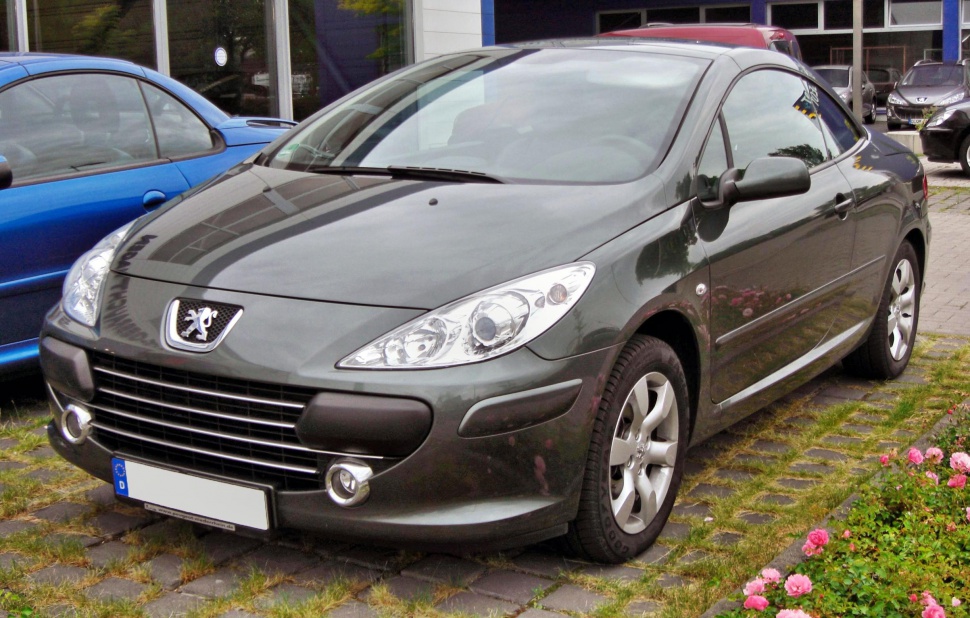
The 2005 facelift brought subtle but impactful changes to the 307 CC, aligning its aesthetics more closely with Peugeot’s contemporary design language, especially the larger 407. These updates included a redesigned front fascia with more aggressive headlights, a larger grille, and revised bumper treatments, giving the car a more sophisticated and modern appearance. Positioned as a stylish and practical lifestyle vehicle, the Peugeot 307 CC aimed to capture the hearts of consumers seeking a blend of everyday usability and weekend leisure, carving out a niche in a highly competitive European compact car market. This particular variant, equipped with the potent 2.0-liter, 177 horsepower engine, offered a more performance-oriented experience within the range, appealing to drivers looking for a bit more zest from their open-top cruiser.
Engine & Performance: The 2.0-liter Powerplant in the Peugeot 307 CC
At the heart of the more performance-focused Peugeot 307 CC (facelift 2005) was the RFK EW10J4S engine, a naturally aspirated 2.0-liter (1997 cm³ or 121.86 cu. in.) inline four-cylinder gasoline unit. This powerplant was engineered to deliver a spirited driving experience while maintaining a reasonable level of efficiency for its class. Generating a robust 177 horsepower at a relatively high 7000 rpm, the engine showcased a willingness to rev, indicative of its sporty character. Torque output stood at 202 Nm (148.99 lb.-ft.) delivered at 4750 rpm, providing a good mid-range pull that made for engaging driving, particularly on winding European roads.
Power was channeled to the front wheels via a 5-speed manual transmission, a common and engaging setup for its time, allowing drivers direct control over the engine’s output. This combination enabled the 307 CC 2.0i to accelerate from 0 to 60 mph in a respectable 8.9 seconds (0-100 km/h in 9.4 seconds), with a top speed of 127.38 mph (205 km/h). While not a pure sports car, these figures were competitive for a compact coupe-cabriolet and provided ample performance for both city driving and highway cruising.
Fuel economy figures for the 2.0i (177 Hp) model were rated at 26.7 US mpg combined (8.8 l/100 km), with urban consumption at 19 US mpg (12.4 l/100 km) and extra-urban at 34.6 US mpg (6.8 l/100 km). These figures, while not groundbreaking by today’s standards, were acceptable for a naturally aspirated engine of its displacement and power output in the mid-2000s. The engine adhered to the Euro 4 emission standard, reflecting its compliance with the environmental regulations of its production era.
Design & Features: The Coupe-Cabriolet Aesthetic
The defining feature of the Peugeot 307 CC, beyond its engine, was its sophisticated coupe-cabriolet body type. Measuring 171.65 inches (4360 mm) in length, 69.25 inches (1759 mm) in width, and 56.06 inches (1424 mm) in height, the car presented a balanced and attractive silhouette whether its roof was up or down. The electrically operated hardtop was a marvel of engineering for its time, transforming the vehicle from a rigid-roof coupe into an open-air convertible in approximately 25 seconds, stowing neatly into the trunk.
Inside, the 307 CC offered seating for four, though the rear seats were best suited for children or short journeys for adults, a common characteristic of compact 2+2 convertibles. The interior design of the facelifted model saw improvements in material quality and ergonomics, aiming for a more premium feel. Standard features for the 2.0i variant typically included automatic climate control, power windows, and a decent audio system, along with safety features such as ABS (Anti-lock Braking System) and multiple airbags, which were becoming standard across European vehicles. The front brakes were ventilated discs, complemented by solid disc brakes at the rear, providing adequate stopping power for the vehicle’s 3478.89 lbs (1578 kg) kerb weight.
Practicality, while secondary to style in a coupe-cabriolet, was still considered. The trunk space varied significantly depending on the roof’s position: 12.36 cu. ft. (350 liters) with the roof up, shrinking to 7.2 cu. ft. (204 liters) when the roof was stowed. This compromise was inherent to the design but provided sufficient space for daily errands or light luggage for a weekend getaway. The car rode on 17-inch wheels, fitted with 205/50 R17 V tires, contributing to both its visual appeal and handling dynamics.
Technical Specifications: Peugeot 307 CC (facelift 2005) 2.0i (177 Hp)
| Category | Specification | US Equivalent (where applicable) |
|---|---|---|
General Information |
||
| Brand | Peugeot | |
| Model | 307 CC (facelift 2005) | |
| Type (Engine) | 2.0i (177 Hp) | |
| Production Start | 2005 | |
| Production End | 2009 | |
| Powertrain Architecture | Internal Combustion Engine | |
| Body Type | Coupe – Cabriolet | |
| Seats | 4 | |
| Doors | 2 | |
Performance Specs |
||
| Fuel Consumption (Urban) | 12.4 l/100 km | 19 US mpg |
| Fuel Consumption (Extra Urban) | 6.8 l/100 km | 34.6 US mpg |
| Fuel Consumption (Combined) | 8.8 l/100 km | 26.7 US mpg |
| CO2 Emissions | 210 g/km | |
| Fuel Type | Petrol (Gasoline) | |
| Acceleration 0 – 60 mph | 8.9 sec | |
| Acceleration 0 – 100 km/h | 9.4 sec | |
| Maximum Speed | 205 km/h | 127.38 mph |
| Emission Standard | Euro 4 | |
| Weight-to-Power Ratio | 8.9 kg/Hp | 112.2 Hp/tonne |
| Weight-to-Torque Ratio | 7.8 kg/Nm | 128 Nm/tonne |
Engine Specs |
||
| Power | 177 Hp @ 7000 rpm | |
| Power per liter | 88.6 Hp/l | |
| Torque | 202 Nm @ 4750 rpm | 148.99 lb.-ft. @ 4750 rpm |
| Engine Layout | Front, Transverse | |
| Engine Model/Code | RFK EW10J4S | |
| Engine Displacement | 1997 cm³ | 2.0 liters / 121.86 cu. in. |
| Number of Cylinders | 4 | |
| Engine Configuration | Inline | |
| Cylinder Bore | 85 mm | 3.35 in. |
| Piston Stroke | 88 mm | 3.46 in. |
| Compression Ratio | 11:1 | |
| Valves per Cylinder | 4 | |
| Fuel Injection System | Multi-port manifold injection | |
| Engine Aspiration | Naturally aspirated | |
| Valvetrain | DOHC | |
| Engine Oil Capacity | 5.5 l | 5.81 US qt |
| Coolant Capacity | 6.6 l | 6.97 US qt |
Space, Volume and Weights |
||
| Kerb Weight | 1578 kg | 3478.89 lbs. |
| Maximum Weight | 1950 kg | 4299.01 lbs. |
| Maximum Load | 372 kg | 820.12 lbs. |
| Trunk Space (Minimum) | 204 l | 7.2 cu. ft. |
| Trunk Space (Maximum) | 350 l | 12.36 cu. ft. |
| Fuel Tank Capacity | 60 l | 15.85 US gal |
| Permitted Trailer Load (with brakes) | 1300 kg | 2866.01 lbs. |
| Permitted Trailer Load (without brakes) | 730 kg | 1609.37 lbs. |
Dimensions |
||
| Length | 4360 mm | 171.65 in. |
| Width | 1759 mm | 69.25 in. |
| Height | 1424 mm | 56.06 in. |
| Wheelbase | 2608 mm | 102.68 in. |
| Front Track | 1497 mm | 58.94 in. |
| Rear Track | 1492 mm | 58.74 in. |
| Ride Height (Ground Clearance) | 120 mm | 4.72 in. |
| Drag Coefficient (Cd) | 0.31 | |
| Minimum Turning Circle | 11.1 m | 36.42 ft. |
Drivetrain, Brakes and Suspension |
||
| Drivetrain Architecture | Front-wheel drive, Internal Combustion Engine | |
| Drive Wheel | Front wheel drive | |
| Number of Gears & Type | 5 gears, manual transmission | |
| Front Brakes | Ventilated discs | |
| Rear Brakes | Disc | |
| Assisting Systems | ABS (Anti-lock Braking System) | |
| Steering Type | Steering rack and pinion | |
| Tire Size | 205/50 R17 V | |
| Wheel Rims Size | 17 inches | |
Legacy & Market Impact of the Peugeot 307 CC
The Peugeot 307 CC, particularly the facelifted 2005 model with its more powerful 2.0i engine, played a crucial role in consolidating Peugeot’s position as a leader in the affordable coupe-cabriolet segment in Europe. While not sold in the United States, its influence was felt across the Atlantic as the retractable hardtop concept gained traction globally. In its primary European market, the 307 CC faced competition from a growing number of rivals, including the Renault Mégane CC, Opel Astra TwinTop, and Volkswagen Eos. What set the Peugeot apart was its blend of distinctive French styling, a relatively spacious four-seat cabin (for a convertible), and the proven reliability of its retractable hardtop mechanism.
The 307 CC built upon the success of its smaller sibling, the 206 CC, demonstrating that the coupe-cabriolet concept could be scaled up to a C-segment vehicle without sacrificing aesthetic appeal or functional integrity. It was praised for its comfort and refinement, especially with the roof up, offering a quieter and more secure cabin than traditional soft-top convertibles. The 2.0-liter, 177 Hp variant provided a much-needed performance boost, appealing to those who found the smaller engines somewhat lacking in dynamism for spirited driving. Its front-wheel-drive architecture and well-tuned suspension offered a balanced ride, leaning more towards comfort than outright sportiness, which suited its target demographic well.
Ultimately, the Peugeot 307 CC carved out a significant niche, demonstrating Peugeot’s ability to innovate and deliver stylish, aspirational vehicles to a broad audience. Its production run from 2005 to 2009 saw it remain a popular choice for consumers looking for a versatile and fashionable car that could adapt to varying weather conditions with ease. The 307 CC’s legacy endures as a testament to the era when retractable hardtops became a mainstream feature, influencing future designs and solidifying Peugeot’s reputation for creating distinctive and engaging automobiles.