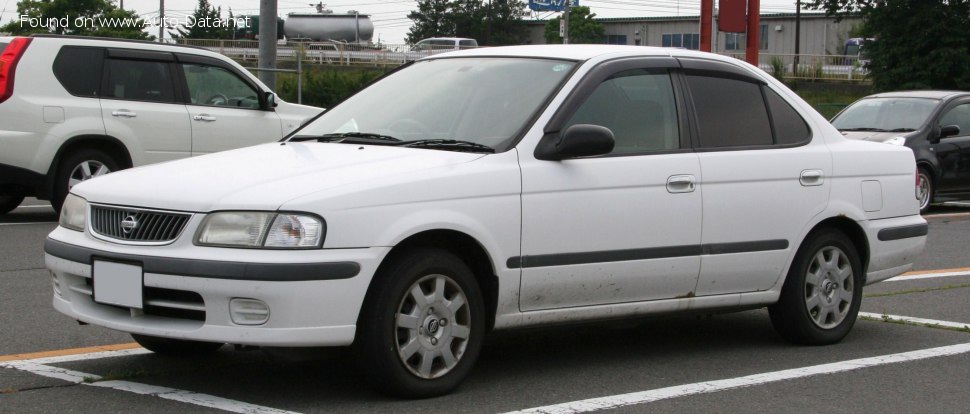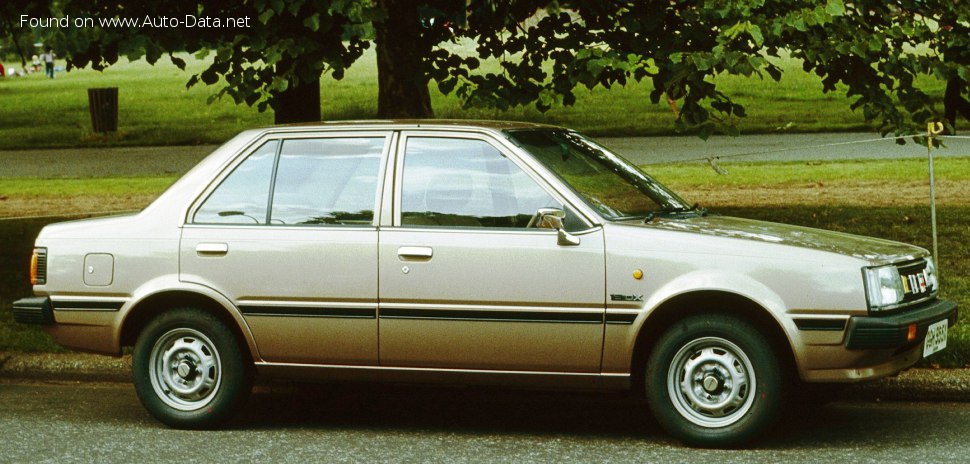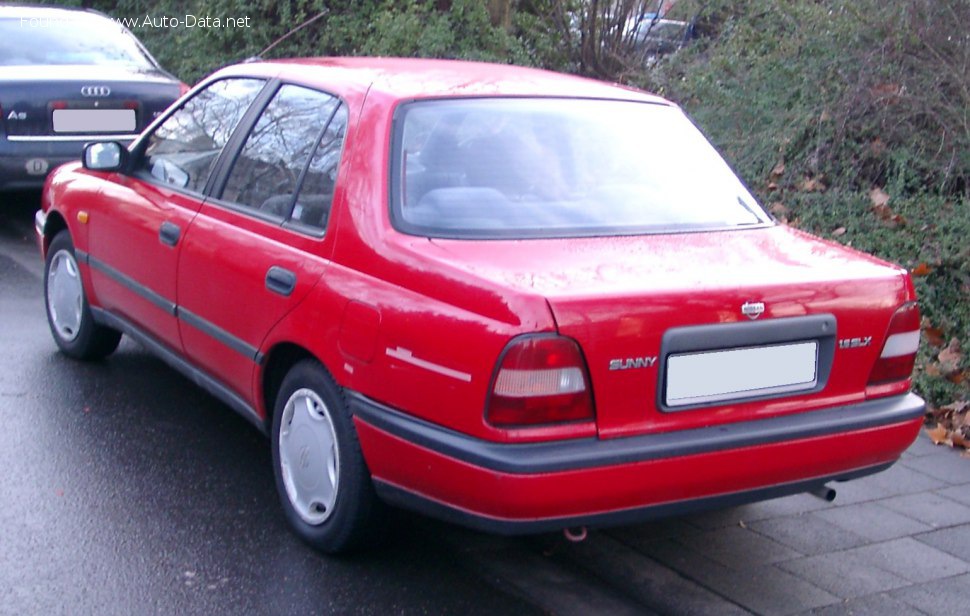
Nissan Sunny III (N14) 1.6 16V (90 Hp): A Global Compact Standard
The Nissan Sunny III, internally designated N14, represents a pivotal generation for Nissan’s long-running compact car series. Produced from 1990 to 1992, the Nissan Sunny III (N14) 1.6 16V (90 Hp) variant served as a cornerstone of the brand’s offerings in numerous international markets, particularly across Europe and Asia. While the Sunny nameplate itself had a significant global presence, this specific N14 generation, in its sedan configuration, was largely marketed outside of North America, where its platform twin was known as the Nissan Sentra. The N14 Sunny was designed as a reliable, economical, and practical compact vehicle, upholding Nissan’s reputation for engineering robust and dependable transportation for the masses. This particular model, equipped with a 1.6-liter, 16-valve engine, offered a balance of efficiency and adequate performance for daily commuting and family duties, solidifying its position in the fiercely competitive compact segment of the early 1990s.
Engine and Performance of the Nissan Sunny III (N14)
At the heart of the Nissan Sunny III (N14) 1.6 16V (90 Hp) sedan lay Nissan’s venerable GA16DE engine. This inline four-cylinder powerplant, featuring a Dual Overhead Camshaft (DOHC) valvetrain with 16 valves (four per cylinder), was a testament to Nissan’s commitment to modern engine technology even in its compact offerings. With an engine displacement of 1,597 cubic centimeters (approximately 97.45 cubic inches or 1.6 liters), the GA16DE delivered a respectable 90 horsepower at 6,000 revolutions per minute. The engine’s power per liter stood at 56.4 Hp/l, indicating a well-engineered, naturally aspirated unit for its time.
Torque output was equally important for real-world drivability, and the GA16DE produced 136 Newton-meters (approximately 100.31 lb-ft) at a relatively accessible 4,000 rpm. This broad torque band, coupled with the engine’s multi-port manifold injection system, ensured smooth power delivery across the rev range, making the Sunny feel responsive in urban traffic and capable on open roads. The engine’s front, transverse layout, typical for front-wheel-drive compact cars, optimized interior space and simplified the drivetrain architecture.
Mated to a standard five-speed manual transmission, the 90 horsepower and 100 lb-ft of torque were efficiently channeled to the front wheels. With a relatively light curb weight of 2,116.44 pounds (960 kg), the Sunny achieved a weight-to-power ratio of 10.7 kg/Hp (approximately 23.59 lbs/Hp) and a weight-to-torque ratio of 7.1 kg/Nm (approximately 15.65 lbs/Nm). These figures, while not indicative of a sports car, positioned the N14 Sunny as a sprightly and economical choice in its segment, capable of offering a satisfying driving experience for its target audience focused on reliability and fuel efficiency. The GA16DE engine’s robust design and widespread use across various Nissan models also contributed to its reputation for longevity and ease of maintenance.
Design and Features
The Nissan Sunny III (N14) sedan sported a clean, functional design aesthetic that was characteristic of early 1990s Japanese automotive styling. Its four-door, five-seat configuration emphasized practicality and family utility. Measuring 166.54 inches (4230 mm) in length, 66.54 inches (1690 mm) in width, and 54.92 inches (1395 mm) in height, the N14 Sunny was a true compact, designed to navigate congested city streets with ease while still offering a comfortable cabin. The wheelbase of 95.67 inches (2430 mm) contributed to a stable ride and maximized interior volume within its modest footprint.
Inside, the Sunny N14 focused on ergonomic simplicity and durability. The five-seat layout provided adequate space for occupants, with practical considerations like ample headroom and legroom for its class. The trunk offered a generous 15.54 cubic feet (440 liters) of cargo space, making it a highly practical vehicle for shopping, family trips, or daily commuting needs. Fuel tank capacity was 13.21 US gallons (50 liters), providing a good cruising range, especially given the engine’s inherent fuel efficiency.
From a chassis perspective, the N14 featured a straightforward but effective suspension setup: wishbones at the front and spring struts at the rear. This combination provided a comfortable ride quality balanced with predictable handling. Braking duties were handled by ventilated discs at the front, offering superior heat dissipation, and traditional drum brakes at the rear. For enhanced safety, the N14 Sunny could be equipped with an Anti-lock Braking System (ABS), a significant safety feature for the early 1990s that helped prevent wheel lock-up during hard braking. Steering was managed by a rack and pinion system, assisted by hydraulic power steering, ensuring light and effortless maneuverability, particularly at low speeds. The vehicle rode on 175/70 R14 tires, a common size for compact cars of the era, providing a good blend of grip, comfort, and cost-effectiveness.
Technical Specifications: Nissan Sunny III (N14) 1.6 16V (90 Hp)
| Category | Specification | Metric / US Equivalent |
|---|---|---|
| General Information | ||
| Brand | Nissan | |
| Model | Sunny | |
| Generation | Sunny III (N14) | |
| Type (Engine) | 1.6 16V (90 Hp) | |
| Start of Production | 1990 year | |
| End of Production | 1992 year | |
| Powertrain Architecture | Internal Combustion engine | |
| Body Type | Sedan | 4 Doors |
| Seats | 5 | |
| Performance Specs | ||
| Fuel Type | Petrol (Gasoline) | |
| Weight-to-power ratio | 10.7 kg/Hp | 23.59 lbs/Hp |
| Weight-to-torque ratio | 7.1 kg/Nm | 15.65 lbs/lb-ft |
| Engine Specs | ||
| Power | 90 Hp @ 6000 rpm | |
| Power per liter | 56.4 Hp/l | |
| Torque | 136 Nm @ 4000 rpm | 100.31 lb-ft @ 4000 rpm |
| Engine Layout | Front, Transverse | |
| Engine Model/Code | GA16DE | |
| Engine Displacement | 1597 cm³ | 1.6 Liters / 97.45 cu. in. |
| Number of Cylinders | 4 | Inline configuration |
| Cylinder Bore | 76 mm | 2.99 in. |
| Piston Stroke | 88 mm | 3.46 in. |
| Compression Ratio | 9.8:1 | |
| Valves per Cylinder | 4 | 16 valves total |
| Fuel Injection System | Multi-port manifold injection | |
| Engine Aspiration | Naturally aspirated engine | |
| Valvetrain | DOHC | |
| Space, Volume and Weights | ||
| Kerb Weight | 960 kg | 2116.44 lbs |
| Trunk (boot) Space – Minimum | 440 l | 15.54 cu. ft. |
| Fuel Tank Capacity | 50 l | 13.21 US gal |
| Dimensions | ||
| Length | 4230 mm | 166.54 in. |
| Width | 1690 mm | 66.54 in. |
| Height | 1395 mm | 54.92 in. |
| Wheelbase | 2430 mm | 95.67 in. |
| Front Track | 1445 mm | 56.89 in. |
| Rear (Back) Track | 1430 mm | 56.3 in. |
| Drivetrain, Brakes and Suspension Specs | ||
| Drivetrain Architecture | Internal Combustion engine (ICE) drives the front wheels. | Front-wheel drive |
| Drive Wheel | Front wheel drive | |
| Number of Gears and Type of Gearbox | 5 gears, manual transmission | |
| Front Suspension | Wishbone | |
| Rear Suspension | Spring Strut | |
| Front Brakes | Ventilated discs | |
| Rear Brakes | Drum | |
| Assisting Systems | ABS (Anti-lock braking system) | Optional |
| Steering Type | Steering rack and pinion | |
| Power Steering | Hydraulic Steering | |
| Tires Size | 175/70 R14 |
Legacy and Market Impact of the Nissan Sunny III (N14)
The Nissan Sunny III (N14) 1.6 16V (90 Hp) solidified its place as a quintessential compact car of the early 1990s, particularly in markets where durability, fuel economy, and value for money were paramount. While the Sunny name was not widely used in the United States for this generation (where the platform was largely sold as the Sentra), the N14 generation, including this 1.6-liter variant, was a ubiquitous sight across Europe, Asia, and other global markets. Its primary competitors varied by region but broadly included other Japanese stalwarts like the Toyota Corolla, Honda Civic, and Mazda 323, as well as European rivals such as the Opel Astra, Ford Escort, and Volkswagen Golf/Jetta.
What set the Sunny N14 apart was its reputation for unwavering reliability. Nissan’s engineering, particularly with the GA16DE engine, ensured that these vehicles could withstand years of rigorous daily use with minimal fuss. This reliability, coupled with its straightforward mechanicals, made the Sunny a favorite among private owners and fleet operators alike. Its conservative yet appealing design ensured it didn’t quickly fall out of fashion, contributing to strong resale values in many markets.
The N14 generation also marked a period of increasing sophistication in the compact segment. Features like multi-port fuel injection, DOHC engines, and the availability of ABS, even if optional, showcased a move towards more advanced technology trickling down from larger, more expensive cars. The Sunny offered these advancements in an accessible package, making modern driving conveniences available to a broader audience.
In terms of historical significance, the Nissan Sunny III (N14) represents a benchmark for Nissan’s global strategy in the compact car segment. It demonstrated Nissan’s ability to produce a vehicle that was globally competitive, adaptable to various market needs, and built to last. Its legacy is one of quiet competence, proving that a car doesn’t need to be flashy or powerful to be profoundly impactful. It provided dependable transportation for millions, reinforcing Nissan’s image as a producer of practical, quality vehicles, and remains a testament to the robust engineering of early 1990s Japanese automobiles. Even today, many N14 Sunnys can still be found on roads around the world, a true testament to their enduring build quality and design.