Introduction: The Toyota HiAce VI (H300) Commuter L1H1
The Toyota HiAce VI (H300) Commuter L1H1 represents the latest iteration of Toyota’s globally renowned light commercial van, a vehicle celebrated for its unwavering reliability, robust construction, and versatile utility across diverse markets. Launched in 2019, the sixth-generation HiAce, internally designated H300, marked a significant departure from its predecessors with a new semi-bonneted design, enhancing safety, comfort, and serviceability. This particular variant, the Commuter L1H1, is configured as a passenger-focused minibus, designed to efficiently transport between 10 and 15 occupants, making it a cornerstone for public transport, shuttle services, and commercial fleet operations in numerous countries worldwide.
While the HiAce series has never been a mainstream offering in the United States market, where different commercial vehicle preferences and regulations prevail, its impact on global logistics and passenger transport is undeniable. In regions such as Asia, Oceania, Africa, Latin America, and parts of Europe, the Toyota HiAce VI (H300) Commuter L1H1 with its 2.8 D-4D (177 Hp) automatic powertrain is a ubiquitous sight, serving as everything from airport shuttles and hotel transfers to intercity buses and school transport. Its reputation as a workhorse, capable of enduring challenging conditions and high mileage, has cemented its status as a cornerstone of commercial mobility for businesses and individuals alike.
Engine and Performance: Powering the Toyota HiAce VI (H300) Commuter L1H1
The 2.8 D-4D Powertrain
At the heart of the Toyota HiAce VI (H300) Commuter L1H1 is the robust 2.8-liter D-4D (Direct Injection 4-stroke Common Rail Diesel) engine, an inline four-cylinder unit internally designated 1GD-FTV. This powerplant is engineered for a demanding commercial environment, prioritizing durability, fuel efficiency, and substantial torque output, crucial for moving heavy loads and multiple passengers. The engine delivers a respectable 177 horsepower (Hp) at 3400 revolutions per minute (rpm), providing ample power for both urban driving and highway cruising.
More critically for a commercial vehicle, the 2.8 D-4D engine produces a formidable 331.9 lb.-ft. (450 Nm) of torque, available across a broad and usable band from 1600 to 2400 rpm. This wide torque plateau ensures strong acceleration from a standstill, effortless climbing of inclines even when fully loaded, and reduced need for frequent gear changes, contributing to a smoother and more economical driving experience. The engine’s architecture includes a sophisticated Commonrail fuel injection system, a turbocharger with an intercooler, and a Double Overhead Camshaft (DOHC) valvetrain with 4 valves per cylinder, all contributing to its efficient combustion and power delivery.
Mated to this potent diesel engine is a smooth-shifting 6-speed automatic transmission. This combination provides a refined driving experience, reducing driver fatigue in heavy traffic and optimizing fuel consumption. The powertrain architecture features a front, longitudinal engine layout driving the rear wheels, a traditional and proven setup for commercial vans that ensures excellent traction under load and robust towing capabilities. This particular HiAce variant boasts a maximum permissible trailer load of 3306.93 lbs. (1500 kg) with brakes, further underscoring its utility.
In terms of environmental considerations, the 2.8 D-4D engine incorporates modern technologies such as a Start & Stop System and a Particulate Filter. These features help the vehicle meet contemporary emissions standards, reflected in its CO2 emissions of 242 g/km (WLTP). Fuel economy for the Toyota HiAce VI (H300) Commuter L1H1 is rated at 25.6 US mpg (9.2 liters per 100 km) on the WLTP combined cycle, a commendable figure for a vehicle of its size and capacity, especially when considering its heavy-duty applications. With a 18.49 US gallon (70 liter) fuel tank, it offers a substantial operating range between refills.
Design and Features: Functionality and Practicality
Exterior and Interior Design
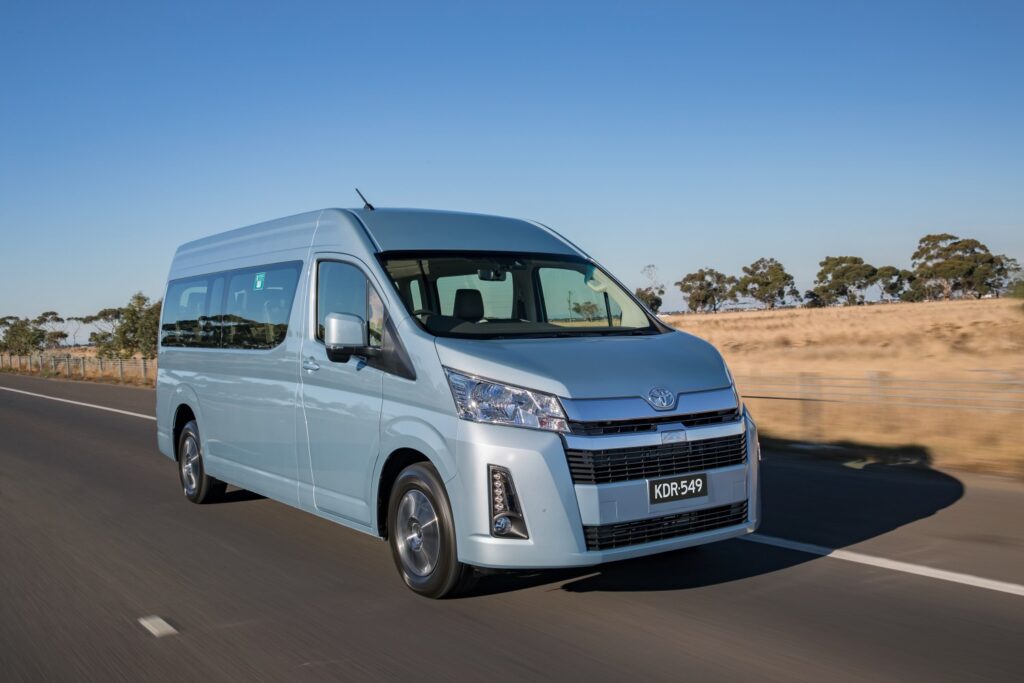
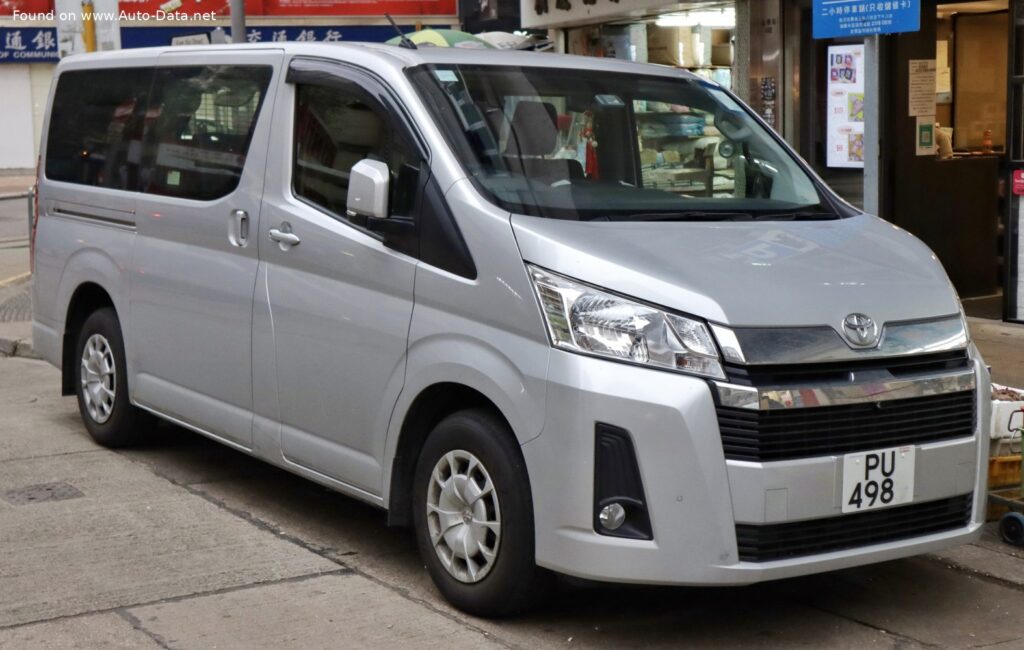
The sixth-generation Toyota HiAce VI (H300) Commuter L1H1 adopted a significant design overhaul from its predecessors, moving away from the traditional “cab-over” layout to a semi-bonneted or “long-nose” configuration. This design change was primarily driven by enhanced safety regulations and improved occupant comfort. The new front end provides a crumple zone, significantly improving collision protection for the driver and front passenger. Aesthetically, the design is modern and purposeful, with a broad grille and integrated headlights that convey a sense of strength and capability.
Measuring 207.28 inches (5265 mm) in length, 76.77 inches (1950 mm) in width, and 78.35 inches (1990 mm) in height, with a substantial wheelbase of 126.38 inches (3210 mm), the HiAce Commuter L1H1 maximizes interior volume for passenger accommodation. The L1H1 designation typically signifies a standard length and standard roof height configuration within the HiAce lineup, balancing passenger capacity with maneuverability. With 4 doors and seating for 10-15 passengers, this variant is explicitly designed for high-capacity people-moving, featuring large windows for improved visibility and a welcoming cabin environment. The minimum turning circle of 36.09 ft (11 m) is impressive for a vehicle of its size, aiding maneuverability in tight urban environments.
Chassis, Suspension, and Safety
Underneath its robust body, the Toyota HiAce VI (H300) Commuter L1H1 is built on a durable chassis designed for heavy-duty use. The front suspension employs an independent McPherson strut setup with coil springs and an anti-roll bar, providing a balance of ride comfort and stable handling. At the rear, a rigid axle suspension with leaf springs is utilized, a time-tested configuration known for its exceptional load-carrying capacity and durability, essential for a vehicle that often operates at or near its maximum payload.
Braking performance is handled by ventilated discs at the front, offering strong and consistent stopping power, complemented by an Anti-lock Braking System (ABS) for enhanced control during emergency braking maneuvers. The hydraulic rack and pinion steering system provides precise control and feedback, crucial for a vehicle of this size and weight. The HiAce rides on 215/70 R16 tires mounted on 7J x 16 wheel rims, a practical choice that offers a good balance of load capacity, ride comfort, and tire availability in its primary markets. The vehicle’s kerb weight ranges from 5235.98 to 5258.02 lbs. (2375-2385 kg), with a maximum gross weight of 7385.49 lbs. (3350 kg), allowing for a substantial maximum load capacity of 2127.46 to 2149.51 lbs. (965-975 kg).
Technical Specifications
| Category | Specification |
|---|---|
| General Information | |
| Brand | Toyota |
| Model | HiAce |
| Generation | HiAce VI (H300) Commuter L1H1 |
| Engine Type | 2.8 D-4D (177 Hp) Automatic |
| Start of Production | 2019 year |
| Powertrain Architecture | Internal Combustion engine |
| Body Type | Van |
| Seats | 10-15 |
| Doors | 4 |
| Performance Specs | |
| Combined Fuel Consumption (WLTP) | 25.6 US mpg (9.2 l/100 km) |
| CO2 Emissions (WLTP) | 242 g/km |
| Fuel Type | Diesel |
| Weight-to-Power Ratio | 13.4 kg/Hp, 74.5 Hp/tonne |
| Weight-to-Torque Ratio | 5.3 kg/Nm, 189.5 Nm/tonne |
| Engine Specs | |
| Power | 177 Hp @ 3400 rpm |
| Power per liter | 64.2 Hp/l |
| Torque | 331.9 lb.-ft. (450 Nm) @ 1600-2400 rpm |
| Engine Layout | Front, Longitudinal |
| Engine Model/Code | 1GD-FTV |
| Engine Displacement | 168.12 cu. in. (2755 cm3) |
| Number of Cylinders | 4 |
| Engine Configuration | Inline |
| Cylinder Bore | 3.62 in. (92 mm) |
| Piston Stroke | 4.08 in. (103.6 mm) |
| Compression Ratio | 15.6:1 |
| Number of Valves per Cylinder | 4 |
| Fuel Injection System | Diesel Commonrail |
| Engine Aspiration | Turbocharger, Intercooler |
| Valvetrain | DOHC |
| Engine Oil Capacity | 7.5 US qt (7.1 l) |
| Coolant Capacity | 10.25 US qt (9.7 l) |
| Engine Systems | Start & Stop System, Particulate filter |
| Space, Volume and Weights | |
| Kerb Weight | 5235.98 – 5258.02 lbs. (2375-2385 kg) |
| Max. Weight (GVWR) | 7385.49 lbs. (3350 kg) |
| Max Load | 2127.46 – 2149.51 lbs. (965-975 kg) |
| Fuel Tank Capacity | 18.49 US gal (70 l) |
| Permitted Trailer Load with Brakes (12%) | 3306.93 lbs. (1500 kg) |
| Permitted Trailer Load without Brakes | 881.85 lbs. (400 kg) |
| Permitted Towbar Download | 330.69 lbs. (150 kg) |
| Dimensions | |
| Length | 207.28 in. (5265 mm) |
| Width | 76.77 in. (1950 mm) |
| Height | 78.35 in. (1990 mm) |
| Wheelbase | 126.38 in. (3210 mm) |
| Front Track | 65.94 in. (1675 mm) |
| Rear (Back) Track | 65.75 in. (1670 mm) |
| Front Overhang | 37.4 in. (950 mm) |
| Rear Overhang | 43.5 in. (1105 mm) |
| Minimum Turning Circle (Turning Diameter) | 36.09 ft (11 m) |
| Drivetrain, Brakes and Suspension Specs | |
| Drivetrain Architecture | Rear wheel drive |
| Drive Wheel | Rear wheel drive |
| Number of Gears and Type of Gearbox | 6 gears, automatic transmission |
| Front Suspension | Independent, type McPherson with coil spring and anti-roll bar |
| Rear Suspension | Rigid axle suspension, Leaf spring |
| Front Brakes | Ventilated discs |
| Assisting Systems | ABS (Anti-lock braking system) |
| Steering Type | Steering rack and pinion |
| Power Steering | Hydraulic Steering |
| Tires Size | 215/70 R16 |
| Wheel Rims Size | 7J x 16 |
Legacy and Market Impact
Global Reach and Competitors
The Toyota HiAce VI (H300) Commuter L1H1 continues the illustrious legacy of a model line that has been a cornerstone of commercial and public transport for over five decades. Its introduction in 2019 marked a significant evolution, maintaining Toyota’s reputation for building durable, reliable, and cost-effective vehicles that are essential tools for businesses and communities worldwide. In markets where the HiAce thrives, its competitors include a wide array of international and regional players, such as the Ford Transit Custom, Mercedes-Benz Sprinter (in certain markets), Hyundai Starex/H350, Nissan NV350, and various models from Chinese and other Asian manufacturers. What consistently sets the HiAce apart is its perceived bulletproof reliability and strong resale value, factors that are paramount for commercial operators.
The HiAce’s robust build quality, coupled with a powertrain specifically engineered for longevity and efficiency under demanding conditions, makes it an indispensable asset in developing economies and regions with challenging road infrastructure. From bustling city streets to remote rural routes, the Toyota HiAce VI (H300) Commuter L1H1 serves as a lifeline for countless individuals and businesses. It is commonly employed as a shared taxi (known by various local names like “jitney,” “matatu,” or “jeepney”), a school bus, a hotel shuttle, and a general-purpose passenger van for tourism and corporate fleets. Its ability to comfortably and safely transport a significant number of passengers, combined with its renowned low running costs and ease of maintenance, ensures its enduring popularity.
Enduring Reputation
Toyota’s commitment to quality, durability, and reliability (QDR) is perhaps best exemplified by vehicles like the HiAce. This sixth-generation model continues to uphold that tradition, offering a modern package that addresses contemporary demands for safety, comfort, and environmental performance, without compromising on the core values that have made it a global icon. The shift to a semi-bonneted design was a bold move, but one that has been well-received for its tangible benefits in occupant protection and overall refinement.
The Toyota HiAce VI (H300) Commuter L1H1 2.8 D-4D (177 Hp) Automatic is more than just a commercial vehicle; it’s a testament to Toyota’s engineering prowess in creating products that genuinely serve the needs of a diverse global clientele. Its legacy is built on millions of kilometers traveled, countless passengers transported, and an unmatched reputation for dependable service, making it a true workhorse that continues to drive progress in its primary markets around the world.