The Vauxhall Insignia I Saloon (facelift 2013): A European Mid-Size Contender
The Vauxhall Insignia I Saloon, specifically the facelifted model introduced in 2013, represents a significant entry in the competitive European D-segment, or mid-size sedan market. As Vauxhall is the British subsidiary of Opel (itself part of General Motors at the time, later PSA Group, now Stellantis), the Insignia is essentially a rebadged Opel Insignia. While the Vauxhall brand is exclusive to the United Kingdom, its Opel counterpart was sold across continental Europe, and a version of the Insignia was even marketed in North America as the Buick Regal. This particular iteration, the Vauxhall Insignia I Saloon (facelift 2013) with the 2.0 CDTi ecoTEC (130 Hp) engine, was produced from 2013 to 2015, serving as a cornerstone of Vauxhall’s lineup for those seeking a blend of executive styling, practical space, and impressive fuel efficiency, particularly for long-distance driving.
The 2013 facelift brought a refreshed aesthetic and technological updates to the first-generation Insignia, enhancing its appeal in a segment dominated by established rivals. The focus for this diesel variant was on delivering robust performance while maintaining stringent environmental standards and exceptional fuel economy, a crucial consideration for both private buyers and large fleet operators in Europe.
Engineering and Performance of the Vauxhall Insignia I Saloon (facelift 2013)
At the heart of this specific Vauxhall Insignia I Saloon (facelift 2013) model lies the 2.0 CDTi ecoTEC engine, a testament to modern diesel engineering. This powertrain architecture is built around an internal combustion engine, driving the front wheels of the vehicle. The engine itself is a 1,956 cubic centimeter (or approximately 2.0-liter) inline four-cylinder unit, configured transversally at the front of the vehicle. It features a Double Overhead Camshaft (DOHC) valvetrain with four valves per cylinder, optimizing airflow and combustion efficiency.
Key to its performance and efficiency is the advanced diesel common rail fuel injection system, coupled with a turbocharger and intercooler. This setup allows the engine to produce a respectable 130 horsepower at 4000 rpm, providing ample power for daily driving and highway cruising. More significantly for a diesel, it generates a substantial 221.27 lb.-ft. of torque, available across a broad and usable range from 1750 to 2500 rpm. This strong torque output contributes to the car’s impressive tractability and makes overtaking maneuvers feel effortless.
The vehicle is equipped with a precise 6-speed manual transmission, which further aids in maximizing fuel economy and driver engagement. Despite its mid-size dimensions and a curb weight of 3,556.06 pounds, the Insignia 2.0 CDTi ecoTEC delivers competitive acceleration, achieving 0 to 60 mph in an estimated 10.5 seconds. Its maximum speed is rated at 126.76 mph, making it a capable performer on European highways.
The “ecoTEC” designation signifies Vauxhall’s commitment to environmental performance. This model boasts impressive fuel economy figures, with a combined rating of 52.3 US mpg (4.5 liters per 100 km). Urban driving yields 42 US mpg, while extra-urban (highway) driving can achieve an outstanding 60.3 US mpg. These figures, combined with CO2 emissions of 119 g/km, allowed the Insignia to meet the Euro 5 emission standard, making it a cost-effective and environmentally conscious choice for its time. The engine also features a particulate filter as standard, further reducing harmful emissions.
Design and Features
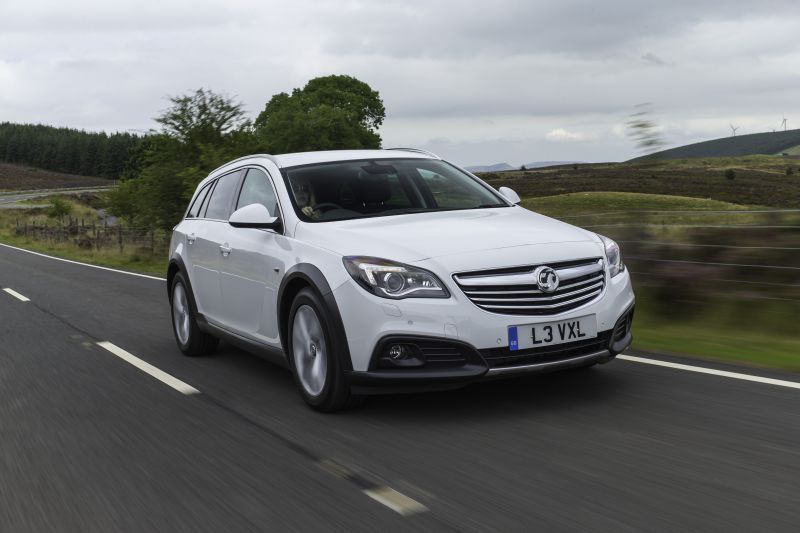
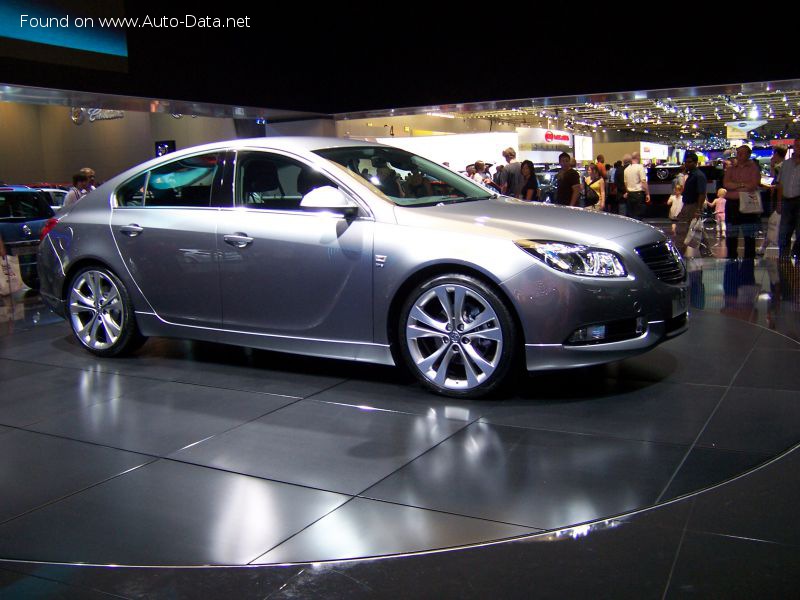
The Vauxhall Insignia I Saloon (facelift 2013) retains the sleek and flowing design language of the original Insignia but introduces several refinements that elevate its executive appeal. The sedan body type, known as a “saloon” in the UK, offers a sophisticated profile with four doors and seating for five occupants. The facelift brought updated front and rear fascias, including a wider, lower grille, revised headlight designs often incorporating LED daytime running lights, and restyled taillights that gave the car a more modern and cohesive look. Its overall length of 190.63 inches and width of 73.07 inches (82.05 inches including mirrors) contribute to a commanding road presence, while the 107.76-inch wheelbase ensures a stable ride and generous interior space.
Inside, the Insignia focused on comfort and practicality. The cabin received upgrades during the facelift, notably in the infotainment system and center console design, aiming for a more intuitive and premium feel. With 500 liters (17.66 cubic feet) of trunk space as standard, expandable to 1,015 liters (35.84 cubic feet) with the rear seats folded, the Insignia offered ample cargo capacity, making it suitable for family trips or business travel.
Safety features were comprehensive for its class and era, including an Anti-lock Braking System (ABS) as standard. The braking system itself comprises ventilated discs at the front and solid discs at the rear, ensuring confident stopping power. The suspension setup features an independent McPherson strut system with coil springs and an anti-roll bar at the front, paired with an independent multi-link suspension at the rear. This combination provides a comfortable yet composed ride, balancing handling dynamics with passenger comfort. The vehicle rides on 215/60 R16 tires mounted on 16-inch wheel rims, a common specification that balances ride comfort and cost-effectiveness.
Technical Specifications
| Category | Specification |
|---|---|
| Brand | Vauxhall |
| Model | Insignia I Saloon (facelift 2013) |
| Engine Type | 2.0 CDTi ecoTEC (130 Hp) |
| Production Years | 2013 – 2015 |
| Body Type | Sedan |
| Doors / Seats | 4 / 5 |
| Fuel Type | Diesel |
| Power | 130 Hp @ 4000 rpm |
| Torque | 300 Nm (221.27 lb.-ft.) @ 1750-2500 rpm |
| Engine Displacement | 1956 cm3 (119.36 cu. in.) |
| Number of Cylinders | 4, Inline |
| Fuel Injection System | Diesel Commonrail |
| Engine Aspiration | Turbocharger, Intercooler |
| Valvetrain | DOHC, 4 valves per cylinder |
| Drivetrain Architecture | Front-wheel drive |
| Gearbox | 6-speed manual transmission |
| Acceleration 0-60 mph | 10.5 seconds |
| Maximum Speed | 126.76 mph (204 km/h) |
| Fuel Economy (Combined) | 52.3 US mpg (4.5 l/100 km) |
| Fuel Economy (Urban) | 42 US mpg (5.6 l/100 km) |
| Fuel Economy (Extra Urban) | 60.3 US mpg (3.9 l/100 km) |
| CO2 Emissions | 119 g/km |
| Emission Standard | Euro 5 |
| Kerb Weight | 3556.06 lbs (1613 kg) |
| Max. Weight | 4684.82 lbs (2125 kg) |
| Max Load | 1128.77 lbs (512 kg) |
| Length | 190.63 in. (4842 mm) |
| Width | 73.07 in. (1856 mm) |
| Height | 58.98 in. (1498 mm) |
| Wheelbase | 107.76 in. (2737 mm) |
| Trunk Space (Min/Max) | 17.66 / 35.84 cu. ft. (500 / 1015 l) |
| Fuel Tank Capacity | 18.49 US gal (70 l) |
| Front Suspension | Independent McPherson with coil spring and anti-roll bar |
| Rear Suspension | Independent multi-link suspension |
| Front Brakes | Ventilated discs |
| Rear Brakes | Disc |
| Assisting Systems | ABS (Anti-lock braking system) |
| Tire Size | 215/60 R16 |
| Wheel Rims Size | 16 inches |
| Minimum Turning Circle | 37.4 ft. (11.4 m) |
| Permitted trailer load with brakes (12%) | 3527.4 lbs (1600 kg) |
| Permitted trailer load without brakes | 1653.47 lbs (750 kg) |
Legacy and Market Impact
The Vauxhall Insignia I Saloon, particularly in its facelifted 2013 guise, played a crucial role in Vauxhall’s strategy in the UK and, by extension, Opel’s strategy across Europe. Positioned as a direct competitor to established players like the Ford Mondeo, Volkswagen Passat, Skoda Superb, and even premium offerings from BMW and Audi in lower trims, the Insignia aimed to offer a compelling package of style, space, and value. Its success was largely driven by its strong appeal to fleet buyers and company car users, who valued its economical diesel engines, comfortable ride, and generous equipment levels.
The 2.0 CDTi ecoTEC (130 Hp) variant was particularly popular due to its excellent fuel efficiency and relatively low CO2 emissions, which translated into favorable tax implications in many European markets. This made it an attractive choice for those with high annual mileages, establishing the Insignia’s reputation as a reliable and cost-effective long-distance cruiser. Its independent suspension systems—McPherson struts at the front and a multi-link setup at the rear—contributed to a refined driving experience, balancing comfort on varied road surfaces with stable handling.
While the Insignia never achieved the same market penetration in North America under the Buick Regal badge as it did in Europe, its presence there demonstrated General Motors’ global platform strategy. In its primary markets, the Insignia was lauded for its spacious interior, particularly the trunk space, and its understated yet elegant design, which matured gracefully with the 2013 facelift. Its mechanical robustness, coupled with the efficiency of its diesel engines, cemented its place as a formidable contender in a highly competitive segment. The Insignia’s legacy is that of a practical, stylish, and highly efficient mid-size sedan that offered a genuine alternative to its rivals, ultimately paving the way for its successor and reinforcing Vauxhall’s position in the UK automotive landscape.