Toyota HiAce VI (H300) Commuter L1H1: A Global Workhorse Redefined
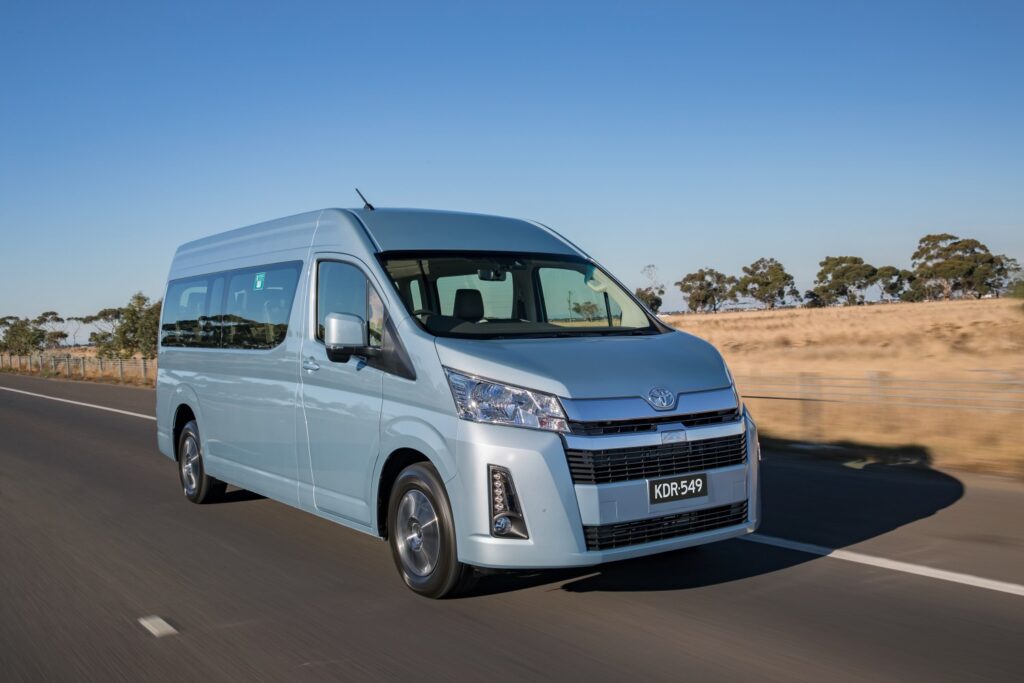
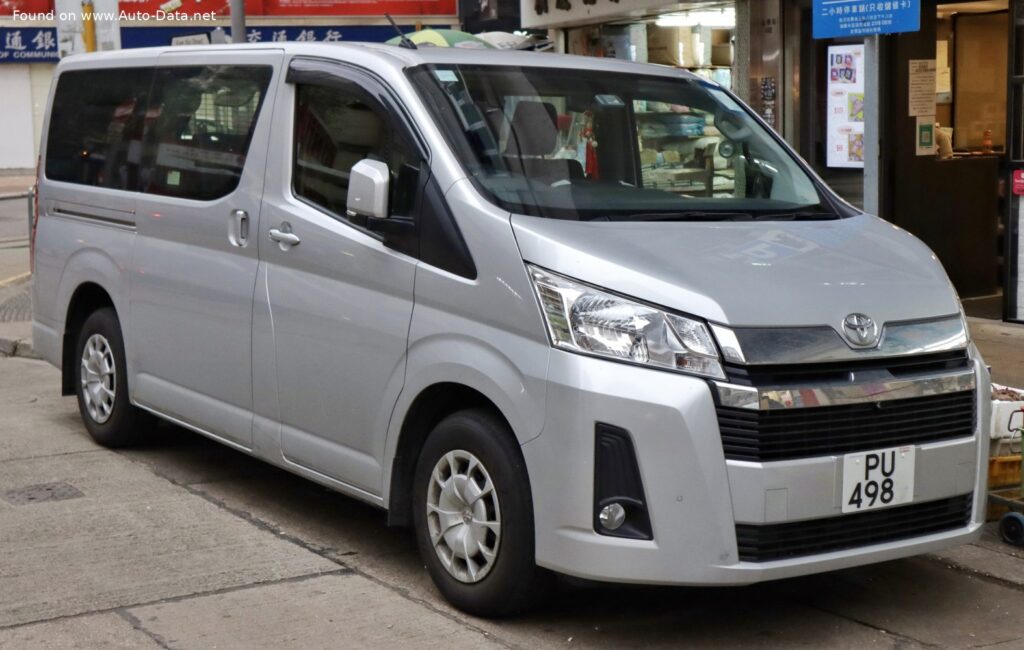
The Toyota HiAce VI (H300) Commuter L1H1 represents the sixth generation of Toyota’s iconic light commercial vehicle, first introduced in 2019. This particular variant, the Commuter L1H1, highlights its role as a versatile passenger and cargo transport solution. Unlike previous generations that often shared a cab-over-engine design, the H300 series adopted a semi-bonnet (or ‘long-nose’) configuration, a significant departure aimed at improving safety, comfort, and noise, vibration, and harshness (NVH) levels. While the HiAce has been a ubiquitous presence in markets across Asia, Africa, Oceania, and Latin America for decades, this modern iteration continues its legacy as a robust and reliable platform for a wide array of commercial and public transport applications. It is engineered to meet diverse demands, from shuttle services and school transport to cargo delivery and specialized conversions. This generation, particularly with its powerful 3.5-liter V6 engine, offers a blend of performance and practicality tailored for demanding operational environments where durability and efficiency are paramount.
Engine and Performance: Powering the Toyota HiAce VI (H300) Commuter L1H1
Under the hood of the Toyota HiAce VI (H300) Commuter L1H1 lies a potent 3.5-liter V6 gasoline engine, designated by the engine code 7GR-FKS. This naturally aspirated powerhouse is a testament to Toyota’s engineering prowess, designed to deliver robust performance and unwavering reliability—qualities essential for a vehicle of its stature. The V6 configuration ensures smooth power delivery, a critical factor for passenger comfort and ease of driving, especially when the vehicle is fully laden.
The engine produces an impressive 281 horsepower at 6000 rpm, translating to a power output of 81.3 horsepower per liter, which is quite respectable for a commercial-grade V6. This substantial power allows the HiAce to maintain highway speeds effortlessly and confidently tackle inclines, even with a full complement of passengers or cargo. Torque is equally important for a vehicle intended for heavy-duty use, and the 7GR-FKS delivers a solid 258.88 lb.-ft. (351 Nm) at 4600 rpm. This ample torque at mid-range RPMs provides excellent pulling power, crucial for acceleration from a standstill and for managing heavy loads without straining the powertrain.
Technically, the engine features a front, longitudinal layout, optimizing weight distribution and allowing for the rear-wheel-drive architecture. With six cylinders arranged in a V-engine configuration, it boasts a displacement of 3456 cubic centimeters (210.9 cu. in.). Each cylinder has four valves, totaling 24 valves for the engine, operating via a Double Overhead Camshaft (DOHC) valvetrain equipped with VVT-iW (Variable Valve Timing-intelligent Wide). This advanced valve timing system enhances both performance and fuel efficiency across the rev range. The engine employs a sophisticated fuel injection system that combines direct injection with multi-port manifold injection, a strategy designed to optimize combustion efficiency, reduce emissions, and improve overall engine performance. With a compression ratio of 11.8:1, the engine is tuned for efficiency while running on regular gasoline. Power is transmitted to the rear wheels via a durable 6-speed manual transmission, offering drivers precise control and the ability to maximize the engine’s output in various driving conditions.
Design and Features: Form Meets Function
The design philosophy behind the Toyota HiAce VI (H300) Commuter L1H1 is rooted in practicality, durability, and passenger comfort, while also adhering to modern safety standards. The most significant design change for this generation is the shift from a cab-over design to a semi-bonnet layout. This move was primarily driven by safety considerations, allowing for a larger crumple zone upfront to better protect occupants in a frontal collision. It also contributes to a more comfortable ride by moving the engine forward and away from the cabin, reducing engine noise and heat intrusion.
As a van with four doors, the Commuter L1H1 variant is specifically configured for passenger transport, offering seating for 10 to 15 individuals. This makes it an ideal choice for tour operators, hotel shuttles, and public transport routes in its primary markets. The interior is designed to be spacious and functional, with an emphasis on ease of entry and exit, durable materials, and adequate ventilation for all passengers.
Dimensionally, the HiAce Commuter L1H1 is substantial, measuring 207.28 inches (5265 mm) in length, 76.77 inches (1950 mm) in width, and 78.35 inches (1990 mm) in height. Its generous wheelbase of 126.38 inches (3210 mm) provides a stable and comfortable ride, essential for a vehicle that often carries multiple passengers over varying distances. Despite its size, a minimum turning circle of 36.09 feet (11 m) indicates reasonable maneuverability for urban environments. The vehicle’s robust construction is evident in its maximum permissible weight of 7495.72 lbs (3400 kg), highlighting its capacity for heavy loads.
Key features include a simple yet effective chassis setup: an independent McPherson strut front suspension with coil springs and an anti-roll bar provides a comfortable and controlled ride, while a rigid axle suspension with leaf springs at the rear ensures durability and load-carrying capability. Braking is handled by ventilated discs at the front and traditional drum brakes at the rear, augmented by an Anti-lock Braking System (ABS) for enhanced safety. The hydraulic power steering, combined with a steering rack and pinion system, offers predictable and manageable handling, important for a vehicle of this size. The HiAce rides on 215/70 R16 tires mounted on 7J x 16 wheel rims, a practical choice balancing load capacity, ride comfort, and replacement cost.
Technical Specifications
| Toyota HiAce VI (H300) Commuter L1H1 3.5 V6 (281 Hp) – Full Specifications | |
|---|---|
| General Information | |
| Brand | Toyota |
| Model | HiAce |
| Generation | HiAce VI (H300) Commuter L1H1 |
| Type (Engine) | 3.5 V6 (281 Hp) |
| Start of production | 2019 year |
| Powertrain Architecture | Internal Combustion engine |
| Body type | Van |
| Seats | 10-15 |
| Doors | 4 |
| Performance Specs | |
| Fuel Type | Petrol (Gasoline) |
| Power | 281 Hp @ 6000 rpm |
| Power per liter | 81.3 Hp/l |
| Torque | 258.88 lb.-ft. (351 Nm) @ 4600 rpm |
| Engine Specs | |
| Engine layout | Front, Longitudinal |
| Engine Model/Code | 7GR-FKS |
| Engine displacement | 210.9 cu. in. (3456 cm3) |
| Number of cylinders | 6 |
| Engine configuration | V-engine |
| Cylinder Bore | 3.7 in. (94 mm) |
| Piston Stroke | 3.27 in. (83 mm) |
| Compression ratio | 11.8:1 |
| Number of valves per cylinder | 4 |
| Fuel injection system | Direct injection and Multi-port manifold injection |
| Engine aspiration | Naturally aspirated engine |
| Valvetrain | DOHC, VVT-iW |
| Engine oil capacity | 6.55 US qt (6.2 l) |
| Coolant | 11.1 US qt (10.5 l) |
| Space, Volume and Weights | |
| Max. weight | 7495.72 lbs. (3400 kg) |
| Fuel tank capacity | 17.17 US gal (65 l) |
| Permitted trailer load with brakes (12%) | 3306.93 lbs. (1500 kg) |
| Permitted trailer load without brakes | 881.85 lbs. (400 kg) |
| Permitted towbar download | 330.69 lbs. (150 kg) |
| Dimensions | |
| Length | 207.28 in. (5265 mm) |
| Width | 76.77 in. (1950 mm) |
| Height | 78.35 in. (1990 mm) |
| Wheelbase | 126.38 in. (3210 mm) |
| Front track | 65.94 in. (1675 mm) |
| Rear (Back) track | 65.75 in. (1670 mm) |
| Front overhang | 37.4 in. (950 mm) |
| Rear overhang | 43.5 in. (1105 mm) |
| Ride height (ground clearance) | 6.89 in. (175 mm) |
| Minimum turning circle (turning diameter) | 36.09 ft. (11 m) |
| Drivetrain, Brakes and Suspension Specs | |
| Drivetrain Architecture | The Internal combustion engine (ICE) drives the rear wheels of the vehicle. |
| Drive wheel | Rear wheel drive |
| Number of gears and type of gearbox | 6 gears, manual transmission |
| Front suspension | Independent, type McPherson with coil spring and anti-roll bar |
| Rear suspension | Rigid axle suspension, Leaf spring |
| Front brakes | Ventilated discs |
| Rear brakes | Drum |
| Assisting systems | ABS (Anti-lock braking system) |
| Steering type | Steering rack and pinion |
| Power steering | Hydraulic Steering |
| Tires size | 215/70 R16 |
| Wheel rims size | 7J x 16 |
Legacy and Market Impact
The Toyota HiAce, especially the sixth-generation H300 series, continues to uphold its formidable reputation as a cornerstone of commercial and public transportation across numerous global markets. While this specific model is not a primary offering in the United States, its impact in regions like Southeast Asia, Australia, New Zealand, the Middle East, Africa, and parts of Latin America is immense. It is widely regarded as one of the most reliable and durable vans available, a testament to Toyota’s commitment to quality and engineering for arduous conditions.
The HiAce’s historical significance stems from its consistent ability to meet the rigorous demands of commercial operators. From its inception, it has been designed as a workhorse, capable of enduring challenging roads, carrying heavy loads, and performing reliably day in and day out. This unwavering dependability has made it a favorite for businesses that cannot afford vehicle downtime, such as shuttle services, delivery companies, construction firms, and emergency services. The transition to the semi-bonnet design in the H300 generation marked a pivotal evolution, addressing modern safety standards and enhancing driver and passenger comfort without compromising its core utility and ruggedness.
In its primary markets, the Toyota HiAce VI (H300) Commuter L1H1 competes with a diverse range of vehicles, including the Mercedes-Benz Sprinter, Ford Transit, Hyundai H350, and Nissan Urvan (NV350). However, the HiAce often distinguishes itself with its legendary resale value and lower total cost of ownership, attributed to its robust build and readily available, affordable spare parts. Its mechanical simplicity, particularly in the context of commercial vehicles, often translates to easier maintenance and repair, a crucial advantage in regions with less developed service infrastructure.
The HiAce’s market impact extends beyond mere sales figures; it has become an integral part of the economic and social fabric in many countries. It facilitates commerce, connects communities, and serves as a vital tool for countless livelihoods. The 3.5-liter V6 gasoline engine, while a departure from the smaller displacement diesel engines often found in commercial vans in some markets, provides a powerful and refined alternative, particularly appealing in regions where gasoline is preferred or readily available, or where higher performance is desired for highway travel or mountainous terrain. The HiAce’s enduring legacy is a testament to its design as a practical, no-nonsense vehicle that simply gets the job done, consistently and reliably, making it a true global automotive icon.