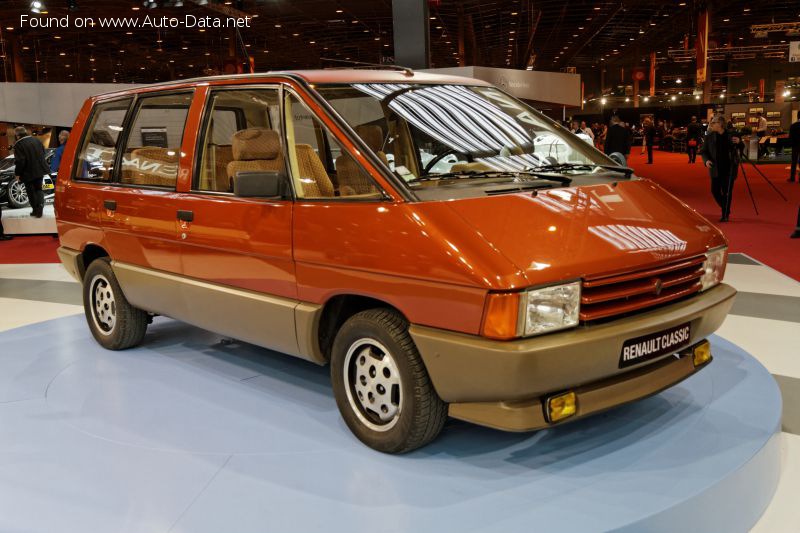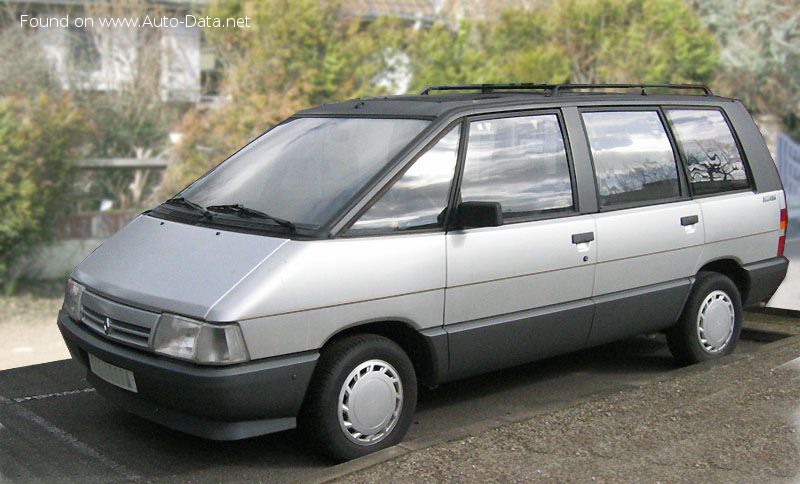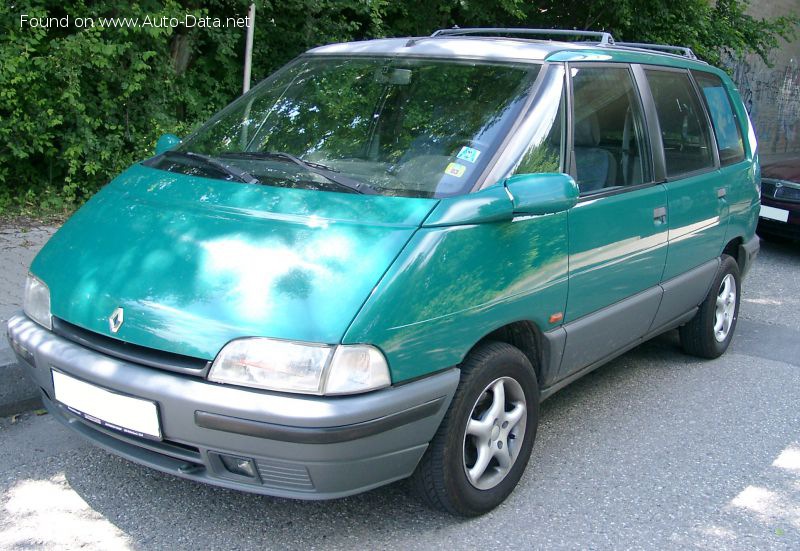
The Renault Espace IV (Phase IV, 2012) 2.0 TCe (170 Hp): A European Minivan Icon
The Renault Espace, first introduced in 1984, holds a significant place in automotive history as one of Europe’s pioneering multi-purpose vehicles (MPVs), or minivans as they are known in the United States. The model under review, the Renault Espace IV (Phase IV, 2012) 2.0 TCe (170 Hp), represents a late-stage iteration of the fourth generation, which itself debuted in 2002. This particular variant, produced between 2012 and 2013, benefited from a final refresh that aimed to keep it competitive in a rapidly evolving segment dominated by family-focused vehicles. While never officially sold in the North American market, the Espace IV was a cornerstone of Renault’s European lineup, offering spaciousness, versatility, and a comfortable ride to families across the continent. This Phase IV model, equipped with a turbocharged 2.0-liter gasoline engine, continued the Espace’s tradition of blending practicality with a distinctive French design philosophy.
Engine and Performance of the Renault Espace IV (Phase IV, 2012)
Powering the Renault Espace IV (Phase IV, 2012) is a robust 2.0-liter TCe (Turbo Control efficiency) inline-four engine, designated by the code F4R. This powerplant, featuring a turbocharger and intercooler, was designed to deliver a balance of usable power for a family hauler and reasonable fuel efficiency. It produces a respectable 170 horsepower at 5000 revolutions per minute (rpm) and a healthy 199.14 lb.-ft. of torque at 3250 rpm. This torque output, available at a relatively low engine speed, was crucial for providing effortless acceleration, especially when the vehicle was fully loaded with passengers and cargo.
The engine’s design incorporates a DOHC (Double Overhead Camshaft) valvetrain with four valves per cylinder, contributing to its efficient breathing and power delivery. Fuel is supplied via a multi-port manifold injection system. With a compression ratio of 9.8:1, the engine is optimized for petrol (gasoline) fuel. The Espace IV (Phase IV) sends its power to the front wheels through a 6-speed manual transmission, offering the driver direct control and engagement.
In terms of performance, the 2.0 TCe engine enables the Espace to accelerate from 0 to 60 miles per hour in a commendable 9.2 seconds, with a top speed of 127.38 mph. These figures are quite respectable for a vehicle of its size and purpose. Fuel economy, a critical factor for European buyers, was rated at 27.7 US mpg combined, with urban driving yielding 20.8 US mpg and extra-urban cruising achieving 34.1 US mpg. The vehicle also met the Euro 5 emission standard, reflecting its compliance with the then-current environmental regulations.
Design, Features, and Versatility
The Renault Espace IV (Phase IV, 2012) retains the distinctive and somewhat futuristic design language that characterized the fourth generation from its inception. As a minivan or MPV, its primary focus is on maximizing interior space and versatility. It offers a 5-door configuration and can comfortably seat seven passengers, making it an ideal choice for larger families or those requiring flexible seating arrangements.
Measuring 183.27 inches in length, 74.57 inches in width (including mirrors), and 70.91 inches in height, the Espace provides a commanding presence on the road. Its generous 110.35-inch wheelbase contributes significantly to both interior roominess and ride comfort. The interior is where the Espace truly shines, offering an impressive minimum trunk space of 10.28 cubic feet, which expands to a massive 101 cubic feet with the rear seats folded or removed. This modularity was a key selling point, allowing owners to configure the interior for various combinations of passengers and cargo.
Standard features for this phase IV model included 17-inch wheels shod with 225/55 R17 tires, providing a balance of grip and ride comfort. The suspension system features an independent McPherson-type setup at the front and a semi-independent coil spring arrangement at the rear, tuned for a smooth and compliant ride, characteristic of French automobiles. Braking duties are handled by ventilated discs at the front and solid discs at the rear, augmented by an Anti-lock Braking System (ABS) for enhanced safety. Electric power steering provides light and precise control, aiding maneuverability in urban environments and parking. With a minimum turning circle of 37.07 feet, it was surprisingly agile for its size.
Technical Specifications
| Category | Specification | US Equivalent |
|---|---|---|
| Brand | Renault | |
| Model | Espace IV (Phase IV, 2012) | |
| Type (Engine) | 2.0 TCe (170 Hp) | |
| Start of Production | 2012 year | |
| End of Production | 2013 year | |
| Powertrain Architecture | Internal Combustion engine | |
| Body type | Minivan, MPV | |
| Seats | 7 | |
| Doors | 5 | |
| Performance Specs | ||
| Fuel consumption (urban) | 11.3 l/100 km | 20.8 US mpg |
| Fuel consumption (extra urban) | 6.9 l/100 km | 34.1 US mpg |
| Fuel consumption (combined) | 8.5 l/100 km | 27.7 US mpg |
| CO2 emissions | 198 g/km | |
| Fuel Type | Petrol (Gasoline) | |
| Acceleration 0 – 60 mph | 9.2 sec | |
| Maximum speed | 205 km/h | 127.38 mph |
| Emission standard | Euro 5 | |
| Weight-to-power ratio | 10.2 kg/Hp | |
| Weight-to-torque ratio | 6.4 kg/Nm | |
| Engine Specs | ||
| Power | 170 Hp @ 5000 rpm. | |
| Power per liter | 85.1 Hp/l | |
| Torque | 270 Nm @ 3250 rpm. | 199.14 lb.-ft. @ 3250 rpm. |
| Engine layout | Front, Transverse | |
| Engine Model/Code | F4R | |
| Engine displacement | 1998 cm3 | 121.93 cu. in. |
| Number of cylinders | 4 | |
| Engine configuration | Inline | |
| Cylinder Bore | 82.7 mm | 3.26 in. |
| Piston Stroke | 93 mm | 3.66 in. |
| Compression ratio | 9.8:1 | |
| Number of valves per cylinder | 4 | |
| Fuel injection system | Multi-port manifold injection | |
| Engine aspiration | Turbocharger, Intercooler | |
| Valvetrain | DOHC | |
| Engine oil capacity | 5.4 l | 5.71 US qt |
| Coolant | 9.3 l | 9.83 US qt |
| Space, Volume and Weights | ||
| Kerb Weight | 1732 kg | 3818.41 lbs. |
| Max. weight | 2539 kg | 5597.54 lbs. |
| Max load | 807 kg | 1779.13 lbs. |
| Trunk (boot) space – minimum | 291 l | 10.28 cu. ft. |
| Trunk (boot) space – maximum | 2860 l | 101 cu. ft. |
| Fuel tank capacity | 83 l | 21.93 US gal |
| Permitted trailer load with brakes (12%) | 2000 kg | 4409.25 lbs. |
| Permitted trailer load without brakes | 750 kg | 1653.47 lbs. |
| Dimensions | ||
| Length | 4655 mm | 183.27 in. |
| Width including mirrors | 1894 mm | 74.57 in. |
| Height | 1801 mm | 70.91 in. |
| Wheelbase | 2803 mm | 110.35 in. |
| Front overhang | 1020 mm | 40.16 in. |
| Rear overhang | 832 mm | 32.76 in. |
| Ride height (ground clearance) | 120 mm | 4.72 in. |
| Minimum turning circle (turning diameter) | 11.3 m | 37.07 ft. |
| Drivetrain, Brakes and Suspension Specs | ||
| Drivetrain Architecture | Front-wheel drive, Internal Combustion engine | |
| Drive wheel | Front wheel drive | |
| Number of gears and type of gearbox | 6 gears, manual transmission | |
| Front suspension | Independent type McPherson | |
| Rear suspension | Semi-independent, coil spring | |
| Front brakes | Ventilated discs | |
| Rear brakes | Disc | |
| Assisting systems | ABS (Anti-lock braking system) | |
| Steering type | Steering rack and pinion | |
| Power steering | Electric Steering | |
| Tires size | 225/55 R17 | |
| Wheel rims size | 17 | |
Legacy and Market Impact
The Renault Espace holds an indelible legacy as a trailblazer in the European automotive landscape. When the first generation launched in 1984, it essentially invented the European MPV segment, setting a benchmark for family-oriented vehicles that prioritized interior space and flexibility over traditional sedan or wagon designs. The fourth generation, especially in its later Phase IV iteration from 2012, continued this tradition, though it faced increasingly stiff competition.
In the early 2010s, the European MPV market was vibrant, with the Espace competing against formidable rivals such as the Ford S-Max, Volkswagen Sharan, Citroën C8, and Peugeot 807. The Espace distinguished itself with its distinctive styling, comfortable ride, and highly versatile interior, which included individual removable seats and a bright, airy cabin thanks to its expansive glass area and often standard panoramic sunroof (depending on trim). Its reputation for comfort on long journeys made it a popular choice for families embarking on vacations across Europe.
However, by the time the Phase IV model was on sale, the automotive industry was already witnessing the nascent rise of the SUV. Consumers were gradually shifting their preferences towards vehicles that offered a higher driving position, rugged styling, and perceived greater adventure, even if they often sacrificed some of the pure practicality of an MPV. Despite this trend, the Espace IV remained a strong contender for those who valued uncompromised passenger and cargo space.
The 2012 Espace IV (Phase IV) represented Renault’s commitment to keeping its flagship MPV modern and competitive until its eventual replacement. It showcased the brand’s engineering prowess in creating a comfortable, safe, and efficient family vehicle. Although the traditional MPV segment eventually waned in favor of crossovers and SUVs, the Renault Espace, particularly this refined fourth generation, solidified its place in history as a pioneering and highly successful example of a truly versatile family car in Europe. Its influence can still be seen in the design and packaging of many modern multi-passenger vehicles, even those that have adopted an SUV-like aesthetic.