
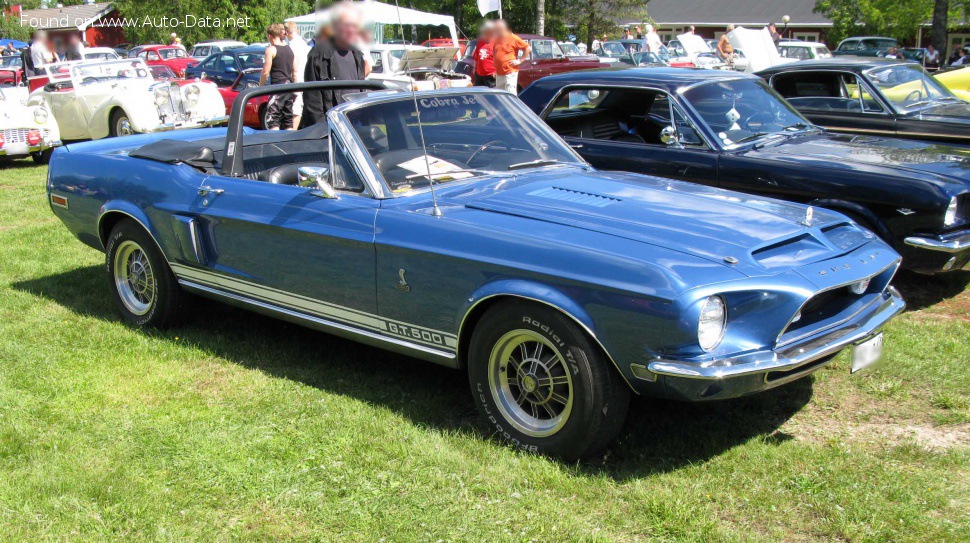
The 1969-1970 Ford Shelby I Cabrio GT 350 5.8 V8 (294 Hp) Automatic: A Pinnacle of American Muscle
The Ford Shelby I Cabrio GT 350 5.8 V8 (294 Hp) Automatic represents a significant chapter in the storied history of American high-performance automobiles. Produced for a brief, impactful period from 1969 to 1970, this vehicle was the culmination of a legendary collaboration between Ford Motor Company and racing icon Carroll Shelby. As part of the first generation of Shelby Mustangs, the GT 350 Cabriolet from these years stood as a testament to raw power, distinctive styling, and the unbridled spirit of the muscle car era. Positioned at the apex of the performance convertible segment, it offered an intoxicating blend of open-air driving pleasure and formidable V8 performance, appealing to enthusiasts who demanded both speed and style.
By 1969, the Shelby Mustang program had evolved considerably. While earlier Shelby models were largely hand-built by Shelby American, the 1969 and 1970 models saw Ford take a more direct role in their production, integrating the Shelby modifications onto the Mustang assembly line. This shift allowed for increased production efficiency but maintained the unique Shelby identity that set these cars apart from their standard Mustang counterparts. The GT 350, specifically, was equipped with a robust 351 cubic inch V8 engine, offering a compelling balance of performance and drivability within the Shelby lineup. The Cabriolet variant, in particular, combined this potent powertrain with the allure of a convertible, making it a highly desirable and relatively rare vehicle, especially today.
Evolution and Design Philosophy of the Ford Shelby I Cabrio
The 1969 Ford Shelby Mustang, including the GT 350 Cabriolet, underwent a significant redesign from previous years, aligning more closely with the broader Mustang refresh of the same year. However, Shelby’s influence remained unmistakable. The car featured a distinctive fiberglass front end, including a unique hood with functional scoops and air intakes, as well as a redesigned grille with integrated driving lights. The side profile was accentuated by prominent scoops, and the rear boasted a unique decklid and sequential taillights borrowed from the Mercury Cougar, a signature Shelby touch. These styling cues were not merely aesthetic; they were often functional, aiding in engine cooling or brake ventilation, embodying Carroll Shelby’s “form follows function” philosophy.
The Cabriolet body style, with its two doors and four seats, offered a more visceral driving experience. The ability to drop the top transformed the already exhilarating performance into an open-air symphony of V8 rumble and wind noise, deeply connecting the driver to the road and the surrounding environment. This design choice solidified its status not just as a performance machine, but as a lifestyle statement, emblematic of the freedom and excitement of the late 1960s. The interior, while largely Mustang-based, received Shelby-specific touches such as a unique steering wheel and additional instrumentation, reminding occupants of the car’s special pedigree.
Powertrain and Performance of the Ford Shelby I Cabrio GT 350 5.8 V8 (294 Hp) Automatic
At the heart of the Ford Shelby I Cabrio GT 350 5.8 V8 (294 Hp) Automatic was its formidable 5.8-liter (351.86 cubic inch) V8 engine. This naturally aspirated Windsor unit, known for its robustness and tuning potential, delivered a potent 294 horsepower at 4800 rpm. Its strength lay not just in peak power, but in its impressive torque output, generating 385.01 lb.-ft. at a relatively low 3200 rpm. This broad torque band ensured strong acceleration from a standstill and effortless cruising, characteristic of American muscle cars of the era.
Fuel delivery was handled by a traditional carburetor system, a standard for high-performance engines of the late 1960s, providing a raw, unadulterated power delivery. With a compression ratio of 10.7:1 and two valves per cylinder, the engine was designed for durability and strong output using premium gasoline. The front, longitudinal engine layout, driving the rear wheels, was the classic configuration for a performance car, ensuring optimal weight distribution for traction under hard acceleration.
Mated to this powerful V8 was a 3-speed automatic transmission. While some purists might prefer a manual gearbox, the automatic offered a smooth, convenient driving experience, making the GT 350 more accessible for daily driving or relaxed cruising, especially in its convertible guise. The automatic transmission was robust and well-suited to handle the engine’s significant torque, providing quick shifts for its time.
Performance figures for the era, while not always precisely documented by modern standards, suggest that the GT 350 Cabriolet was capable of impressive acceleration, with 0-60 mph times in the low to mid-6-second range, making it a formidable competitor on both the street and the drag strip. Its weight-to-power ratio of 5.7 kg/Hp (175.7 Hp/tonne or 10.19 lbs/Hp) underscored its performance credentials, positioning it firmly within the elite ranks of the muscle car segment.
Chassis, Brakes, and Handling
The GT 350’s chassis was based on the Ford Mustang platform, but Shelby modifications aimed to enhance its handling capabilities. While the data specifies front disc brakes and rear drum brakes, this was a common setup for high-performance cars of the period, offering improved stopping power over all-drum systems. The rear-wheel-drive architecture provided classic muscle car dynamics, allowing for spirited driving and a direct connection between the driver and the road. The minimum turning circle of 37.6 feet indicates a reasonably maneuverable vehicle for its size, contributing to its versatility.
Technical Specifications
| Category | Specification | US Equivalent / Notes |
|---|---|---|
| Brand | Ford | |
| Model | Shelby | |
| Generation | Shelby I Cabrio | |
| Type (Engine) | GT 350 5.8 V8 (294 Hp) Automatic | |
| Start of Production | 1969 year | |
| End of Production | 1970 year | |
| Powertrain Architecture | Internal Combustion engine | |
| Body Type | Cabriolet | Convertible |
| Seats | 4 | |
| Doors | 2 | |
| Performance Specs | ||
| Fuel Type | Petrol (Gasoline) | |
| Weight-to-power ratio | 5.7 kg/Hp | 10.19 lbs/Hp |
| Weight-to-torque ratio | 3.2 kg/Nm | Approx. 7.05 lbs/Nm |
| Engine Specs | ||
| Power | 294 Hp @ 4800 rpm | |
| Power per liter | 51 Hp/l | |
| Torque | 522 Nm @ 3200 rpm | 385.01 lb.-ft. @ 3200 rpm |
| Engine Layout | Front, Longitudinal | |
| Engine Displacement | 5766 cm3 | 351.86 cu. in. |
| Number of Cylinders | 8 | |
| Engine Configuration | V-engine | V8 |
| Cylinder Bore | 101.6 mm | 4 in. |
| Piston Stroke | 88.9 mm | 3.5 in. |
| Compression Ratio | 10.7:1 | |
| Number of Valves per Cylinder | 2 | |
| Fuel Injection System | Carburetor | |
| Engine Aspiration | Naturally aspirated engine | |
| Space, Volume and Weights | ||
| Kerb Weight | 1673 kg | 3688.33 lbs. |
| Fuel Tank Capacity | 76 l | 20.08 US gal |
| Dimensions | ||
| Length | 4724 mm | 185.98 in. |
| Width | 1811 mm | 71.3 in. |
| Height | 1303 mm | 51.3 in. |
| Wheelbase | 2743 mm | 107.99 in. |
| Front Track | 1486 mm | 58.5 in. |
| Rear (Back) Track | 1486 mm | 58.5 in. |
| Minimum Turning Circle | 11.46 m | 37.6 ft. |
| Drivetrain, Brakes and Suspension Specs | ||
| Drivetrain Architecture | The Internal combustion engine (ICE) drives the rear wheels of the vehicle. | |
| Drive Wheel | Rear wheel drive | |
| Number of Gears and Type of Gearbox | 3 gears, automatic transmission | |
| Front Brakes | Disc | |
| Rear Brakes | Drum | |
Legacy and Market Impact
The 1969-1970 Ford Shelby I Cabrio GT 350 5.8 V8 (294 Hp) Automatic holds a significant place in automotive history as one of the last true Shelby-Ford collaborations before the program was temporarily discontinued. Its relatively short production run, combined with the desirability of a convertible, makes it a rare and highly sought-after collectible today. It represents the zenith of the muscle car era, embodying the raw power, distinctive styling, and cultural significance that defined the period.
In its time, the GT 350 Cabriolet competed with other iconic American performance convertibles such as the Chevrolet Camaro SS Convertible, the Pontiac GTO Convertible, and the Plymouth Barracuda ‘Cuda Convertible. What set the Shelby apart was its unique blend of Mustang heritage with Carroll Shelby’s racing pedigree and bespoke styling cues. It wasn’t just a fast car; it was a statement of performance and exclusivity.
Today, these cars are revered by collectors and enthusiasts alike. Their historical significance, coupled with their powerful V8 engines and classic American styling, ensures their status as blue-chip investments in the classic car market. The GT 350 Cabriolet serves as a vibrant reminder of a golden age in American automotive design and engineering, when horsepower reigned supreme and the open road beckoned with the promise of adventure. Its legacy continues to influence modern performance vehicles and stands as a testament to the enduring appeal of the Shelby name.
