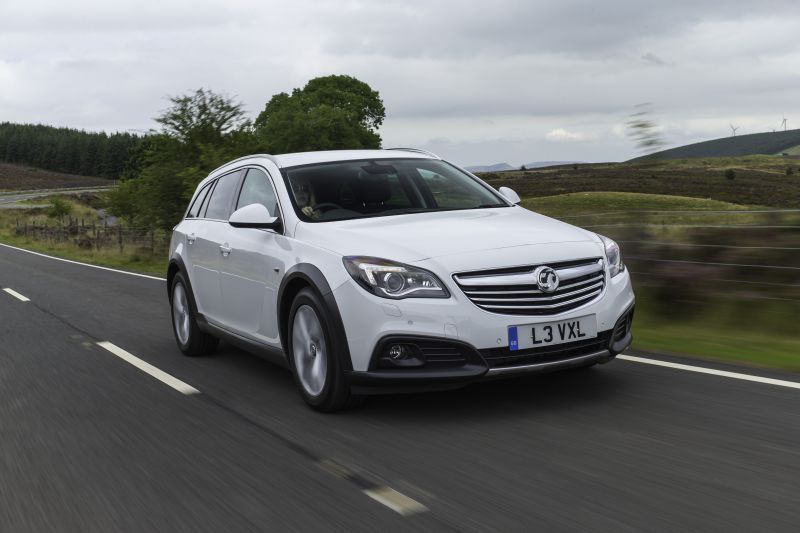
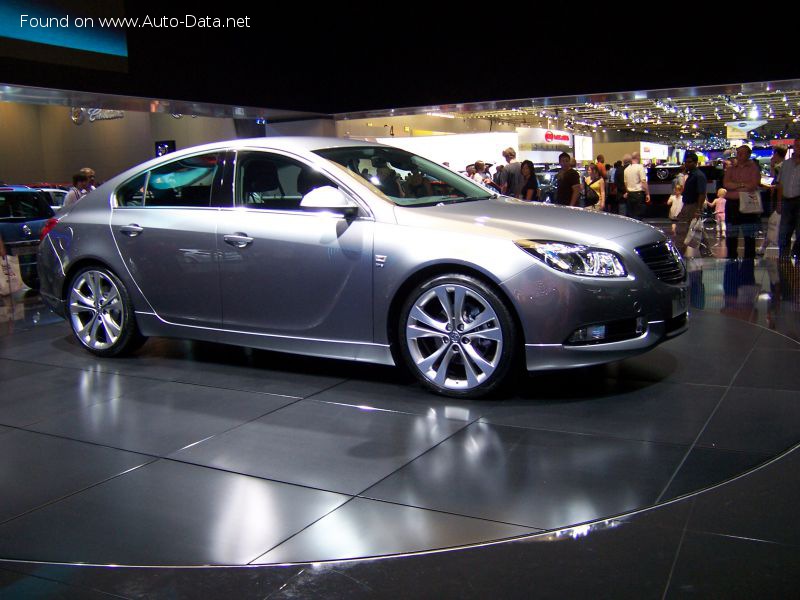
Vauxhall Insignia I Saloon (facelift 2013)
The Vauxhall Insignia I Saloon (facelift 2013) represents a significant evolution of Vauxhall’s flagship mid-size sedan, a crucial model for the brand in the United Kingdom and other European markets. Originally launched in 2008 as the successor to the Vectra, the Insignia quickly established itself as a strong contender in the highly competitive D-segment. The 2013 facelift brought a host of updates, enhancing its aesthetic appeal, refining its interior, and improving its powertrain efficiency and technology. This particular variant, the 2.0 CDTi ecoTEC (130 Hp) Automatic, was a popular choice, embodying the model’s commitment to economical diesel performance paired with the convenience of an automatic transmission, positioning it as an attractive option for both fleet buyers and private customers seeking a practical and comfortable family car.
Manufactured between 2013 and 2015, this iteration of the Insignia I Saloon continued to leverage its Opel counterpart’s engineering, offering a blend of German precision and British branding. While Vauxhall models are not sold in the United States, their European counterparts, particularly the Opel Insignia, were at times rebadged as Buick models (e.g., the Buick Regal), showcasing the underlying global platform strategy of General Motors at the time. The Insignia’s role was to provide a stylish, spacious, and fuel-efficient alternative to premium German sedans and more mainstream rivals, emphasizing value without compromising on modern features or driving dynamics.
Engine and Performance of the Vauxhall Insignia I Saloon (facelift 2013)
At the heart of this particular Vauxhall Insignia I Saloon (facelift 2013) model lies the 2.0 CDTi ecoTEC engine, a four-cylinder inline diesel powerplant designed for a balance of power, efficiency, and refinement. With a displacement of 1956 cubic centimeters (approximately 2.0 liters or 119.36 cubic inches), this engine delivers a respectable 130 horsepower at 4000 RPM. Its “ecoTEC” designation signifies Vauxhall’s focus on environmental performance and fuel economy, a critical factor in the European market.
Torque output is a strong suit for this diesel unit, peaking at 221.27 lb.-ft. (300 Nm) across a broad range from 1750 to 2500 RPM. This substantial low-end torque contributes significantly to the car’s effortless cruising capability and responsive acceleration in everyday driving scenarios. Power is delivered to the front wheels via a smooth-shifting 6-speed automatic transmission, enhancing driving comfort, especially in urban environments or during long commutes.
In terms of acceleration, the Insignia I Saloon 2.0 CDTi ecoTEC (130 Hp) Automatic achieves 0 to 60 mph in a computed 10.6 seconds (11.2 seconds for 0-62 mph or 0-100 km/h), making it adequately brisk for its segment. Its top speed is rated at 126.14 mph (203 km/h). Fuel efficiency is a major highlight, with a combined fuel consumption rating of 44.4 US mpg (5.3 liters per 100 km). Urban driving yields approximately 33.6 US mpg (7 liters per 100 km), while extra-urban cruising can achieve an impressive 54.7 US mpg (4.3 liters per 100 km). These figures, coupled with CO2 emissions of 139 g/km and compliance with the Euro 5 emission standard, underscore the ecoTEC engine’s efficiency credentials. The engine also features a particulate filter, crucial for meeting modern diesel emission regulations.
Design and Features
The 2013 facelift breathed new life into the Insignia’s design, refining its already sleek and aerodynamic sedan body. The updates included revised front and rear styling, giving the car a more contemporary and sophisticated appearance. Key changes included a wider, lower grille, new headlamp and taillamp designs with LED daytime running lights, and a chrome bar that visually widens the car’s rear. These subtle yet effective modifications helped the Vauxhall Insignia I Saloon (facelift 2013) maintain its competitive edge in a segment known for strong design.
Measuring 190.63 inches (4842 mm) in length, 73.07 inches (1856 mm) in width (82.05 inches or 2084 mm including mirrors), and 58.98 inches (1498 mm) in height, the Insignia I Saloon offers a substantial road presence. Its wheelbase of 107.76 inches (2737 mm) contributes to both interior space and ride comfort. The four-door sedan body type comfortably accommodates five occupants, making it a practical choice for families and business users alike.
Inside, the facelift brought improvements to material quality and ergonomics. While specific trim levels would dictate the exact feature set, standard amenities for the Insignia typically included air conditioning, power windows, and a comprehensive infotainment system. Safety was also a priority, with the car equipped with an Anti-lock Braking System (ABS) as standard, along with a suite of airbags and electronic stability control systems, though specific details beyond ABS are not provided in the technical data. The car rides on 215/60 R16 tires mounted on 16-inch wheel rims, providing a comfortable and stable ride. Suspension duties are handled by an independent McPherson strut setup with coil springs and an anti-roll bar at the front, complemented by an independent multi-link suspension at the rear, ensuring a refined ride and competent handling. Braking power is provided by ventilated discs at the front and solid discs at the rear.
Practicality is another strong point, with a minimum trunk (boot) space of 17.66 cubic feet (500 liters), expanding to a generous 35.84 cubic feet (1015 liters) with the rear seats folded down. This ample cargo capacity makes the Insignia suitable for long trips or carrying substantial luggage. The fuel tank capacity of 18.49 US gallons (70 liters) provides an excellent driving range, further enhancing its suitability for extended journeys.
Technical Specifications
| Vauxhall Insignia I Saloon (facelift 2013) 2.0 CDTi ecoTEC (130 Hp) Automatic | |
|---|---|
| General Information | |
| Brand | Vauxhall |
| Model | Insignia |
| Generation | Insignia I Saloon (facelift 2013) |
| Engine Type | 2.0 CDTi ecoTEC (130 Hp) Automatic |
| Production Start | 2013 |
| Production End | 2015 |
| Powertrain Architecture | Internal Combustion Engine |
| Body Type | Sedan |
| Seats | 5 |
| Doors | 4 |
| Performance Specifications | |
| Fuel Consumption (Urban) | 7 l/100 km (33.6 US mpg) |
| Fuel Consumption (Extra Urban) | 4.3 l/100 km (54.7 US mpg) |
| Fuel Consumption (Combined) | 5.3 l/100 km (44.4 US mpg) |
| CO2 Emissions | 139 g/km |
| Fuel Type | Diesel |
| Acceleration 0 – 60 mph | 10.6 sec |
| Acceleration 0 – 62 mph (0-100 km/h) | 11.2 sec |
| Maximum Speed | 126.14 mph (203 km/h) |
| Emission Standard | Euro 5 |
| Weight-to-Power Ratio | 12.5 kg/Hp (80.1 Hp/tonne) |
| Weight-to-Torque Ratio | 5.4 kg/Nm (184.8 Nm/tonne) |
| Engine Specifications | |
| Power | 130 Hp @ 4000 rpm |
| Power per Liter | 66.5 Hp/l |
| Torque | 221.27 lb.-ft. (300 Nm) @ 1750-2500 rpm |
| Engine Layout | Front, Transverse |
| Engine Model/Code | A20DT |
| Engine Displacement | 1956 cm3 (119.36 cu. in.) |
| Number of Cylinders | 4 |
| Engine Configuration | Inline |
| Cylinder Bore | 3.27 in. (83 mm) |
| Piston Stroke | 3.56 in. (90.4 mm) |
| Valves per Cylinder | 4 |
| Fuel Injection System | Diesel Commonrail |
| Engine Aspiration | Turbocharger, Intercooler |
| Valvetrain | DOHC |
| Engine Oil Capacity | 4.5 l (4.76 US qt) |
| Coolant Capacity | 9 l (9.51 US qt) |
| Engine Systems | Particulate filter |
| Space, Volume, and Weights | |
| Kerb Weight | 3578.1 lbs. (1623 kg) |
| Trunk (Boot) Space – Minimum | 17.66 cu. ft. (500 l) |
| Trunk (Boot) Space – Maximum | 35.84 cu. ft. (1015 l) |
| Fuel Tank Capacity | 18.49 US gal (70 l) |
| Permitted Trailer Load (with brakes, 12%) | 3527.4 lbs. (1600 kg) |
| Permitted Trailer Load (without brakes) | 1653.47 lbs. (750 kg) |
| Dimensions | |
| Length | 190.63 in. (4842 mm) |
| Width | 73.07 in. (1856 mm) |
| Width including mirrors | 82.05 in. (2084 mm) |
| Height | 58.98 in. (1498 mm) |
| Wheelbase | 107.76 in. (2737 mm) |
| Front Overhang | 40.43 in. (1027 mm) |
| Rear Overhang | 42.44 in. (1078 mm) |
| Minimum Turning Circle | 37.4 ft. (11.4 m) |
| Drivetrain, Brakes, and Suspension | |
| Drivetrain Architecture | Front-wheel drive, Internal Combustion Engine |
| Drive Wheel | Front-wheel drive |
| Number of Gears and Gearbox Type | 6 gears, automatic transmission |
| Front Suspension | Independent, McPherson with coil spring and anti-roll bar |
| Rear Suspension | Independent multi-link suspension |
| Front Brakes | Ventilated discs |
| Rear Brakes | Disc |
| Assisting Systems | ABS (Anti-lock braking system) |
| Tire Size | 215/60 R16 |
| Wheel Rims Size | 16 inches |
Legacy and Market Impact
The Vauxhall Insignia, particularly the refreshed first generation from 2013 to 2015, played a critical role in Vauxhall’s product lineup, serving as its executive and family sedan offering in the highly competitive European D-segment. This market segment, traditionally dominated by models like the Ford Mondeo, Volkswagen Passat, and to some extent, premium offerings such as the BMW 3 Series, Audi A4, and Mercedes-Benz C-Class, demanded a strong balance of style, comfort, efficiency, and value. The Vauxhall Insignia I Saloon (facelift 2013) was well-equipped to meet these demands.
Its impact was primarily felt in the United Kingdom, where Vauxhall holds significant brand recognition and market share. The Insignia was a popular choice for company car fleets due to its competitive pricing, low running costs, and strong diesel engine options like the 2.0 CDTi ecoTEC. For private buyers, it offered a spacious and well-appointed alternative to smaller, less practical vehicles, appealing to those seeking a comfortable long-distance cruiser with ample cargo capacity.
The 2013 facelift helped extend the model’s appeal, addressing some of the earlier criticisms regarding interior quality and infotainment, while sharpening its exterior design. The ecoTEC variants, with their focus on fuel economy and reduced emissions, were particularly important in a market increasingly swayed by environmental concerns and taxation based on CO2 output. The 130 HP 2.0 CDTi automatic, as detailed, offered a compelling blend of adequate performance and impressive efficiency, making it a sensible choice for a wide array of drivers.
While it may not have achieved the same premium status as its German rivals, the Insignia carved out a solid reputation for being a reliable, practical, and good-value proposition. It successfully demonstrated Vauxhall’s capability to produce a stylish and competent mid-size sedan that could hold its own against established competitors. Its legacy is one of a dependable workhorse and a comfortable family vehicle that provided a strong foundation for future generations of Vauxhall’s flagship models, cementing its position as a significant chapter in the brand’s modern history.