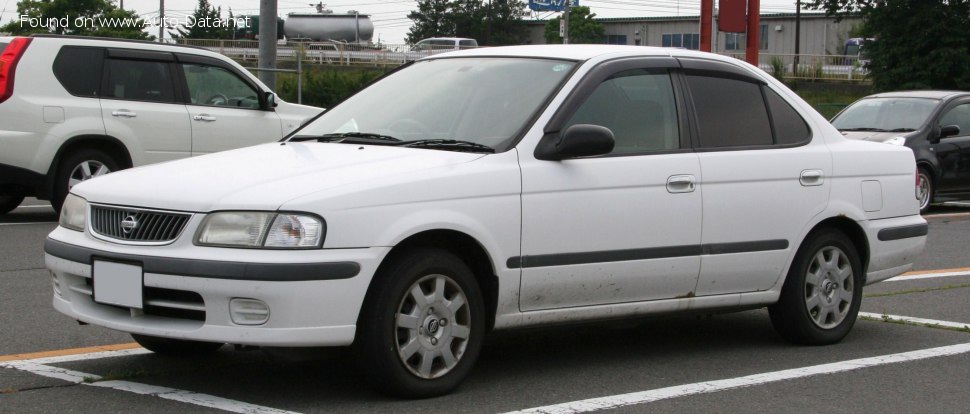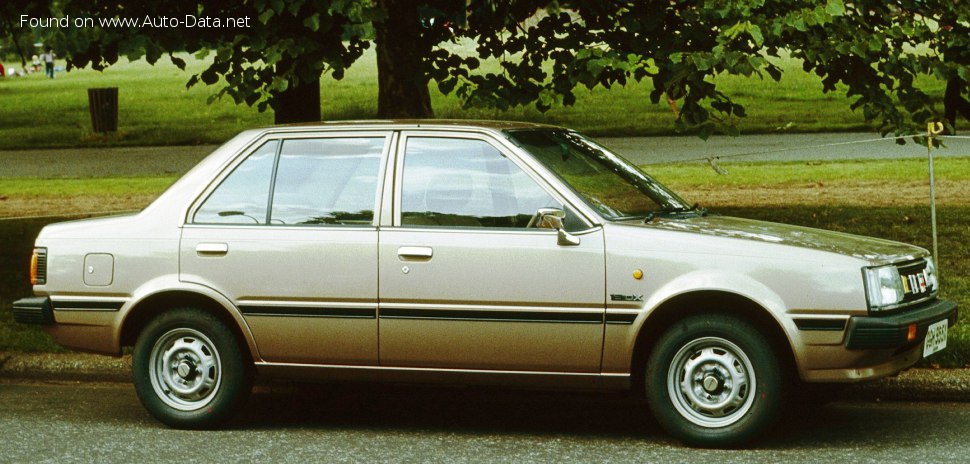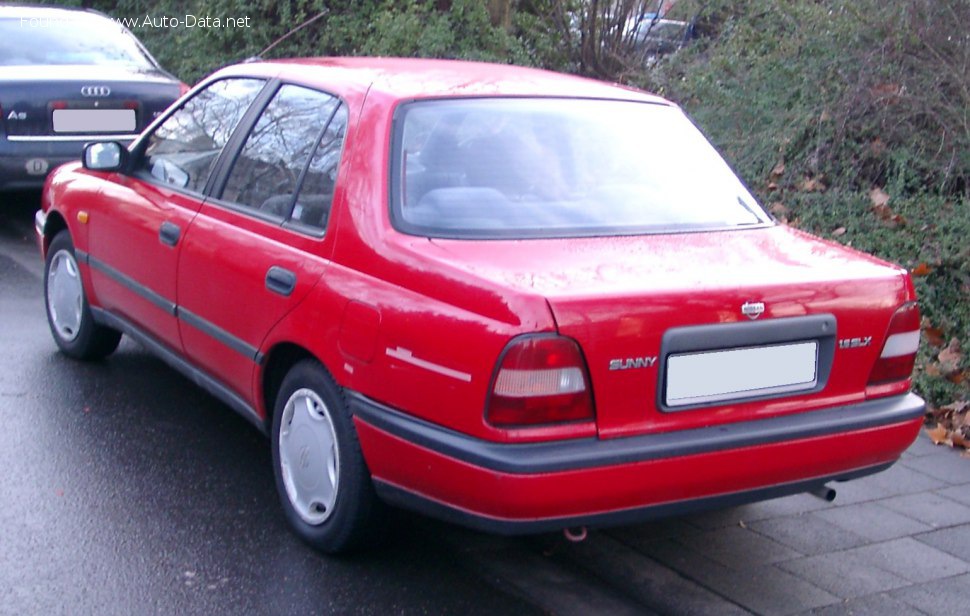
Nissan Sunny III (N14) 1.6 i 16V (90 Hp) Automatic: A Global Compact Workhorse
The Nissan Sunny III (N14) represents the third major iteration of Nissan’s highly successful compact car, a lineage celebrated globally for its reliability, practicality, and economical operation. Produced between 1992 and 1995, this generation, particularly the 1.6 i 16V (90 Hp) Automatic variant, played a crucial role in Nissan’s international portfolio, serving as a dependable family sedan in numerous markets outside of North America, where the equivalent model was often sold as the Nissan Sentra or Pulsar. The N14 generation built upon its predecessors’ reputation for robust engineering and affordability, offering a no-nonsense approach to motoring that resonated with a broad spectrum of buyers seeking a capable and low-maintenance vehicle.
While the “Sunny” nameplate itself might be less familiar to American consumers of the era, its underlying platform and engineering principles were shared with models that did grace U.S. showrooms. This particular 1.6-liter, 90-horsepower automatic sedan was a common sight in European and Asian markets, embodying the global design and manufacturing strategies that characterized the automotive industry in the early 1990s. It was designed to offer a balance of fuel efficiency, adequate performance for daily driving, and a comfortable, spacious interior for its class. The N14 Sunny was a testament to Nissan’s commitment to delivering accessible and durable transportation solutions across diverse economic landscapes.
Engine and Performance: The Heart of the Nissan Sunny III (N14)
Powering the Nissan Sunny III (N14) 1.6 i 16V (90 Hp) Automatic was the venerable GA16DE engine, a 1.6-liter (1597 cm3 or 97.45 cu. in.) inline four-cylinder unit. This engine was a hallmark of Nissan’s engineering prowess during the period, known for its smooth operation and exceptional longevity. Featuring a Double Overhead Camshaft (DOHC) valvetrain with four valves per cylinder, the GA16DE was a modern powerplant for its time, ensuring efficient breathing and improved power delivery compared to earlier two-valve designs. With a compression ratio of 9.8:1 and a multi-port manifold injection system, it delivered a respectable 90 horsepower at 6000 rpm and a peak torque of 100.31 lb.-ft. at 4000 rpm.
The engine’s naturally aspirated design contributed to its reliability and straightforward maintenance. Mated to a 4-speed automatic transmission, this powertrain configuration emphasized ease of driving and fuel economy, particularly in urban environments. While not designed for outright speed, the Sunny N14 1.6L automatic offered competent performance for its segment. It could accelerate from 0 to 60 mph in a calculated 10.2 seconds, with a top speed of 111.85 mph (180 km/h). These figures positioned it as a capable performer for daily commutes and family trips, holding its own against key competitors in the compact class.
Fuel efficiency was a strong suit for this variant, boasting a combined fuel consumption rating of 33.1 US mpg (7.1 l/100 km). This economy, combined with a 13.21 US gallon (50-liter) fuel tank, provided a commendable cruising range, making it an attractive option for budget-conscious buyers. The engine’s design, with a bore of 2.99 inches (76 mm) and a stroke of 3.46 inches (88 mm), demonstrated a well-balanced approach to displacement and cylinder geometry, contributing to its smooth power delivery and overall refinement.
Design and Features: Practicality and Enduring Appeal
The Nissan Sunny III (N14) adopted a clean, unpretentious design aesthetic that prioritized practicality and aerodynamic efficiency, characteristic of early 1990s Japanese compact sedans. Its four-door sedan body style provided comfortable seating for five occupants, making it an ideal family car. The exterior lines were understated, focusing on smooth surfaces and a cohesive overall shape that has aged gracefully. Dimensions were compact yet efficient, with a length of 166.54 inches (4230 mm), a width of 66.54 inches (1690 mm), and a height of 54.92 inches (1395 mm). The wheelbase of 95.67 inches (2430 mm) contributed to a stable ride and maximized interior space within its footprint.
Inside, the N14 Sunny offered a functional and ergonomic cabin. While materials were durable rather than luxurious, the layout was intuitive, with controls easily accessible to the driver. The trunk space was generous for its class, offering 15.54 cu. ft. (440 liters) of cargo volume, further enhancing its appeal as a practical family vehicle. The kerb weight of 2319.26 lbs (1052 kg) contributed to its nimble handling and fuel efficiency, while a maximum load capacity of 1086.88 lbs (493 kg) underscored its utility.
From a chassis perspective, the N14 Sunny featured a front-wheel-drive architecture, which was standard for compact cars of its era, providing predictable handling and efficient packaging. The suspension system consisted of wishbones at the front and spring struts at the rear, a proven setup that balanced ride comfort with stable road holding. Braking performance was handled by ventilated discs at the front for improved heat dissipation and traditional drum brakes at the rear. A significant safety feature for the time was the inclusion of an Anti-lock Braking System (ABS), which was becoming more common in mainstream vehicles and provided enhanced control during emergency braking situations. The hydraulic rack and pinion steering system offered direct feedback and ease of maneuverability, complemented by 175/65 R14 tires on 14-inch wheel rims, providing a good balance of grip and ride comfort.
Technical Specifications
| General Information | |
| Brand | Nissan |
| Model | Sunny |
| Generation | Sunny III (N14) |
| Type (Engine) | 1.6 i 16V (90 Hp) Automatic |
| Start of Production | 1992 year |
| End of Production | 1995 year |
| Powertrain Architecture | Internal Combustion engine |
| Body type | Sedan |
| Seats | 5 |
| Doors | 4 |
| Performance Specs | |
| Fuel consumption (combined) | 33.1 US mpg (7.1 l/100 km) |
| Fuel Type | Petrol (Gasoline) |
| Acceleration 0 – 60 mph | 10.2 sec |
| Maximum speed | 111.85 mph (180 km/h) |
| Weight-to-power ratio | 11.7 kg/Hp, 85.6 Hp/tonne |
| Weight-to-torque ratio | 7.7 kg/Nm, 129.3 Nm/tonne |
| Engine Specs | |
| Power | 90 Hp @ 6000 rpm |
| Power per liter | 56.4 Hp/l |
| Torque | 100.31 lb.-ft. @ 4000 rpm (136 Nm) |
| Engine layout | Front, Transverse |
| Engine Model/Code | GA16DE |
| Engine displacement | 1.6 liters (1597 cm3, 97.45 cu. in.) |
| Number of cylinders | 4 |
| Engine configuration | Inline |
| Cylinder Bore | 2.99 in. (76 mm) |
| Piston Stroke | 3.46 in. (88 mm) |
| Compression ratio | 9.8:1 |
| Number of valves per cylinder | 4 |
| Fuel injection system | Multi-port manifold injection |
| Engine aspiration | Naturally aspirated engine |
| Valvetrain | DOHC |
| Engine oil capacity | 3.38 US qt (3.2 l) |
| Coolant | 6.02 US qt (5.7 l) |
| Space, Volume and Weights | |
| Kerb Weight | 2319.26 lbs (1052 kg) |
| Max. weight | 3406.14 lbs (1545 kg) |
| Max load | 1086.88 lbs (493 kg) |
| Trunk (boot) space – minimum | 15.54 cu. ft. (440 l) |
| Fuel tank capacity | 13.21 US gal (50 l) |
| Dimensions | |
| Length | 166.54 in. (4230 mm) |
| Width | 66.54 in. (1690 mm) |
| Height | 54.92 in. (1395 mm) |
| Wheelbase | 95.67 in. (2430 mm) |
| Front track | 56.5 in. (1435 mm) |
| Rear (Back) track | 55.91 in. (1420 mm) |
| Drivetrain, Brakes and Suspension Specs | |
| Drivetrain Architecture | The Internal combustion engine (ICE) drives the front wheels of the vehicle. |
| Drive wheel | Front wheel drive |
| Number of gears and type of gearbox | 4 gears, automatic transmission |
| Front suspension | Wishbone |
| Rear suspension | Spring Strut |
| Front brakes | Ventilated discs |
| Rear brakes | Drum |
| Assisting systems | ABS (Anti-lock braking system) |
| Steering type | Steering rack and pinion |
| Power steering | Hydraulic Steering |
| Tires size | 175/65 R14 |
| Wheel rims size | 14 |
Legacy and Market Impact
The Nissan Sunny III (N14) 1.6 i 16V (90 Hp) Automatic solidified the Sunny’s reputation as a globally recognized symbol of dependable, affordable, and practical transportation. Although this specific “Sunny” badging was not primarily used in the North American market for this generation, its underpinnings were widely distributed, showcasing Nissan’s strategy of platform sharing to achieve economies of scale and cater to diverse market needs. In Europe, Asia, and other international markets, the N14 Sunny was a direct competitor to other popular compact sedans of its era, such as the Toyota Corolla, Honda Civic, Mazda 323/Protegé, Opel Astra (Vauxhall Astra in the UK), and the Ford Escort. It consistently vied for market share by offering a compelling package of low running costs, robust build quality, and a comfortable, if somewhat unexciting, driving experience.
The N14 generation, including this automatic 1.6-liter variant, was particularly valued for its mechanical resilience. The GA16DE engine, in particular, earned a reputation for its ability to rack up high mileage with minimal fuss, provided regular maintenance was observed. This reliability made it a favorite among private owners, taxi operators, and fleet managers alike, particularly in regions where vehicle longevity and ease of repair were paramount. The inclusion of features like ABS, while standard on many premium cars, was a significant selling point in the compact segment, highlighting Nissan’s commitment to improving safety across its range.
The Sunny’s understated design, while perhaps not inspiring passionate adoration, contributed to its broad appeal. It was a car that didn’t demand attention but consistently delivered on its promises. Its historical significance lies in its role as a global workhorse, a testament to Nissan’s engineering philosophy of creating cars that were accessible, efficient, and built to last. The N14 Sunny, in its various forms, was instrumental in maintaining Nissan’s strong presence in developing and established markets worldwide, laying the groundwork for subsequent generations of Nissan compacts and reinforcing the brand’s image as a producer of durable and trustworthy vehicles. Even decades later, many examples of the N14 Sunny can still be found on roads around the world, a clear indicator of its enduring quality and impact.