Introduction to the Seat Ibiza V (facelift 2021) 1.0 TSI (115 Hp)
The Seat Ibiza V (facelift 2021) 1.0 TSI (115 Hp) represents a compelling entry in the highly competitive European subcompact (B-segment) hatchback market. Produced by the Spanish automaker Seat, a subsidiary of the Volkswagen Group, the Ibiza has long been a cornerstone of the brand’s lineup, known for its youthful design, engaging driving dynamics, and practical urban utility. This particular iteration, part of the fifth generation (initially launched in 2017) and benefiting from a significant facelift in 2021, embodies Seat’s commitment to modern technology, efficiency, and connectivity. While Seat models are not officially sold in the United States, the Ibiza is a critical player in its primary European and select international markets, showcasing the latest advancements in small-car engineering from the Volkswagen Group.
The facelifted fifth-generation Ibiza, with this 1.0 TSI (115 Hp) variant, commenced production in March 2024 and is slated to continue through October 2025. This timeline positions it as a contemporary model, incorporating the most up-to-date powertrain technologies and design refinements to maintain its appeal against a strong field of rivals. Its architecture, shared with other successful B-segment vehicles within the VW Group like the Volkswagen Polo and Skoda Fabia, leverages the versatile MQB A0 platform, providing a robust foundation for its performance, safety, and interior packaging. This article will delve into the specific technical details, design philosophy, and market relevance of this significant European hatchback.
Engine and Performance: The Heart of the Seat Ibiza V (facelift 2021) 1.0 TSI (115 Hp)
At the core of the Seat Ibiza V (facelift 2021) 1.0 TSI (115 Hp) lies a sophisticated and highly efficient powertrain designed for the demands of modern driving. This model is equipped with a 1.0-liter (999 cm3 or 60.96 cubic inches) inline three-cylinder engine, part of Volkswagen Group’s renowned EA211 evo2 family. Despite its compact displacement, this engine is a testament to contemporary turbocharging technology, delivering a robust 115 horsepower at 5500 rpm. This power output, combined with its lightweight construction, results in an impressive power-to-weight ratio of 105.2 HP per tonne (approximately 9.5 kg/Hp).
Crucially, the engine’s performance is further enhanced by its torque delivery. It produces a healthy 147.51 lb.-ft. (200 Nm) of torque, available across a broad and accessible rev range from 2000 to 3500 rpm. This wide torque band ensures responsive acceleration and flexible in-gear performance, making the Ibiza agile in urban environments and capable on highways. The engine benefits from direct fuel injection, a turbocharger, and an intercooler, all working in concert to optimize combustion efficiency and power output. Its DOHC (Double Overhead Camshaft) valvetrain with four valves per cylinder further contributes to its refined operation and efficiency.
Power is channeled to the front wheels via a precise 6-speed manual transmission, offering an engaging driving experience and allowing the driver to maximize the engine’s potential. From a standstill, the Ibiza accelerates from 0 to 60 mph in a respectable 9.2 seconds, with a top speed reaching 123.03 mph (198 km/h). These figures underscore its capability as a versatile daily driver, equally at home navigating city traffic or embarking on longer journeys.
Fuel efficiency is a major highlight of this powertrain, crucial for its success in the European market. The Ibiza 1.0 TSI achieves a combined fuel consumption (WLTP cycle) of 45.2 to 41.3 US mpg (5.2-5.7 l/100 km). This excellent economy is complemented by low CO2 emissions, ranging from 117-128 g/km, allowing it to meet stringent Euro 6e emission standards. Contributing to its eco-friendly credentials are features like the Start & Stop System and a particulate filter, which reduce fuel consumption and emissions, particularly in stop-and-go traffic. The 10.57 US gallon (40 liter) fuel tank provides a practical driving range for its segment.
Design and Features
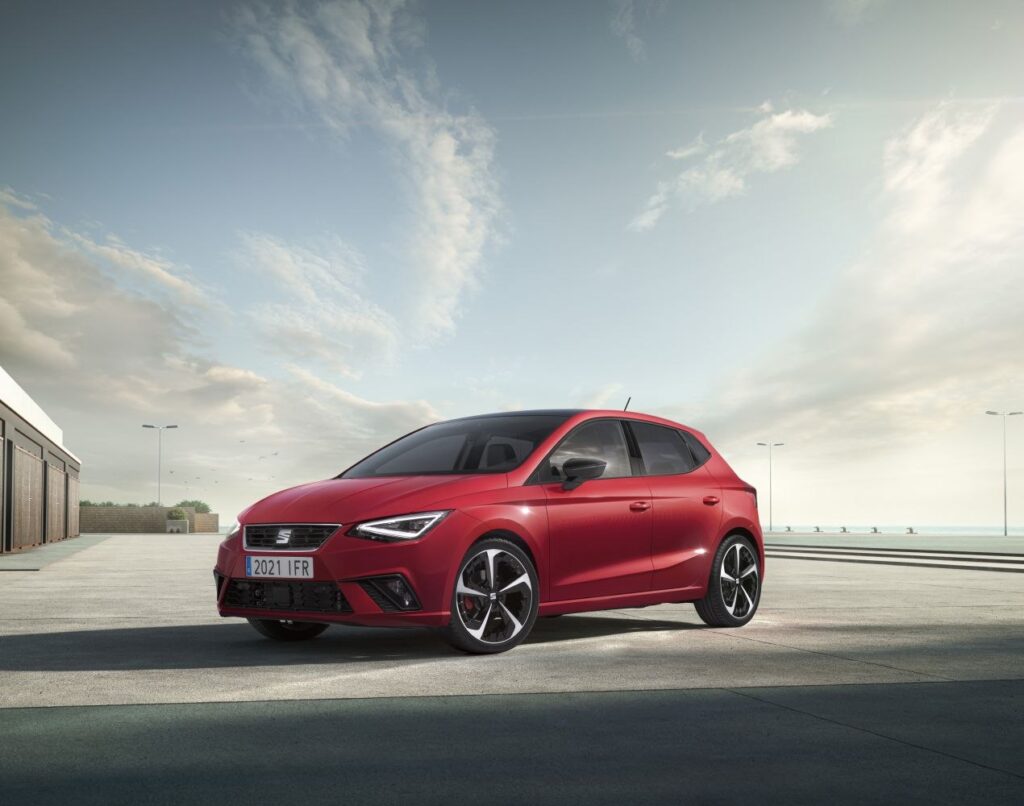
The Seat Ibiza V (facelift 2021) maintains its distinctive and dynamic design, characterized by sharp lines, sculpted surfaces, and an athletic stance. As a 5-door hatchback, it expertly balances sporty aesthetics with practical functionality. The facelift introduced subtle yet impactful changes, including updated LED lighting signatures (often standard or widely available on modern European cars), revised bumper designs, and fresh wheel options, all contributing to a more contemporary and assertive road presence.
Measuring 159.8 inches in length, 70.08 inches in width (76.46 inches including mirrors), and 56.85 inches in height, with a wheelbase of 100.94 inches, the Ibiza offers a compact footprint ideal for urban maneuverability while maximizing interior space. The design prioritizes aerodynamic efficiency, contributing to both fuel economy and reduced wind noise.
Inside, the Ibiza offers a well-appointed cabin designed for five occupants, with a focus on ergonomics and modern connectivity. While specific infotainment details are not provided in the technical data, a 2021 facelift typically implies an upgrade to larger, higher-resolution touchscreens, enhanced smartphone integration (Apple CarPlay and Android Auto), and improved digital instrumentation. Material quality in the B-segment is always a balance, but Seat generally aims for a youthful and tactile feel.
Practicality is a strong suit for the Ibiza. Its hatchback body style provides versatile cargo space, ranging from a generous 12.54 cubic feet (355 liters) with all seats in place, expanding to a substantial 41.14 cubic feet (1165 liters) when the rear seats are folded down. This flexibility makes it highly adaptable for various lifestyles, from daily commuting to weekend errands. The kerb weight of 2409.65 lbs (1093 kg) underscores its lightweight construction, which benefits both performance and efficiency.
Underneath, the Ibiza utilizes a well-proven suspension setup: independent McPherson struts with coil springs and an anti-roll bar at the front, and a semi-independent arrangement with coil springs at the rear. This configuration provides a comfortable ride quality while maintaining responsive handling. Braking is handled by ventilated discs at the front (276×24 mm) and solid discs at the rear (230×9 mm), augmented by ABS (Anti-lock Braking System) for assured stopping power. The electric power steering system, with its rack and pinion setup, offers precise control and light effort, particularly useful in city driving and parking maneuvers, with a minimum turning circle of 34.78 feet (10.6 meters). Various tire and wheel options, ranging from 185/65 R15 to 215/40 R18, allow for customization in terms of grip, comfort, and aesthetic appeal.
Technical Specifications
| Category | Specification |
|---|---|
| Brand | Seat |
| Model | Ibiza |
| Generation | Ibiza V (facelift 2021) |
| Engine Type | 1.0 TSI (115 Hp) |
| Production Start | March, 2024 |
| Production End | October, 2025 |
| Powertrain Architecture | Internal Combustion engine |
| Body type | Hatchback |
| Seats | 5 |
| Doors | 5 |
Performance Specs |
|
| Combined Fuel Consumption (WLTP) | 5.2-5.7 l/100 km (45.2 – 41.3 US mpg) |
| CO2 emissions (WLTP) | 117-128 g/km |
| Fuel Type | Petrol (Gasoline) |
| Acceleration 0 – 60 mph | 9.2 sec |
| Acceleration 0 – 100 km/h | 9.7 sec |
| Maximum Speed | 123.03 mph (198 km/h) |
| Emission Standard | Euro 6e |
| Weight-to-power ratio | 9.5 kg/Hp (105.2 Hp/tonne) |
| Weight-to-torque ratio | 5.5 kg/Nm (183 Nm/tonne) |
Engine Specs |
|
| Power | 115 Hp @ 5500 rpm |
| Power per liter | 115.1 Hp/l |
| Torque | 147.51 lb.-ft. (200 Nm) @ 2000-3500 rpm |
| Engine Layout | Front, Transverse |
| Engine Model/Code | EA211 evo2 |
| Engine Displacement | 1.0 l (999 cm3 / 60.96 cu. in.) |
| Number of Cylinders | 3 |
| Engine Configuration | Inline |
| Cylinder Bore | 2.93 in. (74.5 mm) |
| Piston Stroke | 3.01 in. (76.4 mm) |
| Compression Ratio | 11.5:1 |
| Valves per Cylinder | 4 |
| Fuel Injection System | Direct injection |
| Engine Aspiration | Turbocharger, Intercooler |
| Valvetrain | DOHC |
| Engine Systems | Start & Stop System, Particulate filter |
Space, Volume and Weights |
|
| Kerb Weight | 2409.65 lbs (1093 kg) |
| Max. Weight | 3703.77 lbs (1680 kg) |
| Max Load | 1294.11 lbs (587 kg) |
| Trunk (boot) space – minimum | 12.54 cu. ft. (355 l) |
| Trunk (boot) space – maximum | 41.14 cu. ft. (1165 l) |
| Fuel Tank Capacity | 10.57 US gal (40 l) |
| Max. Roof Load | 165.35 lbs (75 kg) |
| Permitted Trailer Load with brakes (8%) | 2645.55 lbs (1200 kg) |
| Permitted Trailer Load with brakes (12%) | 2425.08 lbs (1100 kg) |
| Permitted Trailer Load without brakes | 1278.68 lbs (580 kg) |
| Permitted Towbar Download | 110.23 lbs (50 kg) |
Dimensions |
|
| Length | 159.8 in. (4059 mm) |
| Width | 70.08 in. (1780 mm) |
| Width including mirrors | 76.46 in. (1942 mm) |
| Height | 56.85 in. (1444 mm) |
| Wheelbase | 100.94 in. (2564 mm) |
| Front Track | 60.04 in. (1525 mm) |
| Rear (Back) Track | 59.25 in. (1505 mm) |
| Front Overhang | 31.34 in. (796 mm) |
| Rear Overhang | 27.52 in. (699 mm) |
| Minimum Turning Circle (turning diameter) | 34.78 ft. (10.6 m) |
Drivetrain, Brakes and Suspension Specs |
|
| Drivetrain Architecture | The Internal combustion engine (ICE) drives the front wheels of the vehicle. |
| Drive Wheel | Front wheel drive |
| Number of gears and type of gearbox | 6 gears, manual transmission |
| Front Suspension | Independent, type McPherson with coil spring and anti-roll bar |
| Rear Suspension | Semi-independent, coil spring |
| Front Brakes | Ventilated discs, 276×24 mm |
| Rear Brakes | Disc, 230×9 mm |
| Assisting Systems | ABS (Anti-lock braking system) |
| Steering Type | Steering rack and pinion |
| Power Steering | Electric Steering |
| Tires Size | 185/65 R15; 195/55 R16; 215/45 R17; 215/40 R18 |
| Wheel Rims Size | 5.5J x 15; 6J x 16; 7J x 17; 7J x 18 |
Legacy and Market Impact
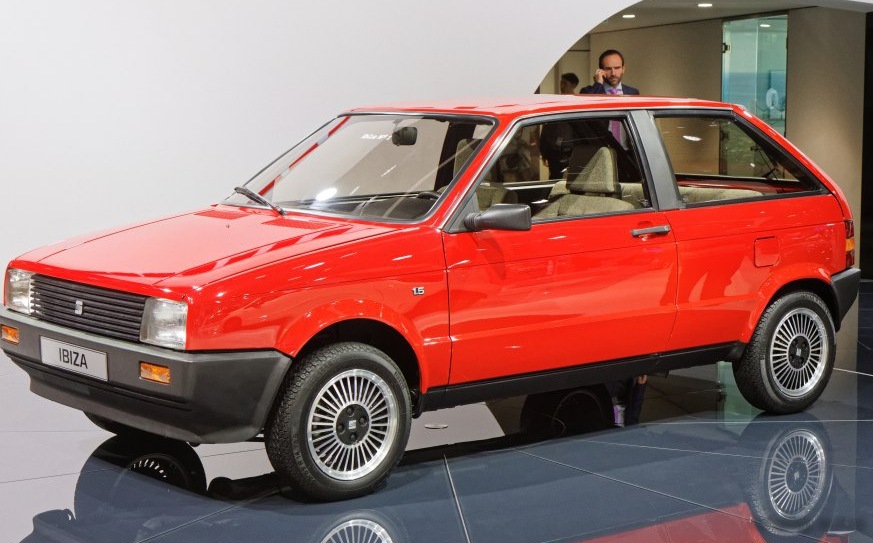
The Seat Ibiza has enjoyed a storied legacy since its introduction in 1984, becoming Seat’s best-selling model and a cultural icon in many European and Latin American markets. The fifth generation, particularly with the 2021 facelift, continues this tradition by offering a blend of sharp design, modern technology, and practical efficiency that resonates deeply with its target demographic: young, urban drivers and small families.
In its primary European market, the Ibiza faces stiff competition from a multitude of well-established rivals. Key competitors include its Volkswagen Group stablemates, the Volkswagen Polo and Skoda Fabia, with which it shares its underlying platform and many components. However, Seat strategically positions the Ibiza as the more emotional, sportier, and design-forward choice among these siblings. Beyond the VW Group, the Ibiza competes directly with segment leaders such as the Ford Fiesta, Renault Clio, Peugeot 208, and Opel/Vauxhall Corsa. Its success hinges on its ability to offer a distinctive personality and a strong value proposition compared to these formidable contenders.
The Seat Ibiza V (facelift 2021) 1.0 TSI (115 Hp) holds significant historical importance for Seat. It exemplifies the brand’s evolution from a purely Spanish carmaker to a key player within the Volkswagen Group, leveraging shared technology while maintaining a unique identity. The continued refinement of its small-displacement turbocharged engines, like the 1.0 TSI, showcases the industry’s drive towards downsizing without compromising performance, all while meeting increasingly strict environmental regulations. This specific powertrain configuration is a prime example of how modern internal combustion engines can deliver both spirited performance and impressive fuel economy, making it a highly relevant choice for consumers prioritizing running costs and environmental impact.
Its role in the market extends beyond just sales figures; the Ibiza often serves as an entry point into the Seat brand, attracting new customers who might later consider larger models like the Leon or the brand’s successful SUV lineup (Arona, Ateca, Tarraco). The Ibiza’s reputation for reliability, coupled with its engaging driving experience and youthful appeal, solidifies its position as a highly respected and impactful model in the global automotive landscape, even if its presence isn’t felt directly in the American market. The 2024-2025 model year run for this specific variant further cements its status as a contemporary and relevant option within the dynamic B-segment, continuing the Ibiza’s legacy of success and innovation.