The Renault Megane III Coupe (Phase III, 2014) GT 2.0 TCe (220 Hp) Start&Stop: A European Performance Coupe
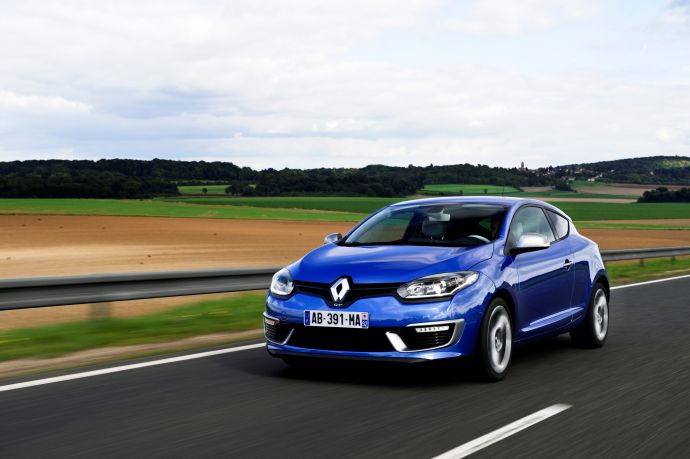
The Renault Megane III Coupe (Phase III, 2014) GT 2.0 TCe (220 Hp) Start&Stop represents a compelling chapter in the third generation of Renault’s popular compact car, specifically its sportier two-door variant. Launched in 2014 as part of the Phase III facelift, this model carved out a niche in the highly competitive European compact performance segment. While not officially sold in the United States, the Megane has been a cornerstone of Renault’s lineup across Europe and other international markets, offering a blend of style, practicality, and dynamic driving characteristics. The GT 2.0 TCe (220 Hp) Start&Stop variant was positioned as a performance-oriented offering, bridging the gap between the standard Megane models and the more extreme Renault Sport (RS) versions. This particular iteration, produced from 2014 to 2016, showcased Renault’s commitment to delivering accessible performance combined with contemporary efficiency technologies.
Engine and Performance: Power Meets Efficiency in the Renault Megane III Coupe
At the heart of the Renault Megane III Coupe GT 2.0 TCe (220 Hp) Start&Stop lies a potent F4R 874 turbocharged inline-four engine. This 2.0-liter (1998 cm3 or 121.93 cu. in.) gasoline powerplant was engineered to deliver an exhilarating driving experience without sacrificing modern efficiency demands. It produces a robust 220 horsepower at 5500 rpm, translating to an impressive power-per-liter output of 110.1 horsepower. Torque figures are equally impressive, with 250.77 lb.-ft. (340 Nm) available from a relatively low 2400 rpm, ensuring strong pulling power across a wide rev range. This ample torque, combined with the engine’s responsive turbocharger and intercooler setup, allows for brisk acceleration. The Megane GT 2.0 TCe can sprint from 0 to 60 mph in a mere 6.5 seconds, with 0 to 62 mph (100 km/h) taking 6.8 seconds, and boasts a top speed of 149.13 mph (240 km/h).
Power is channeled to the front wheels via a precise 6-speed manual transmission, offering engaging control for enthusiasts. The powertrain architecture features a front, transverse engine layout, typical for front-wheel-drive compact cars, optimizing packaging and weight distribution. A key feature for its era was the inclusion of a Start&Stop system, which automatically shuts off the engine when the vehicle is stationary and restarts it when the driver intends to move. This technology significantly contributes to fuel economy, particularly in urban environments, and helps reduce CO2 emissions. The combined fuel economy for this model was rated at 32.2 US mpg (7.3 l/100 km), with urban consumption at 24.5 US mpg (9.6 l/100 km) and extra-urban at 39.2 US mpg (6 l/100 km). CO2 emissions stood at 169 g/km, adhering to the Euro 5 emission standard, showcasing a balance between performance and environmental consciousness for its time. The engine utilizes a multi-port manifold injection system and has a compression ratio of 9.3:1, with 4 valves per cylinder.
Design and Features: Sporty Aesthetics and Functional Engineering
The Renault Megane III Coupe (Phase III, 2014) GT distinguishes itself with a sleek, three-door coupe body style that exudes a sporty and dynamic presence. Measuring 169.25 inches in length, 70.28 inches in width, and 56.02 inches in height, it presents a compact yet muscular stance. The wheelbase of 103.94 inches contributes to both agile handling and a surprisingly spacious cabin for a coupe, accommodating five occupants. The Phase III facelift brought subtle but effective styling updates, including a revised front fascia that aligned with Renault’s contemporary design language.
Beyond aesthetics, the engineering beneath the skin was designed for spirited driving. The suspension system comprises an independent McPherson type setup at the front, known for its balance of comfort and handling precision, paired with a torsion beam rear suspension. This combination provides a firm yet compliant ride characteristic of European sports compacts. Braking performance is handled by ventilated discs at the front and solid discs at the rear, complemented by an Anti-lock Braking System (ABS) for enhanced safety and control during emergency stops. Steering is managed by a rack and pinion system with electric power steering, offering precise feedback and ease of maneuverability, particularly in urban settings with a minimum turning circle of 35.93 feet.
The GT trim level typically included specific visual enhancements such as unique alloy wheels, which in this case were 7.5J x 18-inch rims shod with 225/40 R18V tires, further emphasizing its performance credentials and contributing to improved grip. Inside, while specific details are not provided, GT models often featured sport seats, distinctive trim, and a driver-focused cockpit designed to enhance the connection between driver and car. Practicality was not entirely overlooked, with a trunk capacity ranging from 12.15 cu. ft. (344 liters) with all seats up, expanding to 35 cu. ft. (991 liters) with the rear seats folded, making it reasonably versatile for a coupe.
Technical Specifications
| Renault Megane III Coupe (Phase III, 2014) GT 2.0 TCe (220 Hp) Start&Stop | |
|---|---|
| General Information | |
| Brand | Renault |
| Model | Megane |
| Generation | Megane III Coupe (Phase III, 2014) |
| Type (Engine) | GT 2.0 TCe (220 Hp) Start&Stop |
| Start of Production | 2014 year |
| End of Production | 2016 year |
| Powertrain Architecture | Internal Combustion Engine |
| Body Type | Coupe |
| Seats | 5 |
| Doors | 3 |
| Performance Specifications | |
| Fuel Consumption (Urban) | 9.6 l/100 km (24.5 US mpg) |
| Fuel Consumption (Extra Urban) | 6.0 l/100 km (39.2 US mpg) |
| Fuel Consumption (Combined) | 7.3 l/100 km (32.2 US mpg) |
| CO2 Emissions | 169 g/km |
| Fuel Type | Gasoline |
| Acceleration 0 – 60 mph | 6.5 sec |
| Acceleration 0 – 62 mph (0-100 km/h) | 6.8 sec |
| Maximum Speed | 149.13 mph (240 km/h) |
| Emission Standard | Euro 5 |
| Weight-to-Power Ratio | 6 kg/Hp (166.7 Hp/tonne) |
| Weight-to-Torque Ratio | 3.9 kg/Nm (257.6 Nm/tonne) |
| Engine Specifications | |
| Power | 220 Hp @ 5500 rpm |
| Power per Liter | 110.1 Hp/l |
| Torque | 250.77 lb.-ft. (340 Nm) @ 2400 rpm |
| Engine Layout | Front, Transverse |
| Engine Model/Code | F4R 874 |
| Engine Displacement | 2.0 liters (1998 cm3 / 121.93 cu. in.) |
| Number of Cylinders | 4 |
| Engine Configuration | Inline |
| Cylinder Bore | 3.26 in. (82.7 mm) |
| Piston Stroke | 3.66 in. (93 mm) |
| Compression Ratio | 9.3:1 |
| Number of Valves per Cylinder | 4 |
| Fuel Injection System | Multi-port manifold injection |
| Engine Aspiration | Turbocharger, Intercooler |
| Engine Oil Capacity | 5.71 US qt (5.4 l) |
| Coolant Capacity | 6.87 US qt (6.5 l) |
| Engine Systems | Start & Stop System |
| Space, Volume and Weights | |
| Curb Weight | 2910.1 lbs (1320 kg) |
| Maximum Weight | 4087.37 lbs (1854 kg) |
| Maximum Load | 1177.27 lbs (534 kg) |
| Trunk (Boot) Space – Minimum | 12.15 cu. ft. (344 l) |
| Trunk (Boot) Space – Maximum | 35 cu. ft. (991 l) |
| Fuel Tank Capacity | 15.85 US gal (60 l) |
| Max. Roof Load | 176.37 lbs (80 kg) |
| Permitted Trailer Load with Brakes (12%) | 2866.01 lbs (1300 kg) |
| Permitted Trailer Load without Brakes | 1532.21 lbs (695 kg) |
| Permitted Towbar Download | 165.35 lbs (75 kg) |
| Dimensions | |
| Length | 169.25 in. (4299 mm) |
| Width | 70.28 in. (1785 mm) |
| Height | 56.02 in. (1423 mm) |
| Wheelbase | 103.94 in. (2640 mm) |
| Front Track | 60.87 in. (1546 mm) |
| Rear (Back) Track | 60.91 in. (1547 mm) |
| Front Overhang | 33.94 in. (862 mm) |
| Rear Overhang | 31.38 in. (797 mm) |
| Ride Height (Ground Clearance) | 4.72 in. (120 mm) |
| Minimum Turning Circle (Turning Diameter) | 35.93 ft. (10.95 m) |
| Drivetrain, Brakes and Suspension Specifications | |
| Drivetrain Architecture | Front-wheel drive, Internal Combustion Engine |
| Drive Wheel | Front-wheel drive |
| Number of Gears and Type of Gearbox | 6 gears, manual transmission |
| Front Suspension | Independent type McPherson |
| Rear Suspension | Torsion |
| Front Brakes | Ventilated discs |
| Rear Brakes | Disc |
| Assisting Systems | ABS (Anti-lock braking system) |
| Steering Type | Steering rack and pinion |
| Power Steering | Electric Steering |
| Tires Size | 225/40 R18V |
| Wheel Rims Size | 7.5J x 18 |
Legacy and Market Impact of the Renault Megane III Coupe
The Renault Megane III Coupe GT 2.0 TCe (220 Hp) Start&Stop holds a significant place in the European compact car market, particularly for enthusiasts seeking a sporty yet practical daily driver. In its primary market, the Megane Coupe competed against a strong lineup of rivals, including the Volkswagen Golf GTI, Ford Focus ST, Opel Astra GTC, and the Peugeot 308 GT. What set the Megane GT apart was its distinctive styling, particularly the coupe’s sleek profile, and Renault’s reputation for building engaging chassis and potent engines.
The GT designation itself was crucial for Renault. It allowed the brand to offer a performance-oriented model that was more accessible and less extreme than the full-blown Renault Sport (RS) variants. The RS models, such as the Megane RS 265 or RS 275, were track-focused machines, often with stiffer suspension, more aggressive aerodynamics, and higher power outputs. The GT, on the other hand, provided a refined balance: enough power and handling prowess to be genuinely fun on winding roads, but with sufficient comfort and civility for everyday commuting. This positioning appealed to a broader audience who desired a spirited driving experience without the compromises often associated with hardcore performance cars.
Throughout its production run from 2014 to 2016, the Megane III Coupe GT reinforced Renault’s heritage in creating compelling hot hatches and sport coupes. It showcased the brand’s engineering capabilities in combining a powerful turbocharged engine with a well-sorted chassis, all while integrating modern efficiency features like the Start&Stop system. Its legacy is one of offering a distinctively French take on the performance compact, characterized by a unique blend of style, dynamic capability, and a commitment to driver engagement. For many European buyers, the Megane GT represented an attractive proposition, demonstrating that a performance car could also be a stylish, relatively efficient, and practical choice for daily life. The model contributed to the Megane’s overall success as a versatile and popular offering in the fiercely competitive C-segment.