
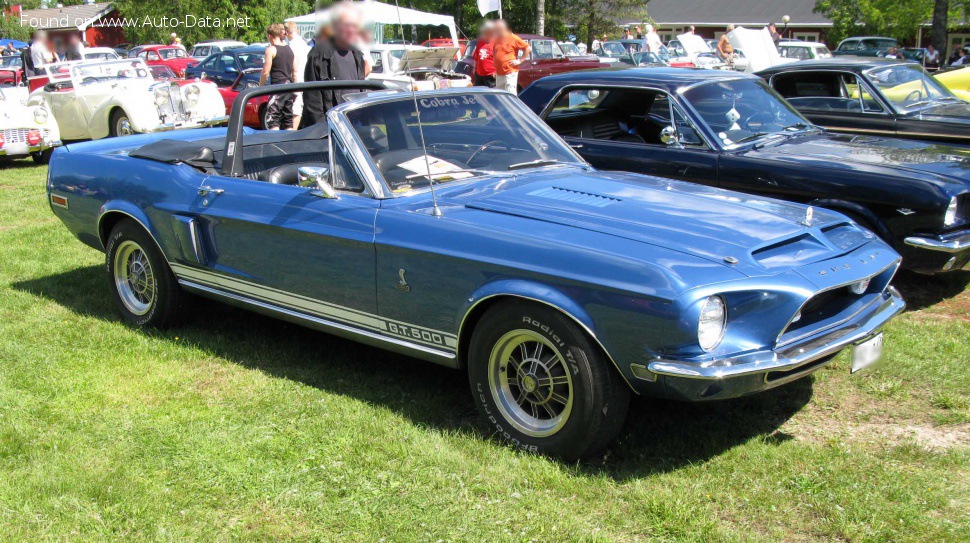
The Legendary Ford Shelby I Cabrio GT 500 7.0 V8 (340 Hp) Automatic (1969-1970)
The late 1960s represented a zenith for American muscle cars, a period when horsepower reigned supreme, and manufacturers vied for dominance on both the street and the track. Within this fiercely competitive landscape, Carroll Shelby’s creations stood out as truly exceptional. The Ford Shelby I Cabrio GT 500 7.0 V8 (340 Hp) Automatic, produced for the 1969 and 1970 model years, represents a pivotal chapter in the Shelby Mustang saga. This generation of Shelby vehicles, often referred to as the “Shelby I Cabrio” or simply the “1969-70 Shelby GT500 convertible,” marked a significant evolution in design, performance, and luxury within the iconic Mustang platform. Positioned at the pinnacle of performance pony cars, the GT500 convertible combined formidable power with open-air driving excitement, appealing to enthusiasts who demanded both raw speed and a distinctive presence.
Unlike earlier Shelby Mustangs, which were largely modified by Shelby American in California, the 1969-70 models saw Ford take a more direct role in their production, integrating many Shelby design cues and performance enhancements directly into the Mustang assembly line. Despite this shift, the cars retained the unmistakable Shelby DNA, characterized by aggressive styling, advanced (for the era) suspension tuning, and, crucially, potent V8 engines. The GT500 convertible, in particular, offered a unique blend of high-performance driving and cruising capability, making it a highly desirable and collectible machine today.
Engine and Performance: Powering the Ford Shelby I Cabrio GT 500 7.0 V8 (340 Hp) Automatic
At the heart of the 1969-1970 Ford Shelby I Cabrio GT 500 7.0 V8 (340 Hp) Automatic lay a truly legendary powertrain: a massive 7.0-liter (427 cubic inch) naturally aspirated V8 engine. This formidable powerplant, configured in a front, longitudinal layout, was designed to deliver immense torque and impressive horsepower, characteristic of the era’s muscle car philosophy. With a robust 340 horsepower generated at 5200 revolutions per minute (rpm) and an astounding 440.32 lb.-ft. of torque peaking at a lower 3400 rpm, the GT500 convertible was an undisputed king of the road.
The engine’s architecture featured eight cylinders in a V-configuration, with two valves per cylinder, ensuring efficient breathing for its substantial displacement. Fuel delivery was handled by a traditional carburetor system, a staple of high-performance engines of the late 1960s, providing a visceral connection to the engine’s operation. The compression ratio of 10.6:1 was relatively high for the time, contributing to its impressive power output and requiring premium gasoline. The bore and stroke measurements of 4.13 inches and 3.98 inches respectively underscored its large-displacement, torque-focused design.
Power was transferred to the rear wheels via a robust 3-speed automatic transmission. While some purists might prefer a manual gearbox, the automatic offered smooth, effortless power delivery, making the GT500 convertible an excellent grand tourer as well as a drag strip contender. This combination of a high-output V8 and a responsive automatic transmission provided exhilarating acceleration and a powerful driving experience that was both thrilling and accessible. With a curb weight of 3939.66 pounds, the car achieved a weight-to-power ratio of 5.3 kg/Hp (approximately 11.68 lbs/Hp), translating to 190.3 Hp per tonne, showcasing its formidable performance capabilities.
Design and Features of the Shelby GT500 Convertible
The 1969-1970 Shelby GT500 convertible represented a significant aesthetic departure from its predecessors, adopting a more integrated, sophisticated, and aggressive look that was distinct from the standard Mustang. The body type was, as its name suggests, a two-door cabriolet, offering seating for four occupants and providing the quintessential open-air American driving experience.
Key design elements included a unique front fascia with a prominent, extended hood featuring functional scoops and vents, designed to feed cool air to the hungry V8 engine. The grille, often featuring a centrally mounted Cobra emblem, gave the car an unmistakable identity. Side scoops, both decorative and functional, enhanced its muscular profile, while sequential turn signals at the rear, a signature Shelby touch, added a touch of flair. The overall dimensions—a length of 185.98 inches, a width of 71.3 inches, and a height of 51.3 inches—gave the GT500 a substantial and imposing stance. The wheelbase of 107.99 inches provided a stable platform for its high-performance aspirations.
Inside, the GT500 offered a blend of performance-oriented instrumentation and comfortable amenities. While not overtly luxurious by modern standards, the interior was well-appointed for its era, featuring bucket seats, a sport steering wheel, and comprehensive gauges to monitor the engine’s vitals. The convertible top, whether manual or power-operated, allowed drivers to fully immerse themselves in the driving experience, amplifying the sound of the powerful V8. Safety features, typical for the late 1960s, included lap belts, and the solid construction of the Ford platform provided a degree of structural rigidity. The car’s braking system comprised disc brakes at the front and drum brakes at the rear, a common setup for high-performance vehicles of the period, offering adequate stopping power for its weight and speed.
Technical Specifications: Ford Shelby I Cabrio GT 500 7.0 V8 (340 Hp) Automatic
| Category | Specification | Value |
|---|---|---|
| General Information | Brand | Ford |
| Model | Shelby | |
| Generation | Shelby I Cabrio | |
| Type (Engine) | GT 500 7.0 V8 (340 Hp) Automatic | |
| Start of Production | 1969 year | |
| End of Production | 1970 year | |
| Powertrain Architecture | Internal Combustion engine | |
| Body Type | Cabriolet | |
| Seats | 4 | |
| Doors | 2 | |
| Performance Specs | Fuel Type | Petrol (Gasoline) |
| Weight-to-Power Ratio | 5.3 kg/Hp (11.68 lbs/Hp) | |
| 190.3 Hp/tonne | ||
| Weight-to-Torque Ratio | 3 kg/Nm (6.61 lbs/Nm) | |
| 334.1 Nm/tonne | ||
| Engine Specs | Power | 340 Hp @ 5200 rpm |
| Power per liter | 48.6 Hp/l | |
| Torque | 597 Nm (440.32 lb.-ft.) @ 3400 rpm | |
| Engine Layout | Front, Longitudinal | |
| Engine Displacement | 6997 cm3 (426.98 cu. in.) | |
| Number of Cylinders | 8 | |
| Engine Configuration | V-engine | |
| Cylinder Bore | 104.9 mm (4.13 in.) | |
| Piston Stroke | 101.19 mm (3.98 in.) | |
| Compression Ratio | 10.6:1 | |
| Number of Valves per Cylinder | 2 | |
| Fuel Injection System | Carburetor | |
| Engine Aspiration | Naturally aspirated engine | |
| Space, Volume and Weights | Kerb Weight | 1787 kg (3939.66 lbs.) |
| Fuel Tank Capacity | 76 liters (20.08 US gal) | |
| Dimensions | Length | 4724 mm (185.98 in.) |
| Width | 1811 mm (71.3 in.) | |
| Height | 1303 mm (51.3 in.) | |
| Wheelbase | 2743 mm (107.99 in.) | |
| Front Track | 1486 mm (58.5 in.) | |
| Rear (Back) Track | 1486 mm (58.5 in.) | |
| Minimum Turning Circle (Turning Diameter) | 11.46 m (37.6 ft.) | |
| Drivetrain, Brakes and Suspension Specs | Drivetrain Architecture | The Internal combustion engine (ICE) drives the rear wheels of the vehicle. |
| Drive Wheel | Rear wheel drive | |
| Number of Gears and Type of Gearbox | 3 gears, automatic transmission | |
| Front Brakes | Disc | |
| Rear Brakes | Drum |
Legacy and Market Impact of the Shelby GT500 Convertible
The 1969-1970 Ford Shelby I Cabrio GT 500 7.0 V8 (340 Hp) Automatic holds a significant place in the pantheon of American muscle cars and within the storied legacy of Carroll Shelby. These models were the culmination of Shelby’s collaboration with Ford on the Mustang platform, representing a period where the vehicles became more refined, albeit still ferociously powerful. While earlier Shelby Mustangs were raw, track-focused machines, the 1969-70 GT500 convertible offered a balance of high performance with a degree of comfort and sophistication, aiming to broaden its appeal.
In its primary market, the United States, the GT500 convertible competed with other top-tier muscle cars of the era, such as the Chevrolet Camaro ZL1 and Z/28, the Pontiac GTO Judge, and the Plymouth Hemi ‘Cuda. What set the Shelby apart was its distinctive styling, the legendary Cobra branding, and the meticulous attention to performance details that were Shelby’s hallmark. The GT500 convertible, in particular, offered a unique proposition, blending the thrill of high-horsepower driving with the joy of open-air motoring, a combination not readily available from all competitors in such a potent package.
Historically, the 1969-70 Shelby models are significant as they were the last to be directly overseen by Carroll Shelby himself before a temporary hiatus in his relationship with Ford. Despite Ford taking over more of the production, these cars retained the aggressive character and performance credentials that defined the Shelby name. Their relatively low production numbers, especially for the convertible variant, have contributed to their immense collectibility today. These cars are not merely vehicles; they are rolling pieces of American automotive history, representing an era of unbridled power and iconic design.
Today, the Ford Shelby I Cabrio GT 500 7.0 V8 (340 Hp) Automatic is highly sought after by collectors and enthusiasts worldwide. Its reputation as a powerful, stylish, and rare classic ensures its continued appreciation in value and its enduring status as a symbol of American automotive excellence. The roar of its 7.0-liter V8, combined with its distinctive styling and open-top configuration, makes it an unforgettable driving machine and a cherished piece of muscle car heritage.
