Introduction to the Toyota RAV4 IV 2.2 D-4D (150 Hp) 4WD
The Toyota RAV4, an acronym for “Recreational Activity Vehicle: 4-wheel drive,” has long been a trailblazer in the compact SUV segment, effectively defining the crossover utility vehicle (CUV) category for decades. The fourth generation, known internally as the XA40 series, debuted in 2012, marking a significant evolution in design, technology, and driving dynamics for this globally popular model. Among its diverse powertrain offerings, the Toyota RAV4 IV 2.2 D-4D (150 Hp) 4WD stands out as a particularly relevant variant for markets outside North America, notably Europe, where diesel engines and all-wheel drive capabilities are highly valued for their blend of efficiency and utility.
Produced from 2012 to 2015, this specific iteration of the RAV4 IV was engineered to meet the demands of discerning European consumers who sought a practical, reliable, and fuel-efficient family vehicle capable of handling varied road conditions, from urban commutes to light off-road excursions. Unlike its gasoline-centric counterparts primarily sold in the United States, this diesel-powered Toyota RAV4 IV 2.2 D-4D (150 Hp) 4WD offered a compelling package of robust torque, respectable horsepower, and impressive fuel economy, all while adhering to the stringent Euro 5 emission standards of its era. Its all-wheel-drive architecture and spacious SUV body type ensured versatility, making it a competitive player in a crowded segment dominated by European and Asian manufacturers.
Engine and Performance: The Toyota RAV4 IV’s Diesel Powerplant
At the heart of the Toyota RAV4 IV 2.2 D-4D (150 Hp) 4WD lies Toyota’s well-regarded 2AD-FTV engine, a 2.2-liter (2231 cm3 or 136.14 cu. in.) inline four-cylinder diesel unit. This powertrain was specifically designed to deliver a balance of energetic performance and commendable fuel efficiency, a critical factor for its target markets. Equipped with a turbocharger and intercooler, the engine benefits from forced induction, significantly enhancing its power output and responsiveness across the rev range.
The 2.2 D-4D engine generates a robust 150 horsepower at 3600 rpm, which, when combined with its substantial torque figure, provides ample motivation for the compact SUV. Torque peaks at 250.77 lb.-ft. (340 Nm) available between a broad band of 2000 and 2800 rpm. This wide torque plateau ensures strong pulling power from low engine speeds, crucial for both swift acceleration and confident overtaking maneuvers, as well as for towing. Power is delivered to all four wheels via a precise 6-speed manual transmission, offering drivers an engaging and direct connection to the vehicle’s dynamics. The all-wheel-drive system provides enhanced traction and stability, particularly beneficial in adverse weather conditions or on unpaved roads.
Performance figures for this diesel RAV4 are quite respectable for its class. It can accelerate from 0 to 60 mph in a brisk 9.1 seconds (0-100 km/h in 9.6 seconds), making it capable of keeping pace with urban traffic and highway speeds. The top speed is rated at 118.06 mph (190 km/h). Beyond raw performance, the diesel engine shines in its fuel economy. The combined fuel consumption is an impressive 42 US mpg (5.6 l/100 km), with urban consumption at 35.1 US mpg (6.7 l/100 km) and extra-urban at 47 US mpg (5 l/100 km). These figures highlight its efficiency, contributing to lower running costs and reduced environmental impact, further bolstered by its Euro 5 emission standard compliance and inclusion of a particulate filter system. The engine’s common rail fuel injection system and DOHC valvetrain with 4 valves per cylinder further contribute to its refined operation and efficiency.
Design and Features of the Fourth-Generation RAV4
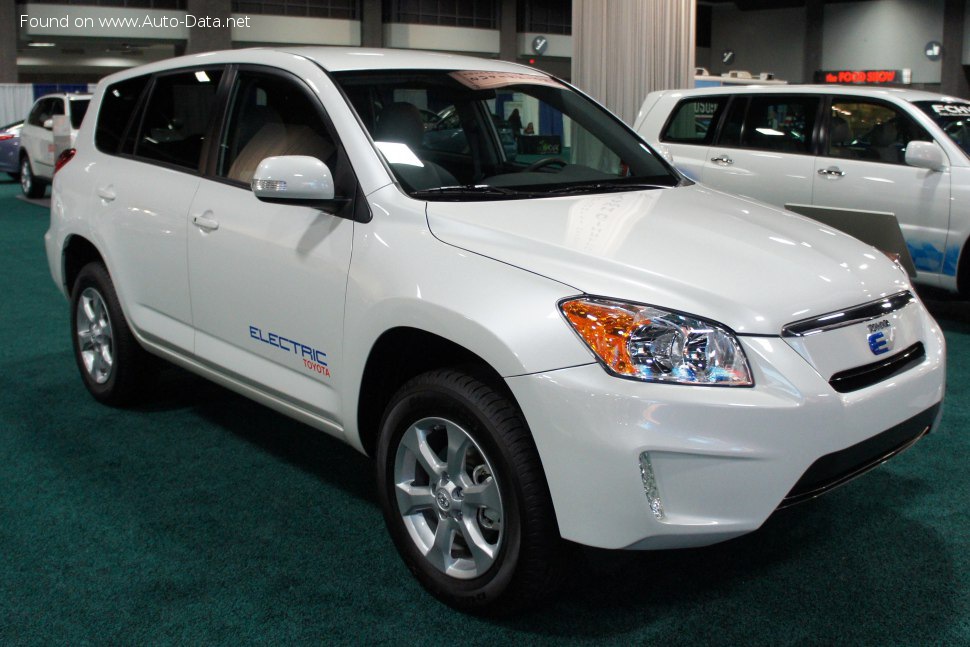
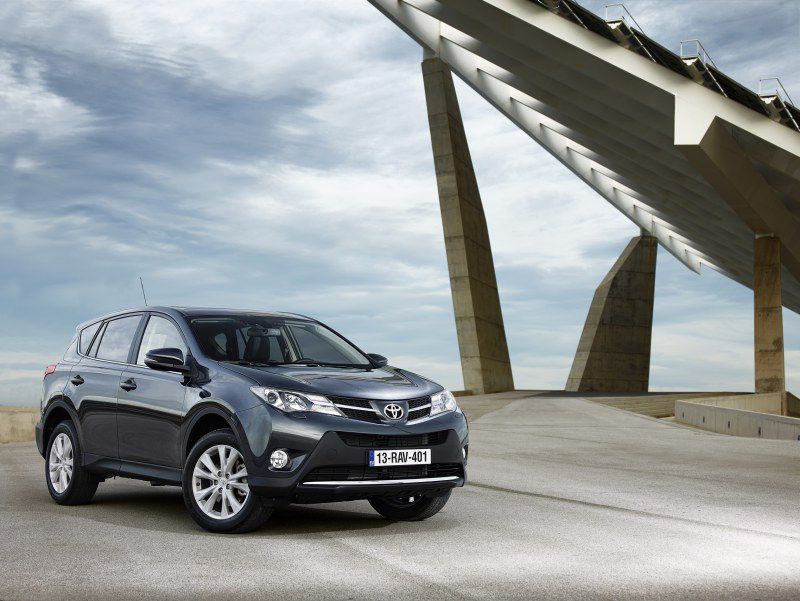
The fourth-generation Toyota RAV4 moved away from the more rounded aesthetic of its predecessors, adopting a sharper, more aggressive, and aerodynamic design language. With a drag coefficient (Cd) of 0.314, it was engineered for efficiency, helping to reduce fuel consumption and wind noise. The body type remained a versatile 5-door SUV, accommodating five occupants comfortably. Its dimensions—179.92 inches in length, 72.64 inches in width, and 65.35 inches in height, with a wheelbase of 104.72 inches—positioned it squarely within the compact SUV segment, offering a good balance between maneuverability and interior space.
Inside, the RAV4 IV offered a practical and well-appointed cabin. The minimum trunk space of 19.32 cu. ft. (547 liters) was generous for its class, providing ample room for luggage, groceries, or sports equipment, and could be expanded by folding down the rear seats. The interior was designed with user-friendliness in mind, featuring durable materials and intuitive controls. For a vehicle of its era, the RAV4 was equipped with essential safety and convenience features, including an Anti-lock Braking System (ABS) as standard, enhancing control during emergency braking.
Underneath, the RAV4 IV featured a sophisticated suspension setup designed to provide a comfortable ride and competent handling. The front utilizes an independent MacPherson strut system, while the rear employs a double wishbone configuration, a combination that strikes a good balance between ride comfort, body control, and off-road articulation. Braking duties are handled by ventilated discs at the front and solid discs at the rear, ensuring consistent stopping power. The steering system is a rack and pinion type, offering precise and responsive feedback to the driver. The vehicle rode on 225/65 R17 tires mounted on 7J x 17-inch wheel rims, providing a good compromise between on-road comfort and light off-road capability. Furthermore, its substantial towing capacity of 4409.25 lbs (2000 kg) with brakes made it a practical choice for those needing to haul trailers or caravans.
Technical Specifications
| Feature | Specification |
|---|---|
| Brand | Toyota |
| Model | RAV4 |
| Generation | RAV4 IV (XA40) |
| Type (Engine) | 2.2 D-4D (150 Hp) 4WD |
| Start of Production | 2012 year |
| End of Production | 2015 year |
| Powertrain Architecture | Internal Combustion Engine |
| Body type | SUV |
| Seats | 5 |
| Doors | 5 |
| Fuel Consumption (Urban) | 6.7 l/100 km (35.1 US mpg) |
| Fuel Consumption (Extra Urban) | 5 l/100 km (47 US mpg) |
| Fuel Consumption (Combined) | 5.6 l/100 km (42 US mpg) |
| CO2 Emissions | 147 g/km |
| Fuel Type | Diesel |
| Acceleration 0 – 60 mph | 9.1 sec |
| Maximum Speed | 118.06 mph (190 km/h) |
| Emission Standard | Euro 5 |
| Power | 150 Hp @ 3600 rpm |
| Power per liter | 67.2 Hp/l |
| Torque | 250.77 lb.-ft. @ 2000-2800 rpm (340 Nm) |
| Engine Layout | Front, Transverse |
| Engine Model/Code | 2AD-FTV |
| Engine Displacement | 2.231 liters (136.14 cu. in.) |
| Number of Cylinders | 4 |
| Engine Configuration | Inline |
| Cylinder Bore | 3.39 in. (86 mm) |
| Piston Stroke | 3.78 in. (96 mm) |
| Compression Ratio | 15.7:1 |
| Number of Valves per Cylinder | 4 |
| Fuel Injection System | Diesel Commonrail |
| Engine Aspiration | Turbocharger, Intercooler |
| Valvetrain | DOHC |
| Engine Oil Capacity | 6.23 US qt (5.9 l) |
| Coolant Capacity | 7.71 US qt (7.3 l) |
| Engine Systems | Particulate filter |
| Max. Weight | 4894.26 lbs (2220 kg) |
| Trunk (boot) Space – Minimum | 19.32 cu. ft. (547 l) |
| Fuel Tank Capacity | 15.85 US gal (60 l) |
| Max. Roof Load | 187.39 lbs (85 kg) |
| Permitted Trailer Load with Brakes (12%) | 4409.25 lbs (2000 kg) |
| Permitted Trailer Load without Brakes | 1653.47 lbs (750 kg) |
| Permitted Towbar Download | 176.37 lbs (80 kg) |
| Length | 179.92 in. (4570 mm) |
| Width | 72.64 in. (1845 mm) |
| Height | 65.35 in. (1660 mm) |
| Wheelbase | 104.72 in. (2660 mm) |
| Front Track | 61.81 in. (1570 mm) |
| Rear (Back) Track | 61.81 in. (1570 mm) |
| Drag Coefficient (Cd) | 0.314 |
| Minimum Turning Circle (Turning Diameter) | 34.78 ft. (10.6 m) |
| Drive Wheel | All-wheel drive (4×4) |
| Number of Gears and Type of Gearbox | 6 gears, manual transmission |
| Front Suspension | Independent type McPherson |
| Rear Suspension | Double wishbone |
| Front Brakes | Ventilated discs |
| Rear Brakes | Disc |
| Assisting Systems | ABS (Anti-lock braking system) |
| Steering Type | Steering rack and pinion |
| Tires Size | 225/65 R17 |
| Wheel Rims Size | 7J x 17 |
Legacy and Market Impact of the Toyota RAV4 IV 2.2 D-4D
The Toyota RAV4 has consistently been a global sales success for Toyota, and the fourth generation, including the Toyota RAV4 IV 2.2 D-4D (150 Hp) 4WD, played a crucial role in maintaining this trajectory in specific international markets. While diesel engines are not typically offered in the U.S. market for compact SUVs, this particular RAV4 variant was a cornerstone of Toyota’s strategy in Europe and other regions where diesel power was, and to some extent still is, highly favored for its torque, efficiency, and durability.
Its reputation was built on Toyota’s hallmark reliability and low running costs, further enhanced by the diesel engine’s fuel efficiency. In its primary markets, the RAV4 IV 2.2 D-4D competed fiercely with established rivals such as the Volkswagen Tiguan, Nissan Qashqai (Rogue Sport in the US), Honda CR-V, Mazda CX-5, and Ford Kuga (Escape in the US). What set the RAV4 apart was its blend of proven engineering, practical interior, and a robust all-wheel-drive system, making it a versatile choice for families and individuals seeking a capable and dependable compact SUV.
The fourth-generation RAV4, particularly with this diesel powertrain, solidified its position as a sensible and highly competent vehicle. It appealed to a broad demographic, from urban dwellers who appreciated its compact footprint and elevated driving position to those in more rural areas who benefited from its AWD capabilities and towing capacity. The model contributed significantly to Toyota’s global sales volume, underscoring the brand’s ability to adapt its offerings to diverse market preferences. The legacy of the RAV4 IV 2.2 D-4D is one of quiet competence, proving that a well-engineered diesel engine, paired with a practical SUV body and a reliable drivetrain, could deliver a compelling and enduring value proposition in a highly competitive segment. It remains a testament to Toyota’s commitment to offering tailored solutions for its global customer base.