The Ford Shelby I Cobra GT 350: An Icon of American Muscle
The Ford Shelby I Cobra GT 350 5.0 V8 (254 Hp) represents a pivotal chapter in American automotive history, a high-performance variant born from the collaboration between Ford Motor Company and the legendary racer and automotive designer, Carroll Shelby. Introduced in its first generation from 1968 to 1970, this model was a direct evolution of Shelby’s earlier successful modifications of the Ford Mustang, transforming a popular pony car into a formidable street and track machine. Positioned within the burgeoning muscle car segment, the GT350 offered a compelling blend of raw V8 power, distinctive styling, and enhanced handling capabilities that set it apart from its contemporaries.
The 1968-1970 Shelby GT350, often referred to as the “Cobra GT 350” due to its powerful engine and heritage, was more than just a performance package; it was a statement. It embodied the spirit of American ingenuity and the quest for speed that defined the late 1960s. While subsequent Shelby models would escalate in power, the GT350 remained a balanced and highly respected performer, offering a more refined yet still aggressive driving experience compared to its larger-engined GT500 sibling. This article delves into the technical prowess, design philosophy, and enduring legacy of this quintessential American classic.
Engine and Performance: The Heart of the Ford Shelby I Cobra GT 350
At the core of the Ford Shelby I Cobra GT 350 5.0 V8 (254 Hp) was its potent powertrain, specifically designed to deliver exhilarating performance. The vehicle was propelled by a naturally aspirated 5.0-liter (4942 cm3 or 301.58 cu. in.) V-engine, configured with eight cylinders in a front, longitudinal layout. This robust V8 engine was equipped with a carburetor fuel injection system, a standard and highly effective setup for maximizing power delivery in its era. With a compression ratio of 10.5:1, the engine was engineered for optimal combustion and responsiveness.
The GT350’s engine generated a formidable 254 horsepower at 4800 rpm, a significant output for a production vehicle of its time. Torque figures were equally impressive, peaking at 309.78 lb.-ft. (420 Nm) at a relatively low 2800 rpm. This characteristic low-end torque ensured strong acceleration and a thrilling driving experience from a standstill. The power-per-liter ratio stood at 51.4 Hp/l, showcasing efficient power generation for its displacement. Power was channeled to the rear wheels via a robust 4-speed manual transmission, offering drivers direct and engaging control over the vehicle’s immense power. This drivetrain architecture, combining a powerful V8 with a manual gearbox and rear-wheel drive, was the quintessential formula for American muscle cars, providing a visceral connection between driver and machine.
Weighing in at 3146 lbs. (1427 kg), the GT350 achieved a favorable weight-to-power ratio of 5.6 kg/Hp (178 Hp/tonne) and a weight-to-torque ratio of 3.4 kg/Nm (294.3 Nm/tonne). These figures underscore the car’s strong performance capabilities, allowing for rapid acceleration and impressive straight-line speed that cemented its reputation on both the street and the drag strip. The engine’s cylinder bore of 4 inches (101.6 mm) and piston stroke of 3 inches (76.2 mm) further illustrate its robust, oversquare design, conducive to high-revving performance.
Design and Features: Form Meets Function in the Shelby GT350
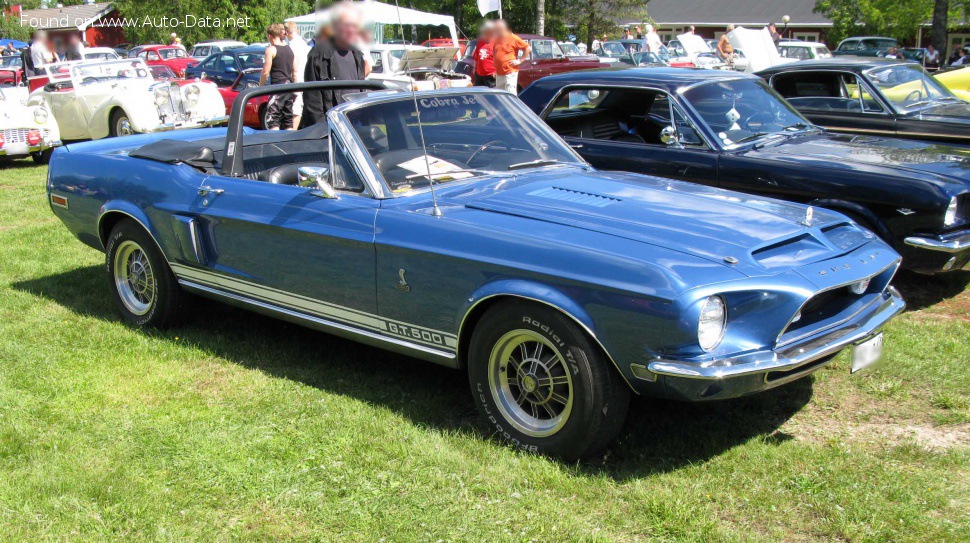
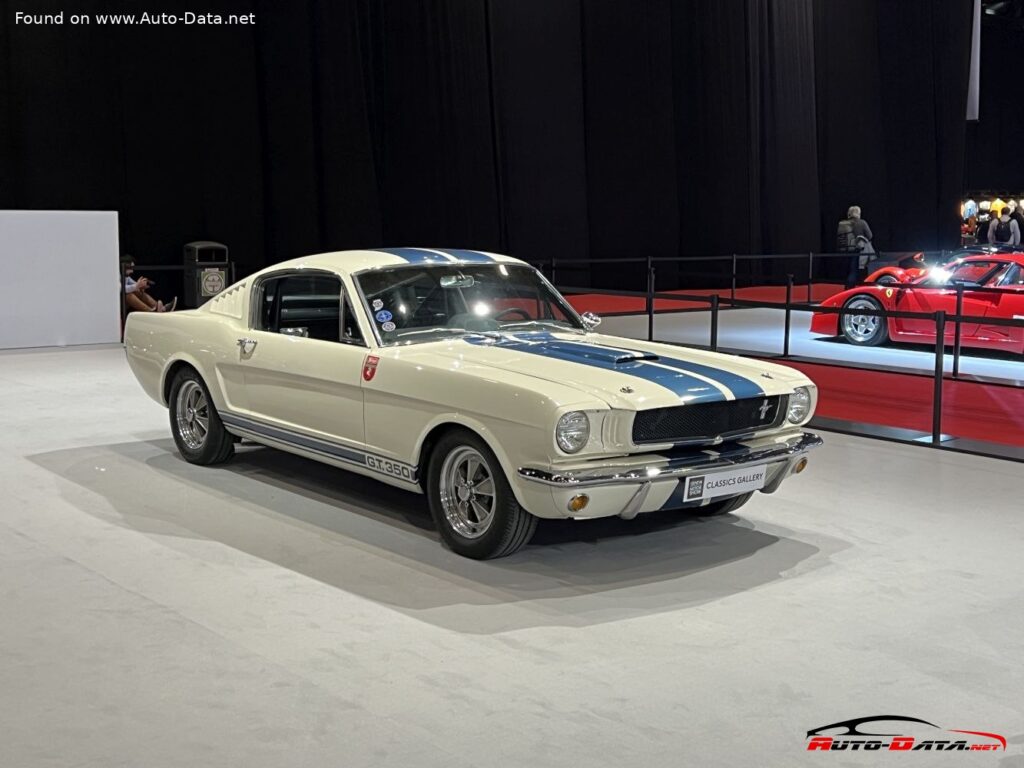
The design of the Ford Shelby I Cobra GT 350 5.0 V8 (254 Hp) was a masterclass in aggressive styling, building upon the iconic Ford Mustang fastback body. As a two-door, four-seat coupe, it maintained the Mustang’s sporty profile but added numerous Shelby-specific enhancements that gave it a more distinctive and performance-oriented look. These modifications included a unique front fascia with a prominent grille and integrated fog lights, functional hood scoops for engine cooling, and side scoops to aid in brake cooling. The rear featured a distinctive spoiler and sequential tail lights, further distinguishing it from standard Mustangs.
Dimensions of the GT350 were substantial, contributing to its imposing road presence. It measured 186.61 inches (4740 mm) in length, 70.91 inches (1801 mm) in width, and 51.42 inches (1306 mm) in height. The wheelbase of 107.99 inches (2743 mm) provided a stable platform for high-speed driving, complemented by a front and rear track of 58.11 inches (1476 mm). While the drag coefficient of 0.47 might seem high by modern aerodynamic standards, it was typical for the angular and powerful muscle cars of its era, where raw power often took precedence over slippery shapes.
In terms of handling and braking, the GT350 was equipped with disc brakes at the front and drum brakes at the rear, a common and effective setup for performance cars of the late 1960s. This combination offered significantly improved stopping power compared to all-drum setups. The steering system provided a minimum turning circle of 38.06 feet (11.6 meters), indicating a car that, while powerful, could still be maneuvered with reasonable agility. The interior, while largely Mustang-derived, often featured Shelby-specific gauges, racing-style seatbelts, and a sportier steering wheel, reinforcing its performance pedigree and driver-focused nature.
Technical Specifications
| Feature | Specification |
|---|---|
| Brand | Ford |
| Model | Shelby |
| Generation | Shelby I |
| Type (Engine) | Cobra GT 350 5.0 V8 (254 Hp) |
| Start of Production | 1968 year |
| End of Production | 1970 year |
| Powertrain Architecture | Internal Combustion engine |
| Body type | Coupe |
| Seats | 4 |
| Doors | 2 |
| Fuel Type | Petrol (Gasoline) |
| Weight-to-power ratio | 5.6 kg/Hp, 178 Hp/tonne |
| Weight-to-torque ratio | 3.4 kg/Nm, 294.3 Nm/tonne |
| Power | 254 Hp @ 4800 rpm |
| Power per liter | 51.4 Hp/l |
| Torque | 420 Nm @ 2800 rpm (309.78 lb.-ft. @ 2800 rpm) |
| Engine layout | Front, Longitudinal |
| Engine displacement | 4942 cm3 (301.58 cu. in.) |
| Number of cylinders | 8 |
| Engine configuration | V-engine |
| Cylinder Bore | 101.6 mm (4 in.) |
| Piston Stroke | 76.2 mm (3 in.) |
| Compression ratio | 10.5:1 |
| Number of valves per cylinder | 4 |
| Fuel injection system | Carburettor |
| Engine aspiration | Naturally aspirated engine |
| Kerb Weight | 1427 kg (3146 lbs.) |
| Fuel tank capacity | 64 l (16.91 US gal) |
| Length | 4740 mm (186.61 in.) |
| Width | 1801 mm (70.91 in.) |
| Height | 1306 mm (51.42 in.) |
| Wheelbase | 2743 mm (107.99 in.) |
| Front track | 1476 mm (58.11 in.) |
| Rear (Back) track | 1476 mm (58.11 in.) |
| Drag coefficient (Cd) | 0.47 |
| Minimum turning circle (turning diameter) | 11.6 m (38.06 ft.) |
| Drivetrain Architecture | The Internal combustion engine (ICE) drives the rear wheels of the vehicle. |
| Drive wheel | Rear wheel drive |
| Number of gears and type of gearbox | 4 gears, manual transmission |
| Front brakes | Disc |
| Rear brakes | Drum |
Legacy and Market Impact of the Shelby GT350
The Ford Shelby I Cobra GT 350 5.0 V8 (254 Hp) holds an indelible place in the pantheon of American muscle cars, revered for its blend of performance, style, and racing heritage. Its production run from 1968 to 1970 coincided with the peak of the muscle car era, and the GT350 quickly established itself as a formidable competitor. While the larger-engined GT500 often garnered headlines for sheer horsepower, the GT350 was frequently praised for its more balanced handling and agile nature, making it a favorite among enthusiasts who appreciated a more engaging driving experience.
In its primary market, the United States, the Shelby GT350 competed fiercely with other iconic performance machines. Its rivals included the Chevrolet Camaro Z/28, a potent small-block V8 track weapon, the Pontiac Firebird Trans Am, known for its aggressive styling and strong performance, and Mopar offerings like the Plymouth Barracuda and Dodge Challenger, which boasted a wide array of powerful engine options. The GT350 carved out its niche by offering the prestige of the Shelby name, a direct connection to Ford’s racing efforts, and a distinctive aesthetic that screamed performance.
The historical significance of the Shelby GT350 extends beyond its impressive specifications. It represents the pinnacle of Carroll Shelby’s transformation of the Ford Mustang, showcasing how a production car could be elevated to racing-grade performance. These cars were not just fast; they were cultural icons, embodying the rebellious spirit and passion for automotive excellence of their time. Today, the 1968-1970 Shelby GT350 models are highly sought-after collector’s items, commanding significant prices at auction and serving as a testament to their enduring appeal and importance in automotive history. Their reputation as genuine American legends continues to grow, influencing subsequent generations of performance vehicles and inspiring countless enthusiasts worldwide.