The Toyota HiAce VI (H300) Panel Van L1H1: A Global Workhorse for the Modern Era
The Toyota HiAce, a name synonymous with durability and versatility across continents, introduced its sixth generation, the H300 series, in 2019. While not a common sight on American roads, the
Toyota HiAce VI (H300) Panel Van L1H1 2.8 D-4D (177 Hp)
represents a significant evolution of a vehicle that serves as the backbone for countless businesses, public services, and transport operations in Asia, Europe, Oceania, Africa, and Latin America. This iteration of the HiAce, specifically the L1H1 Panel Van, continues Toyota’s legacy of building reliable, efficient, and highly functional commercial vehicles, tailored to meet the rigorous demands of daily professional use.
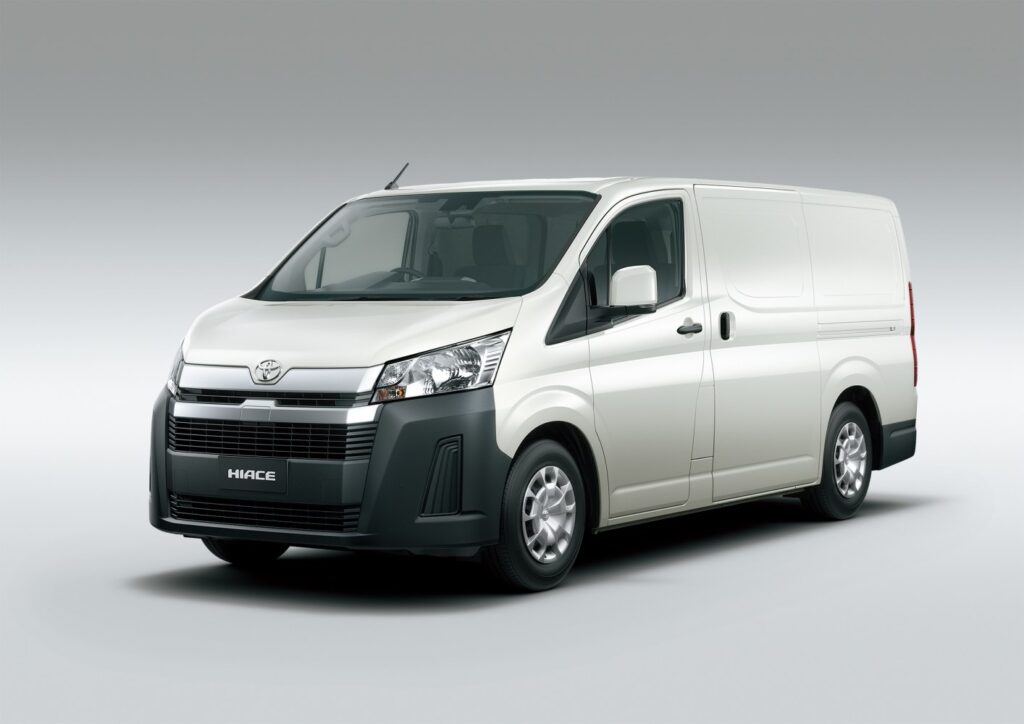
The H300 generation marked a pivotal shift for the HiAce. Previous generations, primarily the H200 series, were largely cab-over designs, meaning the driver sat directly above the front axle. The H300, however, adopted a semi-bonnet or ‘long-nose’ design, positioning the engine further forward and the driver behind the front axle. This change significantly enhanced safety, driver comfort, and noise reduction, aligning the HiAce more closely with modern van designs prevalent in Western markets. The L1H1 designation, common in European markets, refers to the shortest length (L1) and lowest roof height (H1) available in the panel van lineup, indicating a compact yet capable variant designed for urban maneuverability and substantial cargo capacity.
Engine and Performance of the Toyota HiAce VI (H300) Panel Van L1H1
At the heart of the
Toyota HiAce VI (H300) Panel Van L1H1
lies the robust 2.8-liter D-4D (Direct Injection 4-stroke Common Rail Diesel) engine, an inline four-cylinder powerplant known by its internal code, 1GD-FTV. This engine is a cornerstone of Toyota’s commercial vehicle and SUV lineup in many markets, renowned for its balance of power, torque, and fuel efficiency. With a displacement of 2755 cubic centimeters (168.12 cu. in.), it delivers a healthy 177 horsepower at 3400 rpm, providing ample power for hauling heavy loads or navigating diverse terrains.
Perhaps more critical for a commercial vehicle is its torque output, and the 2.8 D-4D excels here, generating an impressive 309.78 lb.-ft. of torque across a broad and usable range, from 1400 to 2600 rpm. This low-end torque is crucial for effortless acceleration, climbing gradients with a full cargo bay, and smooth urban driving. The engine features a DOHC (Double Overhead Camshaft) valvetrain with 4 valves per cylinder, a common rail fuel injection system, and is boosted by a turbocharger with an intercooler, optimizing combustion efficiency and power delivery. Its compression ratio of 15.6:1 further contributes to its diesel characteristics of high efficiency and torque.
Power is delivered to the rear wheels via a 6-speed manual transmission, a traditional and favored choice for commercial vehicles due to its robustness and driver control. This rear-wheel-drive architecture is ideal for vans, especially when carrying heavy loads, ensuring better traction and handling stability. Despite its commercial focus, the HiAce offers respectable fuel economy for its class, with a combined rating of 31.8 – 31.4 US mpg. Urban consumption ranges from 25.8 to 27 US mpg, while extra-urban driving can achieve up to 35.6 US mpg. The van’s top speed is electronically limited to 105.63 mph, perfectly adequate for its intended purpose.
Design and Features
The Toyota HiAce VI (H300) Panel Van L1H1 embraces a purposeful and modern design, moving away from the more utilitarian aesthetics of its predecessors. Its semi-bonnet layout not only enhances safety but also provides a more contemporary and aerodynamic profile. The body type is a classic panel van, featuring five doors – two front, two side sliding doors for easy cargo access, and a rear liftgate or barn doors (depending on market options). With seating for 2-3 occupants, the cabin is designed to be a functional workspace, prioritizing ergonomics and visibility for the driver.
Utility is paramount in the HiAce panel van. The L1H1 configuration, while the shortest, still offers a substantial maximum cargo volume of 6200 liters (218.95 cu. ft.), making it highly capable for various delivery and service applications. Its dimensions – 207.28 inches in length, 76.77 inches in width, and 78.35 inches in height – provide a spacious interior while maintaining a manageable footprint, especially with a minimum turning circle of 36.09 feet for urban maneuverability. The kerb weight ranges from 4894.26 to 4938.35 lbs., with a maximum permissible weight of 7275.25 lbs. and a maximum payload capacity of 2336.9 to 2380.99 lbs.
The chassis is engineered for durability and load-carrying. The front suspension features an independent McPherson strut setup with coil springs and an anti-roll bar, providing a balance of ride comfort and handling stability. The rear suspension utilizes a robust rigid axle with leaf springs, a proven design for heavy-duty commercial applications. Braking is handled by ventilated discs at the front (296 mm) and drum brakes at the rear (256 mm), assisted by ABS (Anti-lock Braking System) for controlled stopping power. The steering system is a hydraulic rack and pinion, offering direct feedback to the driver. The HiAce rides on 215/70 R16 tires mounted on 7J x 16 wheel rims, providing a good balance of load capacity and ride quality. Modern features like a Start & Stop System and a Particulate Filter are included to enhance fuel efficiency and reduce emissions, reflecting contemporary environmental standards.
Technical Specifications
| Category | Specification | US Equivalent / Notes |
|---|---|---|
| Brand | Toyota | |
| Model | HiAce | |
| Generation | HiAce VI (H300) Panel Van L1H1 | |
| Type (Engine) | 2.8 D-4D (177 Hp) | |
| Start of Production | 2019 year | |
| Powertrain Architecture | Internal Combustion engine | |
| Body Type | Van | |
| Seats | 2-3 | |
| Doors | 5 | |
| Performance Specs | ||
| Fuel Consumption (Urban) | 8.7-9.1 l/100 km | 27 – 25.8 US mpg |
| Fuel Consumption (Extra Urban) | 6.6 l/100 km | 35.6 US mpg |
| Fuel Consumption (Combined) | 7.4-7.5 l/100 km | 31.8 – 31.4 US mpg |
| CO2 Emissions | 197 g/km | |
| Fuel Type | Diesel | |
| Maximum Speed | 170 km/h | 105.63 mph |
| Weight-to-Power Ratio | 12.5 kg/Hp | 79.7 Hp/tonne |
| Weight-to-Torque Ratio | 5.3 kg/Nm | 189.2 Nm/tonne |
| Engine Specs | ||
| Power | 177 Hp @ 3400 rpm | |
| Power per Liter | 64.2 Hp/l | |
| Torque | 420 Nm @ 1400-2600 rpm | 309.78 lb.-ft. @ 1400-2600 rpm |
| Engine Layout | Front, Longitudinal | |
| Engine Model/Code | 1GD-FTV | |
| Engine Displacement | 2755 cm3 | 168.12 cu. in. |
| Number of Cylinders | 4 | |
| Engine Configuration | Inline | |
| Cylinder Bore | 92 mm | 3.62 in. |
| Piston Stroke | 103.6 mm | 4.08 in. |
| Compression Ratio | 15.6:1 | |
| Number of Valves per Cylinder | 4 | |
| Fuel Injection System | Diesel Commonrail | |
| Engine Aspiration | Turbocharger, Intercooler | |
| Valvetrain | DOHC | |
| Engine Oil Capacity | 7.1 l | 7.5 US qt |
| Coolant Capacity | 9.7 l | 10.25 US qt |
| Engine Systems | Start & Stop System, Particulate filter | |
| Space, Volume and Weights | ||
| Kerb Weight | 2220-2240 kg | 4894.26 – 4938.35 lbs. |
| Max. Weight (GVWR) | 3300 kg | 7275.25 lbs. |
| Max Load (Payload) | 1060-1080 kg | 2336.9 – 2380.99 lbs. |
| Trunk (Boot) Space – Maximum | 6200 l | 218.95 cu. ft. |
| Fuel Tank Capacity | 70 l | 18.49 US gal |
| Permitted Trailer Load with Brakes (12%) | 1900 kg | 4188.78 lbs. |
| Permitted Trailer Load without Brakes | 400 kg | 881.85 lbs. |
| Permitted Towbar Download | 190 kg | 418.88 lbs. |
| Dimensions | ||
| Length | 5265 mm | 207.28 in. |
| Width | 1950 mm | 76.77 in. |
| Height | 1990 mm | 78.35 in. |
| Wheelbase | 3210 mm | 126.38 in. |
| Front Track | 1670-1675 mm | 65.75 – 65.94 in. |
| Rear (Back) Track | 1670 mm | 65.75 in. |
| Front Overhang | 950 mm | 37.4 in. |
| Rear Overhang | 1105 mm | 43.5 in. |
| Minimum Turning Circle | 11 m | 36.09 ft. |
| Drivetrain, Brakes and Suspension Specs | ||
| Drivetrain Architecture | Internal combustion engine (ICE) drives the rear wheels | Rear Wheel Drive (RWD) |
| Drive Wheel | Rear wheel drive | |
| Number of Gears and Type of Gearbox | 6 gears, manual transmission | |
| Front Suspension | Independent, type McPherson with coil spring and anti-roll bar | |
| Rear Suspension | Rigid axle suspension, Leaf spring | |
| Front Brakes | Ventilated discs, 296 mm | |
| Rear Brakes | Drum, 256 mm | |
| Assisting Systems | ABS (Anti-lock braking system) | |
| Steering Type | Steering rack and pinion | |
| Power Steering | Hydraulic Steering | |
| Tires Size | 215/70 R16 | |
| Wheel Rims Size | 7J x 16 | |
Legacy and Market Impact of the Toyota HiAce VI (H300) Panel Van L1H1
The Toyota HiAce has carved out an almost legendary reputation globally, particularly in markets where reliability and low running costs are paramount. The sixth-generation H300, and specifically the Panel Van L1H1 with its 2.8 D-4D engine, builds upon this formidable legacy. It is not merely a mode of transport but an indispensable tool for countless small and large enterprises, from delivery services and tradespeople to shuttle operators and mobile workshops.
In its primary markets, such as Australia, New Zealand, Southeast Asia, parts of Europe, and Africa, the HiAce faces stiff competition but consistently holds a strong position due to its unwavering dependability and Toyota’s extensive service network. Its main rivals include the Ford Transit Custom, Mercedes-Benz Vito, Volkswagen Transporter, Hyundai Starex (H-1), and various offerings from Nissan and Mitsubishi. What sets the HiAce apart is often perceived as its bulletproof mechanicals and high resale value, factors that significantly reduce the total cost of ownership for commercial operators.
The shift to the semi-bonnet design in the H300 series was a strategic move by Toyota to enhance safety ratings and driver comfort, making the HiAce more appealing in markets with stricter safety regulations and higher expectations for ergonomics. This evolution ensures the HiAce remains competitive and relevant in an increasingly sophisticated commercial vehicle segment. Its ability to handle diverse operating conditions, from congested urban centers to rugged rural roads, further solidifies its status as a global benchmark for light commercial vehicles.
The
Toyota HiAce VI (H300) Panel Van L1H1 2.8 D-4D (177 Hp)
represents Toyota’s continued commitment to practical engineering and market responsiveness. It stands as a testament to the brand’s philosophy of building vehicles that are not only robust and efficient but also deeply integrated into the economic and social fabric of the regions they serve. For businesses requiring a dependable, capable, and economical panel van, the HiAce H300 continues to be a top-tier choice, embodying the spirit of a true workhorse for the modern era.