<h2>Toyota HiAce VI (H300) Panel Van L1H1: A Global Workhorse</h2>
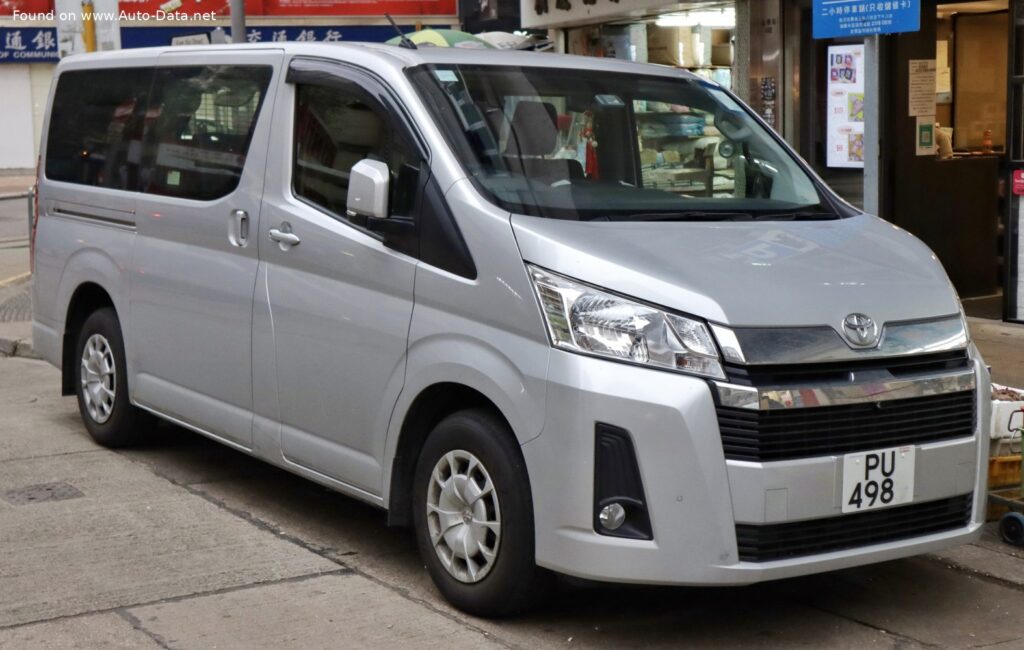
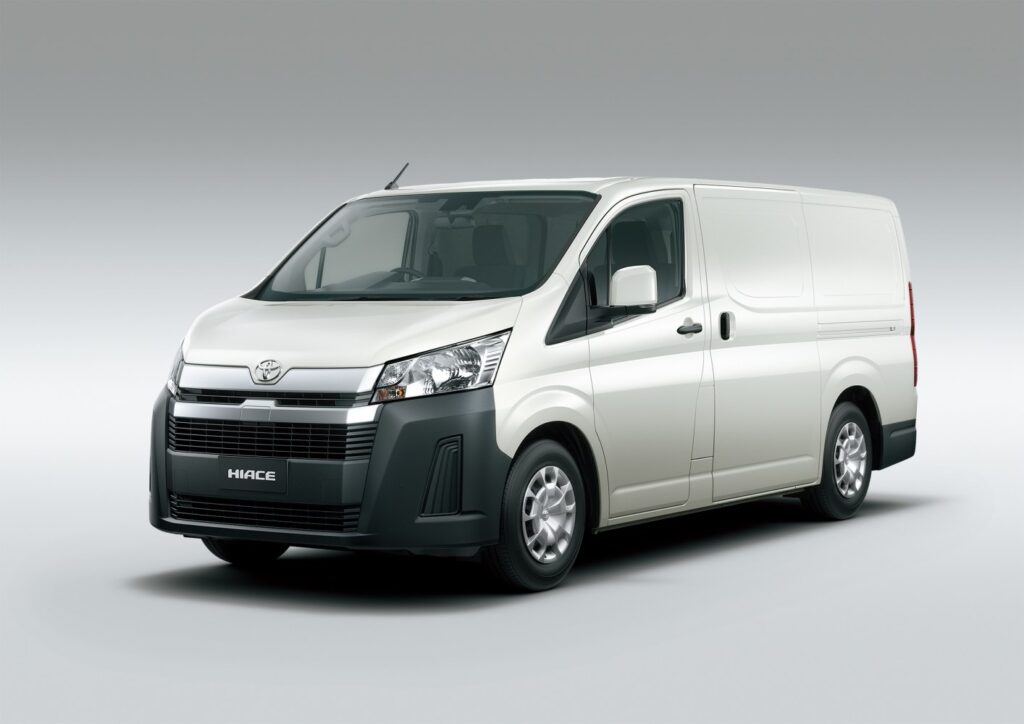
<p>The <strong>Toyota HiAce VI (H300) Panel Van L1H1</strong> represents the latest iteration of Toyota’s globally recognized and highly successful light commercial vehicle, a lineage that has been a cornerstone of businesses and public services worldwide for over five decades. Launched in 2019, the H300 generation marked a significant evolution for the HiAce, moving to a semi-bonneted design that dramatically improved safety, comfort, and refinement compared to its previous cab-over-engine predecessors. While the HiAce has never been officially sold in the United States market, its influence and reputation as an indestructible workhorse resonate across Asia, Australia, parts of Europe, Africa, and Latin America, where it is a ubiquitous sight on roads and job sites. This particular variant, the L1H1, denotes a standard wheelbase and standard roof height panel van, configured with a potent 2.8-liter D-4D turbodiesel engine paired with an automatic transmission, emphasizing both capability and ease of operation for commercial users.</p>
<p>The sixth-generation HiAce was engineered with a clear focus on modern commercial demands: enhanced safety standards, improved driver ergonomics, greater cargo capacity, and more sophisticated powertrain options. Its departure from the traditional cab-over design was a strategic move to meet increasingly stringent crash safety regulations and improve the driving experience, positioning the HiAce as a formidable competitor in the fiercely contested global commercial van segment. Toyota’s commitment to reliability and durability, hallmarks of the HiAce nameplate, are deeply embedded in the H300’s architecture and engineering, ensuring it continues its legacy as a trusted partner for countless businesses.</p>
<h3>Engine and Performance of the Toyota HiAce VI (H300) Panel Van L1H1</h3>
<p>At the heart of the <strong>Toyota HiAce VI (H300) Panel Van L1H1</strong> lies the robust 1GD-FTV 2.8-liter D-4D (Direct Injection-4-stroke Common Rail Diesel) inline-four engine, a powerplant renowned for its balance of power, torque, and efficiency in Toyota’s light commercial vehicle lineup. This turbocharged and intercooled diesel engine delivers a healthy 177 horsepower at 3400 rpm, providing ample muscle for hauling heavy loads or navigating challenging urban environments. More critically for a commercial vehicle, it produces a substantial 331.9 lb.-ft. of torque, available across a broad and usable range from 1600 to 2400 rpm. This low-end torque is crucial for effortless acceleration from a standstill, confident merging into traffic, and tackling inclines, even when the van is fully loaded.</p>
<p>The engine’s sophisticated design includes a DOHC (Dual Overhead Camshaft) valvetrain with 4 valves per cylinder, ensuring optimal airflow and combustion efficiency. The diesel common rail fuel injection system, combined with a turbocharger and intercooler, maximizes power output while maintaining fuel economy. A compression ratio of 15.6:1 further contributes to its diesel efficiency. This particular HiAce variant is equipped with a smooth and responsive 6-speed automatic transmission, which intelligently manages power delivery to the rear wheels. This drivetrain architecture, with the internal combustion engine driving the rear wheels, is a traditional and preferred setup for commercial vans, offering superior traction under heavy loads and robust towing capabilities.</p>
<p>Performance figures for a commercial van prioritize utility over outright speed, yet the HiAce delivers a respectable maximum speed of 102.53 mph, more than adequate for highway cruising. Fuel efficiency is a critical consideration for fleet operators, and the HiAce performs commendably for its size and capability. Combined fuel consumption ranges from 28.7 to 29.8 US mpg, translating to lower operational costs over its lifetime. The inclusion of a Start & Stop System and a Particulate Filter underscores Toyota’s commitment to modern environmental standards, reducing both fuel consumption in city driving and harmful emissions, with CO2 emissions rated at 214 g/km.</p>
<h3>Design and Features: Practicality Meets Modernity</h3>
<p>The <strong>Toyota HiAce VI (H300) Panel Van L1H1</strong> adopts a practical and purposeful design, reflecting its primary role as a work vehicle. The “L1H1” designation signifies a standard wheelbase (L1) and standard roof height (H1), making it versatile for various urban and suburban commercial applications. Its semi-bonneted body type is a significant departure from previous generations, enhancing frontal crash protection and improving engine access for maintenance. The van features five doors, providing easy access to both the cabin and the expansive cargo area, typically configured with sliding side doors and a rear liftgate or barn doors (though specific rear door configuration can vary by market and trim).</p>
<p>Inside, the cabin is designed for durability and functionality, accommodating 2 to 3 seats, depending on the specific configuration. The focus is on driver comfort and ergonomics, with controls logically placed and robust materials chosen to withstand the rigors of daily commercial use. While not luxury-oriented, the interior provides a comfortable and efficient workspace for drivers who spend long hours on the road.</p>
<p>Dimensionally, the HiAce L1H1 measures 207.28 inches in length, 76.77 inches in width, and 78.35 inches in height, with a substantial wheelbase of 126.38 inches. These dimensions contribute to its impressive cargo capacity, offering a maximum trunk space of 218.95 cubic feet (6200 liters), making it suitable for a wide array of goods and equipment. The vehicle’s robust construction is evident in its curb weight, ranging from 4861.19 to 4949.38 lbs., and a gross maximum weight of 7275.25 lbs., allowing for a substantial maximum payload of 2325.88 to 2414.06 lbs.</p>
<p>Underneath, the HiAce is built for endurance. The front suspension utilizes an independent McPherson strut setup with coil springs and an anti-roll bar, providing a good balance of ride comfort and handling stability. The rear suspension features a rigid axle with leaf springs, a time-tested and robust configuration ideal for carrying heavy loads and ensuring durability in demanding conditions. Braking is handled by ventilated discs at both the front (296 mm) and rear (320 mm), complemented by an Anti-lock Braking System (ABS) for enhanced safety and control during emergency stops. The hydraulic power steering, with a rack and pinion system, ensures precise control and manageable steering effort, even when maneuvering the large van in tight spaces, evidenced by its minimum turning circle of 36.09 feet.</p>
<h2>Technical Specifications: Toyota HiAce VI (H300) Panel Van L1H1 2.8 D-4D (177 Hp) Automatic</h2>
<table>
<thead>
<tr>
<th>Category</th>
<th>Specification</th>
</tr>
</thead>
<tbody>
<tr>
<td>Brand</td>
<td>Toyota</td>
</tr>
<tr>
<td>Model</td>
<td>HiAce</td>
</tr>
<tr>
<td>Generation</td>
<td>HiAce VI (H300) Panel Van L1H1</td>
</tr>
<tr>
<td>Engine Type</td>
<td>2.8 D-4D (177 Hp) Automatic</td>
</tr>
<tr>
<td>Start of Production</td>
<td>2019 year</td>
</tr>
<tr>
<td>Body type</td>
<td>Van</td>
</tr>
<tr>
<td>Seats</td>
<td>2-3</td>
</tr>
<tr>
<td>Doors</td>
<td>5</td>
</tr>
<tr>
<td>Fuel Type</td>
<td>Diesel</td>
</tr>
<tr>
<td>Fuel Consumption (Urban)</td>
<td>25.6 – 26.4 US mpg</td>
</tr>
<tr>
<td>Fuel Consumption (Extra Urban)</td>
<td>30.9 – 32.2 US mpg</td>
</tr>
<tr>
<td>Fuel Consumption (Combined)</td>
<td>28.7 – 29.8 US mpg</td>
</tr>
<tr>
<td>CO2 Emissions</td>
<td>214 g/km</td>
</tr>
<tr>
<td>Maximum Speed</td>
<td>102.53 mph (165 km/h)</td>
</tr>
<tr>
<td>Power</td>
<td>177 Hp @ 3400 rpm</td>
</tr>
<tr>
<td>Torque</td>
<td>331.9 lb.-ft. (450 Nm) @ 1600-2400 rpm</td>
</tr>
<tr>
<td>Engine Layout</td>
<td>Front, Longitudinal</td>
</tr>
<tr>
<td>Engine Model/Code</td>
<td>1GD-FTV</td>
</tr>
<tr>
<td>Engine Displacement</td>
<td>2.8 liters (2755 cm3 / 168.12 cu. in.)</td>
</tr>
<tr>
<td>Number of Cylinders</td>
<td>4, Inline</td>
</tr>
<tr>
<td>Valves per Cylinder</td>
<td>4</td>
</tr>
<tr>
<td>Compression Ratio</td>
<td>15.6:1</td>
</tr>
<tr>
<td>Fuel Injection System</td>
<td>Diesel Commonrail</td>
</tr>
<tr>
<td>Engine Aspiration</td>
<td>Turbocharger, Intercooler</td>
</tr>
<tr>
<td>Valvetrain</td>
<td>DOHC</td>
</tr>
<tr>
<td>Engine Oil Capacity</td>
<td>7.5 US qt (7.1 l)</td>
</tr>
<tr>
<td>Coolant Capacity</td>
<td>10.25 US qt (9.7 l)</td>
</tr>
<tr>
<td>Engine Systems</td>
<td>Start & Stop System, Particulate filter</td>
</tr>
<tr>
<td>Curb Weight</td>
<td>4861.19 – 4949.38 lbs. (2205-2245 kg)</td>
</tr>
<tr>
<td>Max. Weight</td>
<td>7275.25 lbs. (3300 kg)</td>
</tr>
<tr>
<td>Max Load</td>
<td>2325.88 – 2414.06 lbs. (1055-1095 kg)</td>
</tr>
<tr>
<td>Trunk (Boot) Space – Maximum</td>
<td>218.95 cu. ft. (6200 l)</td>
</tr>
<tr>
<td>Fuel Tank Capacity</td>
<td>18.49 US gal (70 l)</td>
</tr>
<tr>
<td>Permitted Trailer Load with Brakes (12%)</td>
<td>3306.93 lbs. (1500 kg)</td>
</tr>
<tr>
<td>Permitted Trailer Load without Brakes</td>
<td>881.85 lbs. (400 kg)</td>
</tr>
<tr>
<td>Permitted Towbar Download</td>
<td>330.69 lbs. (150 kg)</td>
</tr>
<tr>
<td>Length</td>
<td>207.28 in. (5265 mm)</td>
</tr>
<tr>
<td>Width</td>
<td>76.77 in. (1950 mm)</td>
</tr>
<tr>
<td>Height</td>
<td>78.35 in. (1990 mm)</td>
</tr>
<tr>
<td>Wheelbase</td>
<td>126.38 in. (3210 mm)</td>
</tr>
<tr>
<td>Front Track</td>
<td>65.75 – 65.94 in. (1670-1675 mm)</td>
</tr>
<tr>
<td>Rear Track</td>
<td>65.75 in. (1670 mm)</td>
</tr>
<tr>
<td>Front Overhang</td>
<td>37.4 in. (950 mm)</td>
</tr>
<tr>
<td>Rear Overhang</td>
<td>43.5 in. (1105 mm)</td>
</tr>
<tr>
<td>Minimum Turning Circle (Turning Diameter)</td>
<td>36.09 ft. (11 m)</td>
</tr>
<tr>
<td>Drivetrain Architecture</td>
<td>Internal combustion engine drives the rear wheels</td>
</tr>
<tr>
<td>Drive Wheel</td>
<td>Rear wheel drive</td>
</tr>
<tr>
<td>Number of Gears and Type of Gearbox</td>
<td>6 gears, automatic transmission</td>
</tr>
<tr>
<td>Front Suspension</td>
<td>Independent, McPherson with coil spring and anti-roll bar</td>
</tr>
<tr>
<td>Rear Suspension</td>
<td>Rigid axle suspension, Leaf spring</td>
</tr>
<tr>
<td>Front Brakes</td>
<td>