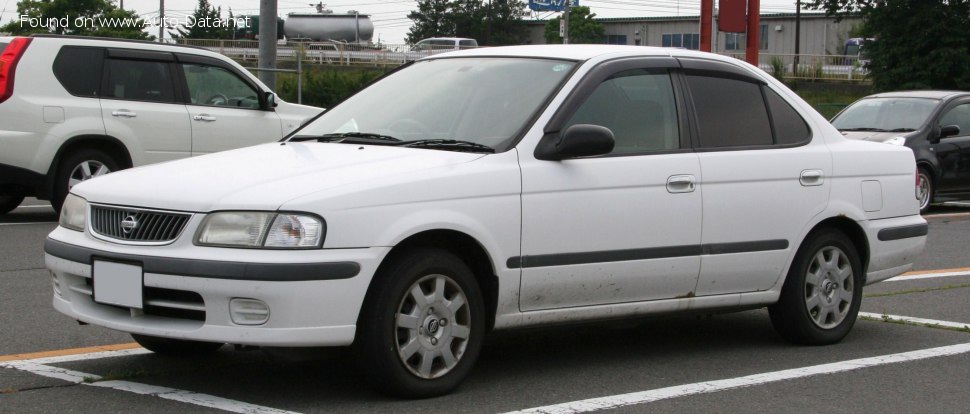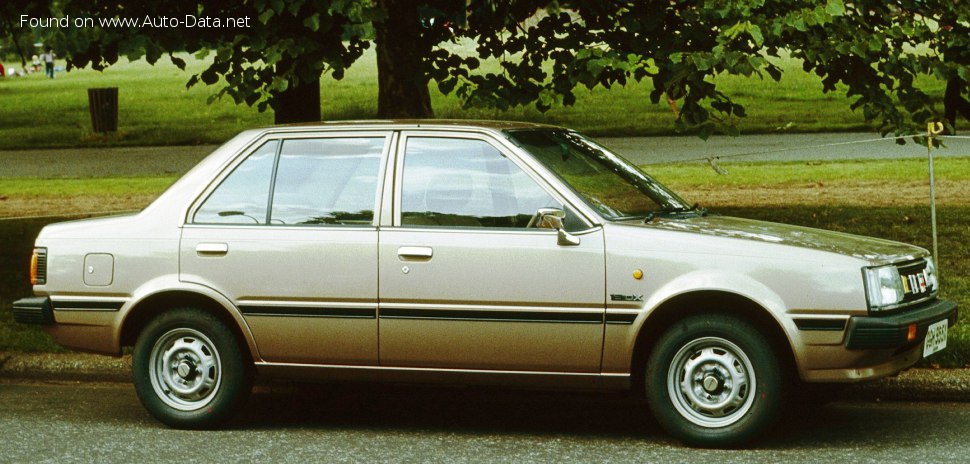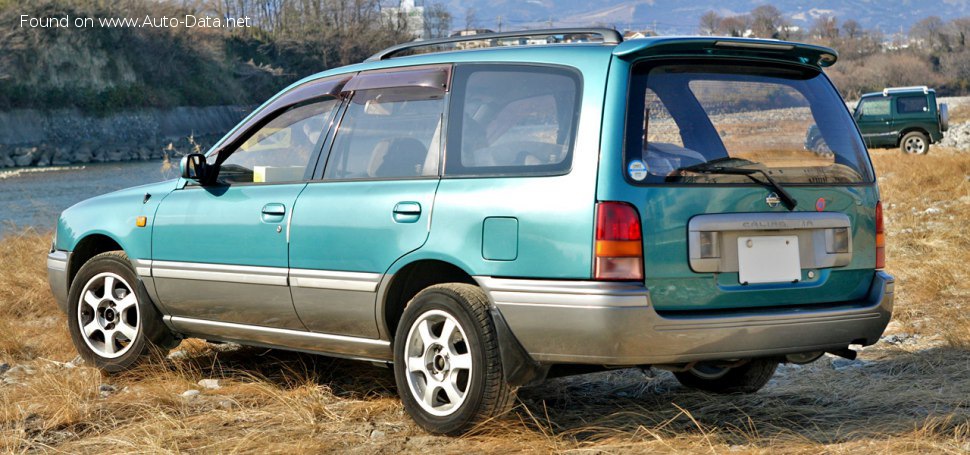
Introduction to the Nissan Sunny III Wagon (Y10)
The Nissan Sunny, a nameplate synonymous with reliable and economical transportation across numerous global markets, saw many iterations throughout its long production history. The third generation of the Sunny Wagon, internally designated as the Y10 chassis, represents a significant chapter for Nissan during the early 1990s. Specifically, the Nissan Sunny III Wagon (Y10) with the 1.4 16V (75 Hp) engine was a practical and accessible family vehicle, primarily targeting European and Asian markets. Produced between 1990 and 1992, this model was part of Nissan’s strategy to offer a versatile and affordable compact car, appealing to buyers seeking a blend of passenger comfort and cargo capacity without a premium price tag.
While the Nissan Sunny series had a presence in North America, often sold under the Sentra nameplate, the Y10 wagon variant with the 1.4-liter engine was not a common sight on U.S. roads. Instead, it carved out its niche in regions where compact wagons were highly valued for their utility in urban environments and for family use. This particular model, with its modest yet efficient powertrain, embodied the straightforward engineering and dependable performance that Nissan was known for in that era. It offered a compelling package for consumers prioritizing practicality and running costs over outright performance or luxury.
Engineering and Performance of the Nissan Sunny III Wagon (Y10) 1.4 16V (75 Hp)
At the heart of the Nissan Sunny III Wagon (Y10) 1.4 16V (75 Hp) was a transversely mounted, naturally aspirated 1.4-liter (1392 cm³ or 84.95 cu. in.) inline-four engine. Coded as the GA16DE, this unit, despite its relatively small displacement, featured a 16-valve cylinder head, a configuration that was becoming increasingly common for improved breathing and efficiency in compact engines of the period. However, in this specific 75 horsepower iteration, the engine relied on a carburettor fuel injection system rather than the more advanced multi-point fuel injection that would become standard in later models. This choice reflected a balance between cost-effectiveness, ease of maintenance, and the emissions standards prevalent in its primary markets at the time.
The engine delivered a peak power output of 75 horsepower at 6000 rpm, which, while not groundbreaking, was entirely adequate for the vehicle’s intended purpose as a practical family wagon. Torque stood at 112 Nm (82.61 lb.-ft.) at 4000 rpm, providing sufficient pulling power for daily driving and light loads. With a compression ratio of 9.5:1 and an OHC (Overhead Camshaft) valvetrain, the engine was designed for reliability and smooth operation. Its power-to-weight ratio of 12.3 kg/Hp (approximately 81.5 Hp per tonne) and a torque-to-weight ratio of 8.2 kg/Nm (121.7 Nm per tonne) underscored its economical nature rather than its sporty aspirations.
Power was transmitted to the front wheels via a 5-speed manual transmission, a common and reliable setup for compact cars of this vintage. This drivetrain architecture, with the engine driving the front wheels, contributed to efficient packaging, improved traction in adverse conditions, and a lighter overall curb weight of 2028.25 lbs (920 kg). The combination of a relatively lightweight body and a fuel-efficient engine made the 1.4 16V (75 Hp) variant of the Sunny III Wagon an economical choice for owners concerned with fuel consumption, offering a fuel tank capacity of 13.21 US gallons (50 liters).
Design and Features
The Nissan Sunny III Wagon (Y10) adopted a functional and unpretentious design, characteristic of compact wagons of its era. Its station wagon body type, featuring five doors and seating for five occupants, emphasized practicality and utility. With a length of 164.37 inches (4175 mm), a width of 65.55 inches (1665 mm), and a height of 59.84 inches (1520 mm), the Y10 wagon offered a compact footprint, making it maneuverable in urban settings while still providing substantial interior volume. The wheelbase of 94.49 inches (2400 mm) contributed to a stable ride for its class.
A key selling point of any station wagon is its cargo capacity, and the Sunny III Wagon delivered on this front. It boasted a minimum trunk space of 16.24 cu. ft. (460 liters), which could be expanded significantly to a maximum of 56.5 cu. ft. (1600 liters) with the rear seats folded down. This flexible cargo area made it an ideal choice for families, small businesses, or anyone needing to transport bulky items. The design prioritized ease of loading and unloading, featuring a wide rear hatch opening.
In terms of chassis and suspension, the Y10 Sunny Wagon utilized a wishbone setup for the front suspension and a spring strut design for the rear, a common and effective combination for achieving a balance between ride comfort and handling stability in a front-wheel-drive platform. Braking was handled by ventilated discs at the front, offering good stopping power, complemented by drum brakes at the rear. Notably, the vehicle was equipped with ABS (Anti-lock Braking System), which was a significant safety feature for a compact car in the early 1990s, indicating Nissan’s commitment to enhancing occupant safety even in its more basic models. The steering system was a hydraulic rack and pinion setup, providing direct and predictable steering feel. The car rode on relatively small 155/80 R13 tires, reflecting its focus on economy and comfortable cruising rather than high-performance handling.
Technical Specifications
| Category | Specification |
|---|---|
| Brand | Nissan |
| Model | Sunny |
| Generation | Sunny III Wagon (Y10) |
| Type (Engine) | 1.4 16V (75 Hp) |
| Start of Production | 1990 year |
| End of Production | 1992 year |
| Powertrain Architecture | Internal Combustion engine |
| Body Type | Station wagon (estate) |
| Seats | 5 |
| Doors | 5 |
| Performance Specs | |
| Fuel Type | Petrol (Gasoline) |
| Weight-to-Power Ratio | 12.3 kg/Hp, 81.5 Hp/tonne |
| Weight-to-Torque Ratio | 8.2 kg/Nm, 121.7 Nm/tonne |
| Engine Specs | |
| Power | 75 Hp @ 6000 rpm |
| Power per Liter | 53.9 Hp/l |
| Torque | 112 Nm @ 4000 rpm (82.61 lb.-ft. @ 4000 rpm) |
| Engine Layout | Front, Transverse |
| Engine Model/Code | GA16DE |
| Engine Displacement | 1392 cm³ (84.95 cu. in.) |
| Number of Cylinders | 4 |
| Engine Configuration | Inline |
| Cylinder Bore | 73.6 mm (2.9 in.) |
| Piston Stroke | 81.8 mm (3.22 in.) |
| Compression Ratio | 9.5:1 |
| Number of Valves per Cylinder | 4 |
| Fuel Injection System | Carburettor |
| Engine Aspiration | Naturally aspirated engine |
| Valvetrain | OHC |
| Engine Oil Capacity | 3.2 l (3.38 US qt) |
| Engine Oil Specification | Not specified in data |
| Coolant Capacity | 5.5 l (5.81 US qt) |
| Space, Volume, and Weights | |
| Kerb Weight | 920 kg (2028.25 lbs) |
| Trunk (Boot) Space – Minimum | 460 l (16.24 cu. ft.) |
| Trunk (Boot) Space – Maximum | 1600 l (56.5 cu. ft.) |
| Fuel Tank Capacity | 50 l (13.21 US gal) |
| Dimensions | |
| Length | 4175 mm (164.37 in.) |
| Width | 1665 mm (65.55 in.) |
| Height | 1520 mm (59.84 in.) |
| Wheelbase | 2400 mm (94.49 in.) |
| Front Track | 1435 mm (56.5 in.) |
| Rear (Back) Track | 1435 mm (56.5 in.) |
| Drivetrain, Brakes, and Suspension Specs | |
| Drivetrain Architecture | The Internal combustion engine (ICE) drives the front wheels of the vehicle. |
| Drive Wheel | Front wheel drive |
| Number of Gears and Type of Gearbox | 5 gears, manual transmission |
| Front Suspension | Wishbone |
| Rear Suspension | Spring Strut |
| Front Brakes | Ventilated discs |
| Rear Brakes | Drum |
| Assisting Systems | ABS (Anti-lock braking system) |
| Steering Type | Steering rack and pinion |
| Power Steering | Hydraulic Steering |
| Tires Size | 155/80 R13 |
Legacy and Market Impact
The Nissan Sunny III Wagon (Y10), particularly the 1.4 16V (75 Hp) variant, played a crucial role in Nissan’s global strategy during the early 1990s, especially in markets outside of North America. It solidified Nissan’s reputation for producing reliable, no-frills, and economical vehicles that catered to the needs of everyday families and utility-focused buyers. In its primary markets, such as Europe and parts of Asia, the Y10 wagon was a direct competitor to other popular compact wagons of the time, including models like the Opel Astra Wagon, Ford Escort Wagon, and the Toyota Corolla Wagon. Its straightforward mechanicals, including the carbureted 1.4-liter engine and manual transmission, contributed to its affordability and ease of maintenance, making it an attractive option for budget-conscious consumers.
The car’s utilitarian design and generous cargo capacity were its strongest attributes, allowing it to serve a diverse range of purposes from family hauler to light commercial vehicle. While it may not have been celebrated for its driving dynamics or cutting-edge technology, its consistent performance and durability earned it a loyal following. The inclusion of ABS as an available or standard feature, even on a modest variant like the 1.4 16V, was a forward-thinking move for its segment and time, highlighting Nissan’s attention to safety.
Over its relatively short production run from 1990 to 1992, the Y10 generation contributed to the overall success of the Sunny nameplate, reinforcing Nissan’s position in the global compact car market. While not an icon of automotive design, its legacy lies in its unpretentious reliability and its ability to meet the practical demands of its owners. It represented a period where functionality and cost-effectiveness were paramount for many buyers, and the Nissan Sunny III Wagon (Y10) delivered precisely that, cementing its place as a dependable workhorse in the automotive landscape of the early 1990s.