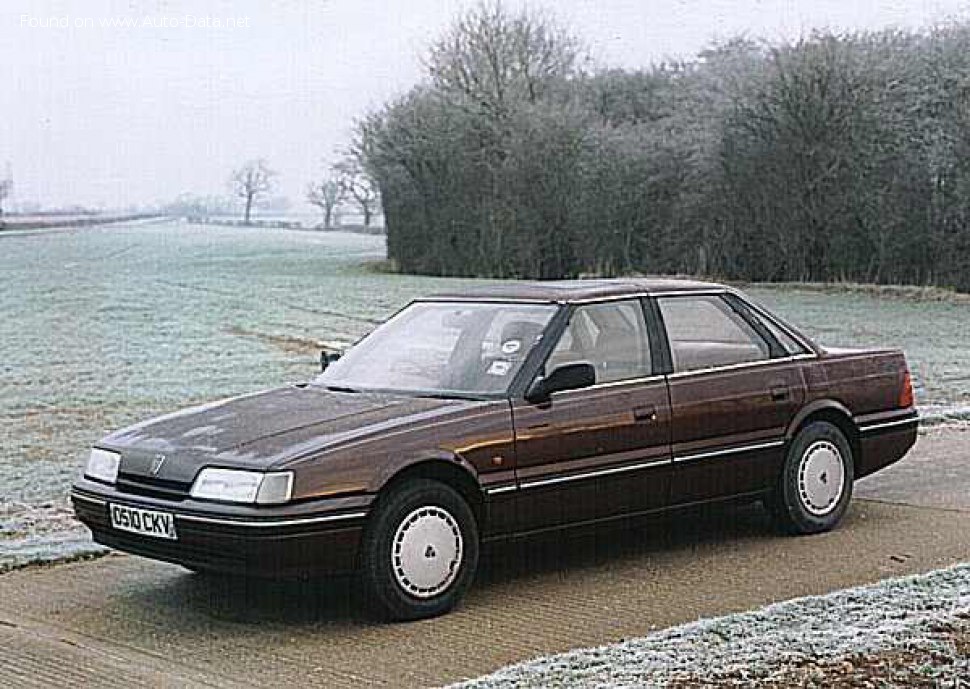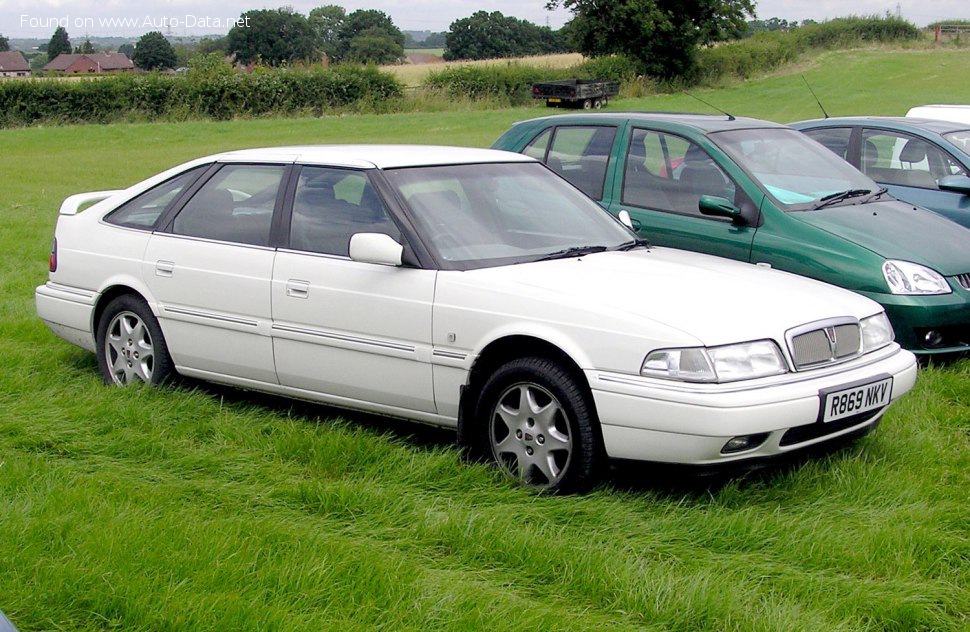
Introduction to the Rover 800 Hatchback 820 SI (XS) (133 Hp)
The Rover 800 series represented a pivotal moment for the British automotive manufacturer Rover Group, marking its ambitious return to the executive car segment. Launched in 1986, the 800 was the product of a significant collaboration between Rover and Honda, known internally as Project XX (Rover) and Project HX (Honda), which also spawned the highly regarded Acura Legend and Honda Legend. This partnership was crucial for Rover, providing access to modern engineering and quality standards that were essential for competing in a demanding market.
The Rover 800 Hatchback 820 SI (XS) (133 Hp), produced between 1988 and 1991, was a key variant within the first generation of the 800 series. While the sedan (known as the Saloon in the UK) was the initial offering, the introduction of the five-door hatchback, often referred to as the “Fastback,” broadened the model’s appeal by combining executive comfort with enhanced practicality. The 820 SI (XS) trim, powered by Rover’s proprietary M16i engine, stood out as a popular mid-range option, balancing performance, refinement, and cost-effectiveness within its primary markets, predominantly the United Kingdom and continental Europe.
This particular iteration of the Rover 800 series aimed to project an image of understated British luxury and engineering competence, leveraging the reliability and advanced technology derived from its Japanese collaborative roots while retaining a distinctly European aesthetic and driving feel. It played a crucial role in Rover’s strategy to re-establish itself as a credible player in the competitive executive car landscape of the late 1980s and early 1990s.
The Rover 800 Hatchback (XS) Generation and its Market Niche
The first generation of the Rover 800, internally designated ‘XX’, was designed to fill a critical gap in Rover’s product portfolio, succeeding the aging SD1. It was positioned squarely in the upper-medium to executive car segment, a highly contested space dominated by established European players. The 800 Hatchback, with its 1988-1991 production run, was an integral part of this initial generation, offering a practical alternative to the traditional sedan. The “XS” designation often referred to specific trim levels or engine variants within the Rover nomenclature, indicating a well-equipped model that offered a blend of comfort and features.
In its primary European markets, the Rover 800 Hatchback competed directly with formidable rivals such as the Ford Granada/Scorpio, Vauxhall Carlton/Opel Omega, Peugeot 605, and Renault 25. It also aimed to capture buyers who might otherwise consider entry-level premium offerings from German manufacturers like the BMW 3-series or Mercedes-Benz 190E, albeit at a more accessible price point. The 800’s unique selling proposition was its blend of Anglo-Japanese engineering, offering a refined driving experience, a well-appointed interior, and the promise of Honda-derived reliability, packaged in a distinctly British design. The hatchback body style specifically targeted buyers who required the versatility of a larger cargo area without compromising on the executive appearance. This was particularly relevant in markets where hatchbacks were more widely accepted in higher segments than in North America.
Engine and Performance: The M16i Powerplant in the Rover 800 Hatchback 820 SI (XS) (133 Hp)
At the heart of the Rover 800 Hatchback 820 SI (XS) was Rover’s own M16i engine, a 2.0-liter, 16-valve, naturally aspirated inline-four gasoline unit. This engine was a significant development for Rover, showcasing its in-house engineering capabilities, especially in contrast to the Honda-sourced V6 engines found in higher-tier 800 models. The M16i delivered a respectable 133 horsepower, providing ample power for executive cruising and confident highway overtakes. Its naturally aspirated design contributed to predictable and linear power delivery, a characteristic often appreciated in cars of this class.
The M16i engine was known for its smooth operation and a relatively flat torque curve, making it a pleasant powertrain for daily driving and longer journeys. While not a performance powerhouse, its 133 Hp output was competitive for a 2.0-liter executive car in the late 1980s. The engine’s internal combustion architecture utilized gasoline as its fuel type, typical for the era. Maintenance specifications for the M16i included an engine oil capacity of 4.5 liters (4.76 US quarts) and a coolant capacity of 10 liters (10.57 US quarts), reflecting standard requirements for a four-cylinder engine of its size. This powerplant offered a more domestically produced, and often more affordable, alternative to the larger V6 options, yet still delivered a level of refinement and performance expected in the Rover 800 series.
Design and Features of the Rover 800 Hatchback
The design of the Rover 800 Hatchback retained much of the elegant and understated styling of its sedan sibling, but with the added practicality of a five-door body. Rover marketed this variant as a “Fastback,” emphasizing its sleek, sloping rear profile that seamlessly integrated the trunk into the cabin space. This design choice provided a more aerodynamic appearance compared to some of its boxier competitors, while also offering significantly enhanced cargo flexibility.
The exterior styling was characterized by clean lines, a relatively low beltline, and a prominent front grille that subtly hinted at Rover’s executive aspirations. The overall aesthetic was a blend of European sophistication and a touch of late-1980s angularity, designed to appeal to a discerning clientele. Inside, the 800 Hatchback was configured with five seats, offering comfortable accommodation for all occupants. The interior was a key selling point for the 800 series, aiming for a luxurious feel with quality materials. Depending on the specific market and options, features for the SI trim likely included power windows, central locking, power steering, and a sophisticated audio system for its time. Upholstery choices ranged from plush velour to leather, contributing to an upscale ambiance. The dashboard layout was ergonomic, with clear instrumentation and controls that were intuitively placed.
Safety features for cars of this era, while not as advanced as modern vehicles, typically included a robust passenger safety cell, three-point seatbelts for all outboard passengers, and possibly anti-lock braking systems (ABS) as an option on higher trims, though not explicitly detailed for this specific variant. The focus was on providing a comfortable, refined, and practical executive transport solution that could handle both urban commuting and long-distance travel with ease.
Technical Specifications for the Rover 800 Hatchback 820 SI (XS) (133 Hp)
| Category | Specification |
|---|---|
| Brand | Rover |
| Model | 800 |
| Generation | 800 Hatchback (XS) |
| Type (Engine) | 820 SI (XS) (133 Hp) |
| Start of Production | 1988 year |
| End of Production | 1991 year |
| Powertrain Architecture | Internal Combustion engine |
| Body type | Hatchback |
| Seats | 5 |
| Doors | 5 |
| Fuel Type | Petrol (Gasoline) |
| Power | 133 Hp |
| Engine Model/Code | M16i |
| Engine Aspiration | Naturally aspirated engine |
| Engine Oil Capacity | 4.5 l (4.76 US qt) |
| Coolant Capacity | 10 l (10.57 US qt) |
Legacy and Market Impact of the Rover 800 Hatchback 820 SI (XS) (133 Hp)
The Rover 800 series, including the Rover 800 Hatchback 820 SI (XS) (133 Hp), holds a complex but significant place in automotive history, particularly for the British brand. Upon its launch, the 800 was initially met with critical acclaim, praised for its modern design, comfortable ride, and the perceived quality benefits of the Honda collaboration. The hatchback variant, in particular, was lauded for its versatility, offering a practical alternative to the traditional sedan without sacrificing the executive image. It successfully competed against mainstream executive models like the Ford Granada and Vauxhall Carlton, and even managed to steal some sales from entry-level premium offerings.
However, the 800’s legacy is also intertwined with some of the challenges faced by Rover during this period. While the Honda-derived components were generally reliable, some of Rover’s own parts and the overall build quality in certain areas were inconsistent, leading to a mixed reputation over time. Despite these challenges, the M16i engine, as found in the 820 SI, proved to be a robust and capable powerplant, offering a balanced performance for the car’s size and segment.
The 800 series was a vital step for Rover in its attempt to modernize and compete on an international stage post-British Leyland. It demonstrated that Rover could produce a sophisticated, competitive executive car, even if its ultimate success was hampered by corporate instability and brand perception issues. The car’s blend of British styling and Honda engineering created a unique proposition in the market, making it an interesting historical footnote. Today, the Rover 800 Hatchback is increasingly recognized by enthusiasts as a classic of its era, offering a comfortable, well-equipped, and relatively affordable entry into classic executive car ownership. Its historical significance lies in its representation of a transitional period for the British automotive industry, a time of ambitious collaborations and the enduring pursuit of executive class prestige.