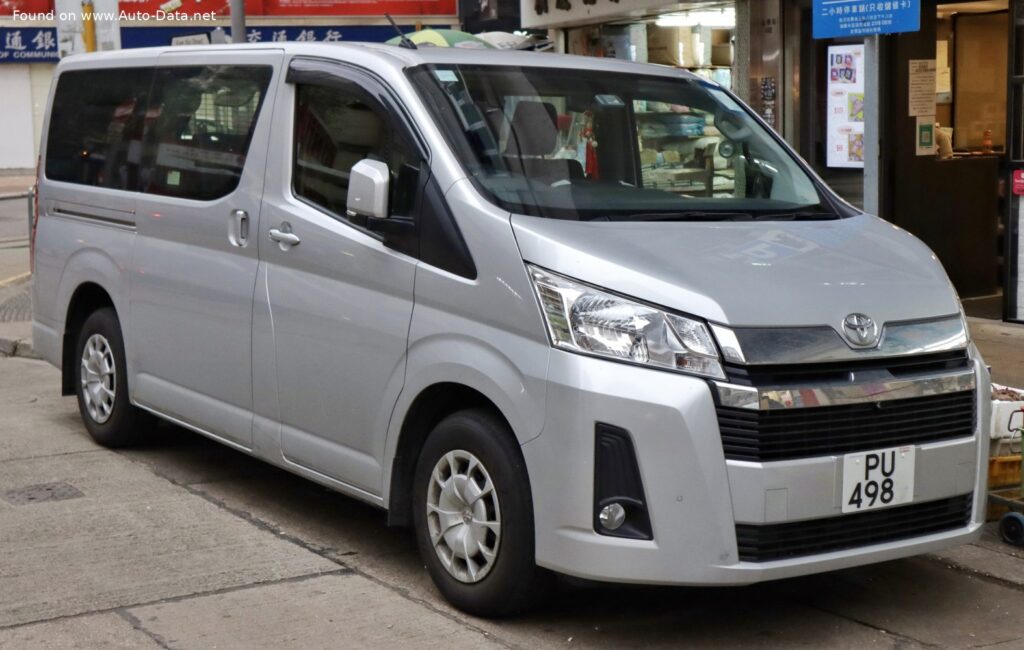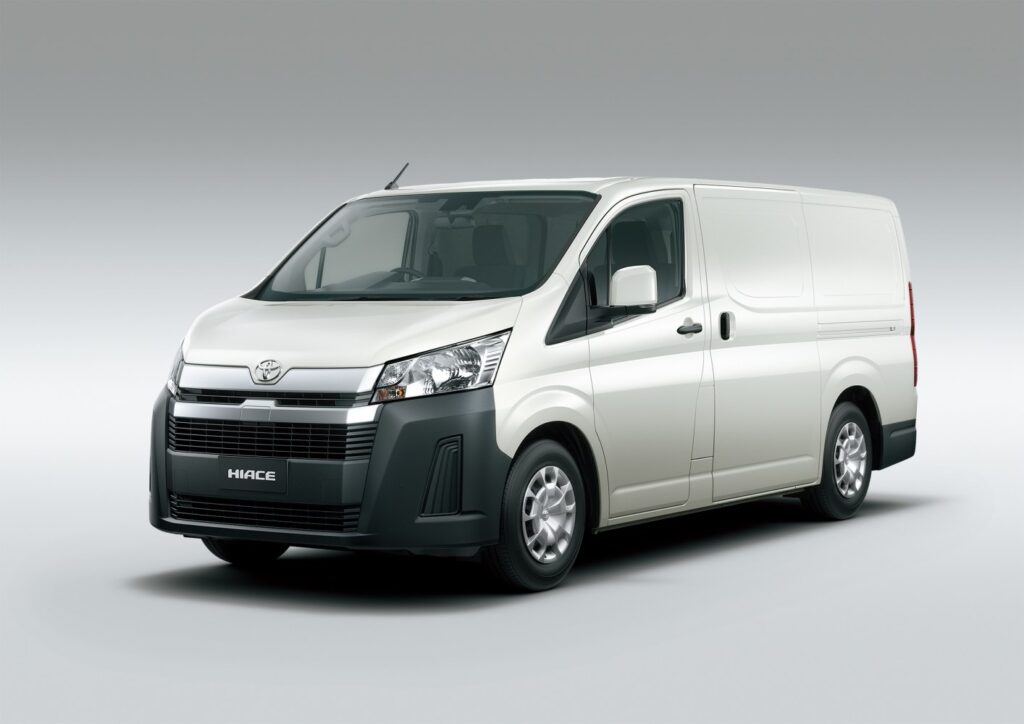
Introduction to the Toyota HiAce VI (H300) Panel Van L1H1 3.5 V6 (281 Hp)
The Toyota HiAce, a name synonymous with reliability and utility in commercial vehicle markets across the globe, entered its sixth generation (H300 series) in 2019. While not offered in the North American market, the HiAce has long been a foundational model for businesses, logistics operations, and passenger transport in Asia, Africa, Oceania, and parts of Europe and Latin America. The variant under review, the Toyota HiAce VI (H300) Panel Van L1H1 3.5 V6 (281 Hp), represents a robust and capable iteration designed for demanding commercial applications, combining significant cargo capacity with a powerful gasoline engine.
This generation marked a significant departure from its predecessors, moving to a semi-bonnet design that enhances safety, comfort, and serviceability. The L1H1 designation refers to the standard length and standard height configuration, making it a versatile workhorse for a wide range of tasks, from urban deliveries to inter-city transport. The inclusion of a potent 3.5-liter V6 gasoline engine, producing 281 horsepower, underscores Toyota’s commitment to offering diverse powertrain options to meet varied market demands, particularly where gasoline engines are preferred or required for their smooth operation and specific performance characteristics.
Engine and Performance of the Toyota HiAce VI (H300)
At the heart of this particular Toyota HiAce VI (H300) model is a formidable 3.5-liter V6 gasoline engine, identified by the engine code 7GR-FKS. This naturally aspirated, V-configuration engine delivers a robust 281 horsepower at 6000 rpm, providing ample power for hauling heavy loads or navigating challenging terrains. Torque output stands at 258.88 lb.-ft. (351 Nm) at 4600 rpm, ensuring strong pulling capability even at lower engine speeds. The engine’s architecture features a DOHC (Dual Overhead Camshaft) valvetrain with VVT-iW (Variable Valve Timing-intelligent Wide), optimizing valve timing for both performance and efficiency across the rev range.
Fuel delivery is managed by a sophisticated system that combines direct injection with multi-port manifold injection, a strategy designed to maximize combustion efficiency and reduce emissions. With a compression ratio of 11.8:1, the engine is tuned for strong performance. Power is channeled to the rear wheels via a durable 6-speed manual transmission, a choice that emphasizes driver engagement and precise control, particularly beneficial in commercial applications where varied load conditions and driving environments are common.
Despite its powerful V6 engine, the HiAce VI (H300) manages respectable fuel economy for a vehicle of its size and capability. The combined fuel consumption is rated at 19 US mpg (12.4 l/100 km), with urban figures at 13.9 US mpg (16.9 l/100 km) and extra-urban at 24 US mpg (9.8 l/100 km). CO2 emissions are 283 g/km, reflecting the output of a large gasoline engine. The vehicle boasts a maximum speed of 105.63 mph (170 km/h), more than adequate for a commercial panel van. Its weight-to-power ratio is 7.6 kg/Hp (131.6 Hp/tonne), highlighting its strong performance for its class.
Design & Features: The Toyota HiAce VI (H300) Panel Van L1H1
The design philosophy behind the Toyota HiAce VI (H300) Panel Van L1H1 is rooted in practicality, durability, and a focus on maximizing cargo utility. As a panel van, its primary function is to transport goods, and the L1H1 designation signifies its standard length and standard height configuration, offering a balanced blend of maneuverability and internal volume. The vehicle features a robust five-door body type, typically with two front doors, a sliding door on one or both sides for cargo access, and a rear liftgate or barn doors. The seating configuration is designed for 2-3 occupants, prioritizing cargo space over passenger capacity.
With a length of 207.28 inches (5265 mm), a width of 76.77 inches (1950 mm), and a height of 78.35 inches (1990 mm), the HiAce L1H1 provides a substantial footprint. The generous wheelbase of 126.38 inches (3210 mm) contributes to stable handling, especially when loaded. Crucially, the cargo area offers a cavernous maximum trunk space of 218.95 cubic feet (6200 liters), allowing businesses to transport significant volumes of goods. The maximum payload capacity stands at an impressive 2347.92 lbs (1065 kg), reinforcing its credentials as a serious commercial vehicle.
Underneath, the HiAce is engineered for toughness. The front suspension utilizes an independent McPherson strut setup with coil springs and an anti-roll bar, providing a balance of ride comfort and stability. The rear features a rigid axle suspension with leaf springs, a time-tested design known for its durability and load-carrying capability, essential for a vehicle frequently subjected to heavy loads. Braking performance is handled by ventilated discs at the front (296 mm) and durable drum brakes at the rear (256 mm), complemented by an Anti-lock Braking System (ABS) for enhanced safety during emergency stops. Steering is managed by a hydraulic rack and pinion system, offering direct feedback and robust operation. The vehicle rides on 215/70 R16 tires mounted on 7J x 16 wheel rims, providing a good balance of load rating and ride quality.
Technical Specifications
| Category | Specification | Value |
|---|---|---|
General Information |
||
| Brand | Toyota | |
| Model | HiAce | |
| Generation | HiAce VI (H300) Panel Van L1H1 | |
| Engine Type | 3.5 V6 (281 Hp) | |
| Start of Production | 2019 year | |
| Powertrain Architecture | Internal Combustion engine | |
| Body Type | Van | |
| Seats | 2-3 | |
| Doors | 5 | |
Performance Specifications |
||
| Fuel Consumption (Urban) | 13.9 US mpg (16.9 l/100 km) | |
| Fuel Consumption (Extra Urban) | 24 US mpg (9.8 l/100 km) | |
| Fuel Consumption (Combined) | 19 US mpg (12.4 l/100 km) | |
| CO2 Emissions | 283 g/km | |
| Fuel Type | Petrol (Gasoline) | |
| Maximum Speed | 105.63 mph (170 km/h) | |
| Weight-to-Power Ratio | 7.6 kg/Hp, 131.6 Hp/tonne | |
| Weight-to-Torque Ratio | 6.1 kg/Nm, 164.4 Nm/tonne | |
Engine Specifications |
||
| Power | 281 Hp @ 6000 rpm. | |
| Power per Liter | 81.3 Hp/l | |
| Torque | 258.88 lb.-ft. (351 Nm) @ 4600 rpm. | |
| Engine Layout | Front, Longitudinal | |
| Engine Model/Code | 7GR-FKS | |
| Engine Displacement | 3.5 l (3456 cm3, 210.9 cu. in.) | |
| Number of Cylinders | 6 | |
| Engine Configuration | V-engine | |
| Cylinder Bore | 3.7 in. (94 mm) | |
| Piston Stroke | 3.27 in. (83 mm) | |
| Compression Ratio | 11.8:1 | |
| Number of Valves per Cylinder | 4 | |
| Fuel Injection System | Direct injection and Multi-port manifold injection | |
| Engine Aspiration | Naturally aspirated engine | |
| Valvetrain | DOHC, VVT-iW | |
| Engine Oil Capacity | 6.55 US qt (6.2 l) | |
| Coolant Capacity | 11.1 US qt (10.5 l) | |
Space, Volume and Weights |
||
| Kerb Weight | 4706.87 lbs. (2135 kg) | |
| Maximum Weight | 7054.79 lbs. (3200 kg) | |
| Maximum Load | 2347.92 lbs. (1065 kg) | |
| Trunk (Boot) Space – Maximum | 218.95 cu. ft. (6200 l) | |
| Fuel Tank Capacity | 18.49 US gal (70 l) | |
| Permitted Trailer Load with Brakes (12%) | 3086.47 lbs. (1400 kg) | |
| Permitted Trailer Load without Brakes | 881.85 lbs. (400 kg) | |
| Permitted Towbar Download | 308.65 lbs. (140 kg) | |
Dimensions |
||
| Length | 207.28 in. (5265 mm) | |
| Width | 76.77 in. (1950 mm) | |
| Height | 78.35 in. (1990 mm) | |
| Wheelbase | 126.38 in. (3210 mm) | |
| Front Track | 65.75 – 65.94 in. (1670-1675 mm) | |
| Rear (Back) Track | 65.75 in. (1670 mm) | |
| Front Overhang | 37.4 in. (950 mm) | |
| Rear Overhang | 43.5 in. (1105 mm) | |
| Minimum Turning Circle (Turning Diameter) | 36.09 ft. (11 m) | |
Drivetrain, Brakes and Suspension Specifications |
||
| Drivetrain Architecture | The Internal combustion engine (ICE) drives the rear wheels of the vehicle. | |
| Drive Wheel | Rear wheel drive | |
| Number of Gears and Type of Gearbox | 6 gears, manual transmission | |
| Front Suspension | Independent, type McPherson with coil spring and anti-roll bar | |
| Rear Suspension | Rigid axle suspension, Leaf spring | |
| Front Brakes | Ventilated discs, 296 mm | |
| Rear Brakes | Drum, 256 mm | |
| Assisting Systems | ABS (Anti-lock braking system) | |
| Steering Type | Steering rack and pinion | |
| Power Steering | Hydraulic Steering | |
| Tires Size | 215/70 R16 | |
| Wheel Rims Size | 7J x 16 | |
Legacy and Market Impact
The Toyota HiAce boasts a formidable legacy spanning over five decades, establishing itself as a benchmark for reliability, durability, and versatility in the global commercial vehicle market. The sixth-generation Toyota HiAce VI (H300) continues this tradition, cementing its position as a go-to choice for countless businesses, from small enterprises to large fleet operators, in diverse regions outside of North America. Its reputation for being virtually indestructible and capable of handling challenging operating conditions with minimal downtime is a significant factor in its widespread adoption.
In its primary markets, which include Southeast Asia, Australia, New Zealand, Africa, the Middle East, and parts of Latin America and Europe, the HiAce competes fiercely with other established commercial vans. Key competitors vary by region but often include models such as the Ford Transit Custom, Mercedes-Benz Vito, Hyundai Starex/H-1, Nissan NV350 Caravan, and certain variants of the Volkswagen Transporter. What sets the HiAce apart is often its lower total cost of ownership, attributed to Toyota’s renowned engineering for longevity and the ready availability of parts and service in its target markets.
The introduction of the H300 generation with its semi-bonnet design was a strategic move by Toyota to enhance occupant safety by allowing for a larger crumple zone and to improve driver ergonomics, moving the driver further behind the front axle. This design shift, combined with modern powertrain options like the 3.5 V6 gasoline engine, helped the HiAce maintain its competitive edge in a rapidly evolving segment. The availability of a powerful gasoline engine appeals to markets where diesel fuel quality might be inconsistent or where gasoline is preferred for its quieter operation and specific performance characteristics, especially for applications requiring brisk acceleration or higher speeds.
Historically, the HiAce has been instrumental in supporting economic development in many countries, serving as the backbone for various industries, including logistics, construction, tourism (as a passenger van), and public transportation. Its adaptability, ranging from basic panel vans like the L1H1 to more sophisticated passenger configurations, showcases its inherent versatility. The Toyota HiAce VI (H300) Panel Van L1H1 3.5 V6 (281 Hp), with its blend of robust engineering, ample cargo capacity, and a powerful engine, continues to uphold this legacy, playing a crucial role in enabling commerce and mobility across its expansive global footprint.