The Renault Megane III Coupe RS 2.0 16V (250 Hp): A European Hot Hatch Icon
The
Renault Megane III Coupe RS 2.0 16V (250 Hp)
, produced between 2009 and 2012, stands as a formidable example of Renault Sport’s engineering prowess and commitment to high-performance front-wheel-drive vehicles. As an international automotive expert, it’s crucial to recognize that while this potent coupe never officially graced American showrooms—a consequence of Renault’s withdrawal from the U.S. market decades prior—it carved out a significant niche and garnered immense respect across Europe and other global markets. This particular variant, part of the third generation of the Megane lineup, was specifically designed to be a driver’s car, blending aggressive styling with a highly capable powertrain and chassis. It represented the pinnacle of the Megane’s performance offerings, challenging established sports coupes and hot hatches with its distinctive French flair and track-honed dynamics. This article will delve into the technical specifications, design philosophy, and enduring legacy of this notable European performance machine, using American English terminology for clarity.
Engine and Performance: The Heart of the Renault Megane III Coupe RS 2.0 16V (250 Hp)
At the core of the
Renault Megane III Coupe RS 2.0 16V (250 Hp)
‘s exhilarating performance lies its acclaimed F4R 874 engine. This 2.0-liter (1998 cm³ or 121.93 cu. in.) inline-four cylinder gasoline engine is a masterpiece of forced induction, featuring a twin-scroll turbocharger and an intercooler to deliver a robust and responsive powerband. With a DOHC (Double Overhead Camshaft) valvetrain and multi-port manifold injection, the engine was engineered for both efficiency and high output. It generates an impressive 250 horsepower at 5500 rpm, translating to a substantial 125.1 horsepower per liter. Torque figures are equally compelling, peaking at 250.77 lb.-ft. (340 Nm) at a relatively low 3000 rpm, ensuring strong acceleration from virtually any speed.
Power is channeled to the front wheels via a precise 6-speed manual transmission, a choice that underscored Renault Sport’s dedication to an engaging driver experience. This powertrain architecture, combined with a kerb weight of 3057.81 lbs., results in an impressive weight-to-power ratio of 5.5 kg/Hp (180.2 Hp/tonne). Such figures translate directly into blistering acceleration: the Megane RS could sprint from 0 to 60 mph in a mere 5.8 seconds, and achieve a top speed of 152.24 mph (245 km/h).
Despite its performance credentials, the engine was designed to meet Euro 5 emission standards, with CO2 emissions rated at 190 g/km. Fuel economy, while not the primary focus of a performance vehicle, was respectable for its class, with a combined cycle rating of 28 US mpg (8.4 l/100 km). This blend of potent performance and relative efficiency made the Megane RS a compelling choice for enthusiasts seeking thrill without excessive compromise.
Design and Features: Form Meets Function
The
Renault Megane III Coupe RS 2.0 16V (250 Hp)
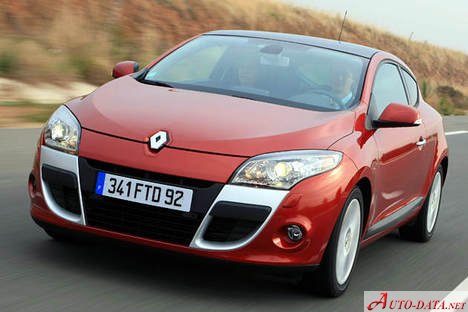
adopted a sleek and aggressive coupe body style, clearly distinguishing it from its more pedestrian Megane hatchback siblings. With three doors and seating for five, it offered a blend of practicality and sporty aesthetics. Its dimensions—169.25 inches in length, 72.76 inches in width (including mirrors), and 56.5 inches in height—contributed to its planted and muscular stance. The design incorporated specific RS styling cues, such as wider fenders, a distinctive front bumper with LED daytime running lights, a prominent rear diffuser, and a centrally mounted exhaust, all signaling its high-performance intent.
Underneath its striking exterior, the Megane RS featured a meticulously tuned chassis designed for optimal handling. The front suspension utilized an independent McPherson strut setup, known for its ability to provide precise steering and good road holding. The rear suspension employed a torsion beam system, often enhanced by Renault Sport with bespoke components to achieve a balance of comfort and dynamic stability. Stopping power was provided by ventilated disc brakes at the front and disc brakes at the rear, augmented by an Anti-lock Braking System (ABS) for enhanced safety and control during aggressive driving.
Steering was managed by an electric rack and pinion system, offering responsive feedback to the driver. The car rode on 18-inch wheels, shod with performance-oriented 225/40 R18 tires, providing ample grip. The exterior design was not just for show; elements like the drag coefficient of 0.34 were carefully considered for aerodynamic efficiency at high speeds. Inside, the Megane RS offered a driver-focused cockpit, with supportive sport seats and an array of features aimed at enhancing the driving experience, while still providing a practical trunk space ranging from 13.31 cu. ft. to 36.16 cu. ft. with the rear seats folded.
Technical Specifications: Renault Megane III Coupe RS 2.0 16V (250 Hp)
| Category | Specification |
|---|---|
| General Information | |
| Brand | Renault |
| Model | Megane III Coupe RS 2.0 16V (250 Hp) |
| Generation | Megane III Coupe |
| Production Start | 2009 |
| Production End | 2012 |
| Body Type | Coupe |
| Doors | 3 |
| Seats | 5 |
| Performance Specifications | |
| Acceleration 0-60 mph | 5.8 seconds |
| Maximum Speed | 152.24 mph (245 km/h) |
| Fuel Consumption (Urban) | 20.5 US mpg (11.5 l/100 km) |
| Fuel Consumption (Extra Urban) | 35.1 US mpg (6.7 l/100 km) |
| Fuel Consumption (Combined) | 28 US mpg (8.4 l/100 km) |
| CO2 Emissions | 190 g/km |
| Emission Standard | Euro 5 |
| Fuel Type | Petrol (Gasoline) |
| Weight-to-Power Ratio | 5.5 kg/Hp (180.2 Hp/tonne) |
| Weight-to-Torque Ratio | 4.1 kg/Nm (245.1 Nm/tonne) |
| Engine Specifications | |
| Power | 250 Hp @ 5500 rpm |
| Torque | 250.77 lb.-ft. (340 Nm) @ 3000 rpm |
| Engine Model/Code | F4R 874 |
| Engine Layout | Front, Transverse |
| Engine Displacement | 2.0 liters (1998 cm³ / 121.93 cu. in.) |
| Number of Cylinders | 4 |
| Engine Configuration | Inline |
| Cylinder Bore | 3.26 in. (82.7 mm) |
| Piston Stroke | 3.66 in. (93 mm) |
| Compression Ratio | 9:1 |
| Valves per Cylinder | 4 |
| Fuel Injection System | Multi-port manifold injection |
| Engine Aspiration | Twin-scroll turbo, Intercooler |
| Valvetrain | DOHC |
| Engine Oil Capacity | 5.71 US qt (5.4 l) |
| Coolant Capacity | 6.87 US qt (6.5 l) |
| Space, Volume, and Weights | |
| Kerb Weight | 3057.81 lbs. (1387 kg) |
| Max. Weight | 4045.48 lbs. (1835 kg) |
| Max Load | 987.67 lbs. (448 kg) |
| Trunk Space (Minimum) | 13.31 cu. ft. (377 l) |
| Trunk Space (Maximum) | 36.16 cu. ft. (1024 l) |
| Fuel Tank Capacity | 15.85 US gal (60 l) |
| Dimensions | |
| Length | 169.25 in. (4299 mm) |
| Width (including mirrors) | 72.76 in. (1848 mm) |
| Height | 56.5 in. (1435 mm) |
| Wheelbase | 103.78 in. (2636 mm) |
| Front Track | 62.52 in. (1588 mm) |
| Rear Track | 60.83 in. (1545 mm) |
| Front Overhang | 33.86 in. (860 mm) |
| Rear Overhang | 31.61 in. (803 mm) |
| Ride Height (Ground Clearance) | 4.72 in. (120 mm) |
| Drag Coefficient (Cd) | 0.34 |
| Minimum Turning Circle | 37.24 ft. (11.35 m) |
| Drivetrain, Brakes, and Suspension | |
| Drivetrain Architecture | Front-wheel drive, Internal Combustion Engine |
| Drive Wheel | Front-wheel drive |
| Gearbox Type | 6-speed manual transmission |
| Front Suspension | Independent type McPherson |
| Rear Suspension | Torsion beam |
| Front Brakes | Ventilated discs |
| Rear Brakes | Disc |
| Assisting Systems | ABS (Anti-lock braking system) |
| Steering Type | Steering rack and pinion |
| Power Steering | Electric Steering |
| Tires Size | 225/40 R18 |
| Wheel Rims Size | 18 inches |
Legacy and Market Impact
The
Renault Megane III Coupe RS 2.0 16V (250 Hp)
quickly established itself as a benchmark in the highly competitive European hot hatch and performance coupe segment. It garnered critical acclaim for its exceptional chassis dynamics, powerful turbocharged engine, and engaging driving experience. Renault Sport, the high-performance division of Renault, had a formidable reputation for producing some of the best-handling front-wheel-drive cars in the world, and the Megane RS 250 further solidified this standing. Its ability to combine daily usability with track-day prowess made it a favorite among driving enthusiasts.
In its primary markets, the Megane RS competed fiercely with rivals such as the Ford Focus RS, the Volkswagen Golf R, the Honda Civic Type R (in its various generations), and the Opel Astra OPC (Vauxhall Astra VXR in the UK). What set the Megane RS apart was often its unique blend of ride comfort and razor-sharp handling, often attributed to Renault Sport’s meticulous suspension tuning, including a sophisticated independent steering axis front suspension setup (though not explicitly detailed in the provided data, it’s a known characteristic of RS models of this era that enhances steering precision and reduces torque steer).
While its absence from the American market meant it never achieved the widespread recognition it deserved stateside, the Megane RS 250 became a cult classic among global automotive journalists and enthusiasts. Its legacy is one of a truly driver-focused machine that proved front-wheel drive could be just as thrilling and capable as its rear-wheel-drive or all-wheel-drive counterparts, especially on twisty roads and racetracks. It showcased Renault’s commitment to performance engineering and continues to be highly sought after in the used car market by those who appreciate its blend of French flair, mechanical integrity, and unadulterated driving pleasure. The Megane RS 250 remains a significant chapter in the history of performance cars, a testament to what can be achieved when a manufacturer dedicates itself to creating a truly engaging driver’s car.