The Volvo V60 II 2.0 T4 (190 Hp) Automatic: A Detailed Overview
The
Volvo V60 II 2.0 T4 (190 Hp) Automatic
represents the second generation of Volvo’s popular compact executive station wagon, a vehicle that masterfully blends Scandinavian design, advanced technology, and practical versatility. Produced for a specific run between March 2019 and March 2020, this particular variant of the V60 II generation (internally designated as V60 II) solidified its position in the premium segment, particularly in European markets where the station wagon body style remains highly cherished. While the V60 has a presence in North America, this specific T4 powertrain configuration, with its focus on balanced efficiency and performance, was especially relevant to the diverse regulatory and consumer demands of the global automotive landscape, though less common in the US where larger engines or electrified options often dominate the premium segment.
Building on Volvo’s rich heritage of crafting practical yet elegant wagons, the V60 II arrived with a sophisticated design language, cutting-edge safety features, and a refined driving experience. The 2.0 T4 (190 Hp) Automatic variant offered a compelling package for discerning buyers seeking a blend of spirited performance, respectable fuel economy, and the inherent utility of a five-door, five-seat station wagon. It served as a testament to Volvo’s commitment to delivering premium vehicles that prioritize both occupant well-being and environmental responsibility, all while maintaining a distinctive and understated aesthetic that sets it apart in a competitive market.
Engine and Performance: The Heart of the Volvo V60 II 2.0 T4 (190 Hp) Automatic
At the core of the
Volvo V60 II 2.0 T4 (190 Hp) Automatic
lies a highly capable and efficient powertrain. This variant is equipped with Volvo’s B4204T31 engine, a 2.0-liter (120.16 cubic inch) inline four-cylinder gasoline unit. Utilizing a sophisticated direct injection fuel system and boosted by a turbocharger and intercooler, this engine generates a robust 190 horsepower at 5000 rpm. This power output is complemented by a substantial 221.27 lb.-ft. (300 Nm) of torque, available across a broad rev range from 1680 to 4020 rpm, ensuring strong, accessible acceleration in a variety of driving conditions. The DOHC (Double Overhead Camshaft) valvetrain with four valves per cylinder further optimizes engine breathing and efficiency.
Power is seamlessly delivered to the front wheels via an advanced 8-speed automatic transmission. This gearbox is precisely tuned to maximize both performance and fuel efficiency, offering smooth shifts and responsive acceleration. The V60 II 2.0 T4 boasts impressive performance figures for a family wagon, accelerating from 0 to 60 mph in a calculated 6.8 seconds (or 0-100 km/h in 7.2 seconds) and reaching a top speed of 136.7 mph (220 km/h). This makes it more than capable of handling highway cruising and spirited driving alike.
Despite its performance capabilities, the T4 engine is engineered with efficiency in mind. According to WLTP (Worldwide Harmonized Light Vehicles Test Procedure) standards, the combined fuel consumption ranges from 28.7 to 32.2 US mpg (7.3-8.2 l/100 km). CO2 emissions are also relatively contained, ranging from 166-187 g/km, reflecting Volvo’s commitment to reducing environmental impact. The engine’s layout, front and transverse, contributes to optimized packaging and interior space, while its 10.8:1 compression ratio and meticulous engineering ensure a refined and quiet operation.
Design and Features: Scandinavian Elegance Meets Practicality
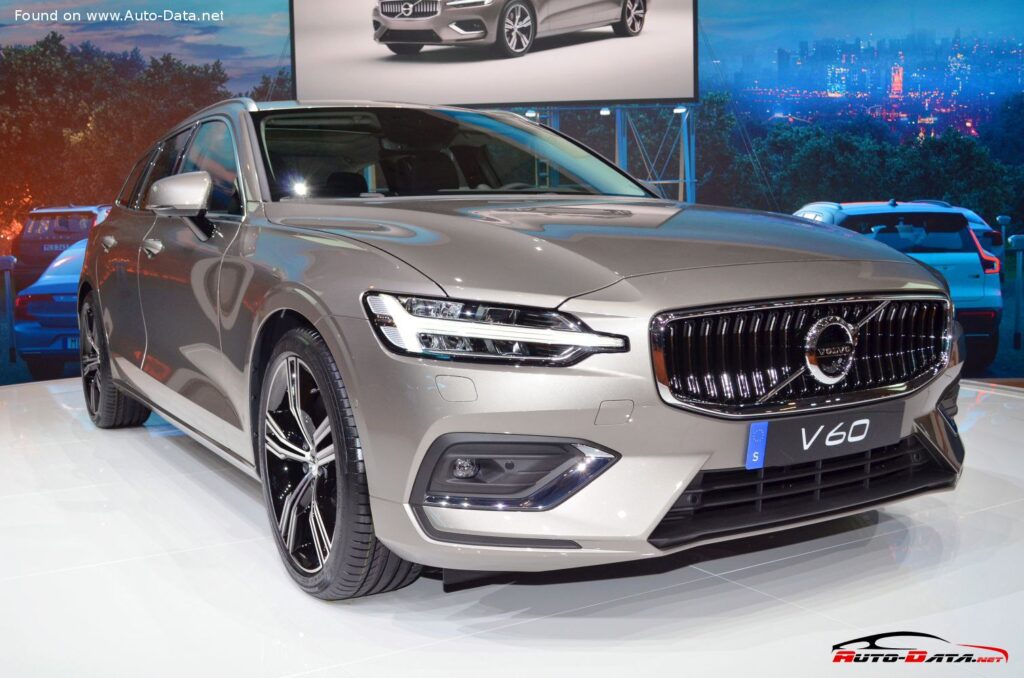
The Volvo V60 II embodies a contemporary Scandinavian design philosophy, characterized by clean lines, elegant proportions, and a focus on functionality. As a station wagon (estate), it offers a five-door, five-seat configuration, prioritizing passenger comfort and cargo versatility. The exterior features Volvo’s signature ‘Thor’s Hammer’ LED daytime running lights, a prominent grille, and sculpted body panels that convey a sense of understated sophistication. Its aerodynamic profile, with a drag coefficient (Cd) of 0.29, not only enhances visual appeal but also contributes to improved fuel efficiency and reduced wind noise.
Inside, the V60 II continues the theme of minimalist luxury. The cabin is meticulously crafted with high-quality materials, offering a serene and ergonomically sound environment. The Sensus infotainment system, typically featuring a large, vertically oriented touchscreen, serves as the central hub for navigation, entertainment, and vehicle settings, providing an intuitive user experience. Comfort is paramount, with supportive seats and ample legroom for all occupants.
Practicality is a hallmark of the V60. It offers a generous minimum trunk (boot) space of 18.68 cubic feet (529 liters), which expands to an impressive 50.89 cubic feet (1441 liters) with the rear seats folded down. This expansive cargo capacity makes it ideal for families, outdoor enthusiasts, or anyone requiring substantial hauling capability. Additional practical features include a maximum roof load of 165.35 lbs (75 kg) and a substantial permitted trailer load with brakes of 3968.32 lbs (1800 kg), further underscoring its utility.
Volvo’s unwavering commitment to safety is evident throughout the V60 II. While the provided data specifically mentions ABS (Anti-lock Braking System), the V60 II, as a modern Volvo, would have been equipped with a comprehensive suite of advanced driver-assistance systems (ADAS). These typically include features like City Safety (autonomous emergency braking with pedestrian, cyclist, and large animal detection), Lane Keeping Aid, Run-off Road Mitigation, and various collision avoidance technologies, setting a benchmark for safety in its class. The vehicle’s robust chassis, disc brakes on both front and rear axles, and electric power steering system further enhance its dynamic safety characteristics.
Technical Specifications: Volvo V60 II 2.0 T4 (190 Hp) Automatic
| Specification | Value |
|---|---|
| General Information | |
| Brand | Volvo |
| Model | V60 |
| Generation | V60 II |
| Type (Engine) | 2.0 T4 (190 Hp) Automatic |
| Start of Production | March, 2019 |
| End of Production | March, 2020 |
| Powertrain Architecture | Internal Combustion engine |
| Body type | Station wagon (estate) |
| Seats | 5 |
| Doors | 5 |
| Performance Specs | |
| Fuel Type | Petrol (Gasoline) |
| Acceleration 0 – 60 mph | 6.8 sec |
| Acceleration 0 – 100 km/h | 7.2 sec |
| Maximum Speed | 136.7 mph (220 km/h) |
| Combined Fuel Consumption (WLTP) | 28.7 – 32.2 US mpg (7.3-8.2 l/100 km) |
| CO2 Emissions (WLTP) | 166-187 g/km |
| Combined Fuel Consumption (Economy) | 33.6 – 35.1 US mpg (6.7-7.0 l/100 km) |
| CO2 Emissions (Economy) | 154-160 g/km |
| Weight-to-Power Ratio | 9 kg/Hp, 111.6 Hp/tonne |
| Weight-to-Torque Ratio | 5.7 kg/Nm, 176.2 Nm/tonne |
| Engine Specs | |
| Power | 190 Hp @ 5000 rpm |
| Power per liter | 96.5 Hp/l |
| Torque | 221.27 lb.-ft. (300 Nm) @ 1680-4020 rpm |
| Maximum Engine Speed | 6000 rpm |
| Engine Layout | Front, Transverse |
| Engine Model/Code | B4204T31 |
| Engine Displacement | 120.16 cu. in. (1969 cm3) |
| Number of Cylinders | 4 |
| Engine Configuration | Inline |
| Cylinder Bore | 3.23 in. (82 mm) |
| Piston Stroke | 3.67 in. (93.2 mm) |
| Compression Ratio | 10.8:1 |
| Number of Valves per Cylinder | 4 |
| Fuel Injection System | Direct injection |
| Engine Aspiration | Turbocharger, Intercooler |
| Valvetrain | DOHC |
| Engine Oil Capacity | 5.92 US qt (5.6 l) |
| Space, Volume and Weights | |
| Kerb Weight | 3754.47 lbs (1703 kg) |
| Trunk (boot) space – minimum | 18.68 cu. ft. (529 l) |
| Trunk (boot) space – maximum | 50.89 cu. ft. (1441 l) |
| Fuel Tank Capacity | 15.85 US gal (60 l) |
| Max. Roof Load | 165.35 lbs (75 kg) |
| Permitted Trailer Load with Brakes (12%) | 3968.32 lbs (1800 kg) |
| Permitted Trailer Load without Brakes | 1653.47 lbs (750 kg) |
| Dimensions | |
| Length | 187.44 in. (4761 mm) |
| Width | 72.83 in. (1850 mm) |
| Width with Mirrors Folded | 75.43 in. (1916 mm) |
| Width Including Mirrors | 80.31 in. (2040 mm) |
| Height | 56.38 in. (1432 mm) |
| Wheelbase | 113.07 in. (2872 mm) |
| Front Track | 62.72 – 63.39 in. (1593-1610 mm) |
| Rear (Back) Track | 62.72 – 63.39 in. (1593-1610 mm) |
| Ride Height (Ground Clearance) | 5.59 in. (142 mm) |
| Drag Coefficient (Cd) | 0.29 |
| Minimum Turning Circle (Turning Diameter) | 37.4 – 38.39 ft. (11.4-11.7 m) |
| Drivetrain, Brakes and Suspension Specs | |
| Drivetrain Architecture | The Internal combustion engine (ICE) drives the front wheels of the vehicle. |
| Drive Wheel | Front wheel drive |
| Number of Gears and Type of Gearbox | 8 gears, automatic transmission |
| Front Suspension | Double wishbone |
| Rear Suspension | Independent multi-link suspension, Leaf spring |
| Front Brakes | Disc |
| Rear Brakes | Disc |
| Assisting Systems | ABS (Anti-lock braking system) |
| Steering Type | Steering rack and pinion |
| Power Steering | Electric Steering |
| Wheel Rims Size | Front: 16; 17; 18 inch; Rear: 16; 17 inch |
Legacy and Market Impact
The Volvo V60 II 2.0 T4 (190 Hp) Automatic, during its production run, played a significant role in reinforcing Volvo’s modern identity as a premium automaker. While the station wagon segment has faced increasing competition from SUVs globally, especially in the North American market, the V60 II successfully carved out a niche for those who appreciate the dynamic driving characteristics of a car combined with the unparalleled practicality of a wagon. In markets like Europe, where wagons have a stronger cultural foothold, this V60 variant was a direct competitor to established German rivals such as the Audi A4 Avant, BMW 3 Series Touring, and Mercedes-Benz C-Class Estate.
Volvo’s legacy in building wagons is extensive and deeply ingrained in its brand identity, dating back to iconic models like the Amazon, 240, and 850. The V60 II continues this tradition, evolving it for the 21st century with contemporary design, advanced powertrains, and industry-leading safety technology. The T4 engine, in particular, demonstrated Volvo’s ability to extract impressive performance and efficiency from smaller displacement, turbocharged engines, aligning with global trends towards downsizing without sacrificing refinement.
Its impact on the market was to offer a compelling alternative for buyers who desired luxury, safety, and versatility without conforming to the SUV trend. The V60 II became a symbol of intelligent design and conscious consumption, appealing to those who value understated elegance and functional excellence over ostentation. Its strong performance, combined with its ergonomic interior and comprehensive safety features, contributed to its reputation as a well-rounded and desirable premium vehicle. Even today, the second-generation V60, particularly well-maintained examples of the T4 variant, remains a sought-after used vehicle, a testament to its enduring quality, safety, and timeless appeal in the competitive premium segment. It solidified Volvo’s position not just as a safety innovator, but also as a purveyor of sophisticated, driver-centric luxury.