Mercedes-Benz SLS AMG Coupe (C197) GT 6.2 V8 (591 Hp) AMG SPEEDSHIFT DCT
The Mercedes-Benz SLS AMG Coupe (C197) stands as a modern icon in the pantheon of high-performance grand tourers, a spiritual successor to the legendary 300 SL “Gullwing.” Launched in 2010, the SLS AMG was significant as the first car designed and built entirely by AMG, Mercedes-Benz’s performance division, rather than being a modified production Mercedes model. The specific variant in focus, the GT 6.2 V8 (591 Hp) AMG SPEEDSHIFT DCT, represents a pinnacle of its production run, introduced in October 2012 and produced until December 2013. This two-door, two-seat coupe combined a potent naturally aspirated V8 engine, a sophisticated rear-mounted transaxle gearbox, and an unmistakable design featuring its signature gullwing doors, positioning it as a direct competitor to supercars from Ferrari, Porsche, and Audi. It offered a compelling blend of raw power, luxurious appointments, and everyday usability that few rivals could match.
Engine & Performance: The Heart of the Mercedes-Benz SLS AMG Coupe (C197) GT
At the core of the Mercedes-Benz SLS AMG Coupe (C197) GT is the magnificent M 159.980 engine, a 6.2-liter (6208 cm³ or 378.84 cu. in.) naturally aspirated V8. This powerhouse, hand-built by AMG, delivers an astounding 591 horsepower at 6800 rpm, a substantial output for a non-turbocharged engine. Its specific power output stands at an impressive 95.2 Hp per liter. The engine produces a robust 479.42 lb.-ft. (650 Nm) of torque at 4750 rpm, ensuring immense pulling power across a wide rev range, with a maximum engine speed of 7200 rpm. The M159 engine is characterized by its front, longitudinal layout, a classic V-engine configuration with eight cylinders, four valves per cylinder, and a DOHC valvetrain. Its multi-port manifold injection system and high 11.3:1 compression ratio contribute to its responsiveness and efficiency.
Power is meticulously managed and transferred to the rear wheels via an AMG SPEEDSHIFT DCT 7-speed dual-clutch automatic transmission. This advanced gearbox offers lightning-fast shifts, allowing the SLS AMG GT to rocket from 0 to 60 mph in a blistering 3.6 seconds (0-100 km/h in 3.7 seconds). The car’s top speed is electronically limited to 198.84 mph (320 km/h), a testament to its aerodynamic efficiency and immense power. Despite its formidable performance, Mercedes-AMG engineered the SLS AMG GT to meet Euro 5 emission standards, with combined fuel consumption rated at 17.8 US mpg (13.2 l/100 km) and CO2 emissions of 308 g/km. The car’s impressive weight-to-power ratio of 2.7 kg/Hp (364.8 Hp/tonne) further underscores its performance credentials.
Design & Features of the SLS AMG GT
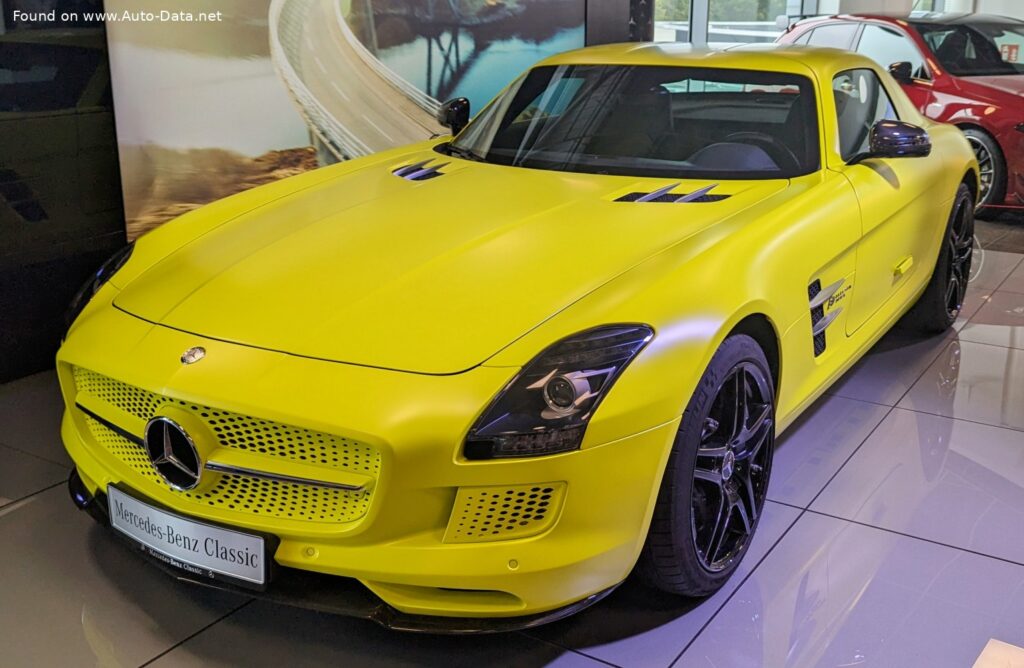
The design of the Mercedes-Benz SLS AMG Coupe (C197) GT is a masterclass in modern automotive aesthetics, drawing clear inspiration from its iconic ancestor, the 300 SL. The most striking feature, undoubtedly, is the pair of upward-swinging gullwing doors, which not only provide a dramatic entrance but also serve as a direct visual link to the past. The long hood, short rear deck, and muscular fenders give the car a powerful and purposeful stance. With a length of 182.6 inches (4638 mm), a width of 76.34 inches (1939 mm), and a height of just 49.69 inches (1262 mm), the SLS AMG possesses classic supercar proportions. Its wheelbase measures 105.51 inches (2680 mm), contributing to both stability and interior space.
Beneath the striking exterior lies a sophisticated aluminum spaceframe chassis, which contributes to the car’s relatively low curb weight of 3571.49 lbs. (1620 kg). This lightweight construction, combined with a transaxle layout (engine at the front, transmission at the rear), ensures optimal weight distribution, crucial for high-performance driving. The suspension system features a double-wishbone setup at both the front and rear, complemented by transverse stabilizers, providing exceptional handling and ride comfort. Braking is handled by large ventilated discs: 390×36 mm at the front and 360×26 mm at the rear, ensuring superb stopping power, aided by an Anti-lock Braking System (ABS). The car rides on staggered wheel sizes, with 265/35 R19 tires on 9.5J x 19 rims at the front and larger 295/30 R20 tires on 11J x 20 rims at the rear, optimizing grip and traction. The hydraulic rack and pinion steering offers precise feedback, connecting the driver intimately with the road.
Inside, the SLS AMG GT offers a cockpit focused on the driver, blending luxury with functionality. High-quality materials, including leather and carbon fiber, adorn the cabin. Despite its supercar performance, it offers a respectable trunk space of 6.22 cu. ft. (176 liters), making it surprisingly practical for a weekend getaway. The fuel tank capacity of 22.45 US gallons (85 liters) provides a decent range, suitable for grand touring.
Technical Specifications
| Specification | Value |
|---|---|
| General Information | |
| Brand | Mercedes-Benz |
| Model | SLS AMG |
| Generation | SLS AMG Coupe (C197) |
| Type (Engine) | GT 6.2 V8 (591 Hp) AMG SPEEDSHIFT DCT |
| Start of Production | October, 2012 year |
| End of Production | December, 2013 year |
| Powertrain Architecture | Internal Combustion engine |
| Body type | Coupe |
| Seats | 2 |
| Doors | 2 |
| Performance Specs | |
| Fuel consumption (urban NEDC) | 11.8 US mpg (19.9 l/100 km) |
| Fuel consumption (extra urban NEDC) | 25.3 US mpg (9.3 l/100 km) |
| Fuel consumption (combined NEDC) | 17.8 US mpg (13.2 l/100 km) |
| CO2 emissions (NEDC) | 308 g/km |
| Fuel Type | Petrol (Gasoline) |
| Acceleration 0 – 60 mph | 3.6 sec |
| Acceleration 0 – 100 km/h | 3.7 sec |
| Maximum speed | 198.84 mph (320 km/h) |
| Emission standard | Euro 5 |
| Weight-to-power ratio | 2.7 kg/Hp, 364.8 Hp/tonne |
| Weight-to-torque ratio | 2.5 kg/Nm, 401.2 Nm/tonne |
| Engine Specs | |
| Power | 591 Hp @ 6800 rpm |
| Power per liter | 95.2 Hp/l |
| Torque | 479.42 lb.-ft. (650 Nm) @ 4750 rpm |
| Maximum engine speed | 7200 rpm |
| Engine layout | Front, Longitudinal |
| Engine Model/Code | M 159.980 |
| Engine displacement | 378.84 cu. in. (6208 cm³) |
| Number of cylinders | 8 |
| Engine configuration | V-engine |
| Cylinder Bore | 4.02 in. (102.2 mm) |
| Piston Stroke | 3.72 in. (94.6 mm) |
| Compression ratio | 11.3:1 |
| Number of valves per cylinder | 4 |
| Fuel injection system | Multi-port manifold injection |
| Engine aspiration | Naturally aspirated engine |
| Valvetrain | DOHC |
| Engine oil capacity | 10.04 US qt (9.5 l) |
| Coolant capacity | 14.79 US qt (14 l) |
| Space, Volume and Weights | |
| Kerb Weight | 3571.49 lbs. (1620 kg) |
| Max. weight | 4265.94 lbs. (1935 kg) |
| Max load | 694.46 lbs. (315 kg) |
| Trunk (boot) space – minimum | 6.22 cu. ft. (176 l) |
| Fuel tank capacity | 22.45 US gal (85 l) |
| Dimensions | |
| Length | 182.6 in. (4638 mm) |
| Width | 76.34 in. (1939 mm) |
| Width including mirrors | 81.69 in. (2075 mm) |
| Height | 49.69 in. (1262 mm) |
| Wheelbase | 105.51 in. (2680 mm) |
| Front track | 66.22 in. (1682 mm) |
| Rear (Back) track | 65 in. (1651 mm) |
| Front overhang | 37.09 in. (942 mm) |
| Rear overhang | 40 in. (1016 mm) |
| Drag coefficient (Cd) | 0.36 |
| Minimum turning circle | 39.04 ft. (11.9 m) |
| Drivetrain, Brakes and Suspension Specs | |
| Drivetrain Architecture | The Internal combustion engine (ICE) drives the rear wheels of the vehicle. |
| Drive wheel | Rear wheel drive |
| Number of gears and type of gearbox | 7 gears, automatic transmission AMG SPEEDSHIFT DCT |
| Front suspension | Double wishbone, Transverse stabilizer |
| Rear suspension | Double wishbone, Transverse stabilizer |
| Front brakes | Ventilated discs, 390×36 mm |
| Rear brakes | Ventilated discs, 360×26 mm |
| Assisting systems | ABS (Anti-lock braking system) |
| Steering type | Steering rack and pinion |
| Power steering | Hydraulic Steering |
| Front wheel tires | 265/35 R19 |
| Rear wheel tires | 295/30 R20 |
| Front wheel rims | 9.5J x 19 |
| Rear wheel rims | 11J x 20 |
Legacy & Market Impact of the Mercedes-Benz SLS AMG Coupe (C197)
The Mercedes-Benz SLS AMG Coupe (C197) carved a significant niche in the high-performance automotive market during its relatively short production run. As AMG’s first ground-up vehicle, it served as a powerful declaration of the division’s engineering prowess and design ambition. Its spiritual lineage to the 300 SL Gullwing was not merely cosmetic; the SLS AMG embodied a similar philosophy of blending cutting-edge performance with an unmistakable, iconic style. The naturally aspirated 6.2-liter V8, often lauded as one of the last great atmospheric engines, provided an auditory and visceral experience that subsequent turbocharged AMG models, while potent, struggled to replicate.
In its primary markets, particularly North America and Europe, the SLS AMG competed fiercely with established supercars. Its rivals included the Ferrari 458 Italia, known for its exotic flair and high-revving V8; the Porsche 911 Turbo, a benchmark for all-wheel-drive performance and everyday usability; and the Audi R8 V10, offering German precision with a Lamborghini-derived engine. What set the SLS AMG apart was its unique blend of classic elegance, raw muscle car power, and a distinctly Mercedes-Benz level of luxury and refinement. The gullwing doors were a major draw, providing a theatrical element that elevated its status beyond mere performance figures.
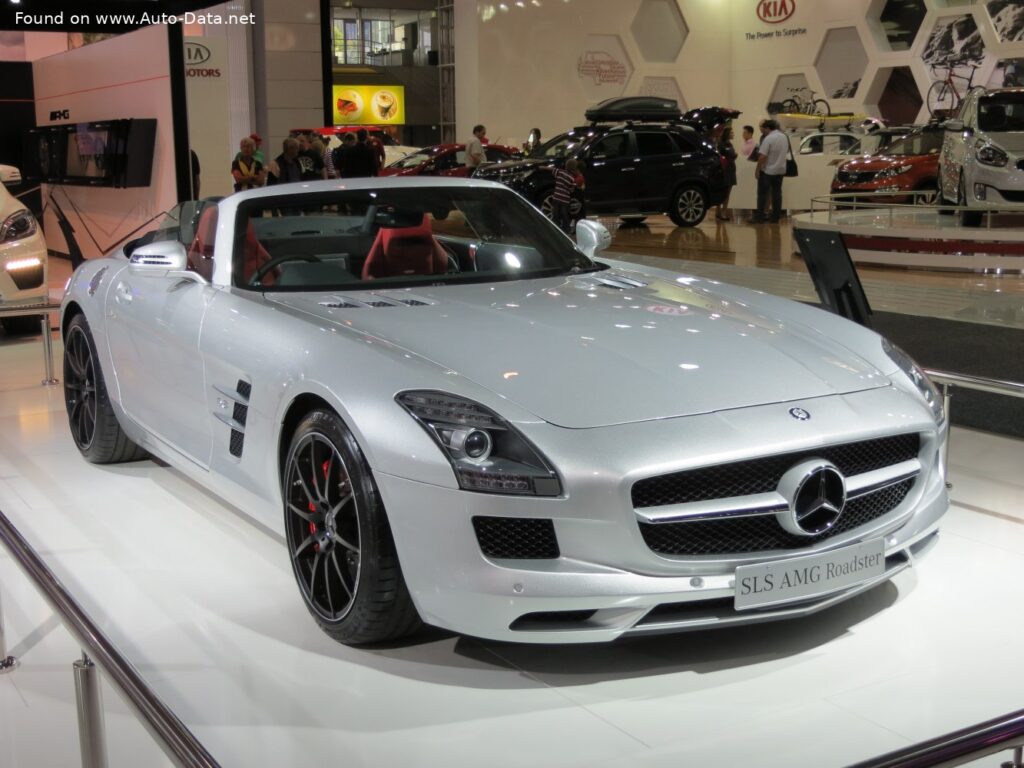
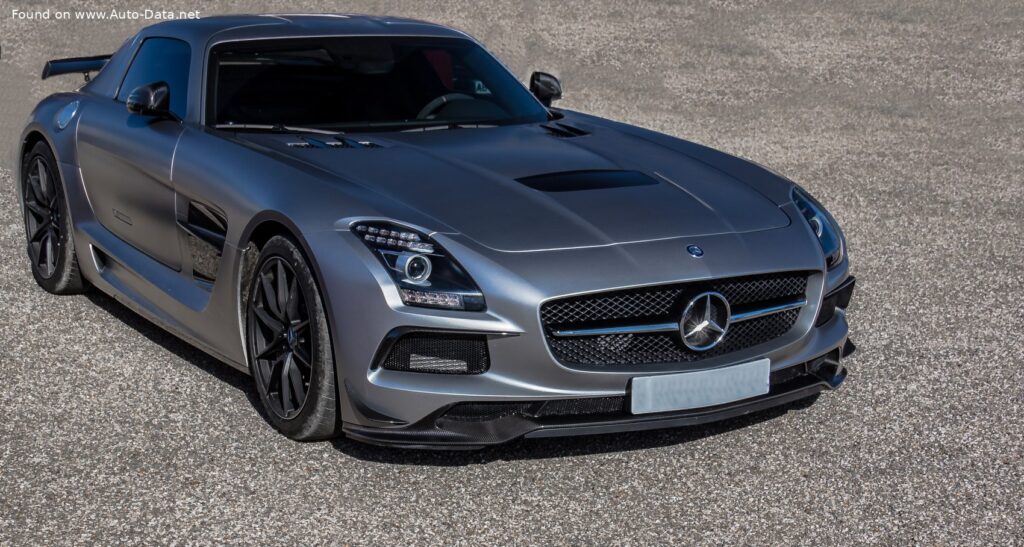
The GT variant, with its increased power output and refined dynamics, represented the zenith of the SLS AMG’s coupe development before the introduction of the even more extreme Black Series and the subsequent roadster models. Its limited production window (2010-2014 for the entire SLS line, with the GT Coupe from late 2012 to late 2013) has contributed to its enduring appeal and collector status. Today, the Mercedes-Benz SLS AMG Coupe (C197) is widely regarded as a modern classic, celebrated for its bold design, the glorious sound and power of its M159 V8, and its significance in AMG’s history. It laid the groundwork for future standalone AMG models and cemented the division’s reputation as a creator of truly bespoke, high-performance vehicles, leaving an indelible mark on the automotive landscape.