The Toyota HiAce VI (H300) Panel Van L2H2: A Global Workhorse Redefined
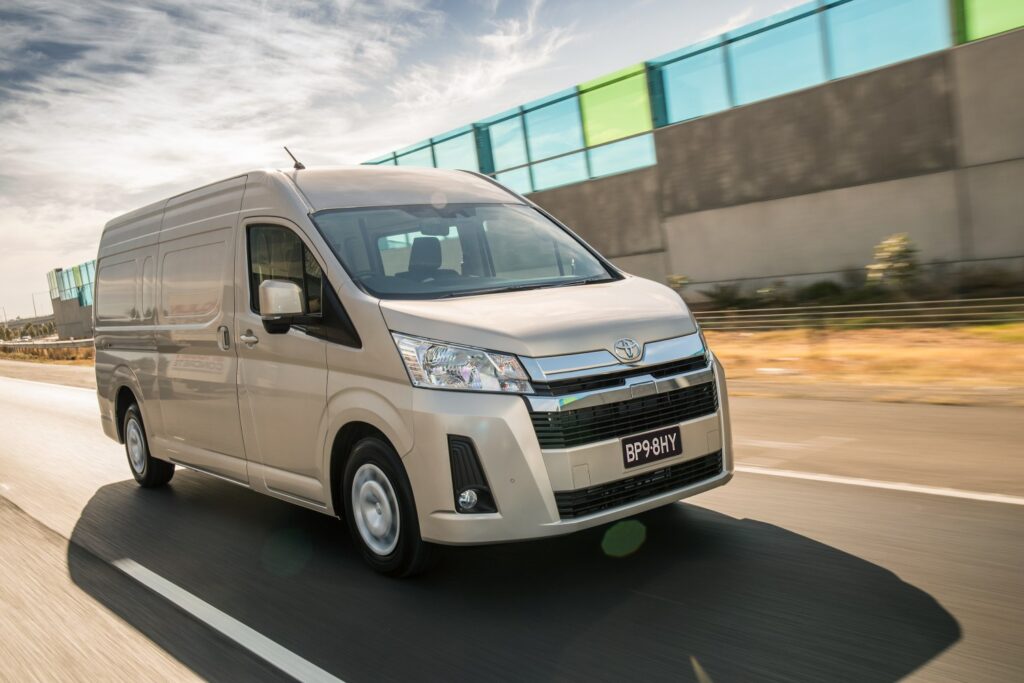
The Toyota HiAce VI (H300) Panel Van L2H2 represents the sixth generation of Toyota’s iconic light commercial vehicle, a nameplate synonymous with reliability and utility across the globe. Introduced in 2019, this iteration marked a significant departure from its predecessors, moving to a semi-bonneted design that dramatically improved safety, comfort, and refinement. While the HiAce has never been a mainstream offering in the United States market, its influence and ubiquity in Asia, Australia, and parts of Europe cannot be overstated. This particular variant, the L2H2 with its 2.8 D-4D (177 Hp) Automatic powertrain, is a testament to Toyota’s commitment to delivering robust, efficient, and highly capable vehicles for commercial applications, serving as the backbone for countless businesses worldwide. Its design prioritizes cargo capacity, driver ergonomics, and operational efficiency, making it a formidable competitor in the demanding panel van segment.
Engine and Performance: Powering the Toyota HiAce VI (H300)
Under the hood of the Toyota HiAce VI (H300) Panel Van L2H2 lies the robust 1GD-FTV 2.8-liter D-4D inline-four turbodiesel engine. This powerplant is engineered for durability and efficiency, crucial attributes for a vehicle designed for continuous commercial operation. With an engine displacement of 2,755 cubic centimeters (168.12 cu. in.), it delivers a healthy 177 horsepower at 3,400 rpm. More importantly for a commercial vehicle, it produces a substantial 331.9 lb.-ft. of torque, available across a wide and usable band from 1,600 to 2,400 rpm. This broad torque curve ensures strong pulling power from low engine speeds, essential for hauling heavy loads and navigating urban environments.
The engine features a DOHC (Dual Overhead Camshaft) valvetrain with 4 valves per cylinder, a common rail fuel injection system, and is boosted by a turbocharger with an intercooler, optimizing power delivery and fuel efficiency. A high compression ratio of 15.6:1 further contributes to its diesel efficiency. Power is channeled to the rear wheels via a smooth and responsive 6-speed automatic transmission, a configuration chosen for its robustness and suitability for heavy-duty applications.
Despite its substantial size and capability, the HiAce maintains respectable fuel economy figures for its class. In a combined cycle, it achieves approximately 28-29 US mpg (8.1-8.4 liters per 100 km). Urban consumption is rated around 24-26.1 US mpg, while extra-urban driving can see figures as high as 31.4 US mpg. The vehicle’s top speed is electronically limited to 99.42 mph (160 km/h), a practical limit for a commercial van. Its powertrain architecture, featuring a front, longitudinal engine layout driving the rear wheels, is a classic and proven setup for commercial vans, offering excellent traction under load and robust reliability.
Design and Features: Utility and Practicality
The Toyota HiAce VI (H300) Panel Van L2H2 is specifically designed for maximum utility and cargo efficiency. The “Panel Van” designation indicates a windowless cargo area, ideal for security and customization. The “L2H2” further specifies its dimensions: L2 denotes a long wheelbase, and H2 signifies a medium-high roof configuration, striking a balance between substantial cargo volume and maneuverability.
Measuring 232.87 inches (5,915 mm) in length, 76.77 inches (1,950 mm) in width, and 89.76 inches (2,280 mm) in height, this HiAce variant boasts an impressive interior volume. The wheelbase spans 151.97 inches (3,860 mm), contributing to a stable ride and significant cargo capacity. The rear-wheel-drive architecture allows for a cavernous maximum trunk space of 328.43 cubic feet (9,300 liters), making it suitable for a wide array of commercial uses, from parcel delivery to specialized trade fit-outs. With a maximum payload capacity ranging from 2,458.15 to 2,557.36 lbs. (1,115-1,160 kg) and a maximum gross vehicle weight of 7,716.18 lbs. (3,500 kg), the HiAce is built to handle substantial loads.
The exterior design is functional and modern, featuring five doors (typically two front, two sliding side doors, and a rear liftgate or barn doors for cargo access). The cabin is designed for 2-3 occupants, offering a comfortable and ergonomic workspace for drivers who spend long hours on the road. Standard features include a hydraulic power steering system with rack and pinion steering, ensuring predictable handling. Safety is addressed with ventilated disc brakes (296 mm front, 320 mm rear) and an Anti-lock Braking System (ABS). Furthermore, modern emissions control systems like a Particulate Filter and a Start & Stop System contribute to its environmental compliance and fuel economy. The suspension setup, with an independent McPherson strut front suspension and a robust rigid axle with leaf springs at the rear, is optimized for carrying heavy loads while maintaining durability.
Technical Specifications
| Category | Specification |
|---|---|
| General Information | |
| Brand | Toyota |
| Model | HiAce |
| Generation | HiAce VI (H300) Panel Van L2H2 |
| Engine Type | 2.8 D-4D (177 Hp) Automatic |
| Production Start | 2019 |
| Body Type | Van |
| Seats | 2-3 |
| Doors | 5 |
| Performance Specs | |
| Fuel Consumption (Urban) | 9-9.8 l/100 km (24-26.1 US mpg) |
| Fuel Consumption (Extra Urban) | 7.5 l/100 km (31.4 US mpg) |
| Fuel Consumption (Combined) | 8.1-8.4 l/100 km (28-29 US mpg) |
| CO2 Emissions | 219 g/km |
| Fuel Type | Diesel |
| Maximum Speed | 160 km/h (99.42 mph) |
| Weight-to-Power Ratio | 13.2 kg/Hp (75.6 Hp/tonne) |
| Weight-to-Torque Ratio | 5.2 kg/Nm (192.3 Nm/tonne) |
| Engine Specs | |
| Power | 177 Hp @ 3400 rpm |
| Power per liter | 64.2 Hp/l |
| Torque | 450 Nm (331.9 lb.-ft.) @ 1600-2400 rpm |
| Engine Layout | Front, Longitudinal |
| Engine Model/Code | 1GD-FTV |
| Engine Displacement | 2755 cm3 (168.12 cu. in.) |
| Number of Cylinders | 4, Inline |
| Cylinder Bore | 92 mm (3.62 in.) |
| Piston Stroke | 103.6 mm (4.08 in.) |
| Compression Ratio | 15.6:1 |
| Valves per Cylinder | 4 |
| Fuel Injection System | Diesel Commonrail |
| Engine Aspiration | Turbocharger, Intercooler |
| Valvetrain | DOHC |
| Engine Oil Capacity | 7.1 l (7.5 US qt) |
| Coolant Capacity | 9.7 l (10.25 US qt) |
| Engine Systems | Start & Stop System, Particulate Filter |
| Space, Volume and Weights | |
| Kerb Weight | 2340-2385 kg (5158.82 – 5258.02 lbs.) |
| Max. Weight (GVWR) | 3500 kg (7716.18 lbs.) |
| Max Load | 1115-1160 kg (2458.15 – 2557.36 lbs.) |
| Trunk (Boot) Space – maximum | 9300 l (328.43 cu. ft.) |
| Fuel Tank Capacity | 70 l (18.49 US gal) |
| Permitted Trailer Load with brakes (12%) | 1500 kg (3306.93 lbs.) |
| Permitted Trailer Load without brakes | 400 kg (881.85 lbs.) |
| Permitted Towbar Download | 150 kg (330.69 lbs.) |
| Dimensions | |
| Length | 5915 mm (232.87 in.) |
| Width | 1950 mm (76.77 in.) |
| Height | 2280 mm (89.76 in.) |
| Wheelbase | 3860 mm (151.97 in.) |
| Front Track | 1670-1675 mm (65.75 – 65.94 in.) |
| Rear Track | 1670 mm (65.75 in.) |
| Front Overhang | 950 mm (37.4 in.) |
| Rear Overhang | 1105 mm (43.5 in.) |
| Ride Height (Ground Clearance) | 182 mm (7.17 in.) |
| Minimum Turning Circle | 12.8 m (41.99 ft.) |
| Drivetrain, Brakes and Suspension Specs | |
| Drivetrain Architecture | Internal combustion engine drives the rear wheels |
| Drive Wheel | Rear wheel drive |
| Gearbox | 6 gears, automatic transmission |
| Front Suspension | Independent, McPherson with coil spring and anti-roll bar |
| Rear Suspension | Rigid axle suspension, Leaf spring |
| Front Brakes | Ventilated discs, 296 mm |
| Rear Brakes | Ventilated discs, 320 mm |
| Assisting Systems | ABS (Anti-lock braking system) |
| Steering Type | Steering rack and pinion |
| Power Steering | Hydraulic Steering |
| Tire Size | 215/70 R16 |
| Wheel Rims Size | 7J x 16 |
Legacy and Market Impact
The Toyota HiAce, particularly the sixth-generation H300 series, continues to uphold its legendary status as a highly durable and reliable commercial vehicle. In markets where it is predominantly sold, such as Japan, Australia, New Zealand, Southeast Asia, and parts of Europe and Africa, the HiAce is often the benchmark for panel vans. Its reputation for longevity and low running costs makes it a favorite among small businesses, large fleet operators, and government agencies alike.
In its primary markets, the HiAce VI (H300) competes with a diverse range of commercial vans. These include the Ford Transit Custom (in some regions), Mercedes-Benz Sprinter (for larger capacities), Volkswagen Transporter, Hyundai Starex/H-1, and various offerings from Nissan and Renault. What often sets the HiAce apart is its unwavering commitment to reliability and its extensive service network, which ensures minimal downtime for businesses that rely heavily on their vehicles. The move to a semi-bonneted design in the H300 generation also brought significant improvements in crash safety ratings and driver comfort, addressing key concerns for modern commercial fleets.
The HiAce’s impact extends beyond mere transportation; it plays a crucial role in supporting economies by facilitating trade, logistics, and service industries. From delivering goods in bustling city centers to transporting tools and equipment for remote construction projects, the Toyota HiAce VI (H300) Panel Van L2H2 embodies the spirit of a dependable workhorse. Its continuous evolution, balancing traditional Toyota ruggedness with modern technology and efficiency, ensures its legacy as a global leader in the light commercial vehicle segment will endure for years to come.