The Suzuki Liana Wagon I 1.6 i 16V 2WD (103 Hp) Automatic: A Practical Compact for Global Markets
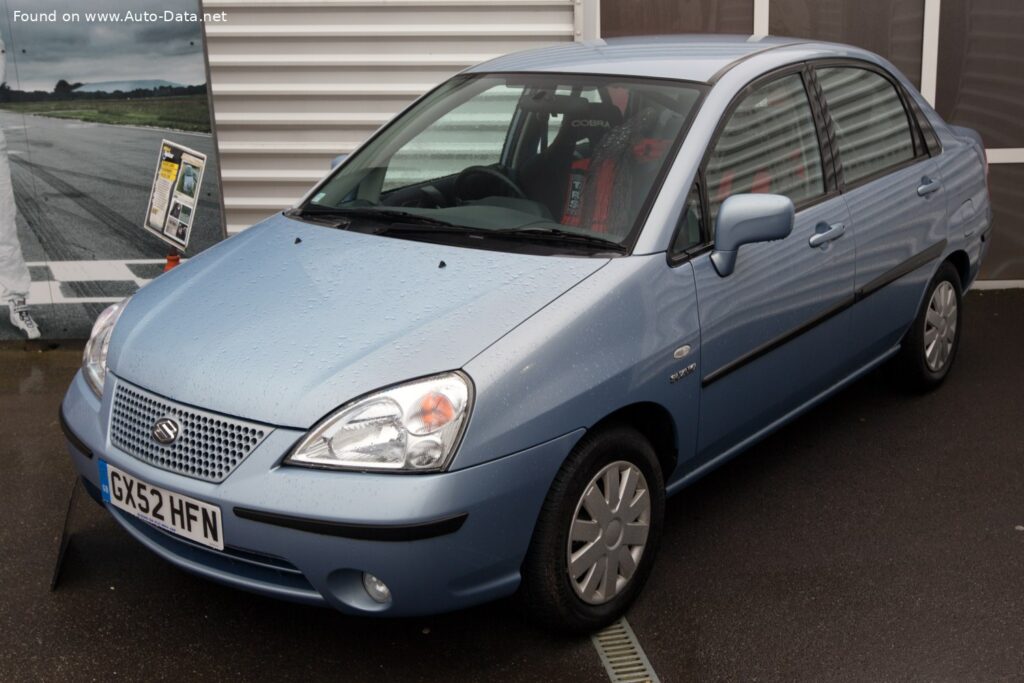
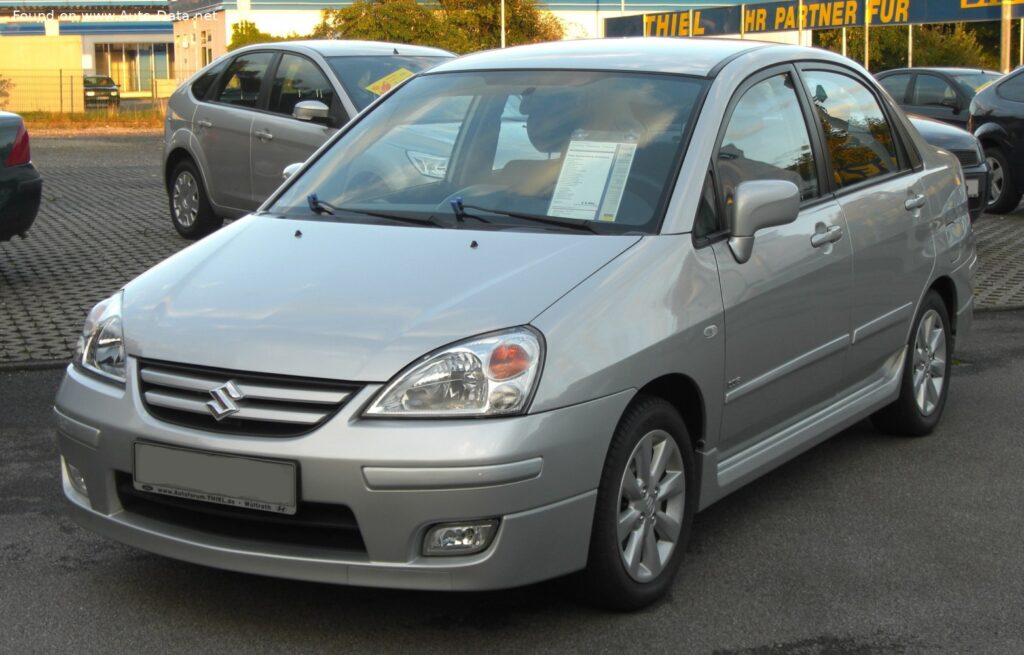
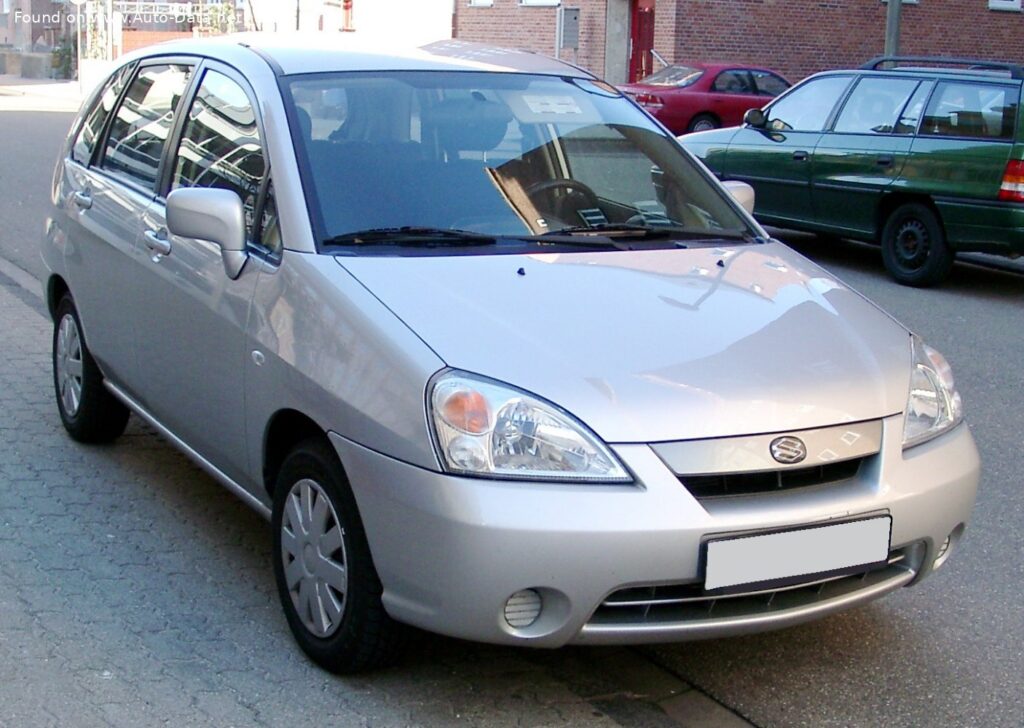
The Suzuki Liana Wagon I, specifically the 1.6 i 16V 2WD with 103 horsepower and an automatic transmission, represents a significant offering from the Japanese automaker in the compact car segment during the early 2000s. Produced from 2001 to 2004, this first-generation Liana (known as the Aerio in some markets, including North America, though the Wagon variant was less prominent there) was designed with practicality, economy, and versatility at its core. Primarily targeting European and Asian markets where compact station wagons, or estates, held considerable appeal, the Liana Wagon I aimed to provide a spacious and user-friendly vehicle for families and individuals seeking a blend of urban maneuverability and cargo capacity. Its conservative yet functional design, coupled with Suzuki’s reputation for reliability, positioned it as a sensible choice in a competitive class.
Engine and Performance of the Suzuki Liana Wagon I
At the heart of the Suzuki Liana Wagon I 1.6 i 16V 2WD model is a robust 1.6-liter (1586 cm³ or 96.78 cu. in.) M16A inline-four engine. This naturally aspirated gasoline (petrol) powerplant features a Double Overhead Camshaft (DOHC) valvetrain with four valves per cylinder, a configuration known for its efficiency and smooth power delivery. With a compression ratio of 9.7:1 and a multi-port manifold injection fuel system, the engine produces a respectable 103 horsepower at 5500 revolutions per minute (rpm). Torque peaks at 106.21 lb.-ft. (144 Nm) at 4000 rpm, providing adequate pulling power for daily driving scenarios.
Power is delivered to the front wheels via a conventional 4-speed automatic transmission, emphasizing ease of use and comfort, particularly in urban environments. While not designed for outright performance, the powertrain offers a competent driving experience. The Liana Wagon I 1.6 i 16V 2WD accelerates from 0 to 60 mph in a calculated 11.1 seconds, with a 0 to 100 km/h sprint taking 11.7 seconds. Its maximum speed is rated at 105.63 mph (170 km/h). These figures reflect its role as a practical family vehicle rather than a performance-oriented machine.
Fuel economy was a key consideration for the Liana, and the 1.6-liter automatic model delivers competitive numbers for its era. It achieves an estimated 25.6 US mpg (9.2 l/100 km) in urban driving, 39.9 US mpg (5.9 l/100 km) on the extra-urban cycle, and a combined average of 33.1 US mpg (7.1 l/100 km). With a 13.21 US gallon (50 liter) fuel tank, the Liana Wagon I offered a decent cruising range, making it suitable for both city commutes and longer journeys.
Design and Features
The Suzuki Liana Wagon I adopted a distinct station wagon body type, prioritizing interior space and cargo versatility. Measuring 166.54 inches (4230 mm) in length, 66.54 inches (1690 mm) in width, and 61.02 inches (1550 mm) in height, the Liana Wagon featured a relatively compact footprint for its class, making it easy to maneuver and park. Its 97.64-inch (2480 mm) wheelbase contributed to a stable ride and a surprisingly spacious cabin for its exterior dimensions.
The interior was designed to accommodate five occupants comfortably. The Wagon variant excelled in its cargo capacity, offering a minimum trunk space of 12.29 cubic feet (348 liters) with all seats in place. For larger loads, the rear seats could be folded down to expand the cargo area to a generous 37.5 cubic feet (1062 liters), highlighting its utility as a family hauler or for transporting goods. The four-door configuration provided easy access for passengers and cargo alike.
From a chassis perspective, the Liana Wagon I featured a front suspension with wishbones, providing a balance of comfort and handling. The rear suspension utilized coil springs, contributing to a smooth ride even when loaded. Braking performance was handled by ventilated discs at the front, offering effective stopping power, complemented by drum brakes at the rear. An Anti-lock Braking System (ABS) was a standard or optional feature, enhancing safety by preventing wheel lock-up during hard braking. Steering was managed by a hydraulic power steering system with a rack and pinion setup, ensuring light and responsive control. The vehicle was fitted with 185/65 R14 T tires, a common size for compact cars of the period, balancing grip and ride comfort.
Technical Specifications
Below is a comprehensive table detailing the technical specifications of the Suzuki Liana Wagon I 1.6 i 16V 2WD (103 Hp) Automatic:
| Category | Specification | US Equivalent / Notes |
|---|---|---|
| General Information | ||
| Brand | Suzuki | |
| Model | Liana | |
| Generation | Liana Wagon I | |
| Type (Engine) | 1.6 i 16V 2WD (103 Hp) Automatic | |
| Production Start | 2001 year | |
| Production End | 2004 year | |
| Powertrain Architecture | Internal Combustion engine | |
| Body Type | Station wagon (estate) | |
| Seats | 5 | |
| Doors | 4 | |
| Performance Specs | ||
| Fuel Consumption – Urban | 9.2 l/100 km | 25.6 US mpg |
| Fuel Consumption – Extra Urban | 5.9 l/100 km | 39.9 US mpg |
| Fuel Consumption – Combined | 7.1 l/100 km | 33.1 US mpg |
| Fuel Type | Petrol (Gasoline) | |
| Acceleration 0 – 60 mph | 11.1 sec | |
| Acceleration 0 – 100 km/h | 11.7 sec | |
| Maximum Speed | 170 km/h | 105.63 mph |
| Weight-to-Power Ratio | 11.8 kg/Hp | |
| Engine Specs | ||
| Power | 103 Hp @ 5500 rpm | |
| Power per Liter | 64.9 Hp/l | |
| Torque | 144 Nm @ 4000 rpm | 106.21 lb.-ft. @ 4000 rpm |
| Engine Layout | Front, Transverse | |
| Engine Model/Code | M16A | |
| Engine Displacement | 1586 cm³ | 1.6 Liters / 96.78 cu. in. |
| Number of Cylinders | 4 | |
| Engine Configuration | Inline | |
| Cylinder Bore | 78 mm | 3.07 in. |
| Piston Stroke | 83 mm | 3.27 in. |
| Compression Ratio | 9.7:1 | |
| Valves per Cylinder | 4 | |
| Fuel Injection System | Multi-port manifold injection | |
| Engine Aspiration | Naturally aspirated | |
| Valvetrain | DOHC | |
| Engine Oil Capacity | 4.1 l | 4.33 US qt |
| Coolant Capacity | 6.5 l | 6.87 US qt |
| Space, Volume and Weights | ||
| Kerb Weight | 1215 kg | 2678.62 lbs. |
| Max. Weight | 1640 kg | 3615.58 lbs. |
| Max Load | 425 kg | 936.96 lbs. |
| Trunk Space – Minimum | 348 l | 12.29 cu. ft. |
| Trunk Space – Maximum | 1062 l | 37.5 cu. ft. |
| Fuel Tank Capacity | 50 l | 13.21 US gal |
| Dimensions | ||
| Length | 4230 mm | 166.54 in. |
| Width | 1690 mm | 66.54 in. |
| Height | 1550 mm | 61.02 in. |
| Wheelbase | 2480 mm | 97.64 in. |
| Front Track | 1450 mm | 57.09 in. |
| Rear Track | 1445 mm | 56.89 in. |
| Drivetrain, Brakes and Suspension | ||
| Drivetrain Architecture | Front-wheel drive, Internal Combustion engine | |
| Drive Wheel | Front wheel drive | |
| Gearbox | 4 gears, automatic transmission | |
| Front Suspension | Wishbone | |
| Rear Suspension | Coil spring | |
| Front Brakes | Ventilated discs | |
| Rear Brakes | Drum | |
| Assisting Systems | ABS (Anti-lock braking system) | |
| Steering Type | Steering rack and pinion | |
| Power Steering | Hydraulic Steering | |
| Tires Size | 185/65 R14 T | |
Legacy and Market Impact
The Suzuki Liana Wagon I carved out a niche for itself in the highly competitive compact car market of the early 2000s, particularly in Europe and Asia. Its primary appeal lay in its blend of practicality, affordability, and Suzuki’s renowned reputation for reliability. It wasn’t a car designed to turn heads with aggressive styling or exhilarating performance, but rather to serve as a dependable and economical mode of transport for families and individuals prioritizing utility.
In its key markets, the Liana Wagon I competed against a diverse range of compact wagons, including the Toyota Corolla Wagon, Opel Astra Caravan, Ford Focus Wagon, and various offerings from Hyundai and Kia. Its ability to offer substantial cargo space within a relatively compact exterior, coupled with decent fuel economy, made it a compelling alternative to larger, more expensive vehicles or less versatile sedans and hatchbacks. While the Liana (Aerio) sedan and hatchback variants did make it to North America, the wagon version, especially with this specific powertrain, was not a significant player in the US market, where SUVs and larger sedans dominated preferences.
The Liana’s legacy is one of quiet competence. It fulfilled its mission as a practical, no-nonsense vehicle that was easy to own and maintain. Its M16A engine, in various states of tune, proved to be a durable and efficient unit that would see continued use in later Suzuki models, showcasing the engineering soundness behind the Liana. While it may not be remembered as an icon, the Suzuki Liana Wagon I played an important role in Suzuki’s global strategy, demonstrating the brand’s commitment to providing accessible and versatile vehicles that met the real-world needs of its customers.