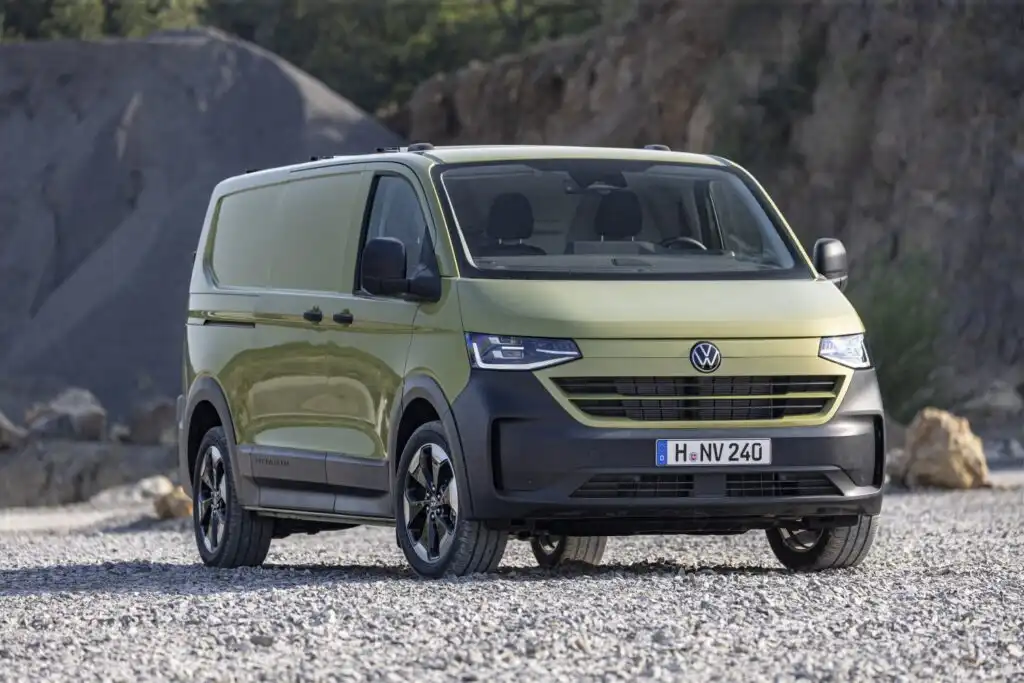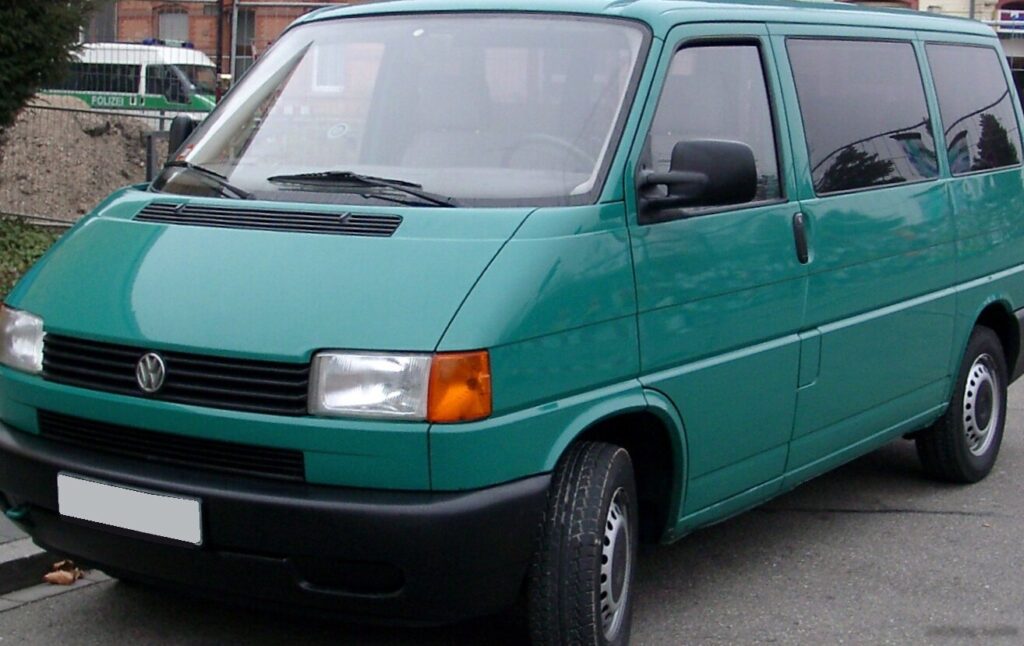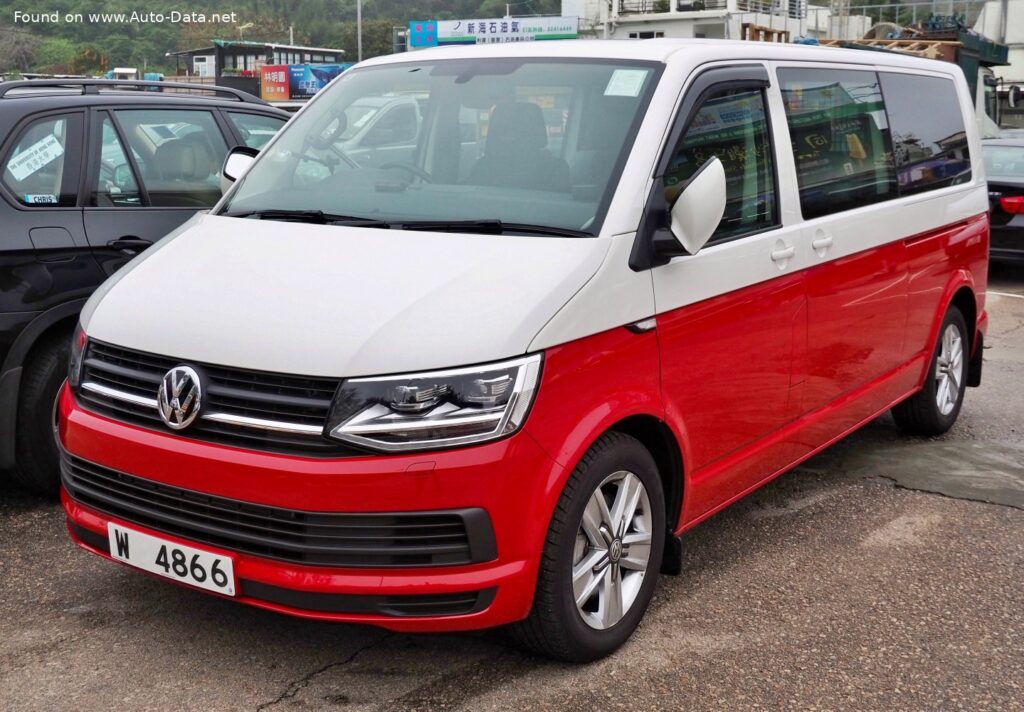
The Volkswagen Transporter (T6) Kombi 2.0 TDI (102 Hp) L1H1: A European Workhorse
The Volkswagen Transporter, a name synonymous with versatility and reliability across generations, continued its legacy with the T6 iteration. Introduced in 2015 and produced until 2019, the Volkswagen Transporter (T6) Kombi represented the sixth major generation of Volkswagen’s iconic light commercial vehicle. While largely a heavily revised version of its T5 predecessor rather than an entirely new platform, the T6 brought significant updates in terms of technology, refinement, and efficiency. This specific variant, the 2.0 TDI (102 Hp) L1H1 Kombi, was a cornerstone of its European market presence, offering a practical blend of passenger transport and cargo capability. It was designed as a multi-purpose vehicle, serving as a family carrier, a work van for tradespeople, or a shuttle for businesses, embodying the spirit of a true utility vehicle. Unlike some of its more luxurious siblings, the Kombi trim focused on functionality and robust performance, making it an indispensable asset in its primary markets throughout Europe and other global regions where its blend of efficiency and space was highly valued. It was not officially marketed in the United States, where Volkswagen’s commercial vehicle strategy centered on different models.
Engine & Performance of the Volkswagen Transporter (T6) Kombi
At the heart of the Volkswagen Transporter (T6) Kombi 2.0 TDI (102 Hp) L1H1 lies a sophisticated 2.0-liter (1968 cm3 or 120.09 cu. in.) inline four-cylinder diesel engine. This powertrain, part of Volkswagen’s highly regarded EA288 engine family (specifically code CXGB), is a testament to modern diesel engineering. It features a common rail fuel injection system, ensuring precise fuel delivery for optimal combustion and efficiency. Bolstering its output, a turbocharger and intercooler work in tandem to force-feed air into the engine, significantly enhancing both power and torque output, especially at lower RPMs, which is crucial for a vehicle designed to carry heavy loads or multiple passengers.
The engine generates a respectable 102 horsepower (Hp) at an engine speed ranging from 3000 to 3750 RPM, providing ample motivation for daily tasks. More importantly for a commercial vehicle, it delivers a robust 184.39 lb.-ft. (250 Nm) of torque, available across a wide and accessible band from 1500 to 2750 RPM. This broad torque curve ensures strong pulling power from low speeds, making it adept at urban driving and highway cruising, even when fully laden. Power is sent to the front wheels via a smooth-shifting 5-speed manual transmission, a common and reliable choice for this class of vehicle, prioritizing durability and cost-effectiveness.
In terms of outright performance, the 2.0 TDI (102 Hp) L1H1 is not built for speed but rather for consistent, economical operation. It accelerates from 0 to 60 mph in a measured 15.6 seconds, with a top speed of 97.56 mph (157 km/h). These figures are entirely appropriate for a utility van, emphasizing practicality over sportiness. Fuel economy was a significant selling point, especially in Europe where diesel prices and environmental regulations are stringent. The combined NEDC (New European Driving Cycle) fuel consumption is an impressive 41.3 to 33.6 US miles per gallon (5.7-7 liters/100 km). This efficiency is further aided by features like a Start & Stop system, which automatically shuts off the engine when stationary, and a particulate filter, crucial for meeting the Euro 6 emission standard, reducing its environmental footprint.
Design & Features: The Volkswagen Transporter (T6) Kombi’s Practicality
The Volkswagen Transporter (T6) Kombi 2.0 TDI (102 Hp) L1H1 embodies a design ethos focused on functionality, durability, and understated style. As a “Kombi” variant, it offers a flexible interior configuration, typically seating anywhere from 4 to 9 passengers, making it highly adaptable for various applications. The “L1H1” designation denotes its short wheelbase (L1) and standard roof height (H1), a popular configuration that balances interior space with maneuverability, particularly in urban environments and multi-story parking garages.
Measuring 193.07 inches (4904 mm) in length, 74.96 inches (1904 mm) in width (90.43 inches or 2297 mm including mirrors), and 78.35 inches (1990 mm) in height, the T6 Kombi presents a substantial yet manageable footprint. Its 118.11-inch (3000 mm) wheelbase contributes to a stable ride, while a minimum turning circle of 39.04 feet (11.9 meters) ensures reasonable agility for a vehicle of its size. The ride height of 7.91 inches (201 mm) provides adequate ground clearance for varying road conditions.
Inside, the Kombi offers an immense maximum trunk (boot) space of 204.83 cubic feet (5800 liters) with the rear seats removed or folded, showcasing its formidable cargo-carrying capabilities. Its substantial maximum load capacity, ranging from 1935.66 to 2482.41 pounds (878-1126 kg), underscores its utility as a genuine work vehicle. Furthermore, the T6 Kombi is well-equipped for towing, with a permitted trailer load of 4850.17 pounds (2200 kg) with brakes, and 1653.47 pounds (750 kg) without brakes, adding to its versatility for businesses and adventurers alike.
Chassis and safety features include an independent McPherson strut front suspension with coil springs and an anti-roll bar, paired with an independent coil spring, wishbone, and transverse stabilizer rear suspension, providing a comfortable ride and stable handling for a van. Braking is handled by ventilated discs at both the front (308×29.5 mm) and rear (294×22 mm), complemented by an Anti-lock Braking System (ABS) for enhanced stopping power and control. Hydraulic power steering with a rack and pinion system ensures precise and responsive steering feedback, essential for navigating diverse driving scenarios.
Technical Specifications: Volkswagen Transporter (T6) Kombi 2.0 TDI (102 Hp) L1H1
| Category | Specification |
|---|---|
| Brand | Volkswagen |
| Model | Transporter |
| Generation | Transporter (T6) Kombi |
| Type (Engine) | 2.0 TDI (102 Hp) L1H1 |
| Start of production | 2015 year |
| End of production | 2019 year |
| Powertrain Architecture | Internal Combustion engine |
| Body type | Van |
| Seats | 4-9 |
| Doors | 4-5 |
| Fuel consumption (economy) – urban (NEDC) | 6.8-8.8 l/100 km (34.6 – 26.7 US mpg) |
| Fuel consumption (economy) – extra urban (NEDC) | 5.1-6.3 l/100 km (46.1 – 37.3 US mpg) |
| Fuel consumption (economy) – combined (NEDC) | 5.7-7 l/100 km (41.3 – 33.6 US mpg) |
| CO2 emissions (NEDC) | 149-184 g/km |
| Fuel Type | Diesel |
| Acceleration 0 – 60 mph | 15.6 sec |
| Maximum speed | 97.56 mph (157 km/h) |
| Emission standard | Euro 6 |
| Weight-to-power ratio | 16.9 kg/Hp (59.2 Hp/tonne) |
| Weight-to-torque ratio | 6.9 kg/Nm (145.2 Nm/tonne) |
| Power | 102 Hp @ 3000-3750 rpm |
| Power per liter | 51.8 Hp/l |
| Torque | 184.39 lb.-ft. (250 Nm) @ 1500-2750 rpm |
| Engine layout | Front, Transverse |
| Engine Model/Code | EA288 / CXGB |
| Engine displacement | 120.09 cu. in. (1968 cm3) |
| Number of cylinders | 4 |
| Engine configuration | Inline |
| Cylinder Bore | 3.19 in. (81 mm) |
| Piston Stroke | 3.76 in. (95.5 mm) |
| Compression ratio | 15.5:1 |
| Number of valves per cylinder | 4 |
| Fuel injection system | Diesel Commonrail |
| Engine aspiration | Turbocharger, Intercooler |
| Valvetrain | DOHC |
| Engine oil capacity | 7.82 US qt (7.4 l) |
| Engine systems | Start & Stop System, Particulate filter |
| Kerb Weight | 3796.36 – 4572.39 lbs. (1722-2074 kg) |
| Max. weight | 5732.02 – 7054.79 lbs. (2600-3200 kg) |
| Max load | 1935.66 – 2482.41 lbs. (878-1126 kg) |
| Trunk (boot) space – maximum | 204.83 cu. ft. (5800 l) |
| Fuel tank capacity | 18.49 US gal (70 l) |
| AdBlue tank | 3.43 US gal (13 l) |
| Max. roof load | 220.46 lbs. (100 kg) |
| Permitted trailer load with brakes (12%) | 4850.17 lbs. (2200 kg) |
| Permitted trailer load without brakes | 1653.47 lbs. (750 kg) |
| Permitted towbar download | 220.46 lbs. (100 kg) |
| Length | 193.07 in. (4904 mm) |
| Width | 74.96 in. (1904 mm) |
| Width including mirrors | 90.43 in. (2297 mm) |
| Height | 78.35 in. (1990 mm) |
| Wheelbase | 118.11 in. (3000 mm) |
| Front overhang | 35.75 in. (908 mm) |
| Rear overhang | 39.09 in. (993 mm) |
| Ride height (ground clearance) | 7.91 in. (201 mm) |
| Minimum turning circle (turning diameter) | 39.04 ft. (11.9 m) |
| Approach angle | 21.2° |
| Departure angle | 16.2° |
| Ramp-over (brakeover) angle | 13.7° |
| Drivetrain Architecture | Front-wheel drive, Internal Combustion Engine |
| Drive wheel | Front wheel drive |
| Number of gears and type of gearbox | 5 gears, manual transmission |
| Front suspension | Independent, McPherson with coil spring and anti-roll bar |
| Rear suspension | Independent coil spring, Wishbone, Transverse stabilizer |
| Front brakes | Ventilated discs, 308×29.5 mm |
| Rear brakes | Ventilated discs, 294×22 mm |
| Assisting systems | ABS (Anti-lock braking system) |
| Steering type | Steering rack and pinion |
| Power steering | Hydraulic Steering |
| Tires size | 205/65 R16; 215/65 R16 |
| Wheel rims size | 6.5J x 16 |
Legacy & Market Impact of the Volkswagen Transporter (T6) Kombi
The Volkswagen Transporter series holds an almost legendary status in the automotive world, with a heritage stretching back to the original T1 “Bus” or “Microbus.” The T6 generation, including the Kombi 2.0 TDI (102 Hp) L1H1, continued this formidable legacy, cementing its position as a highly respected and immensely popular light commercial vehicle across Europe and other international markets. Its reputation is built on decades of proven reliability, robust construction, and an unparalleled adaptability that few competitors can match.
In its primary European market, the T6 Kombi faced stiff competition from rivals such as the Mercedes-Benz Vito, Ford Transit Custom, Renault Trafic, and Peugeot Expert/Citroën Jumpy. However, the Transporter consistently held its own, often setting the benchmark for build quality, residual values, and overall user satisfaction. The 2.0 TDI (102 Hp) variant, in particular, was strategically positioned as an economical choice for businesses and families where fuel efficiency and lower running costs were paramount. Its relatively modest horsepower was perfectly adequate for the typical speed limits and driving conditions found in Europe, while its substantial torque ensured it could handle heavy loads without feeling underpowered.
The T6 Kombi’s impact extended beyond just being a commercial tool; it was a cultural icon. It served as the backbone for countless small businesses, from florists to electricians, and was a favored choice for large families or those with active lifestyles needing space for sports equipment or camping gear. Its L1H1 configuration, balancing interior volume with exterior compactness, made it a practical choice for navigating narrow city streets and fitting into standard parking spaces, unlike larger, longer-wheelbase variants.
The Volkswagen Transporter (T6) Kombi 2.0 TDI (102 Hp) L1H1 was more than just a van; it was a versatile workhorse that embodied Volkswagen’s commitment to practical engineering and enduring quality. Its strong resale value and widespread service network further contributed to its market dominance. Even after the cessation of its production in 2019, paving the way for the T6.1 facelift, the T6 Kombi remains a highly sought-after used vehicle, a testament to its robust construction and timeless utility. It stands as a prime example of a vehicle perfectly tailored to the demands of its target market, delivering efficiency, capability, and an enduring legacy.