
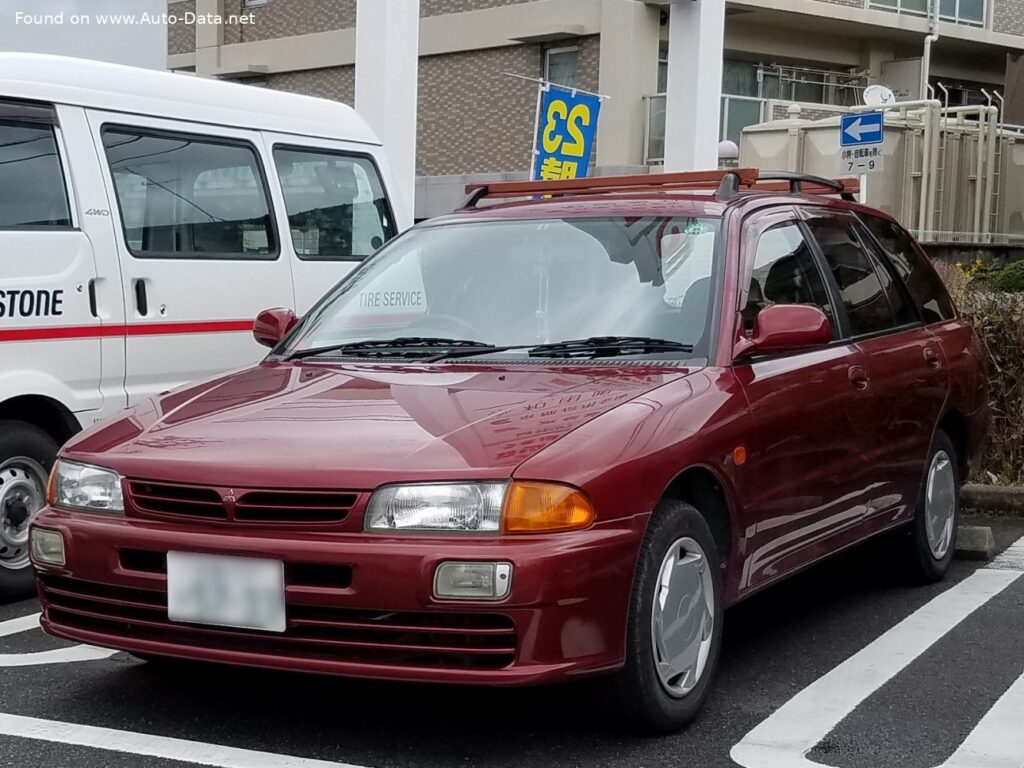
Introduction to the Mitsubishi Libero 1.5 i 16V Limited (110 Hp)
The Mitsubishi Libero 1.5 i 16V Limited (110 Hp) represents a versatile and practical offering from the Japanese automaker, Mitsubishi, during a significant era of automotive development. Produced from 1992 to 2002, the Libero was a compact station wagon (often referred to as an “estate” in other markets) primarily aimed at the Japanese domestic market (JDM) and various Asian and some European regions, where compact, fuel-efficient, and highly functional vehicles were in high demand. Unlike many Mitsubishi models that found widespread success in North America, such as the Lancer Evolution or the Eclipse, the Libero remained a regional specialist, embodying the brand’s reputation for reliability and utility in its target markets.
Built on the robust Lancer/Mirage platform, the Libero was designed to offer a compelling blend of passenger comfort, cargo versatility, and economical operation. Its powertrain architecture featured an internal combustion engine driving the front wheels, a common and efficient layout for vehicles of its class. The 1.5 i 16V Limited variant, with its 110 horsepower output, stood as a well-balanced option within the Libero lineup, providing adequate performance for daily commuting and family duties without sacrificing fuel economy. This article delves into the technical specifications, design philosophies, and market impact of this enduring Japanese wagon.
The Mitsubishi Libero: Engineering and Performance
At the heart of the Mitsubishi Libero 1.5 i 16V Limited (110 Hp) was a capable and well-engineered powertrain, designed for efficiency and smooth operation. The vehicle was equipped with a 1.5-liter (1468 cm³ or 89.58 cu. in.) inline four-cylinder engine. This powerplant featured a 16-valve cylinder head, signifying a focus on improved breathing and efficiency over older 8-valve designs. With a compression ratio of 9.5:1, the engine was tuned to run on standard petrol (gasoline).
The engine produced a respectable 110 horsepower at 6000 rpm, which, for a compact wagon of its time, provided lively acceleration and sufficient cruising power. Torque delivery was equally impressive for its displacement, peaking at 137 Nm (101.05 lb.-ft.) at a relatively low 3000 rpm. This low-end torque characteristic made the Libero particularly tractable in urban environments and when carrying loads, reducing the need for constant gear changes. The engine utilized a multi-port manifold injection system, a sophisticated fuel delivery method for its era, ensuring precise fuel metering and contributing to both performance and fuel efficiency. As a naturally aspirated engine, it delivered linear power without the complexities of forced induction.
Power was sent to the front wheels via a 4-speed automatic transmission. This setup prioritized ease of driving and comfort, especially in congested city traffic, making it an ideal choice for its intended market. The front-wheel-drive architecture, combined with a front, transverse engine layout, contributed to efficient packaging, maximizing interior space, and providing predictable handling characteristics. The weight-to-power ratio of 10.1 kg/Hp (or 99.1 Hp/tonne) and a weight-to-torque ratio of 8.1 kg/Nm (or 123.4 Nm/tonne) further underscore its balanced performance for a utility-focused vehicle.
Design and Features of the Mitsubishi Libero
Body and Exterior Aesthetics
The Mitsubishi Libero adopted a classic 5-door station wagon silhouette, emphasizing practicality and utility. Its design was understated yet functional, typical of Japanese vehicles of the 1990s. With a length of 174.02 inches, a width of 66.54 inches, and a height of 57.87 inches, the Libero was compact enough for navigating tight city streets while still offering substantial interior volume. The wheelbase of 98.43 inches contributed to a stable ride and allowed for a relatively spacious cabin. The front track measured 57.09 inches, and the rear track 55.91 inches, providing a solid stance on the road.
Interior and Practicality
Inside, the Libero was configured to seat five occupants comfortably. The “Limited” designation often implied a higher trim level, potentially including upgraded upholstery, power accessories, and other convenience features that enhanced the driving and passenger experience. However, the true strength of the Libero lay in its versatility. With a minimum trunk (boot) space of 16.6 cubic feet (470 liters), it offered ample room for daily errands. When the rear seats were folded, the cargo capacity expanded significantly to a maximum of 49.44 cubic feet (1400 liters), transforming the wagon into a practical hauler for larger items, making it suitable for small businesses or active families.
Chassis, Brakes, and Safety
The Libero’s chassis featured a coil spring suspension system at both the front and rear, providing a comfortable ride quality suitable for varied road conditions. Braking duties were handled by ventilated discs at the front, offering superior heat dissipation and consistent stopping power, complemented by drum brakes at the rear. A notable safety feature for a vehicle of its class and era was the inclusion of ABS (Anti-lock Braking System), which helped prevent wheel lock-up during hard braking, enhancing directional control and safety. Steering was managed by a rack and pinion system, assisted by hydraulic power steering, ensuring light and responsive handling. The vehicle rode on 185/65 R14 tires, a common size for compact cars that balanced grip, ride comfort, and affordability.
Technical Specifications: Mitsubishi Libero 1.5 i 16V Limited (110 Hp)
| Category | Specification |
|---|---|
| General Information | |
| Brand | Mitsubishi |
| Model | Libero |
| Generation | Libero |
| Type (Engine) | 1.5 i 16V Limited (110 Hp) |
| Start of Production | 1992 year |
| End of Production | 2002 year |
| Powertrain Architecture | Internal Combustion engine |
| Body Type | Station wagon (estate) |
| Seats | 5 |
| Doors | 5 |
| Performance Specs | |
| Fuel Type | Petrol (Gasoline) |
| Weight-to-Power Ratio | 10.1 kg/Hp, 99.1 Hp/tonne |
| Weight-to-Torque Ratio | 8.1 kg/Nm, 123.4 Nm/tonne |
| Engine Specs | |
| Power | 110 Hp @ 6000 rpm |
| Power per Liter | 74.9 Hp/l |
| Torque | 137 Nm @ 3000 rpm (101.05 lb.-ft. @ 3000 rpm) |
| Engine Layout | Front, Transverse |
| Engine Displacement | 1468 cm³ (89.58 cu. in.) |
| Number of Cylinders | 4 |
| Engine Configuration | Inline |
| Cylinder Bore | 75.5 mm (2.97 in.) |
| Piston Stroke | 82 mm (3.23 in.) |
| Compression Ratio | 9.5:1 |
| Number of Valves per Cylinder | 4 |
| Fuel Injection System | Multi-port manifold injection |
| Engine Aspiration | Naturally aspirated engine |
| Space, Volume and Weights | |
| Kerb Weight | 1110 kg (2447.13 lbs.) |
| Trunk (boot) Space – Minimum | 470 l (16.6 cu. ft.) |
| Trunk (boot) Space – Maximum | 1400 l (49.44 cu. ft.) |
| Fuel Tank Capacity | 50 l (13.21 US gal) |
| Dimensions | |
| Length | 4420 mm (174.02 in.) |
| Width | 1690 mm (66.54 in.) |
| Height | 1470 mm (57.87 in.) |
| Wheelbase | 2500 mm (98.43 in.) |
| Front Track | 1450 mm (57.09 in.) |
| Rear (Back) Track | 1420 mm (55.91 in.) |
| Drivetrain, Brakes, and Suspension Specs | |
| Drivetrain Architecture | The Internal combustion engine (ICE) drives the front wheels of the vehicle. |
| Drive Wheel | Front wheel drive |
| Number of Gears and Type of Gearbox | 4 gears, automatic transmission |
| Front Suspension | Coil spring |
| Rear Suspension | Coil spring |
| Front Brakes | Ventilated discs |
| Rear Brakes | Drum |
| Assisting Systems | ABS (Anti-lock braking system) |
| Steering Type | Steering rack and pinion |
| Power Steering | Hydraulic Steering |
| Tires Size | 185/65 R14 |
Legacy and Market Impact of the Mitsubishi Libero
The Mitsubishi Libero, particularly the 1.5 i 16V Limited (110 Hp) variant, carved out a significant niche in its primary markets, which predominantly included Japan and other parts of Asia. Its decade-long production run, from 1992 to 2002, is a testament to its enduring appeal and Mitsubishi’s commitment to providing practical, reliable, and economical transportation solutions. In an era when SUVs and minivans were gaining traction globally, especially in the North American market, the compact station wagon like the Libero remained a staple in regions where space efficiency, fuel economy, and maneuverability were paramount.
The Libero’s reputation was built on its inherent reliability, a hallmark of Mitsubishi engineering during this period. Owners often praised its low running costs, robust mechanicals, and surprising cargo capacity for its footprint. It was a no-frills workhorse that delivered consistently, making it popular among families, small businesses, and anyone needing a dependable utility vehicle.
In its home market and surrounding regions, the Libero faced stiff competition from other Japanese automakers offering similar compact wagons. Key rivals included models like the Toyota Corolla Wagon/Fielder, Nissan Wingroad (which evolved from the Sunny Wagon), and to some extent, the Honda Orthia/Partner. While some larger Subaru Legacy Wagon models offered all-wheel drive and more potent engines, the Libero competed effectively in the front-wheel-drive, compact segment by focusing on value, practicality, and efficiency.
The historical significance of the Mitsubishi Libero lies in its representation of a specific automotive philosophy prevalent in Japan: designing vehicles that perfectly fit the needs of a densely populated market with a strong emphasis on multi-purpose functionality. It demonstrated Mitsubishi’s ability to adapt its core Lancer platform into a highly versatile family and utility vehicle. While it never achieved the global recognition of some of its sportier or more rugged siblings, the Libero played a crucial role in Mitsubishi’s lineup, reinforcing its image as a producer of dependable and practical automobiles. Its legacy continues in the form of many still-running examples in various Asian countries, showcasing its robust construction and timeless utility.
