The Renault Espace V 1.8 TCe: A European Vision of Versatility
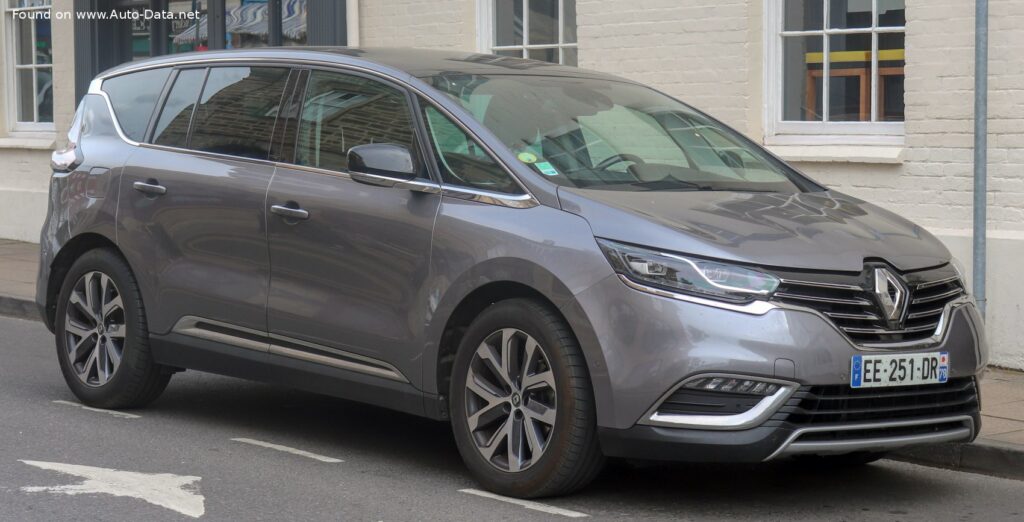
The Renault Espace V 1.8 TCe (225 Hp) EDC FAP represents the fifth generation of Renault’s pioneering multi-purpose vehicle (MPV), a model that significantly influenced the European automotive landscape. Launched in 2018 as part of the Espace V’s ongoing production, this particular iteration, available until 2019, showcased Renault’s strategy to adapt its iconic family hauler to evolving market preferences. While never officially sold in the United States, the Espace holds a legendary status in Europe, having practically invented the segment for family-friendly, spacious vehicles. The Espace V marked a significant departure from its predecessors, transitioning from a traditional boxy minivan silhouette to a more stylish, crossover-inspired design, aiming to blend the practicality of an MPV with the visual appeal and elevated driving position of an SUV. This generation sought to redefine the Espace for a new era, emphasizing technology, efficiency, and a refined driving experience.
Engine and Performance: The 1.8 TCe Powertrain
At the heart of this particular Renault Espace V variant is the M5P 1.8-liter (1798 cm³) TCe (Turbo Control efficiency) four-cylinder inline engine. This powerplant, engineered for a balance of spirited performance and fuel efficiency, delivers a robust 225 horsepower at 5600 rpm. Its design features a turbocharger and intercooler, ensuring optimal air intake and combustion, which translates into impressive power output for its displacement. The engine’s direct injection fuel system further enhances efficiency and responsiveness.
Peak torque for the 1.8 TCe engine stands at a substantial 221.27 lb.-ft. (300 Nm), achieved at a relatively low 1750 rpm. This broad torque band is crucial for a family vehicle, providing strong acceleration from a standstill and effortless overtaking capabilities, even when fully loaded. The powertrain architecture is front-transverse, driving the front wheels, a common configuration for efficiency and packaging in this segment.
Power is channeled through a sophisticated 7-speed EDC (Efficient Dual Clutch) automatic transmission. This gearbox is renowned for its smooth and rapid gear changes, contributing to both the vehicle’s dynamic performance and its fuel economy. The Espace V 1.8 TCe accelerates from 0 to 60 mph in a brisk 7.5 seconds (calculated), with a 0 to 100 km/h sprint completed in 7.9 seconds. Its top speed is rated at 139.19 mph (224 km/h), making it a capable performer on European highways.
Fuel efficiency for the combined cycle is rated at 31.8 US mpg (7.4 l/100 km), which is commendable for a vehicle of its size and power. Urban consumption is 25.6 US mpg (9.2 l/100 km), while extra-urban driving yields an impressive 37.3 US mpg (6.3 l/100 km). With CO2 emissions of 168 g/km, this model complied with the stringent Euro 6d-TEMP emission standard, reflecting Renault’s commitment to environmental performance. The presence of a Particulate Filter (FAP) on this gasoline engine underscores the increasing focus on reducing fine particulate matter from exhaust gases, even in petrol vehicles, aligning with evolving European emission regulations.
Design and Features: The Crossover-Minivan Evolution
The Renault Espace V represented a significant design evolution, moving away from the traditional minivan aesthetic towards a more dynamic and sculpted crossover appearance. Classified as both a Minivan and a Crossover, it cleverly fused the best attributes of both body types. Its exterior styling incorporated Renault’s contemporary design language, featuring a bold front grille, distinctive C-shaped LED daytime running lights, and flowing lines that give it a more athletic stance.
With a length of 191.22 inches (4857 mm), a width of 74.33 inches (1888 mm), and a height of 66.02 inches (1677 mm), the Espace V offered substantial road presence. The generous 113.54-inch (2884 mm) wheelbase was key to providing ample interior space and a comfortable ride. Despite its crossover styling, the Espace V retained its core strength: versatility. It offered seating for five occupants across two rows, with a focus on passenger comfort and cargo flexibility.
The interior of the Espace V was designed with a premium feel, featuring high-quality materials and advanced technology. Key features for its era would have included a large, tablet-style infotainment system (R-Link 2), a configurable digital instrument cluster, and a range of driver-assistance systems. The car’s 6.3-inch (160 mm) ground clearance, while not truly off-road capable, contributed to the elevated seating position favored by crossover buyers, offering better visibility and easier ingress/egress.
Practicality remained paramount. The minimum trunk (boot) space of 24.01 cubic feet (680 liters) was generous, expanding to a cavernous 74.2 cubic feet (2101 liters) with the rear seats folded, making it ideal for families, adventurers, or those needing significant cargo capacity. The vehicle also featured a substantial towing capacity, capable of pulling up to 4409.25 lbs (2000 kg) with brakes, further enhancing its utility. Safety features, standard for modern European vehicles, would include ABS (Anti-lock Braking System), multiple airbags, and a robust chassis design. The steering system was an electric power-assisted rack and pinion setup, ensuring light and precise handling.
Technical Specifications: Renault Espace V 1.8 TCe (225 Hp) EDC FAP
| Category | Specification | US Equivalent (where applicable) |
|---|---|---|
| General Information | ||
| Brand | Renault | |
| Model | Espace | |
| Generation | Espace V | |
| Type (Engine) | 1.8 TCe (225 Hp) EDC FAP | |
| Production Start | 2018 | |
| Production End | 2019 | |
| Powertrain Architecture | Internal Combustion engine | |
| Body type | Minivan, Crossover | |
| Seats | 5 | |
| Doors | 5 | |
| Performance Specs | ||
| Fuel consumption (urban) | 9.2 l/100 km | 25.6 US mpg |
| Fuel consumption (extra urban) | 6.3 l/100 km | 37.3 US mpg |
| Fuel consumption (combined) | 7.4 l/100 km | 31.8 US mpg |
| CO2 emissions | 168 g/km | |
| Fuel Type | Petrol (Gasoline) | |
| Acceleration 0 – 60 mph | 7.5 sec | |
| Acceleration 0 – 100 km/h | 7.9 sec | |
| Maximum speed | 224 km/h | 139.19 mph |
| Emission standard | Euro 6d – TEMP | |
| Weight-to-power ratio | 7.3 kg/Hp | 137.8 Hp/tonne |
| Weight-to-torque ratio | 5.4 kg/Nm | 183.7 Nm/tonne |
| Engine Specs | ||
| Power | 225 Hp @ 5600 rpm | |
| Power per liter | 125.1 Hp/l | |
| Torque | 300 Nm @ 1750 rpm | 221.27 lb.-ft. @ 1750 rpm |
| Engine layout | Front, Transverse | |
| Engine Model/Code | M5P | |
| Engine displacement | 1798 cm³ | 1.8 liters (109.72 cu. in.) |
| Number of cylinders | 4 | |
| Engine configuration | Inline | |
| Cylinder Bore | 79.7 mm | 3.14 in. |
| Piston Stroke | 90.1 mm | 3.55 in. |
| Number of valves per cylinder | 4 | |
| Fuel injection system | Direct injection | |
| Engine aspiration | Turbocharger, Intercooler | |
| Engine oil capacity | 4.1 l | 4.33 US qt |
| Engine systems | Particulate filter (FAP) | |
| Space, Volume and Weights | ||
| Kerb Weight | 1633 kg | 3600.15 lbs. |
| Max. weight | 2417 kg | 5328.57 lbs. |
| Max load | 784 kg | 1728.42 lbs. |
| Trunk (boot) space – minimum | 680 l | 24.01 cu. ft. |
| Trunk (boot) space – maximum | 2101 l | 74.2 cu. ft. |
| Fuel tank capacity | 58 l | 15.32 US gal |
| Max. roof load | 80 kg | 176.37 lbs. |
| Permitted trailer load with brakes (12%) | 2000 kg | 4409.25 lbs. |
| Permitted trailer load without brakes | 750 kg | 1653.47 lbs. |
| Dimensions | ||
| Length | 4857 mm | 191.22 in. |
| Width | 1888 mm | 74.33 in. |
| Width with mirrors folded | 1914 mm | 75.35 in. |
| Width including mirrors | 2128 mm | 83.78 in. |
| Height | 1677 mm | 66.02 in. |
| Wheelbase | 2884 mm | 113.54 in. |
| Front track | 1630 mm | 64.17 in. |
| Rear (Back) track | 1621 mm | 63.82 in. |
| Front overhang | 1034 mm | 40.71 in. |
| Rear overhang | 939 mm | 36.97 in. |
| Ride height (ground clearance) | 160 mm | 6.3 in. |
| Minimum turning circle (turning diameter) | 11.1 m | 36.42 ft. |
| Drivetrain, Brakes and Suspension Specs | ||
| Drivetrain Architecture | Internal combustion engine drives the front wheels. | |
| Drive wheel | Front wheel drive | |
| Number of gears and type of gearbox | 7 gears, automatic transmission EDC | |
| Front brakes | Ventilated discs | |
| Rear brakes | Disc | |
| Assisting systems | ABS (Anti-lock braking system) | |
| Steering type | Steering rack and pinion | |
| Power steering | Electric Steering | |
| Tires size | 235/60 R18 | |
| Wheel rims size | 18 inches | |
Legacy and Market Impact of the Renault Espace V
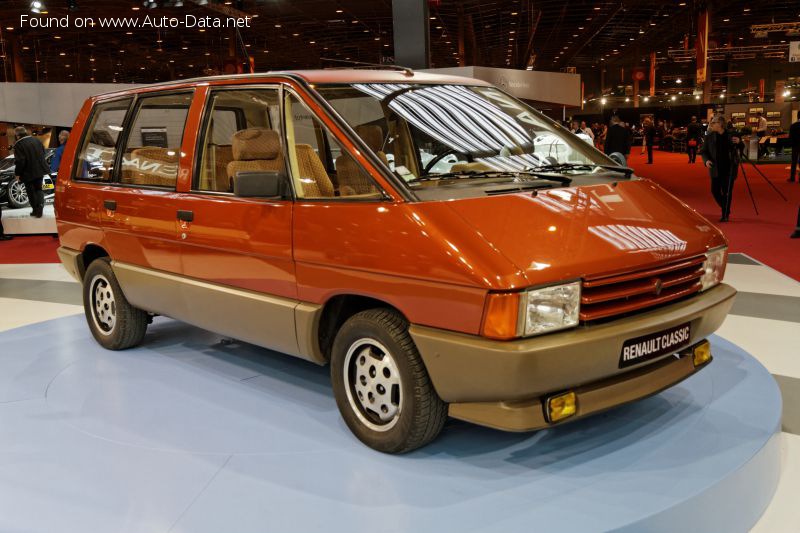
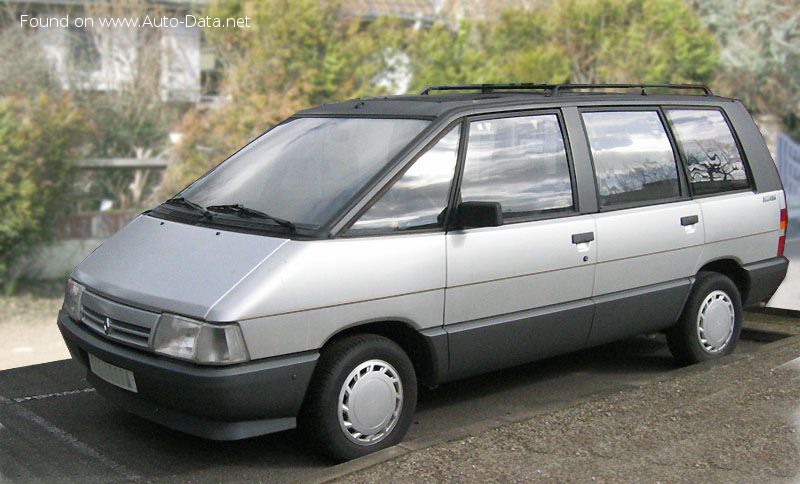
The Renault Espace has an undeniable legacy as a groundbreaking vehicle in Europe, having essentially created the MPV segment when its first generation debuted in 1984. By the time the Espace V arrived, the automotive landscape had shifted dramatically, with a strong consumer preference for SUVs and crossovers. Renault’s decision to transform the Espace from a traditional boxy minivan into a more crossover-like vehicle was a strategic move to keep it relevant in a fiercely competitive market.
In its primary European market, the Espace V competed against a diverse range of vehicles. Traditional MPV rivals included models like the Ford S-Max, Volkswagen Sharan, and SEAT Alhambra, which still offered more conventional, high-capacity people-carrying solutions. However, the Espace V also found itself up against a growing tide of large SUVs and crossovers such as the Peugeot 5008, Skoda Kodiaq, and even its stablemate, the Renault Koleos. The Espace V carved out a niche by offering a blend of MPV practicality with a more upscale design and driving dynamics that appealed to buyers who wanted versatility without the utilitarian image of a traditional minivan.
The 1.8 TCe (225 Hp) EDC FAP variant, with its potent yet efficient engine, positioned the Espace V as a premium offering within its segment. It appealed to families seeking a refined, comfortable, and technologically advanced vehicle capable of long-distance travel, while also providing enough power for confident performance. The EDC transmission and the advanced engine technologies, including direct injection and the particulate filter, underscored its modernity and compliance with increasingly strict European environmental standards.
While the Espace V never achieved the revolutionary impact of its first generation, it successfully demonstrated Renault’s ability to adapt an iconic nameplate to changing market demands. It maintained its reputation for innovative interior packaging, comfort, and safety, cementing its place as a significant player in the European family vehicle market during its production run. The Espace V’s journey from a pure minivan to a crossover-MPV hybrid reflects a broader trend in the automotive industry, where manufacturers continually evolve their offerings to meet the dynamic preferences of consumers worldwide.