<!DOCTYPE html>
<html lang=”en”>
<head>
<meta charset=”UTF-8″>
<meta name=”viewport” content=”width=device-width, initial-scale=1.0″>
<title>Volkswagen Polo III Variant 1.6 (101 Hp) Automatic</title>
</head>
<body>
<h2>Volkswagen Polo III Variant 1.6 (101 Hp) Automatic</h2>
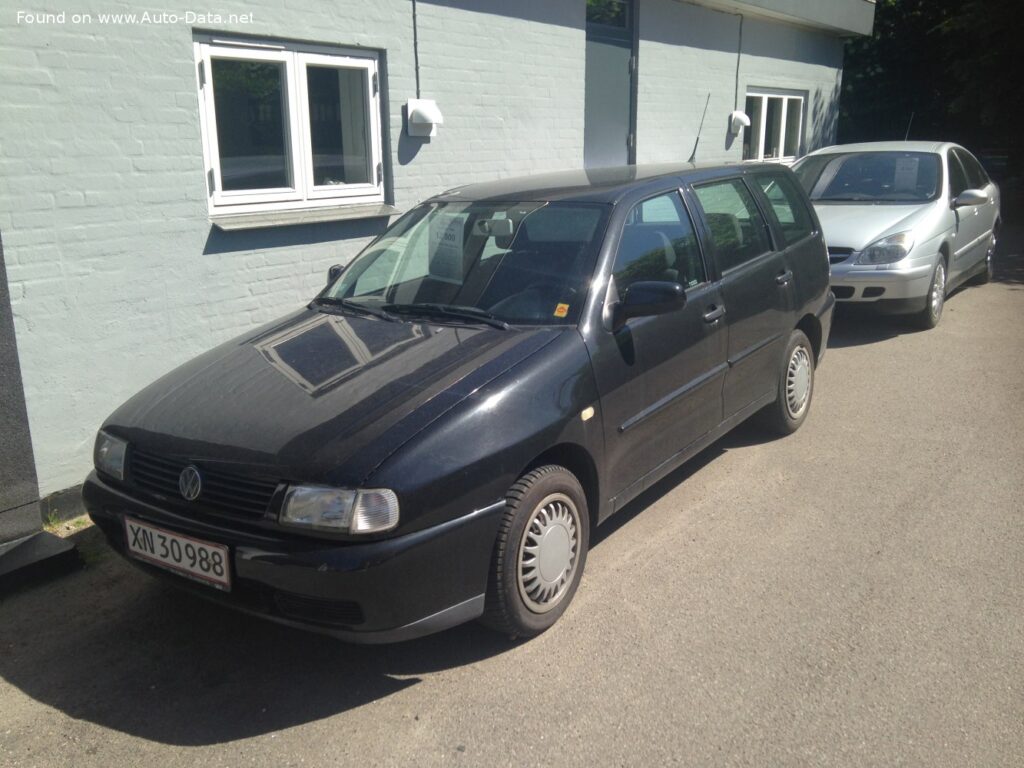
<p>The <strong>Volkswagen Polo III Variant</strong>, specifically the 1.6 (101 Hp) Automatic model, represents a significant chapter in the history of Volkswagen’s highly successful subcompact car line. Launched in 1994, the third generation Polo (Type 6N/6KV) marked a departure from its predecessors, growing in size and sophistication to better compete in the fiercely contested European supermini segment. While the Polo hatchback was a common sight across Europe, the Variant (or estate/station wagon) body style offered enhanced practicality and cargo capacity, catering to a niche of buyers who required more utility than a standard hatchback but preferred the compact footprint of a smaller vehicle. This particular iteration, produced between 1994 and 2000, was never officially sold in the United States, reflecting Volkswagen’s strategic market segmentation where larger models like the Golf and Jetta dominated its U.S. offerings. Instead, the Polo III Variant carved out its reputation as a reliable, economical, and surprisingly spacious family vehicle within its primary European and select Asian markets.</p>
<h2>The Volkswagen Polo III Variant: Engineering for the European Market</h2>
<p>The third-generation Polo built upon Volkswagen’s reputation for solid engineering and pragmatic design. Unlike previous generations, the Polo III shared its platform with the SEAT Ibiza, leading to a more contemporary and robust chassis. The introduction of the Variant body style in 1997 further expanded the Polo’s appeal, offering a compelling alternative to larger, more expensive station wagons. For European consumers, where narrow streets and high fuel prices were common considerations, a compact wagon like the <strong>Volkswagen Polo III Variant</strong> provided an ideal balance of maneuverability, fuel efficiency, and cargo volume. The 1.6 (101 Hp) Automatic variant, while not the most performance-oriented, prioritized ease of driving and comfort, making it a popular choice for urban and suburban families.</p>
<h3>Engine & Performance</h3>
<p>Powering the <strong>Volkswagen Polo III Variant</strong> 1.6 (101 Hp) Automatic was Volkswagen’s well-regarded 1.6-liter (1595 cm<sup>3</sup> or 97.33 cu. in.) naturally aspirated inline-four gasoline engine, internally designated as the AFT code. This powerplant featured an OHC (Overhead Camshaft) valvetrain with two valves per cylinder and a multi-port manifold injection system, a common and reliable setup for the era. It delivered a respectable 101 horsepower at 5600 rpm, which for a vehicle of its size and class, provided adequate motivation. Torque output stood at 106.95 lb.-ft. (145 Nm) at 3800 rpm, ensuring decent pulling power, especially in city driving scenarios.</p>
<p>The engine was paired with a 4-speed automatic transmission, driving the front wheels. This combination emphasized smooth, effortless driving over outright speed, appealing to drivers who navigated congested urban environments or preferred the convenience of an automatic gearbox. Performance figures reflected this focus on practicality: the Polo III Variant 1.6 Automatic could accelerate from 0 to 60 mph in a calculated 12.5 seconds, with a top speed of approximately 113.09 mph (182 km/h). While not a speed demon, these figures were competitive for its segment and purpose.</p>
<p>Fuel efficiency was a key selling point in Europe. The vehicle achieved an urban fuel economy of approximately 19.8 US mpg (11.9 l/100 km) and a more impressive extra-urban (highway) economy of about 34.6 US mpg (6.8 l/100 km). These numbers showcased its economical nature, especially for longer journeys, making it an attractive proposition for cost-conscious consumers.</p>
<h3>Design & Features</h3>
<p>The design of the <strong>Volkswagen Polo III Variant</strong> was characterized by its functional and understated aesthetic, typical of Volkswagen during the 1990s. As a 5-door station wagon (estate), its primary design goal was to maximize interior space and versatility within a compact footprint. Measuring 162.87 inches (4137 mm) in length, 64.57 inches (1640 mm) in width, and 56.42 inches (1433 mm) in height, the Polo Variant was remarkably easy to maneuver and park in tight European urban settings.</p>
<p>The interior was designed for practicality, offering comfortable seating for five occupants. The real highlight was its cargo capacity: a generous 13.77 cubic feet (390 liters) with the rear seats up, which expanded to an impressive 44.14 cubic feet (1250 liters) when the rear seats were folded down. This made it incredibly versatile for hauling groceries, luggage, or even small furniture, a significant advantage over its hatchback sibling.</p>
<p>Underpinning the ride quality were a front coil spring suspension and a rear wishbone setup, providing a balanced blend of comfort and handling. Braking was handled by front discs and rear drums, augmented by an Anti-lock Braking System (ABS), which was a valuable safety feature for its time, especially in varying road conditions. The hydraulic rack and pinion power steering offered precise control and made parking effortless. The vehicle rode on 185/60 R14 tires mounted on 6J x 14 wheel rims, a standard setup that contributed to both ride comfort and cost-effective tire replacement.</p>
<h3>Technical Specifications</h3>
<table border=”1″ style=”width:100%; border-collapse: collapse;”>
<thead>
<tr>
<th style=”padding: 8px; text-align: left; background-color: #f2f2f2;”>Category</th>
<th style=”padding: 8px; text-align: left; background-color: #f2f2f2;”>Specification</th>
</tr>
</thead>
<tbody>
<tr>
<td style=”padding: 8px; border: 1px solid #ddd;”><strong>General Information</strong></td>
<td style=”padding: 8px; border: 1px solid #ddd;”></td>
</tr>
<tr>
<td style=”padding: 8px; border: 1px solid #ddd;”>Brand</td>
<td style=”padding: 8px; border: 1px solid #ddd;”>Volkswagen</td>
</tr>
<tr>
<td style=”padding: 8px; border: 1px solid #ddd;”>Model</td>
<td style=”padding: 8px; border: 1px solid #ddd;”>Polo</td>
</tr>
<tr>
<td style=”padding: 8px; border: 1px solid #ddd;”>Generation</td>
<td style=”padding: 8px; border: 1px solid #ddd;”>Polo III Variant</td>
</tr>
<tr>
<td style=”padding: 8px; border: 1px solid #ddd;”>Type (Engine)</td>
<td style=”padding: 8px; border: 1px solid #ddd;”>1.6 (101 Hp) Automatic</td>
</tr>
<tr>
<td style=”padding: 8px; border: 1px solid #ddd;”>Production Start</td>
<td style=”padding: 8px; border: 1px solid #ddd;”>1994</td>
</tr>
<tr>
<td style=”padding: 8px; border: 1px solid #ddd;”>Production End</td>
<td style=”padding: 8px; border: 1px solid #ddd;”>2000</td>
</tr>
<tr>
<td style=”padding: 8px; border: 1px solid #ddd;”>Body Type</td>
<td style=”padding: 8px; border: 1px solid #ddd;”>Station wagon (estate)</td>
</tr>
<tr>
<td style=”padding: 8px; border: 1px solid #ddd;”>Seats / Doors</td>
<td style=”padding: 8px; border: 1px solid #ddd;”>5 / 5</td>
</tr>
<tr>
<td style=”padding: 8px; border: 1px solid #ddd;”><strong>Performance Specs</strong></td>
<td style=”padding: 8px; border: 1px solid #ddd;”></td>
</tr>
<tr>
<td style=”padding: 8px; border: 1px solid #ddd;”>Fuel Consumption (Urban)</td>
<td style=”padding: 8px; border: 1px solid #ddd;”>11.9 l/100 km (19.8 US mpg)</td>
</tr>
<tr>
<td style=”padding: 8px; border: 1px solid #ddd;”>Fuel Consumption (Extra Urban)</td>
<td style=”padding: 8px; border: 1px solid #ddd;”>6.8 l/100 km (34.6 US mpg)</td>
</tr>
<tr>
<td style=”padding: 8px; border: 1px solid #ddd;”>Fuel Type</td>
<td style=”padding: 8px; border: 1px solid #ddd;”>Petrol (Gasoline)</td>
</tr>
<tr>
<td style=”padding: 8px; border: 1px solid #ddd;”>Acceleration 0-60 mph</td>
<td style=”padding: 8px; border: 1px solid #ddd;”>12.5 sec</td>
</tr>
<tr>
<td style=”padding: 8px; border: 1px solid #ddd;”>Maximum Speed</td>
<td style=”padding: 8px; border: 1px solid #ddd;”>113.09 mph (182 km/h)</td>
</tr>
<tr>
<td style=”padding: 8px; border: 1px solid #ddd;”>Weight-to-power ratio</td>
<td style=”padding: 8px; border: 1px solid #ddd;”>10.8 kg/Hp, 92.7 Hp/tonne</td>
</tr>
<tr>
<td style=”padding: 8px; border: 1px solid #ddd;”><strong>Engine Specs</strong></td>
<td style=”padding: 8px; border: 1px solid #ddd;”></td>
</tr>
<tr>
<td style=”padding: 8px; border: 1px solid #ddd;”>Power</td>
<td style=”padding: 8px; border: 1px solid #ddd;”>101 Hp @ 5600 rpm</td>
</tr>
<tr>
<td style=”padding: 8px; border: 1px solid #ddd;”>Torque</td>
<td style=”padding: 8px; border: 1px solid #ddd;”>106.95 lb.-ft. (145 Nm) @ 3800 rpm</td>
</tr>
<tr>
<td style=”padding: 8px; border: 1px solid #ddd;”>Engine Layout</td>
<td style=”padding: 8px; border: 1px solid #ddd;”>Front, Longitudinal</td>
</tr>
<tr>
<td style=”padding: 8px; border: 1px solid #ddd;”>Engine Model/Code</td>
<td style=”padding: 8px; border: 1px solid #ddd;”>AFT</td>
</tr>
<tr>
<td style=”padding: 8px; border: 1px solid #ddd;”>Engine Displacement</td>
<td style=”padding: 8px; border: 1px solid #ddd;”>1.6 Liters (1595 cm<sup>3</sup> / 97.33 cu. in.)</td>
</tr>
<tr>
<td style=”padding: 8px; border: 1px solid #ddd;”>Number of Cylinders</td>
<td style=”padding: 8px; border: 1px solid #ddd;”>4, Inline</td>
</tr>
<tr>
<td style=”padding: 8px; border: 1px solid #ddd;”>Compression Ratio</td>
<td style=”padding: 8px; border: 1px solid #ddd;”>10.3:1</td>
</tr>
<tr>
<td style=”padding: 8px; border: 1px solid #ddd;”>Valves per Cylinder</td>
<td style=”padding: 8px; border: 1px solid #ddd;”>2</td>
</tr>
<tr>
<td style=”padding: 8px; border: 1px solid #ddd;”>Fuel Injection System</td>
<td style=”padding: 8px; border: 1px solid #ddd;”>Multi-port manifold injection</td>
</tr>
<tr>
<td style=”padding: 8px; border: 1px solid #ddd;”>Engine Aspiration</td>
<td style=”padding: 8px; border: 1px solid #ddd;”>Naturally aspirated</td>
</tr>
<tr>
<td style=”padding: 8px; border: 1px solid #ddd;”>Valvetrain</td>
<td style=”padding: 8px; border: 1px solid #ddd;”>OHC</td>
</tr>
<tr>
<td style=”padding: 8px; border: 1px solid #ddd;”>Engine Oil Capacity</td>
<td style=”padding: 8px; border: 1px solid #ddd;”>