The Renault Megane III Grandtour 1.5 dCi (110 Hp) FAP EDC: A European Workhorse
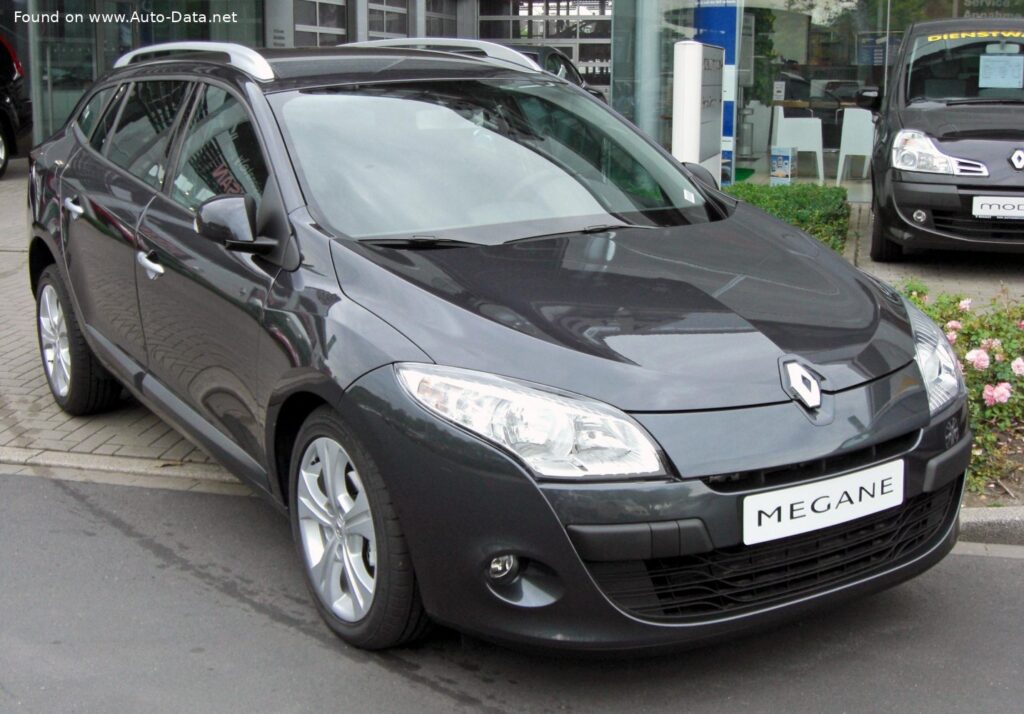
The Renault Megane III Grandtour 1.5 dCi (110 Hp) FAP EDC represents a crucial offering in the European compact segment, specifically tailored for practicality, efficiency, and family-oriented buyers. Produced between 2009 and 2012, this particular variant of the third-generation Megane Grandtour (known as an estate car in Europe) showcased Renault’s commitment to delivering a versatile and economical vehicle. While never officially sold in the United States, its role in the highly competitive European C-segment was significant, providing a compelling alternative to hatchbacks with its extended cargo capacity and the refined efficiency of its diesel powertrain combined with a modern automatic transmission.
The Megane III generation, launched in 2008, marked a design evolution from its more distinctive, somewhat polarizing predecessor, adopting a more conventional yet still stylish aesthetic. The Grandtour body style further emphasized functionality, offering substantial luggage space without compromising passenger comfort. This specific model, powered by the popular 1.5-liter dCi turbodiesel engine and equipped with Renault’s Efficient Dual Clutch (EDC) automatic gearbox, was a testament to the European market’s demand for fuel-efficient and convenient family transportation.
Engine and Performance of the Renault Megane III Grandtour 1.5 dCi (110 Hp) FAP EDC
At the heart of this practical station wagon was Renault’s widely utilized K9K 837 1.5-liter (1461 cm³) inline-four turbodiesel engine. This powerplant delivered a respectable 110 horsepower at 4000 rpm, a solid figure for its displacement, especially when considering its primary focus on fuel economy. More importantly for daily driving and load-carrying, the engine produced a robust 177 lb.-ft. (240 Nm) of torque, available from a low 1750 rpm. This low-end torque characteristic was instrumental in providing brisk acceleration from a standstill and confident overtaking capabilities, even when the vehicle was fully loaded.
The engine featured a common rail direct fuel injection system, ensuring precise fuel delivery and efficient combustion. It was also equipped with a turbocharger and intercooler, enhancing power output and overall efficiency. Crucially for its era, the engine included a Diesel Particulate Filter (FAP – Filtre à Particules), allowing it to meet the stringent Euro 5 emission standards, a vital consideration for European markets. The FAP system captured harmful soot particles, contributing to cleaner exhaust emissions.
Mated to this efficient diesel engine was a 6-speed EDC (Efficient Dual Clutch) automatic transmission. This advanced gearbox, a significant technological leap for Renault in the compact segment, offered the convenience of an automatic with the efficiency and responsiveness often associated with manual transmissions. The EDC system provided smooth, quick gear changes, contributing to both driving comfort and optimized fuel consumption. Performance figures reflected its utilitarian nature: the Megane III Grandtour 1.5 dCi could accelerate from 0 to 60 mph in a calculated 11.5 seconds and reach a top speed of 118 mph (190 km/h). While not designed for outright speed, these figures were perfectly adequate for highway cruising and city driving.
Fuel economy was a standout feature, a critical selling point in Europe. The combined cycle fuel consumption was an impressive 4.2 liters per 100 kilometers, translating to approximately 56 US mpg. Urban driving yielded around 46.1 US mpg, while extra-urban (highway) driving could achieve an exceptional 63.6 US mpg. These figures, coupled with a 15.85 US gallon (60-liter) fuel tank, provided an excellent cruising range, making it an ideal choice for long-distance travel.
Design and Features
The Megane III Grandtour adopted a sleek and balanced station wagon design, prioritizing functionality without sacrificing aesthetic appeal. Its five-door, five-seat configuration made it a highly practical vehicle for families and individuals requiring ample cargo space. With a length of 179.49 inches (4559 mm), a width of 69.53 inches (1766 mm), and a height of 57.52 inches (1461 mm), it struck a good balance between maneuverability and interior volume. The generous 106.42-inch (2703 mm) wheelbase contributed to a stable ride and comfortable passenger legroom.
The interior of the Megane III Grandtour was designed with ergonomics and practicality in mind. While specific trim levels would dictate the exact materials and features, the cabin generally offered comfortable seating and a user-friendly layout. The true highlight, however, was its cargo capacity. With the rear seats in place, the trunk provided a substantial 18.5 cubic feet (524 liters) of space. Folding down the rear seats expanded this to a cavernous 56.33 cubic feet (1595 liters), making it capable of hauling significant amounts of luggage, sports equipment, or even small furniture. This versatility was a key differentiator from its hatchback sibling.
Safety features for the 2009-2012 model year would typically include a comprehensive airbag system, anti-lock braking system (ABS) as standard, and often electronic stability control (ESC) depending on the market and trim. The vehicle’s structure was designed to meet European crash safety standards, providing occupants with a high level of protection. The front suspension utilized an independent McPherson strut setup, while the rear featured a torsion beam, a common and cost-effective solution for compact cars that offered a good balance of ride comfort and handling. Stopping power was provided by ventilated disc brakes at the front and disc brakes at the rear, complemented by ABS. Electric power steering offered ease of maneuverability in urban environments and at lower speeds.
Technical Specifications
| General Information | |
|---|---|
| Brand | Renault |
| Model | Megane |
| Generation | Megane III Grandtour |
| Type (Engine) | 1.5 dCi (110 Hp) FAP EDC |
| Start of Production | 2009 year |
| End of Production | 2012 year |
| Powertrain Architecture | Internal Combustion engine |
| Body type | Station wagon (estate) |
| Seats | 5 |
| Doors | 5 |
| Performance Specifications | |
| Fuel Consumption (economy) – urban | 5.1 l/100 km (46.1 US mpg) |
| Fuel Consumption (economy) – extra urban | 3.7 l/100 km (63.6 US mpg) |
| Fuel Consumption (economy) – combined | 4.2 l/100 km (56 US mpg) |
| CO2 emissions | 109 g/km |
| Fuel Type | Diesel |
| Acceleration 0 – 60 mph | 11.5 sec |
| Maximum speed | 118.06 mph (190 km/h) |
| Emission standard | Euro 5 |
| Weight-to-power ratio | 11.7 kg/Hp, 85.6 Hp/tonne |
| Weight-to-torque ratio | 5.4 kg/Nm, 186.8 Nm/tonne |
| Engine Specifications | |
| Power | 110 Hp @ 4000 rpm |
| Power per liter | 75.3 Hp/l |
| Torque | 177.01 lb.-ft. (240 Nm) @ 1750 rpm |
| Engine layout | Front, Transverse |
| Engine Model/Code | K9K 837 |
| Engine displacement | 1.5 liters (1461 cm³ / 89.16 cu. in.) |
| Number of cylinders | 4 |
| Engine configuration | Inline |
| Cylinder Bore | 2.99 in. (76 mm) |
| Piston Stroke | 3.17 in. (80.5 mm) |
| Compression ratio | 15:1 |
| Number of valves per cylinder | 2 |
| Fuel injection system | Diesel Commonrail |
| Engine aspiration | Turbocharger, Intercooler |
| Engine oil capacity | 4.76 US qt (4.5 l) |
| Coolant | 6.87 US qt (6.5 l) |
| Engine systems | Particulate filter |
| Space, Volume and Weights | |
| Kerb Weight | 2832.94 lbs. (1285 kg) |
| Max. weight | 4060.91 lbs. (1842 kg) |
| Max load | 1227.97 lbs. (557 kg) |
| Trunk (boot) space – minimum | 18.5 cu. ft. (524 l) |
| Trunk (boot) space – maximum | 56.33 cu. ft. (1595 l) |
| Fuel tank capacity | 15.85 US gal (60 l) |
| Max. roof load | 176.37 lbs. (80 kg) |
| Permitted trailer load with brakes (12%) | 2866.01 lbs. (1300 kg) |
| Permitted trailer load without brakes | 1499.14 lbs. (680 kg) |
| Permitted towbar download | 165.35 lbs. (75 kg) |
| Dimensions | |
| Length | 179.49 in. (4559 mm) |
| Width | 69.53 in. (1766 mm) |
| Height | 57.52 in. (1461 mm) |
| Wheelbase | 106.42 in. (2703 mm) |
| Front track | 60.87 in. (1546 mm) |
| Rear (Back) track | 60.91 in. (1547 mm) |
| Front overhang | 33.94 in. (862 mm) |
| Rear overhang | 39.13 in. (994 mm) |
| Ride height (ground clearance) | 4.72 in. (120 mm) |
| Drag coefficient (Cd) | 0.32 |
| Minimum turning circle (turning diameter) | 36.25 ft. (11.05 m) |
| Drivetrain, Brakes and Suspension Specifications | |
| Drivetrain Architecture | The Internal combustion engine (ICE) drives the front wheels of the vehicle. |
| Drive wheel | Front wheel drive |
| Number of gears and type of gearbox | 6 gears, automatic transmission EDC |
| Front suspension | Independent type McPherson |
| Rear suspension | Torsion |
| Front brakes | Ventilated discs |
| Rear brakes | Disc |
| Assisting systems | ABS (Anti-lock braking system) |
| Steering type | Steering rack and pinion |
| Power steering | Electric Steering |
| Tires size | 205/50 R17 |
| Wheel rims size | 17 |
Legacy and Market Impact
The Renault Megane III Grandtour 1.5 dCi (110 Hp) FAP EDC carved out a significant niche in the highly competitive European compact segment. Its primary competitors included well-established models like the Volkswagen Golf Variant, Ford Focus Estate, Opel Astra Sports Tourer, and Peugeot 308 SW. In this environment, the Megane Grandtour stood out for its blend of distinctive French design (albeit more subdued than its predecessor), impressive fuel efficiency, and practical cargo solutions.
Renault’s reputation for building comfortable and family-friendly vehicles was further solidified by this model. The 1.5 dCi engine, in particular, was lauded across Europe for its robust performance, reliability, and outstanding economy, making it a favorite among fleet buyers and private owners alike who covered long distances. The introduction of the EDC dual-clutch transmission was a key factor in its appeal, offering a modern, efficient automatic option that was increasingly sought after by consumers.
Its market impact was largely confined to Europe and other regions with a strong preference for compact diesel station wagons. The vehicle was never officially imported into the United States, a common trend for many European C-segment models. The American market, even during this period, showed a diminishing interest in compact station wagons and a growing preference for SUVs and crossovers, along with a general aversion to diesel passenger cars outside of heavy-duty trucks. This cultural and market difference meant that while the Megane Grandtour was a practical and economical choice in its home continent, it did not align with American consumer tastes.
Despite its absence from the North American market, the Renault Megane III Grandtour 1.5 dCi (110 Hp) FAP EDC remains an important chapter in Renault’s history. It represented a mature and highly competent offering in its segment, embodying the European automotive industry’s focus on fuel efficiency, intelligent packaging, and advanced powertrain technology. Its legacy is that of a reliable, versatile, and economical family car that served the needs of countless European households, perfectly illustrating Renault’s mastery of the compact segment.