Renault Espace V 1.8 TCe (225 Hp) EDC FAP 7 Seat
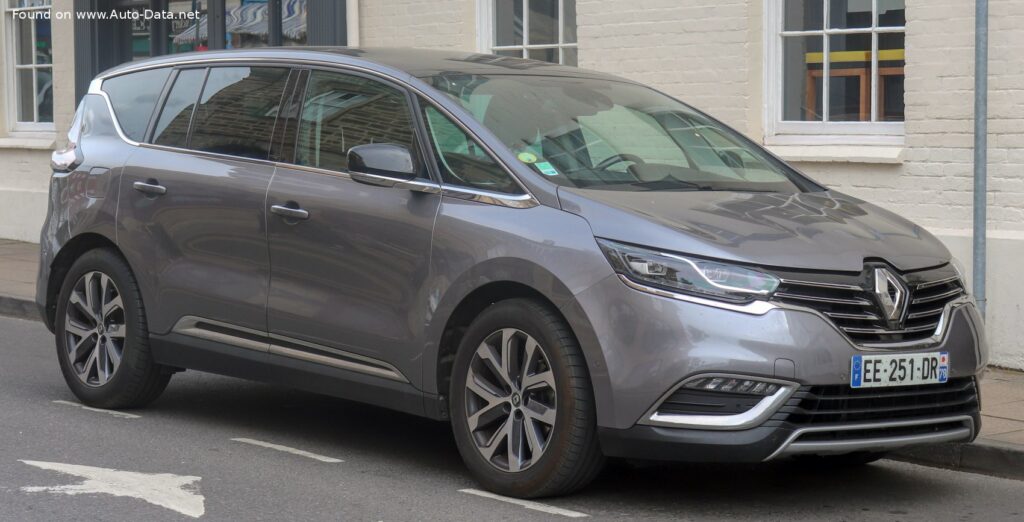
The Renault Espace V 1.8 TCe (225 Hp) EDC FAP 7 Seat represents a significant evolution in Renault’s long-standing Espace lineage, a model that pioneered the European minivan segment. Launched in 2015, the fifth-generation Espace dramatically shifted its design philosophy, transitioning from a traditional, boxy multi-purpose vehicle (MPV) into a sleek, crossover-inspired offering. This particular variant, produced between 2018 and 2019, epitomizes the blend of family practicality with a more dynamic, SUV-like aesthetic and a robust powertrain. While not sold in the United States, the Espace V played a crucial role in the European market, appealing to families seeking versatility, comfort, and a touch of premium styling.
This generation of the Espace, often described as a “crossover-minivan,” aimed to bridge the gap between declining MPV sales and the booming SUV market. It retained the core Espace values of spaciousness and modularity, while adopting a more assertive stance and higher ground clearance. The 1.8 TCe (Turbo Control efficiency) engine, paired with an advanced EDC (Efficient Dual Clutch) automatic transmission, provided a compelling balance of performance and efficiency for its segment.
Engine and Performance of the Renault Espace V
At the heart of the Renault Espace V 1.8 TCe (225 Hp) EDC FAP 7 Seat lies a sophisticated 1.8-liter (1798 cm3) inline four-cylinder engine, designated by the M5P code. This powerplant is a testament to modern automotive engineering, featuring direct fuel injection, a turbocharger, and an intercooler to maximize both power output and fuel efficiency. It delivers a healthy 225 horsepower at 5600 rpm, a substantial figure for a family-oriented vehicle of its class. The torque output is equally impressive, reaching 221.27 lb.-ft. at a low 1750 rpm, ensuring strong acceleration and flexible in-gear performance, crucial for hauling passengers and cargo.
Power is channeled to the front wheels through a quick-shifting 7-speed EDC automatic transmission. This dual-clutch gearbox offers smooth and responsive shifts, contributing to both the vehicle’s dynamic capabilities and its overall refinement. The powertrain enables the Espace V to accelerate from 0 to 60 mph in a brisk 7.5 seconds, with a top speed of 139.19 mph. These figures underscore its ability to perform confidently on highways and handle various driving conditions with ease.
Despite its performance credentials, the Espace V 1.8 TCe also demonstrates commendable fuel economy for its size and power. It achieves a combined fuel consumption rating of 31.8 US mpg (7.4 l/100 km), with urban figures around 25.6 US mpg (9.2 l/100 km) and extra-urban figures reaching 37.3 US mpg (6.3 l/100 km). This efficiency is further enhanced by its compliance with the stringent Euro 6d-TEMP emission standard, aided by a Gasoline Particulate Filter (FAP), ensuring reduced environmental impact. The engine’s advanced design, including 4 valves per cylinder and precise bore and stroke measurements (3.14 in x 3.55 in), optimizes combustion for clean and powerful operation.
Design and Features
The design of the Renault Espace V marked a radical departure from its predecessors, embracing a “crossover” aesthetic while retaining the practical advantages of a minivan. Its exterior styling is characterized by fluid lines, a prominent grille, and distinctive LED lighting signatures, giving it a more upscale and assertive presence on the road. The body type is officially classified as a Minivan, Crossover, reflecting its dual nature. With five doors and seating for seven occupants, the Espace V prioritizes interior space and flexibility, a hallmark of the Espace nameplate.
Measuring 191.22 inches in length, 74.33 inches in width (83.78 inches including mirrors), and 66.02 inches in height, the Espace V offers generous interior dimensions. A long wheelbase of 113.54 inches contributes to a stable ride and expansive cabin room. The interior is designed with versatility in mind, offering a minimum trunk space of 8.72 cubic feet, which can expand dramatically to 71.87 cubic feet with the rear seats folded, allowing for ample cargo capacity for family trips or larger items. The 6.3 inches of ground clearance further underscores its crossover aspirations, providing a slightly elevated driving position and improved capability over varied terrain compared to a traditional MPV.
Key features of this modern family vehicle include a sophisticated drivetrain architecture that sends power to the front wheels, ensuring predictable handling. The braking system comprises ventilated discs at the front and disc brakes at the rear, complemented by an Anti-lock Braking System (ABS) for enhanced safety. Electric power steering, with a rack and pinion setup, provides light and precise control. The Espace V rides on 235/60 R18 tires, mounted on 18-inch wheels, which contribute to both its visual appeal and comfortable ride quality. While specific interior technology details are not listed in the raw data, as a modern European family vehicle, it would typically include a comprehensive infotainment system, advanced driver-assistance systems, and premium cabin materials, aligning with Renault’s positioning of the Espace as a flagship model.
Technical Specifications
| Category | Specification |
|---|---|
| Brand | Renault |
| Model | Espace V |
| Type (Engine) | 1.8 TCe (225 Hp) EDC FAP 7 Seat |
| Production Years | 2018 – 2019 |
| Body Type | Minivan, Crossover |
| Seats | 7 |
| Doors | 5 |
| Performance Specs | |
| Fuel Consumption (Urban) | 9.2 l/100 km (25.6 US mpg) |
| Fuel Consumption (Extra Urban) | 6.3 l/100 km (37.3 US mpg) |
| Fuel Consumption (Combined) | 7.4 l/100 km (31.8 US mpg) |
| CO2 Emissions | 168 g/km |
| Fuel Type | Petrol (Gasoline) |
| Acceleration 0 – 60 mph | 7.5 seconds |
| Maximum Speed | 139.19 mph (224 km/h) |
| Emission Standard | Euro 6d – TEMP |
| Weight-to-Power Ratio | 7.4 kg/Hp, 134.6 Hp/tonne |
| Weight-to-Torque Ratio | 5.6 kg/Nm, 179.4 Nm/tonne |
| Engine Specs | |
| Power | 225 Hp @ 5600 rpm |
| Torque | 221.27 lb.-ft. (300 Nm) @ 1750 rpm |
| Engine Layout | Front, Transverse |
| Engine Model/Code | M5P |
| Engine Displacement | 1.8 liters (1798 cm3 / 109.72 cu. in.) |
| Number of Cylinders | 4 |
| Engine Configuration | Inline |
| Cylinder Bore | 3.14 inches (79.7 mm) |
| Piston Stroke | 3.55 inches (90.1 mm) |
| Valves per Cylinder | 4 |
| Fuel Injection System | Direct injection |
| Engine Aspiration | Turbocharger, Intercooler |
| Engine Oil Capacity | 4.33 US quarts (4.1 liters) |
| Engine Systems | Particulate filter (FAP/GPF) |
| Space, Volume and Weights | |
| Kerb Weight | 3686.13 lbs. (1672 kg) |
| Max. Weight | 5328.57 lbs. (2417 kg) |
| Max Load | 1642.44 lbs. (745 kg) |
| Trunk (Boot) Space – Minimum | 8.72 cu. ft. (247 liters) |
| Trunk (Boot) Space – Maximum | 71.87 cu. ft. (2035 liters) |
| Fuel Tank Capacity | 15.32 US gallons (58 liters) |
| Max. Roof Load | 176.37 lbs. (80 kg) |
| Permitted Trailer Load with Brakes (12%) | 4409.25 lbs. (2000 kg) |
| Permitted Trailer Load without Brakes | 1653.47 lbs. (750 kg) |
| Dimensions | |
| Length | 191.22 inches (4857 mm) |
| Width | 74.33 inches (1888 mm) |
| Width with Mirrors Folded | 75.35 inches (1914 mm) |
| Width Including Mirrors | 83.78 inches (2128 mm) |
| Height | 66.02 inches (1677 mm) |
| Wheelbase | 113.54 inches (2884 mm) |
| Front Track | 64.17 inches (1630 mm) |
| Rear (Back) Track | 63.82 inches (1621 mm) |
| Front Overhang | 40.71 inches (1034 mm) |
| Rear Overhang | 36.97 inches (939 mm) |
| Ride Height (Ground Clearance) | 6.3 inches (160 mm) |
| Minimum Turning Circle (Turning Diameter) | 36.42 feet (11.1 meters) |
| Drivetrain, Brakes and Suspension Specs | |
| Drivetrain Architecture | Front-wheel drive, Internal Combustion Engine |
| Drive Wheel | Front wheel drive |
| Number of Gears and Type of Gearbox | 7 gears, automatic transmission EDC |
| Front Brakes | Ventilated discs |
| Rear Brakes | Disc |
| Assisting Systems | ABS (Anti-lock braking system) |
| Steering Type | Steering rack and pinion |
| Power Steering | Electric Steering |
| Tires Size | 235/60 R18 |
| Wheel Rims Size | 18 inches |
Legacy and Market Impact
The Renault Espace holds a significant place in European automotive history, having essentially created the minivan segment when the first generation debuted in 1984. The Espace V, especially this potent 1.8 TCe (225 Hp) EDC FAP 7 Seat variant, represents a pivotal moment in the model’s evolution, reflecting changing consumer preferences away from traditional minivans towards more stylish and rugged crossovers. While it maintained the Espace’s core identity of spaciousness and modularity, its SUV-inspired design allowed it to compete in a broader market, attempting to attract buyers who might otherwise opt for a conventional SUV.
In its primary European market, the Espace V faced a diverse set of competitors. Traditional MPV rivals included the Ford S-Max/Galaxy, Volkswagen Sharan, and SEAT Alhambra, all offering strong practicality. However, with its crossover styling, the Espace V also found itself up against a growing number of large, 7-seater SUVs, such as the Peugeot 5008, Skoda Kodiaq, Hyundai Santa Fe, and Kia Sorento. Its unique position as a blend of MPV comfort and SUV aesthetics carved out a niche for itself, emphasizing a premium feel and a more dynamic driving experience than many of its more utilitarian MPV counterparts.
The Espace V’s reputation was built on its comfortable ride, innovative interior design, and its ability to effortlessly swallow passengers and luggage. The 1.8 TCe (225 Hp) engine further enhanced this reputation by providing ample power for long-distance cruising and confident overtaking, making it an ideal choice for European families who frequently travel across borders. Its advanced EDC transmission and Euro 6d-TEMP compliance underscored Renault’s commitment to modern technology and environmental responsibility. Although this specific variant had a relatively short production run from 2018 to 2019, it was a high-performance option within the Espace lineup, catering to those who desired extra power without sacrificing fuel efficiency or family utility.
Ultimately, the Renault Espace V, and particularly the 1.8 TCe (225 Hp) EDC FAP 7 Seat model, will be remembered as an ambitious attempt by Renault to reinvent a classic nameplate for a new era. It demonstrated how a traditional family hauler could adapt to market trends by incorporating crossover elements, proving that practicality and style could indeed coexist. Its legacy is one of innovation and adaptation, a testament to Renault’s enduring commitment to designing vehicles that meet the evolving needs of modern families.