Introduction to the Volvo V60 II 2.0 T6 TwEn Plug-in Hybrid AWD Geartronic
The Volvo V60 II 2.0 T6 TwEn Plug-in Hybrid AWD Geartronic represents the second generation of Volvo’s mid-size premium station wagon, first introduced in 2018. This particular variant, produced from September 2019 to September 2021, embodies Volvo’s strategic shift towards electrification, combining a potent internal combustion engine with an advanced electric motor to deliver a compelling blend of performance, efficiency, and environmental responsibility. Positioned in the highly competitive premium D-segment, the V60 II T6 Twin Engine, as it was often known in its primary European markets, aimed to attract buyers seeking the practicality of a wagon, the luxury of a premium brand, and the forward-thinking benefits of a plug-in hybrid powertrain. While the V60 wagon has a strong presence in markets like the United States, this specific T6 Twin Engine configuration highlights Volvo’s commitment to diverse powertrain options tailored to global emission standards and consumer preferences. It stands as a testament to Volvo’s engineering prowess, integrating sophisticated hybrid technology within a stylish and functional Scandinavian design philosophy.
Powertrain and Performance: The Volvo V60 II 2.0 T6 TwEn Plug-in Hybrid AWD Geartronic
Engine & Performance
At the heart of the Volvo V60 II 2.0 T6 TwEn Plug-in Hybrid AWD Geartronic lies an innovative powertrain architecture that combines a powerful gasoline engine with a robust electric motor. The internal combustion engine (ICE) is a 2.0-liter (1969 cm3 or 120.16 cu. in.) inline-four cylinder unit, designated B4204T46. This engine is a marvel of modern engineering, featuring both turbocharging and supercharging, along with an intercooler, to deliver exceptional power across the rev range. It produces a substantial 253 horsepower at 6000 rpm and a peak torque of 258.15 lb.-ft. (350 Nm) available between 1800-4800 rpm. This dual-boosted setup effectively minimizes turbo lag, providing immediate throttle response and a broad power band. Power is delivered to the front wheels via an 8-speed Geartronic automatic transmission, renowned for its smooth and precise shifts.
Electric Drivetrain Capabilities
Complementing the gasoline engine is an electric motor, strategically positioned on the rear axle, which contributes an additional 87 horsepower at 7000 rpm and a significant 177.01 lb.-ft. (240 Nm) of torque from 0-3000 rpm. This unique drivetrain architecture ensures an all-wheel-drive (AWD) capability, with the ICE driving the front wheels and the electric motor powering the rear wheels. The combined system offers not only enhanced traction but also impressive acceleration, propelling the V60 T6 Twin Engine from 0 to 60 mph in a swift 5.2 seconds (0-100 km/h in 5.5 seconds). The vehicle’s top speed is electronically limited to 155.34 mph (250 km/h), demonstrating its capability as a true performance wagon.
The plug-in hybrid system is powered by an 11.6 kWh gross capacity Lithium-ion (Li-Ion) battery, ingeniously located in the central tunnel to optimize weight distribution and preserve cargo space. This battery allows for a substantial all-electric range of 31.07 to 36.66 miles (50-59 km) under WLTP testing, making daily commutes emission-free for many drivers. In pure electric mode, the V60 T6 TwEn can reach speeds up to 77.67 mph (125 km/h). When operating in hybrid mode, the vehicle achieves remarkable fuel efficiency, with a combined WLTP fuel consumption ranging from 1.7 to 2.4 liters per 100 km, which translates to an astounding 138.4 to 98 US mpg. This exceptional efficiency is coupled with low CO2 emissions of 38-55 g/km (WLTP), earning it an Euro 6d-TEMP emission standard rating, highlighting Volvo’s commitment to environmental sustainability without compromising performance.
Design and Features of the Volvo V60 II
Exterior Aesthetics and Practicality
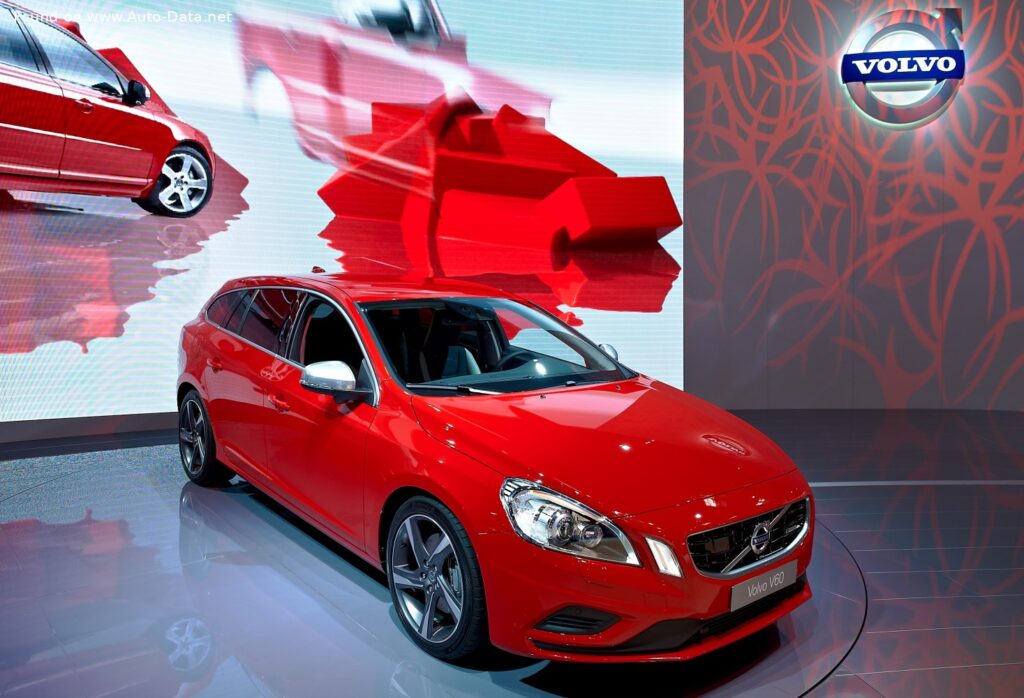
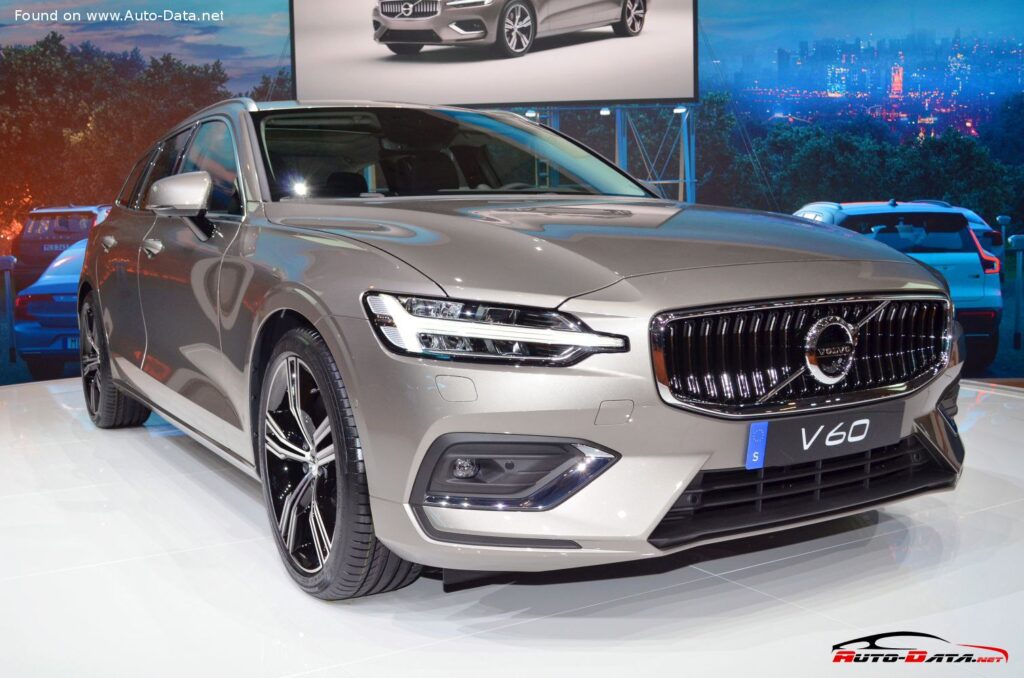
The Volvo V60 II, with its station wagon body type, perfectly embodies Volvo’s modern design language – a sophisticated blend of elegance, strength, and practicality. Measuring 187.44 inches (4761 mm) in length, 72.83 inches (1850 mm) in width (80.31 inches or 2040 mm including mirrors), and 56.18 inches (1427 mm) in height, the V60 boasts sleek proportions and a dynamic stance. Its distinctive features include the signature “Thor’s Hammer” LED daytime running lights, a prominent grille, and a sculpted body that exudes a premium feel. The wagon form factor is not just about aesthetics; it offers immense practicality, providing a minimum trunk space of 18.68 cu. ft. (529 liters) that expands to a cavernous 50.89 cu. ft. (1441 liters) with the rear seats folded, catering to families and active lifestyles. The V60 II also features a respectable ground clearance of 5.04 inches (128 mm) and a low drag coefficient of 0.29, contributing to both its visual appeal and aerodynamic efficiency.
Interior Comfort and Technology
Inside, the V60 II continues Volvo’s tradition of minimalist Scandinavian design, focusing on ergonomic comfort, high-quality materials, and intuitive technology. The cabin offers seating for five occupants, with supportive seats designed for long-distance comfort. The focal point of the dashboard is Volvo’s Sensus Connect infotainment system, typically presented on a large, vertically oriented touchscreen. This system provides access to navigation, media, connectivity services, and vehicle settings, all with a user-friendly interface. Premium materials such as fine leather, genuine wood, and metallic accents create an upscale ambiance. Practical features abound, including a 60-liter (15.85 US gal) fuel tank, ample storage compartments, and a maximum roof load capacity of 165.35 lbs (75 kg), further enhancing its utility.
Safety and Driver Assistance Systems
As expected from Volvo, safety is paramount in the V60 II. The vehicle comes equipped with a comprehensive suite of active and passive safety features. Beyond standard ABS (Anti-lock Braking System) and a robust structural design, modern Volvos are renowned for their advanced driver-assistance systems (ADAS). While specific ADAS details are not provided in the raw data, the V60 II generation typically includes features like City Safety (autonomous emergency braking with pedestrian, cyclist, and large animal detection), Lane Keeping Aid, Run-off Road Mitigation, and optional Pilot Assist (adaptive cruise control with steering assistance). These systems work in concert to prevent accidents and protect occupants, reinforcing Volvo’s reputation as a leader in automotive safety. The inclusion of ventilated disc brakes (345×30 mm front, 320×20 mm rear) ensures powerful and reliable stopping performance, capable of bringing the vehicle from 100 km/h to a standstill in approximately 35 meters.
Technical Specifications
| Category | Specification | Value |
|---|---|---|
| General Information | ||
| Brand | Volvo | |
| Model | V60 | |
| Generation | V60 II | |
| Type (Engine) | 2.0 T6 TwEn (253 Hp) Plug-in Hybrid AWD Geartronic | |
| Start of production | September, 2019 year | |
| End of production | September, 2021 year | |
| Powertrain Architecture | PHEV (Plug-in Hybrid Electric Vehicle) | |
| Body type | Station wagon (estate) | |
| Seats | 5 | |
| Doors | 5 | |
| Performance Specs | ||
| Combined fuel consumption (WLTP) | 1.7-2.4 l/100 km (138.4 – 98 US mpg) | |
| CO2 emissions (WLTP) | 38-55 g/km | |
| Fuel consumption (economy) – combined (NEDC) | 1.7-1.8 l/100 km (138.4 – 130.7 US mpg) | |
| CO2 emissions (NEDC) | 39-42 g/km | |
| Fuel Type | Petrol / electricity | |
| Acceleration 0 – 60 mph | 5.2 sec | |
| Acceleration 0 – 100 km/h | 5.5 sec | |
| Maximum speed | 155.34 mph (250 km/h) | |
| Braking distance 100 km/h – 0 | 35 m | |
| Emission standard | Euro 6d-TEMP | |
| Weight-to-power ratio | 7.8 kg/Hp, 127.4 Hp/tonne | |
| Weight-to-torque ratio | 5.7 kg/Nm, 176.2 Nm/tonne | |
| Electric Cars and Hybrids Specs | ||
| Gross battery capacity | 11.6 kWh | |
| Battery voltage | 400 V | |
| Battery technology | Lithium-ion (Li-Ion) | |
| Battery location | In the central tunnel | |
| All-electric range (WLTP) | 31.07 – 36.66 mi (50-59 km) | |
| All-electric range (NEDC) | 33.55 – 34.8 mi (54-56 km) | |
| Average Energy consumption (WLTP) | 15.7-16.6 kWh/100 km (133 – 126 MPGe) | |
| Average Energy consumption (NEDC) | 15.8-16.5 kWh/100 km (133 – 127 MPGe) | |
| Max speed (electric) | 77.67 mph (125 km/h) | |
| Electric motor power | 87 Hp @ 7000 rpm. | |
| Electric motor Torque | 177.01 lb.-ft. (240 Nm) @ 0-3000 rpm. | |
| Electric motor location | Rear axle, Transverse | |
| Internal Combustion Engine Specs | ||
| Power | 253 Hp @ 6000 rpm. | |
| Power per liter | 128.5 Hp/l | |
| Torque | 258.15 lb.-ft. (350 Nm) @ 1800-4800 rpm. | |
| Engine layout | Front, Transverse | |
| Engine Model/Code | B4204T46 | |
| Engine displacement | 120.16 cu. in. (1969 cm3) | |
| Number of cylinders | 4 | |
| Engine configuration | Inline | |
| Cylinder Bore | 3.23 in. (82 mm) | |
| Piston Stroke | 3.67 in. (93.2 mm) | |
| Compression ratio | 10.3:1 | |
| Number of valves per cylinder | 4 | |
| Fuel injection system | Direct injection | |
| Engine aspiration | Turbocharging and Supercharger, Intercooler | |
| Valvetrain | DOHC | |
| Engine oil capacity | 5.6 l (5.92 US qt) | |
| Engine systems | Start & Stop System, Particulate filter | |
| Space, Volume and Weights | ||
| Kerb Weight | 4378.38 lbs (1986 kg) | |
| Max. weight | 5621.79 lbs (2550 kg) | |
| Max load | 1243.41 lbs (564 kg) | |
| Trunk (boot) space – minimum | 18.68 cu. ft. (529 l) | |
| Trunk (boot) space – maximum | 50.89 cu. ft. (1441 l) | |
| Fuel tank capacity | 15.85 US gal (60 l) | |
| Max. roof load | 165.35 lbs (75 kg) | |
| Permitted trailer load with brakes (12%) | 4409.25 lbs (2000 kg) | |
| Permitted trailer load without brakes | 1653.47 lbs (750 kg) | |
| Permitted towbar download | 220.46 lbs (100 kg) | |
| Dimensions | ||
| Length | 187.44 in. (4761 mm) | |
| Width | 72.83 in. (1850 mm) | |
| Width with mirrors folded | 75.43 in. (1916 mm) | |
| Width including mirrors | 80.31 in. (2040 mm) | |
| Height | 56.18 in. (1427 mm) | |
| Wheelbase | 113.07 in. (2872 mm) | |
| Front track | 63.39 in. (1610 mm) | |
| Rear (Back) track | 63.39 in. (1610 mm) | |
| Front overhang | 33.39 in. (848 mm) | |
| Rear overhang | 40.98 in. (1041 mm) | |
| Ride height (ground clearance) | 5.04 in. (128 mm) | |
| Drag coefficient (Cd) | 0.29 | |
| Minimum turning circle (turning diameter) | 37.07 ft. (11.3 m) | |
| Drivetrain, Brakes and Suspension Specs | ||
| Drivetrain Architecture | The Internal combustion engine (ICE) permanently drives the front wheels of the vehicle, the electric motor drives the rear wheels of the vehicle, capable of running in full electric mode, only by the Internal combustion engine (ICE) or in mixed mode. | |
| Drive wheel | All wheel drive (4×4) | |
| Number of gears and type of gearbox | 8 gears, automatic transmission Geartronic | |
| Front suspension | Double wishbone, Transverse stabilizer | |
| Rear suspension | Transverse stabilizer, Leaf spring | |
| Front brakes | ||