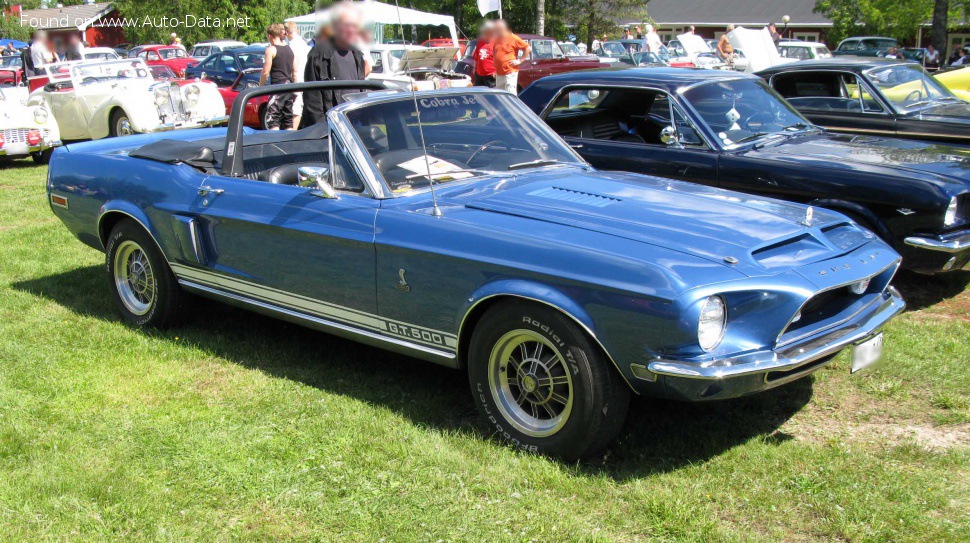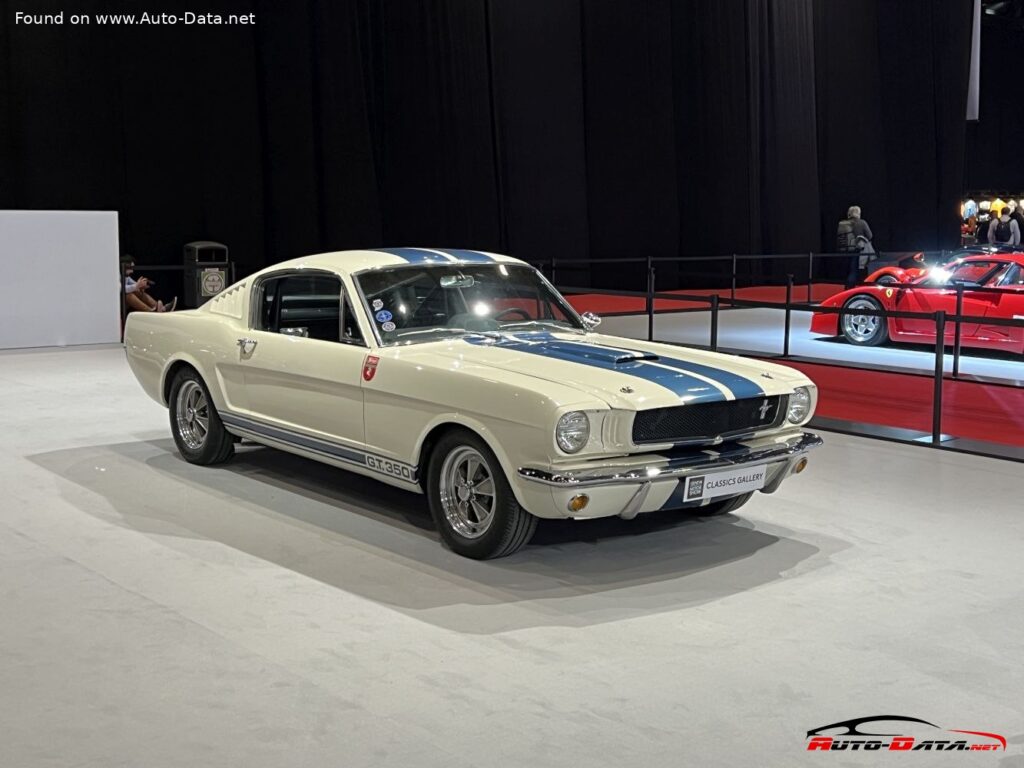
Introduction to the Ford Shelby I GT 350 4.7 V8 (289 Hp)
The Ford Shelby I GT 350 4.7 V8 (289 Hp) stands as an undisputed icon of American automotive performance, a legendary machine born from the collaboration between Ford Motor Company and the visionary racer and entrepreneur Carroll Shelby. Introduced in 1965, this first-generation Shelby GT350 was not merely a variant of the popular Ford Mustang; it was a purpose-built, high-performance coupe designed to dominate SCCA (Sports Car Club of America) road racing circuits while also being street legal. It quickly established itself as a benchmark for American muscle and sports car engineering, embodying the raw power and aggressive styling that defined the era.
The Shelby GT350’s inception was rooted in Ford’s desire to enhance the Mustang’s performance image and compete directly with European sports cars on the track. Carroll Shelby’s team at Shelby American took a standard Mustang 2+2 fastback and transformed it into a formidable racing machine. The GT350 was produced from 1965 to 1970, with the initial 1965 models, like the 4.7 V8 (289 Hp) variant, being particularly revered for their purity of purpose and direct connection to Shelby’s racing ethos. This vehicle segment carved out a unique niche, blending the affordability and widespread appeal of the Mustang with the specialized engineering and exclusivity of a limited-production performance car.
The Heart of the Beast: Ford Shelby I GT 350 4.7 V8 (289 Hp)’s Powertrain
At the core of the legendary Ford Shelby I GT 350 4.7 V8 (289 Hp) was a heavily modified version of Ford’s robust 289 cubic inch (4.7-liter) “K-Code” small-block V8 engine. While the standard K-Code produced 271 horsepower, Shelby American significantly enhanced its output and character. The engine modifications included a high-rise aluminum intake manifold, a large Holley four-barrel carburetor, a more aggressive camshaft, and a freer-flowing exhaust system, culminating in a formidable 289 horsepower at 5000 rpm. This power output, combined with a substantial 325.26 lb.-ft. of torque peaking at a relatively low 3000 rpm, provided exhilarating acceleration and strong pulling power, characteristic of classic American muscle.
The engine, with its V-engine configuration and eight cylinders, featured a bore of 4 inches and a stroke of 2.87 inches, contributing to its high-revving nature for a V8 of its time. A high compression ratio of 11.6:1 further amplified its performance, demanding premium gasoline. Fuel delivery was handled by a carburettor system, typical for the era, while the engine remained naturally aspirated, relying solely on atmospheric pressure for air intake. Power was efficiently transmitted to the rear wheels via a robust 4-speed manual transmission, offering drivers direct control over the engine’s potent output. This powertrain architecture, driving the rear wheels, was a quintessential setup for performance cars of the 1960s, delivering a thrilling and engaging driving experience. With a curb weight of 2791.05 lbs., the GT350 boasted an impressive weight-to-power ratio of approximately 9.66 lbs. per horsepower, a figure that underscored its performance credentials against many contemporaries.
Iconic Design and Purpose-Built Features
The design of the Ford Shelby I GT350 was a masterful blend of the Mustang’s inherent good looks and Shelby American’s functional, performance-oriented modifications. Starting with the sleek 2-door fastback coupe body, Shelby’s team added distinctive elements that immediately set the GT350 apart. These included the iconic Le Mans stripes, a fiberglass hood with a functional scoop for improved engine cooling, and side scoops that directed air to the rear brakes on early models. The car maintained its 4-seat configuration, though the rear seats were often replaced with a fiberglass shelf for racing homologation in the 1965 models, emphasizing its track-focused intent.
Beyond aesthetics, the GT350 featured significant enhancements to its chassis and braking system. Unlike many muscle cars of the period, the GT350 came equipped with front disc brakes and, notably, rear disc brakes, a highly advanced feature for a production car in 1965, providing superior stopping power crucial for track performance. The suspension system was also heavily revised, with relocated front control arms, specific Koni shock absorbers, and larger sway bars to improve handling and reduce body roll, transforming the Mustang’s comfortable ride into a taut, responsive sports car experience.
Dimensionally, the GT350 measured 181.61 inches in length, 68.19 inches in width, and 51.18 inches in height, with a wheelbase of 107.99 inches. These compact dimensions, for an American car, contributed to its agility. The front track was 56.5 inches and the rear track 57.01 inches, providing a stable footprint. While the drag coefficient of 0.47 might seem high by modern standards, it was typical for the era and did not detract from the car’s formidable straight-line performance or its intended purpose as a road racer. The minimum turning circle of 38.06 feet indicated a reasonable maneuverability for a performance car of its size. The fuel tank capacity of 16.11 US gallons ensured a decent range for both street driving and endurance racing.
Technical Specifications: Ford Shelby I GT 350 4.7 V8 (289 Hp)
| Feature | Specification |
|---|---|
| Brand | Ford |
| Model | Shelby |
| Generation | Shelby I |
| Type (Engine) | GT 350 4.7 V8 (289 Hp) |
| Start of Production | 1965 year |
| End of Production | 1970 year |
| Powertrain Architecture | Internal Combustion engine |
| Body type | Coupe |
| Seats | 4 |
| Doors | 2 |
| Fuel Type | Petrol (Gasoline) |
| Weight-to-power ratio | 4.4 kg/Hp (9.66 lbs/Hp), 228.3 Hp/tonne |
| Weight-to-torque ratio | 2.9 kg/Nm, 348.3 Nm/tonne |
| Power | 289 Hp @ 5000 rpm |
| Power per liter | 61.1 Hp/l |
| Torque | 441 Nm (325.26 lb.-ft.) @ 3000 rpm |
| Engine layout | Front, Longitudinal |
| Engine displacement | 4727 cm3 (288.46 cu. in.) |
| Number of cylinders | 8 |
| Engine configuration | V-engine |
| Cylinder Bore | 101.6 mm (4 in.) |
| Piston Stroke | 72.89 mm (2.87 in.) |
| Compression ratio | 11.6:1 |
| Number of valves per cylinder | 4 |
| Fuel injection system | Carburettor |
| Engine aspiration | Naturally aspirated engine |
| Kerb Weight | 1266 kg (2791.05 lbs.) |
| Fuel tank capacity | 61 l (16.11 US gal) |
| Length | 4613 mm (181.61 in.) |
| Width | 1732 mm (68.19 in.) |
| Height | 1300 mm (51.18 in.) |
| Wheelbase | 2743 mm (107.99 in.) |
| Front track | 1435 mm (56.5 in.) |
| Rear (Back) track | 1448 mm (57.01 in.) |
| Drag coefficient (Cd) | 0.47 |
| Minimum turning circle (turning diameter) | 11.6 m (38.06 ft.) |
| Drivetrain Architecture | The Internal combustion engine (ICE) drives the rear wheels of the vehicle. |
| Drive wheel | Rear wheel drive |
| Number of gears and type of gearbox | 4 gears, manual transmission |
| Front brakes | Disc |
| Rear brakes | Disc |
The Enduring Legacy of the Shelby GT350
The Ford Shelby I GT 350 4.7 V8 (289 Hp) cemented its place in automotive history as more than just a performance variant; it was a definitive statement from Ford and Shelby American about what an American sports car could be. Its reputation as a “race car for the street” was well-earned, delivering a thrilling, uncompromising driving experience that resonated with enthusiasts and racers alike. The GT350’s immediate success in SCCA B Production racing, winning championships year after year, directly translated into an elevated image for the Ford Mustang and for Shelby’s burgeoning performance brand.
In its primary market, the United States, the GT350 faced competition from a growing field of “pony cars” and “muscle cars.” While cars like the Chevrolet Camaro Z/28 and Pontiac GTO would emerge as formidable rivals, the early GT350 stood somewhat apart due to its explicit focus on road course performance rather than just drag strip prowess. It was arguably more of a direct competitor to European sports coupes like the Porsche 911 or Jaguar E-Type in terms of handling aspirations, albeit with a distinctly American V8 soundtrack and robust construction. The GT350’s blend of raw power, precise handling (for its time), and aggressive aesthetics created a unique identity.
Historically, the Shelby GT350’s significance cannot be overstated. It was instrumental in establishing the Mustang’s performance credibility and laid the groundwork for future high-performance Mustang models. Its limited production numbers, especially the early 1965 models, have made it highly collectible, with pristine examples commanding significant prices at auction. The GT350 inspired countless enthusiasts and influenced generations of performance car design, proving that an American car could be both powerful and agile. It remains a powerful symbol of American ingenuity, passion for speed, and the golden age of muscle cars, continuing to be celebrated at car shows, races, and in the hearts of automotive aficionados worldwide. The legacy of the Ford Shelby I GT 350 4.7 V8 (289 Hp) is not just about its impressive specifications, but about the spirit of innovation and performance it embodied.