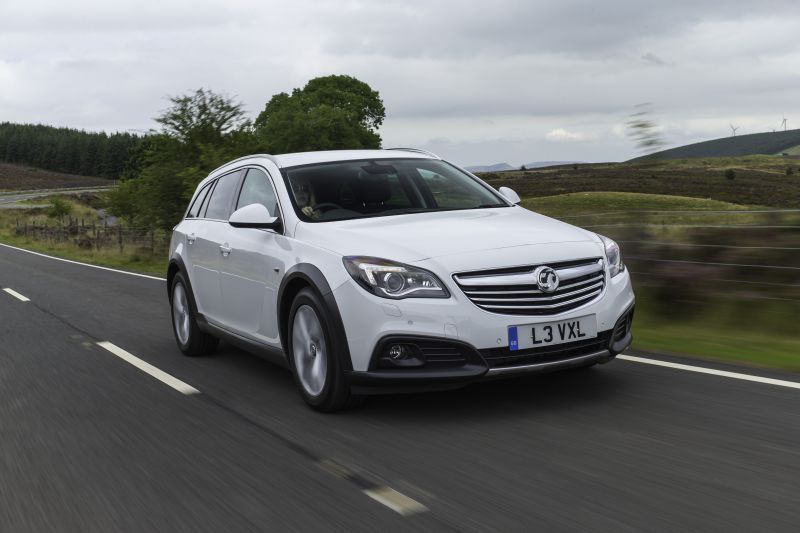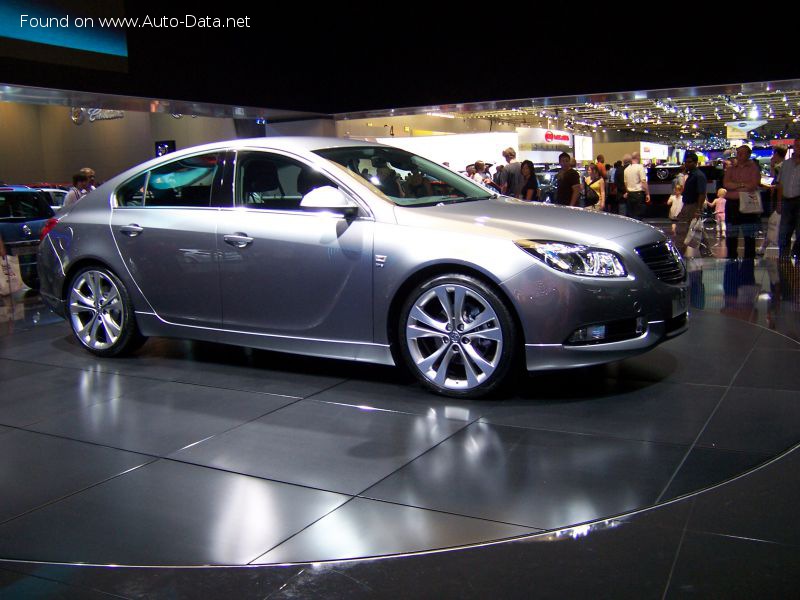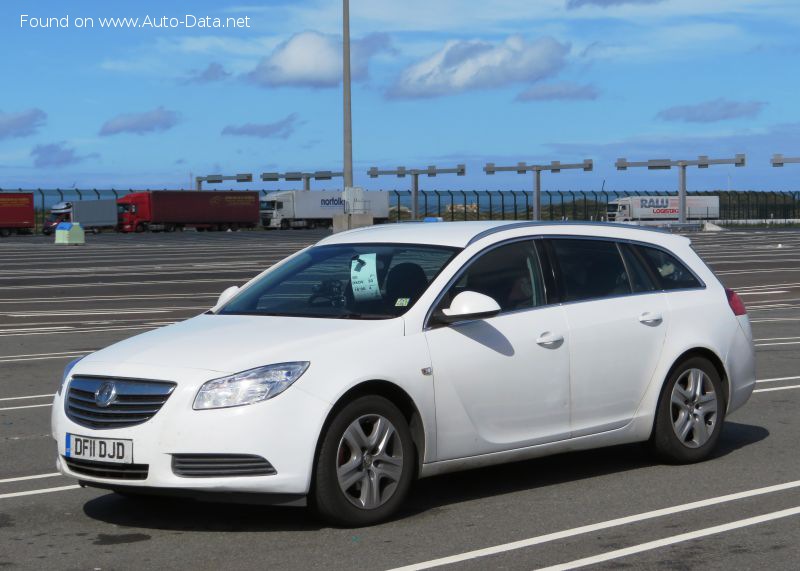
Vauxhall Insignia I Sports Tourer 2.0i Turbo ecoTEC (220 Hp)
The
Vauxhall Insignia I Sports Tourer 2.0i Turbo ecoTEC (220 Hp)
represents a significant chapter in the history of Vauxhall, the British arm of General Motors’ European operations, Opel. Launched in 2008, the first-generation Insignia was a pivotal model, succeeding the long-running Vectra in the highly competitive mid-size family car segment, known as the D-segment in Europe. This particular variant, the Sports Tourer with the potent 2.0-liter Turbo ecoTEC engine delivering 220 horsepower, was produced from 2008 to 2011. While the Insignia was never officially sold in the United States, its Opel counterpart, the Insignia, formed the basis for the Buick Regal in the North American market, showcasing the global engineering prowess of General Motors. In its primary European markets, including the United Kingdom, the Insignia Sports Tourer was lauded for its striking design, enhanced interior quality, and sophisticated driving dynamics, aiming to elevate Vauxhall’s brand perception and challenge established premium rivals. This model specifically targeted consumers seeking a blend of performance, practicality, and efficiency in a stylish station wagon package.
Engine and Performance of the Vauxhall Insignia I Sports Tourer
At the heart of the
Vauxhall Insignia I Sports Tourer 2.0i Turbo ecoTEC (220 Hp)
lies a robust 2.0-liter (1998 cm3 or 121.93 cu. in.) inline-four gasoline engine, designated with the code A20NHT. This powertrain was a testament to General Motors’ commitment to advanced engine technology, featuring direct fuel injection, a twin-scroll turbocharger, and an intercooler. These technologies worked in concert to produce a formidable 220 horsepower at 5300 rpm and a substantial 258.15 pound-feet of torque, available across a broad rev range from 2000 to 4000 rpm. This wide torque band ensured responsive acceleration and flexible in-gear performance, making it well-suited for both urban commuting and long-distance highway cruising.
Power was efficiently delivered to the front wheels via a precise 6-speed manual transmission, offering an engaging driving experience. The performance figures for this station wagon were impressive for its class: it could accelerate from 0 to 60 mph in a swift 7.1 seconds (calculated) and reach a maximum speed of 146.64 mph. Despite its performance capabilities, the “ecoTEC” designation underscored Vauxhall’s focus on efficiency. The combined fuel economy was rated at 26.1 US mpg (9 liters per 100 km), which, for a turbocharged gasoline engine of its output and a vehicle of its size, was competitive for the era. The engine also met the Euro 5 emission standard, reflecting its relatively clean operation at the time. This combination of spirited performance and respectable fuel efficiency made the 2.0i Turbo ecoTEC a compelling choice within the Insignia lineup.
Design and Features
The
Vauxhall Insignia I Sports Tourer
debuted with a fresh and dynamic design language that dramatically departed from its Vectra predecessor. The Sports Tourer variant, a five-door station wagon, was particularly lauded for its sleek, coupe-like roofline and muscular proportions, which lent it a much more premium and sporting appearance than typical family wagons. With a length of 193.23 inches (4908 mm), a width of 73.07 inches (1856 mm), and a height of 59.84 inches (1520 mm), the Insignia Sports Tourer commanded a significant road presence. Its relatively low drag coefficient of 0.30 further contributed to both its aesthetics and aerodynamic efficiency.
Inside, the Insignia offered a spacious and well-appointed cabin, designed to comfortably accommodate five occupants. The focus on quality materials and a more modern dashboard layout marked a significant step up for Vauxhall. As a station wagon, practicality was a key strength. The minimum trunk space stood at 19.07 cubic feet (540 liters), which could be expanded to a cavernous 53.33 cubic feet (1510 liters) with the rear seats folded down, making it an ideal vehicle for families, tradespeople, or those with active lifestyles requiring ample cargo capacity. The vehicle’s kerb weight of 3637.63 lbs (1650 kg) and a maximum permissible load of 1388.91 lbs (630 kg) underscored its robust construction and utility.
In terms of chassis and safety, the Insignia I Sports Tourer featured an independent McPherson strut front suspension with a coil spring and anti-roll bar, paired with an independent multi-link rear suspension. This setup provided a balanced ride, combining comfort with confident handling. Braking power came from ventilated discs at the front and disc brakes at the rear, complemented by an Anti-lock Braking System (ABS) for enhanced safety. Hydraulic power steering offered direct feedback to the driver, a characteristic appreciated by enthusiasts. Standard tire size was 215/60 R16, mounted on 16-inch wheel rims, providing a good blend of grip and ride comfort.
Technical Specifications: Vauxhall Insignia I Sports Tourer 2.0i Turbo ecoTEC (220 Hp)
| Category | Specification |
|---|---|
| General Information | |
| Brand | Vauxhall |
| Model | Insignia |
| Generation | Insignia I Sports Tourer |
| Type (Engine) | 2.0i Turbo ecoTEC (220 Hp) |
| Start of Production | 2008 year |
| End of Production | 2011 year |
| Powertrain Architecture | Internal Combustion engine |
| Body type | Station wagon (estate) |
| Seats | 5 |
| Doors | 5 |
| Performance Specs | |
| Fuel consumption (economy) – urban | 12.7 l/100 km (18.5 US mpg) |
| Fuel consumption (economy) – extra urban | 6.8 l/100 km (34.6 US mpg) |
| Fuel consumption (economy) – combined | 9 l/100 km (26.1 US mpg) |
| CO2 emissions | 211 g/km |
| Fuel Type | Petrol (Gasoline) |
| Acceleration 0 – 60 mph | 7.1 sec |
| Acceleration 0 – 100 km/h | 7.5 sec |
| Maximum speed | 236 km/h (146.64 mph) |
| Emission standard | Euro 5 |
| Weight-to-power ratio | 7.5 kg/Hp (133.3 Hp/tonne) |
| Weight-to-torque ratio | 4.7 kg/Nm (212.1 Nm/tonne) |
| Engine Specs | |
| Power | 220 Hp @ 5300 rpm |
| Power per liter | 110.1 Hp/l |
| Torque | 350 Nm @ 2000-4000 rpm (258.15 lb.-ft.) |
| Engine layout | Front, Transverse |
| Engine Model/Code | A20NHT |
| Engine displacement | 1998 cm3 (121.93 cu. in.) |
| Number of cylinders | 4 |
| Engine configuration | Inline |
| Cylinder Bore | 86 mm (3.39 in.) |
| Piston Stroke | 86 mm (3.39 in.) |
| Compression ratio | 9.3:1 |
| Number of valves per cylinder | 4 |
| Fuel injection system | Direct injection |
| Engine aspiration | Twin-scroll turbo, Intercooler |
| Valvetrain | DOHC |
| Engine oil capacity | 6 l (6.34 US qt) |
| Coolant | 7.3 l (7.71 US qt) |
| Space, Volume and Weights | |
| Kerb Weight | 1650 kg (3637.63 lbs) |
| Max. weight | 2280 kg (5026.54 lbs) |
| Max load | 630 kg (1388.91 lbs) |
| Trunk (boot) space – minimum | 540 l (19.07 cu. ft.) |
| Trunk (boot) space – maximum | 1510 l (53.33 cu. ft.) |
| Fuel tank capacity | 70 l (18.49 US gal) |
| Permitted trailer load with brakes (12%) | 1700 kg (3747.86 lbs) |
| Permitted trailer load without brakes | 750 kg (1653.47 lbs) |
| Dimensions | |
| Length | 4908 mm (193.23 in.) |
| Width | 1856 mm (73.07 in.) |
| Width including mirrors | 2084 mm (82.05 in.) |
| Height | 1520 mm (59.84 in.) |
| Wheelbase | 2737 mm (107.76 in.) |
| Front track | 1585 mm (62.4 in.) |
| Rear (Back) track | 1585 mm (62.4 in.) |
| Front overhang | 1015 mm (39.96 in.) |
| Rear overhang | 1156 mm (45.51 in.) |
| Ride height (ground clearance) | 160 mm (6.3 in.) |
| Drag coefficient (Cd) | 0.30 |
| Minimum turning circle (turning diameter) | 10.89 m (35.73 ft.) |
| Drivetrain, Brakes and Suspension Specs | |
| Drivetrain Architecture | The Internal combustion engine (ICE) drives the front wheels of the vehicle. |
| Drive wheel | Front wheel drive |
| Number of gears and type of gearbox | 6 gears, manual transmission |
| Front suspension | Independent, type McPherson with coil spring and anti-roll bar |
| Rear suspension | Independent multi-link suspension |
| Front brakes | Ventilated discs |
| Rear brakes | Disc |
| Assisting systems | ABS (Anti-lock braking system) |
| Power steering | Hydraulic Steering |
| Tires size | 215/60 R16 |
| Wheel rims size | 16 |
Legacy and Market Impact of the Vauxhall Insignia I Sports Tourer
The
Vauxhall Insignia I Sports Tourer
played a crucial role in repositioning Vauxhall within the European automotive landscape. As the successor to the Vectra, a model often criticized for its bland design and perceived lack of refinement, the Insignia was tasked with a complete image overhaul. It succeeded admirably, especially with the eye-catching Sports Tourer variant, which brought a level of style and sophistication previously unseen in Vauxhall’s mainstream D-segment offerings. Its impact was significant enough for its Opel twin to be awarded the prestigious European Car of the Year in 2009, a testament to its overall design, engineering, and market relevance.
In its primary market, the UK, and across Europe, the Insignia Sports Tourer competed fiercely with established rivals such as the Ford Mondeo Estate, Volkswagen Passat Variant, Mazda 6 Tourer, and Skoda Superb Combi. The 2.0i Turbo ecoTEC (220 Hp) variant, in particular, carved out a niche for buyers seeking strong performance without venturing into the premium German brands’ higher price points. It offered a compelling blend of power, practicality, and dynamic styling, appealing to both private buyers who needed cargo space and company car drivers looking for an executive-level feel.
The Insignia’s legacy is defined by its ability to modernize Vauxhall’s image and elevate expectations for its products. It demonstrated that a mainstream brand could offer genuinely attractive design, a high-quality interior, and engaging driving dynamics. While it was not a direct competitor in the US market, its underlying architecture and design philosophy influenced models like the Buick Regal, showcasing the global synergy within General Motors. The first-generation Insignia Sports Tourer, especially with a capable engine like the 2.0i Turbo ecoTEC, remains a respected and practical choice in the used car market, remembered for its significant contribution to Vauxhall’s evolution and its strong presence in the European D-segment. Its blend of European design flair and accessible performance solidified its place as a memorable and impactful vehicle of its era.