The Peugeot 307 Station Wagon 2.0 16V: A European Family Hauler
The Peugeot 307, launched in 2001, marked a significant evolution for the French automaker in the highly competitive European C-segment. Revered for its spacious interior, comfortable ride, and distinctive styling, the 307 quickly became a popular choice across the continent. This article focuses on a particular variant, the Peugeot 307 Station Wagon 2.0 16V (136 Hp), produced between 2002 and 2005. While never officially sold in the United States, this model represented a quintessential European family car, offering a compelling blend of practicality, efficiency, and a touch of French flair. It was designed to cater to the needs of families requiring more cargo space than a traditional hatchback, without venturing into the larger, often more expensive, D-segment estate cars.
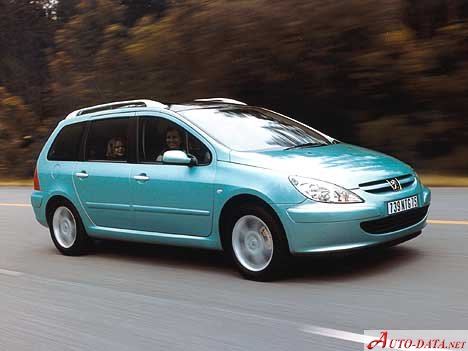
The 307 Station Wagon, or “estate” as it’s known in Europe, built upon the success of its hatchback sibling by extending the roofline and enhancing its rear cargo capacity. It played a crucial role in Peugeot’s lineup, competing against formidable rivals from other European manufacturers. This specific 2.0 16V variant was positioned as a capable, mid-to-high-range option, offering a robust engine for both urban commuting and longer highway journeys, ensuring it could handle family duties with ease.
Engine and Performance: The Heart of the Peugeot 307 Station Wagon 2.0 16V
Under the hood of the Peugeot 307 Station Wagon 2.0 16V lies a naturally aspirated, inline four-cylinder gasoline engine, designated by Peugeot as the RFN EW10J4. This powerplant, with a displacement of 1997 cm³ (121.86 cubic inches), was a well-regarded unit known for its balance of power and reliability in its era. It featured a multi-port manifold injection system and a 16-valve cylinder head (four valves per cylinder), optimizing combustion and efficiency.
The engine produced a respectable 136 horsepower at 6000 rpm, which, for a compact station wagon of its time, provided ample motivation. Torque output stood at 190 Nm (140.14 lb.-ft.) at 4100 rpm, delivering a usable powerband for everyday driving conditions. This allowed the 307 Station Wagon to accelerate from 0 to 60 mph in a competitive 10 seconds, and reach a maximum speed of 124.27 mph. These figures underscored its capability as a family vehicle that didn’t shy away from highway cruising.
Power was delivered to the front wheels via a five-speed manual transmission, a common and reliable setup for European cars of this segment. This drivetrain architecture, combined with the engine’s characteristics, contributed to a combined fuel economy rating of 28.3 US mpg (8.3 l/100 km). While not groundbreaking by today’s standards, it was a respectable figure for a gasoline-powered vehicle of its size and performance in the early 2000s. The engine complied with the Euro 3 emission standard, reflecting the environmental regulations of its production period. The engine oil capacity was 4.25 liters (4.49 US quarts), and the cooling system held 6.2 liters (6.55 US quarts), indicating standard maintenance requirements.
Design and Features: Practicality Meets French Style
The Peugeot 307 Station Wagon adopted a practical yet aesthetically pleasing design, a hallmark of French automotive styling. Its body type is a classic five-door station wagon (or estate), offering superior cargo versatility compared to its hatchback counterpart. With a length of 173.98 inches, a width of 69.17 inches, and a height ranging from 60.39 to 60.79 inches, the 307 Station Wagon presented a substantial road presence for its class. The wheelbase of 106.61 inches contributed to a stable ride and generous interior space.
Inside, the 307 Station Wagon was designed to comfortably accommodate five occupants across its two rows of seating. The true strength of the station wagon variant, however, lay in its cargo capacity. With the rear seats in place, it offered a minimum trunk space of 12.01 cubic feet. Folding down the rear seats dramatically expanded this to an impressive 54.38 cubic feet, making it highly versatile for carrying luggage, sports equipment, or even small furniture. The fuel tank capacity of 15.85 US gallons provided a decent range between fill-ups.
From a chassis perspective, the 307 Station Wagon featured a front spring strut suspension and a rear torsion beam setup, a common and cost-effective configuration for front-wheel-drive compact cars, balancing ride comfort with handling characteristics. Braking duties were handled by ventilated discs at the front and solid discs at the rear, complemented by an Anti-lock Braking System (ABS) for enhanced safety during emergency stops – a standard but crucial feature for its time. The steering system utilized a hydraulic rack and pinion setup, providing direct feedback to the driver. The vehicle rode on 195/65 R15 tires mounted on 15-inch wheel rims, offering a good balance of grip and ride comfort.
Technical Specifications
| Category | Specification | Value |
|---|---|---|
| General Information | ||
| Brand | Peugeot | |
| Model | 307 | |
| Generation | 307 Station Wagon | |
| Type (Engine) | 2.0 16V (136 Hp) | |
| Production Start | 2002 year | |
| Production End | 2005 year | |
| Powertrain Architecture | Internal Combustion engine | |
| Body type | Station wagon (estate) | |
| Seats | 5 | |
| Doors | 5 | |
| Performance Specifications | ||
| Fuel consumption (economy) – urban | 20.5 US mpg | |
| Fuel consumption (economy) – extra urban | 37.3 US mpg | |
| Fuel consumption (economy) – combined | 28.3 US mpg | |
| CO2 emissions | 194 g/km | |
| Fuel Type | Petrol (Gasoline) | |
| Acceleration 0 – 60 mph | 10 sec | |
| Maximum speed | 124.27 mph | |
| Emission standard | Euro 3 | |
| Weight-to-power ratio | 10 kg/Hp (22.05 lbs/Hp) | |
| Weight-to-torque ratio | 7.1 kg/Nm (15.65 lbs/Nm) | |
| Engine Specifications | ||
| Power | 136 Hp @ 6000 rpm | |
| Power per liter | 68.1 Hp/l | |
| Torque | 140.14 lb.-ft. @ 4100 rpm | |
| Engine layout | Front, Transverse | |
| Engine Model/Code | RFN EW10J4 | |
| Engine displacement | 121.86 cu. in. (1997 cm³) | |
| Number of cylinders | 4 | |
| Engine configuration | Inline | |
| Cylinder Bore | 3.35 in. (85 mm) | |
| Piston Stroke | 3.46 in. (88 mm) | |
| Compression ratio | 10.8:1 | |
| Number of valves per cylinder | 4 | |
| Fuel injection system | Multi-port manifold injection | |
| Engine aspiration | Naturally aspirated engine | |
| Engine oil capacity | 4.49 US qt (4.25 l) | |
| Coolant capacity | 6.55 US qt (6.2 l) | |
| Space, Volume and Weights | ||
| Kerb Weight | 2987.26 lbs. (1355 kg) | |
| Max. weight | 4279.17 lbs. (1941 kg) | |
| Max load | 1291.91 lbs. (586 kg) | |
| Trunk (boot) space – minimum | 12.01 cu. ft. (340 l) | |
| Trunk (boot) space – maximum | 54.38 cu. ft. (1540 l) | |
| Fuel tank capacity | 15.85 US gal (60 l) | |
| Permitted trailer load with brakes (12%) | 3306.93 lbs. (1500 kg) | |
| Permitted trailer load without brakes | 1576.31 lbs. (715 kg) | |
| Dimensions | ||
| Length | 173.98 in. (4419 mm) | |
| Width | 69.17 in. (1757 mm) | |
| Height | 60.39 – 60.79 in. (1534-1544 mm) | |
| Wheelbase | 106.61 in. (2708 mm) | |
| Front track | 59.25 in. (1505 mm) | |
| Rear (Back) track | 59.45 in. (1510 mm) | |
| Front overhang | 34.57 in. (878 mm) | |
| Rear overhang | 32.8 in. (833 mm) | |
| Drivetrain, Brakes and Suspension Specifications | ||
| Drivetrain Architecture | The Internal combustion engine (ICE) drives the front wheels of the vehicle. | |
| Drive wheel | Front wheel drive | |
| Number of gears and type of gearbox | 5 gears, manual transmission | |
| Front suspension | Spring Strut | |
| Rear suspension | Torsion | |
| Front brakes | Ventilated discs | |
| Rear brakes | Disc | |
| Assisting systems | ABS (Anti-lock braking system) | |
| Steering type | Steering rack and pinion | |
| Power steering | Hydraulic Steering | |
| Tires size | 195/65 R15 | |
| Wheel rims size | 15 | |
Legacy and Market Impact of the Peugeot 307 Station Wagon 2.0 16V
The Peugeot 307, particularly in its Station Wagon guise, carved out a significant niche in the European compact family car market during its production run. The Peugeot 307 Station Wagon 2.0 16V, with its robust engine and practical design, was a strong contender against rivals such as the Ford Focus Wagon, Opel Astra Caravan (Vauxhall Astra Estate in the UK), Volkswagen Golf Variant, and the Renault Megane Sport Tourer. These vehicles were all vying for the attention of European families seeking versatility, fuel economy, and a comfortable ride.
The 307’s design, characterized by its “tall car” architecture and distinctive ‘cat’s eye’ headlights, set it apart visually. This design philosophy, which prioritized interior space and a commanding driving position, was particularly effective in the station wagon variant, maximizing usability for passengers and cargo alike. Its reputation was built on its spacious cabin, good visibility, and generally compliant ride quality, making it an ideal long-distance cruiser for family vacations.
The 2.0 16V engine offered a good balance of performance and efficiency for its time, appealing to buyers who needed more power than the smaller 1.4-liter or 1.6-liter options, especially for hauling loads or navigating mountainous terrain. While not a performance car, its 136 horsepower provided confidence and reduced stress on longer journeys. The manual transmission was a familiar and reliable choice for European drivers, contributing to a more engaging driving experience.
In terms of historical significance, the Peugeot 307 Station Wagon represented a continuation of Peugeot’s strong presence in the C-segment, building on the success of its predecessors like the 306. It showcased Peugeot’s commitment to offering practical and stylish vehicles tailored to European tastes. Its emphasis on safety features, such as ABS, was also indicative of the evolving standards in the automotive industry, providing peace of mind for families. Although never reaching American shores, the 307 Station Wagon remains a testament to European automotive engineering, embodying the pragmatic and family-oriented values that define the segment it so successfully inhabited. Its legacy lies in its enduring practicality and its contribution to the landscape of the European family car.