The First Generation Toyota Highlander I 2.4 i 16V 4WD (157 Hp): A Crossover Pioneer
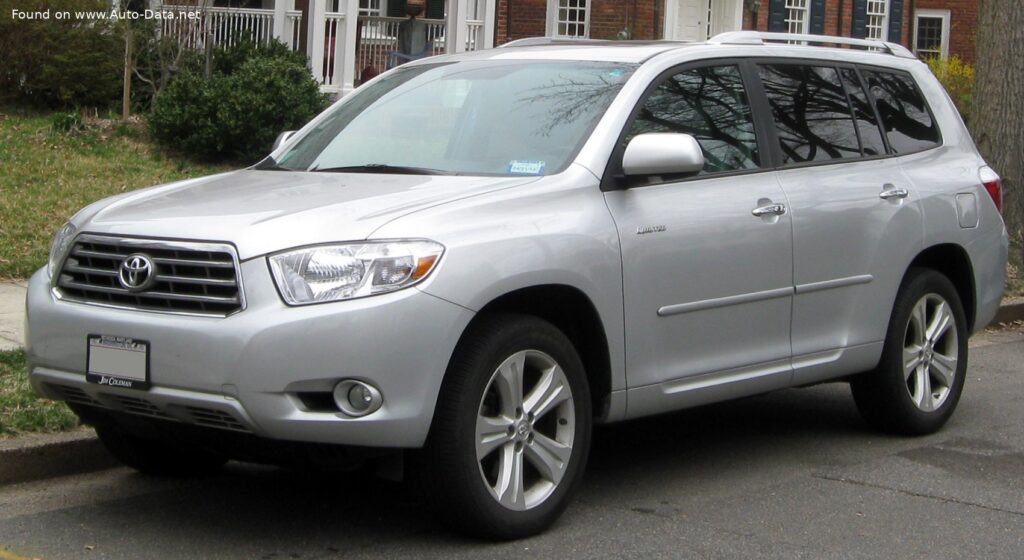
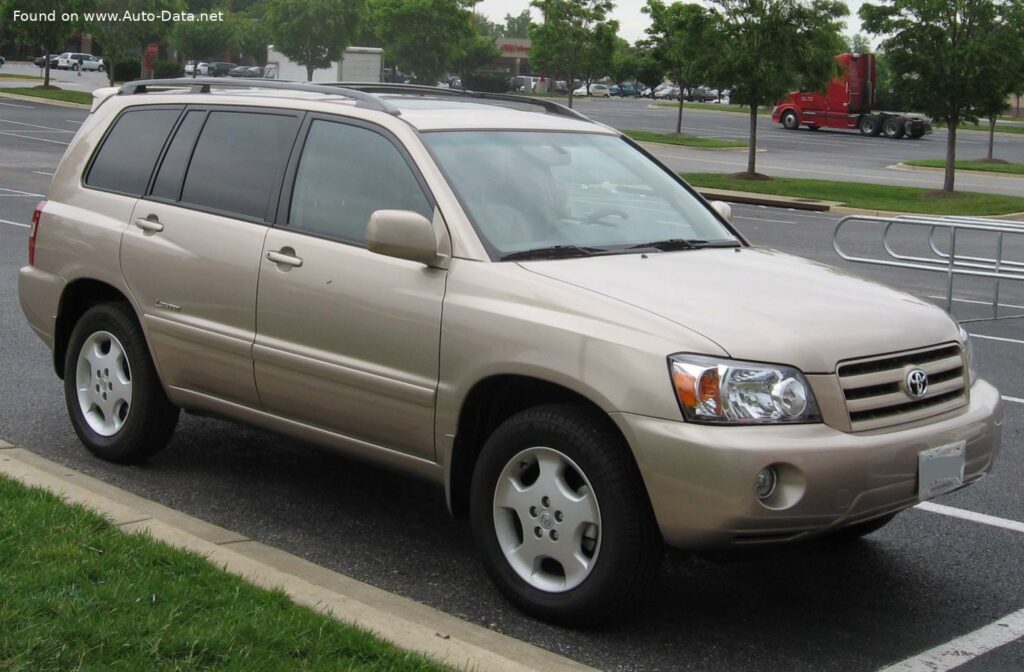
The Toyota Highlander, introduced for the 2001 model year, marked a significant shift in the automotive landscape, particularly in the North American market. As one of the earliest true mid-size crossover SUVs, the first-generation Toyota Highlander I 2.4 i 16V 4WD (157 Hp) carved out a unique niche between smaller compact SUVs and larger, truck-based sport utility vehicles. Built on a modified platform shared with the popular Toyota Camry and Lexus RX, the Highlander delivered a car-like ride and handling while offering the practicality, higher driving position, and available all-wheel-drive capability that consumers were increasingly seeking. This specific variant, featuring the 2.4-liter, 16-valve inline-four engine with 4WD, represented the entry point into the Highlander lineup, offering a compelling blend of efficiency, reliability, and utility from its production start in 2000 until its discontinuation in 2007.
Engine and Performance: The Reliable 2.4-liter Powertrain
Under the hood of the Toyota Highlander I 2.4 i 16V 4WD (157 Hp) resided Toyota’s venerable 2AZ-FE engine. This 2.4-liter (2362 cm3 or 144.14 cubic inches) inline-four was a workhorse for the brand, known for its robust construction and impressive longevity. Featuring a DOHC (Dual Overhead Camshaft) valvetrain with four valves per cylinder, the engine was naturally aspirated and utilized multi-port manifold fuel injection, a common and reliable setup for its time. It produced a respectable 157 horsepower at 5600 rpm and 163 lb.-ft. of torque at 4000 rpm. While not designed for blistering speed, this output was entirely adequate for daily driving, highway cruising, and light towing duties.
Power was delivered to all four wheels via a conventional 4-speed automatic transmission. This drivetrain configuration, while perhaps lacking the refinement of later multi-speed automatics, was exceptionally durable and smooth for the period. The all-wheel-drive system provided enhanced traction and stability, particularly beneficial in adverse weather conditions like snow or rain, distinguishing it from purely front-wheel-drive crossovers. Performance figures for the Highlander I 2.4 i 16V 4WD (157 Hp) included an acceleration time of 0 to 60 mph in a calculated 10.7 seconds, with 0 to 62 mph (100 km/h) taking 11.3 seconds. Its maximum speed was approximately 108.74 mph (175 km/h). Fuel economy, an increasingly important factor, was rated at an estimated 19 US mpg in urban driving and 23.1 US mpg on the highway, which was competitive for an AWD SUV of its size and era.
Design and Features: Practicality Meets Car-Like Comfort
The first-generation Toyota Highlander adopted a pragmatic yet appealing design, clearly signaling its intention as a family-friendly vehicle. Its five-door SUV body type offered easy access to both front and rear seating, accommodating five occupants comfortably. With an overall length of 184.41 inches (4684 mm), a width of 72.28 inches (1836 mm), and a height of 66.81 inches (1697 mm), the Highlander struck a balance between exterior maneuverability and interior spaciousness. The 106.89-inch (2715 mm) wheelbase contributed to its stable ride and generous cabin room.
Inside, the Highlander prioritized utility. It boasted an impressive minimum trunk space of 38.49 cubic feet (1090 liters), expandable to a cavernous 81.4 cubic feet (2305 liters) with the rear seats folded down. This cargo capacity was a major selling point, allowing it to easily swallow luggage, groceries, or sports equipment. The vehicle’s kerb weight stood at 3802.97 lbs (1725 kg), with a maximum permissible weight of 4982.45 lbs (2260 kg), allowing for a substantial maximum load of 1179.47 lbs (535 kg).
From a chassis perspective, the Highlander featured a sophisticated suspension setup for its time, employing spring struts at the front and coil springs at the rear. This independent suspension system, combined with hydraulic rack and pinion steering, contributed significantly to its car-like ride quality, distinguishing it from more rugged, truck-based SUVs. Braking was handled by ventilated discs at the front and solid discs at the rear, augmented by an Anti-lock Braking System (ABS) for improved safety during emergency stops. The vehicle rode on 225/70 R16 tires, providing a good balance of comfort and all-season capability.
Technical Specifications: Toyota Highlander I 2.4 i 16V 4WD (157 Hp)
| Category | Specification | US Equivalent |
|---|---|---|
| General Information | ||
| Brand | Toyota | |
| Model | Highlander | |
| Generation | Highlander I | |
| Type (Engine) | 2.4 i 16V 4WD (157 Hp) | |
| Start of production | 2000 year | |
| End of production | 2007 year | |
| Powertrain Architecture | Internal Combustion engine | |
| Body type | SUV | |
| Seats | 5 | |
| Doors | 5 | |
| Performance Specs | ||
| Fuel consumption (economy) – urban | 12.4 l/100 km | 19 US mpg |
| Fuel consumption (economy) – extra urban | 10.2 l/100 km | 23.1 US mpg |
| Fuel Type | Petrol (Gasoline) | |
| Acceleration 0 – 60 mph | 10.7 sec | 10.7 sec |
| Acceleration 0 – 100 km/h | 11.3 sec | 11.3 sec |
| Maximum speed | 175 km/h | 108.74 mph |
| Weight-to-power ratio | 11 kg/Hp | 91 Hp/tonne |
| Weight-to-torque ratio | 7.8 kg/Nm | 128.1 Nm/tonne |
| Engine Specs | ||
| Power | 157 Hp @ 5600 rpm | 157 Hp @ 5600 rpm |
| Power per liter | 66.5 Hp/l | |
| Torque | 221 Nm @ 4000 rpm | 163 lb.-ft. @ 4000 rpm |
| Engine layout | Front, Transverse | |
| Engine Model/Code | 2AZ-FE | |
| Engine displacement | 2362 cm3 | 144.14 cu. in. |
| Number of cylinders | 4 | |
| Engine configuration | Inline | |
| Cylinder Bore | 88.5 mm | 3.48 in. |
| Piston Stroke | 96 mm | 3.78 in. |
| Compression ratio | 9.6:1 | |
| Number of valves per cylinder | 4 | |
| Fuel injection system | Multi-port manifold injection | |
| Engine aspiration | Naturally aspirated engine | |
| Valvetrain | DOHC | |
| Engine oil capacity | 3.8 l | 4.02 US qt |
| Coolant | 6.4 l | 6.76 US qt |
| Space, Volume and Weights | ||
| Kerb Weight | 1725 kg | 3802.97 lbs. |
| Max. weight | 2260 kg | 4982.45 lbs. |
| Max load | 535 kg | 1179.47 lbs. |
| Trunk (boot) space – minimum | 1090 l | 38.49 cu. ft. |
| Trunk (boot) space – maximum | 2305 l | 81.4 cu. ft. |
| Fuel tank capacity | 75 l | 19.81 US gal |
| Dimensions | ||
| Length | 4684 mm | 184.41 in. |
| Width | 1836 mm | 72.28 in. |
| Height | 1697 mm | 66.81 in. |
| Wheelbase | 2715 mm | 106.89 in. |
| Front track | 1580 mm | 62.2 in. |
| Rear (Back) track | 1565 mm | 61.61 in. |
| Drivetrain, Brakes and Suspension Specs | ||
| Drive wheel | All wheel drive (4×4) | |
| Number of gears and type of gearbox | 4 gears, automatic transmission | |
| Front suspension | Spring Strut | |
| Rear suspension | Coil spring | |
| Front brakes | Ventilated discs | |
| Rear brakes | Disc | |
| Assisting systems | ABS (Anti-lock braking system) | |
| Steering type | Steering rack and pinion | |
| Power steering | Hydraulic Steering | |
| Tires size | 225/70 R16 | |
Legacy and Market Impact: Solidifying Toyota’s Crossover Dominance
The first-generation Toyota Highlander, especially variants like the 2.4 i 16V 4WD (157 Hp), played a pivotal role in establishing the crossover SUV as a mainstream vehicle type in North America. Before the Highlander, many SUVs were still largely truck-based, offering ruggedness but often at the expense of ride comfort, fuel efficiency, and ease of maneuverability. The Highlander, with its unibody construction derived from a passenger car platform, successfully blended the best attributes of a sedan (comfortable ride, predictable handling) with the utility and perceived safety of an SUV (higher ground clearance, available AWD, generous cargo space).
In its primary market, the United States, the Highlander competed against a growing field of rivals. While smaller than some traditional SUVs, it offered more space and a more refined driving experience than compact crossovers like the Honda CR-V or Ford Escape. It presented a compelling alternative to mid-size body-on-frame SUVs such as the Ford Explorer or Nissan Xterra, appealing to suburban families who needed practicality and all-weather capability without the harsh ride or thirst for fuel associated with heavier vehicles. Its closest direct competitor was arguably the Honda Pilot, which arrived slightly later but also embraced the unibody philosophy.
The Highlander quickly garnered a reputation for Toyota’s hallmark qualities: exceptional reliability, durability, and strong resale value. This made it a highly attractive proposition for consumers, ensuring its commercial success throughout its production run. The 2.4-liter engine, in particular, was praised for its fuel efficiency and dependability, making it a popular choice for budget-conscious buyers or those who didn’t require the additional power of the available V6 engine. The all-wheel-drive system further enhanced its appeal in regions with inclement weather, providing peace of mind and improved traction.
Ultimately, the first-generation Toyota Highlander didn’t just sell well; it helped define and popularize the modern mid-size crossover segment. Its success paved the way for a proliferation of similar vehicles from other manufacturers and solidified Toyota’s position as a leader in this crucial automotive category. Its legacy is evident in the continued dominance of crossover SUVs today, many of which owe a debt to the pioneering formula perfected by vehicles like the original Highlander.