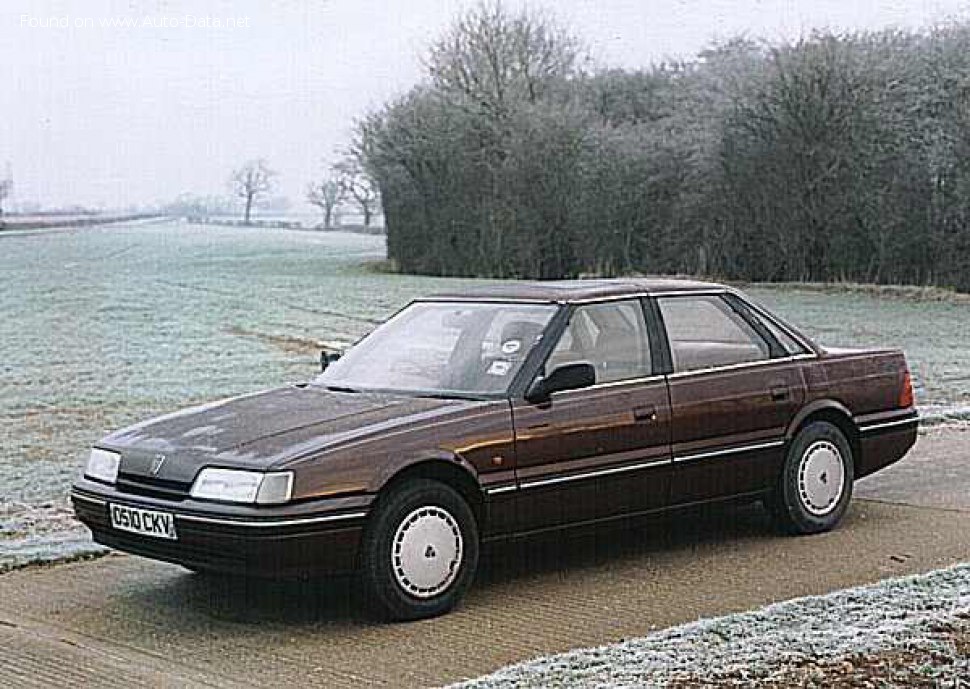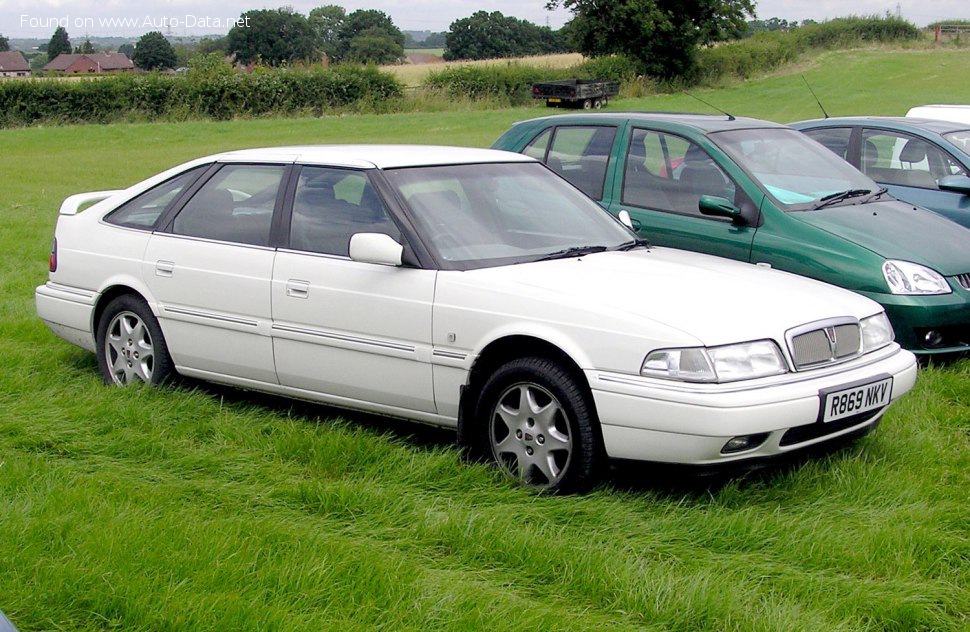
The Rover 800 Hatchback 827 Vitesse/SLI (177 Hp): A British Executive with a Japanese Heart
The Rover 800 series represented a significant chapter in the history of the British automotive industry, particularly during a period of intense international collaboration. Launched in 1986, the 800 series was the product of a joint venture between British Leyland (later Rover Group) and Honda, known internally as the XX/HX project. This partnership yielded not only the Rover 800 but also its Japanese counterpart, the Honda Legend. The Rover 800 Hatchback 827 Vitesse/SLI (177 Hp), produced between 1988 and 1991, stood as a prominent variant within this executive car lineup, offering a blend of traditional British luxury appointments with the engineering prowess and reliability of a Honda-derived powertrain. Positioned as a contender in the competitive European executive segment, the 800 Hatchback aimed to capture buyers seeking both practicality and performance in a refined package.
Engineering and Performance: The Heart of the Rover 800 Hatchback 827 Vitesse/SLI
At the core of the Rover 800 Hatchback 827 Vitesse/SLI’s appeal was its sophisticated powertrain, a testament to the Rover-Honda collaboration. This particular model was equipped with the C27A-V6 engine, a naturally aspirated gasoline (petrol) unit sourced from Honda. This 2.7-liter V6 engine was renowned for its smoothness, refinement, and robust reliability, characteristics that were highly valued in the executive car market. With an output of 177 horsepower, the C27A-V6 provided ample power for spirited driving and comfortable cruising on European highways.
The naturally aspirated nature of the engine meant a linear and predictable power delivery, devoid of the lag often associated with early turbocharged units. This contributed to a driving experience that was both engaging and effortless, perfectly suiting the car’s executive aspirations. The engine’s design prioritized a balance of performance and long-distance comfort, making the 827 Vitesse/SLI a capable tourer. The vehicle’s internal combustion engine architecture was a conventional front-engine, front-wheel-drive setup, which was common for the segment and offered a good balance of interior space and traction.
Maintenance considerations for this powertrain included an engine oil capacity of 4.5 liters (approximately 4.76 US quarts), a standard volume for a V6 of its size, ensuring adequate lubrication for sustained performance. The cooling system, with a capacity of 8.6 liters (approximately 9.09 US quarts), was designed to efficiently manage engine temperatures, vital for maintaining optimal performance and longevity, especially during varied driving conditions across Europe.
Design and Features: Practicality Meets Executive Style
The Rover 800 series, including the 800 Hatchback, showcased a design language that sought to blend modern aerodynamic principles with a distinctive British aesthetic. The hatchback body type, a five-door configuration, was a pragmatic choice for the European market, where such designs offered enhanced versatility compared to traditional sedans. This layout provided a large, easily accessible cargo area, making the 800 Hatchback a practical option for families or individuals requiring greater luggage capacity without sacrificing executive comfort or styling.
With seating for five occupants, the interior of the Rover 800 Hatchback 827 Vitesse/SLI was designed to offer a comfortable and well-appointed environment. Rover’s traditional emphasis on luxury was evident, with high-quality materials, often including leather upholstery and genuine wood trim, depending on the specific trim level and optional extras. The Vitesse and SLI designations typically indicated higher specification levels, with the Vitesse often leaning towards a sportier aesthetic and enhanced performance-oriented features, while the SLI emphasized luxury and convenience.
For its era (late 1980s to early 1990s), the 800 Hatchback would have featured a comprehensive array of standard and optional equipment aimed at enhancing comfort, convenience, and safety. These would likely have included power windows, central locking, power steering, and a sophisticated audio system. Features like air conditioning, alloy wheels, and anti-lock braking systems (ABS) were becoming increasingly common and were typically offered on higher trims like the Vitesse/SLI, reflecting the car’s premium positioning. The exterior design, characterized by its sleek profile, integrated bumpers, and distinctive Rover grille, gave the car a refined yet understated presence on the road.
Technical Specifications: Rover 800 Hatchback 827 Vitesse/SLI
The following table details the core technical specifications for the Rover 800 Hatchback 827 Vitesse/SLI (177 Hp) model:
| Specification | Detail |
|---|---|
| Brand | Rover |
| Model | 800 |
| Generation | 800 Hatchback |
| Type (Engine) | 827 Vitesse/SLI (177 Hp) |
| Start of Production | 1988 year |
| End of Production | 1991 year |
| Powertrain Architecture | Internal Combustion engine |
| Body Type | Hatchback |
| Seats | 5 |
| Doors | 5 |
| Fuel Type | Petrol (Gasoline) |
| Power | 177 Hp |
| Engine Model/Code | C27A-V6 |
| Engine Aspiration | Naturally aspirated engine |
| Engine Oil Capacity | 4.5 l (4.76 US qt | 3.96 UK qt) |
| Coolant Capacity | 8.6 l (9.09 US qt | 7.57 UK qt) |
Legacy and Market Impact of the Rover 800 Hatchback 827 Vitesse/SLI
The Rover 800 series, and specifically the 800 Hatchback 827 Vitesse/SLI, holds a significant place in automotive history as a product of a pivotal Anglo-Japanese collaboration. In its primary European market, the 800 Hatchback competed against a diverse range of executive cars. Its rivals included established players like the Ford Granada/Scorpio, Vauxhall Carlton/Opel Omega, Saab 9000, and Volvo 700/900 series, all vying for market share in the upper-midsize segment. It also faced indirect competition from entry-level luxury sedans and hatchbacks from premium German marques such as the BMW 5 Series and Audi 100, which were beginning to assert their dominance.
The reputation of the Rover 800 series was somewhat mixed, yet largely positive regarding its mechanical underpinnings. The Honda-derived C27A-V6 engine was widely praised for its exceptional smoothness, reliability, and strong performance, often seen as a significant advantage over some domestic and European competitors. This engine contributed substantially to the 827 Vitesse/SLI’s standing as a refined and capable executive car. However, some criticisms occasionally surfaced regarding aspects of build quality, interior plastics, or perceived refinement compared to the increasingly sophisticated German rivals, particularly as the 1990s progressed.
The “Vitesse” designation, historically associated with Rover’s sportier and higher-performance models, lent a certain prestige and performance credibility to the 827 Vitesse/SLI. It appealed to buyers who desired a more dynamic driving experience within the executive car segment, coupled with the practicality of a large hatchback. The 800 Hatchback’s role was crucial for Rover, as it represented a modern, front-wheel-drive executive offering designed to compete on an international stage, moving away from some of the more traditional rear-wheel-drive architectures of its predecessors.
Ultimately, the Rover 800 Hatchback 827 Vitesse/SLI stands as a testament to an era of global automotive partnerships and a significant attempt by Rover to redefine its image and market position. While the Rover brand itself eventually faced challenges, the 800 series, particularly its V6-powered variants, is remembered for its blend of British character and reliable, high-performing Japanese engineering. It remains an interesting example of how international collaboration shaped the automotive landscape, offering a compelling executive package that, for a time, successfully carved out its niche in the competitive European market.