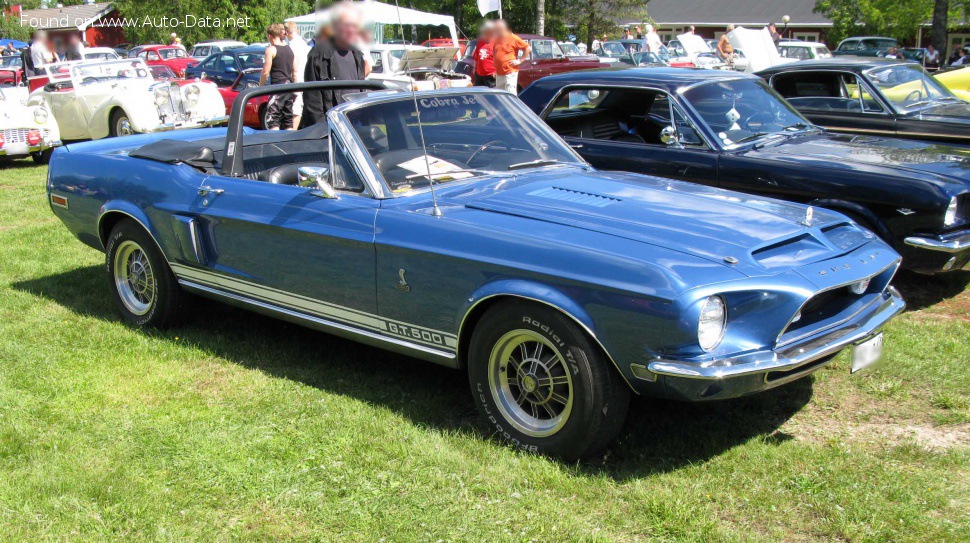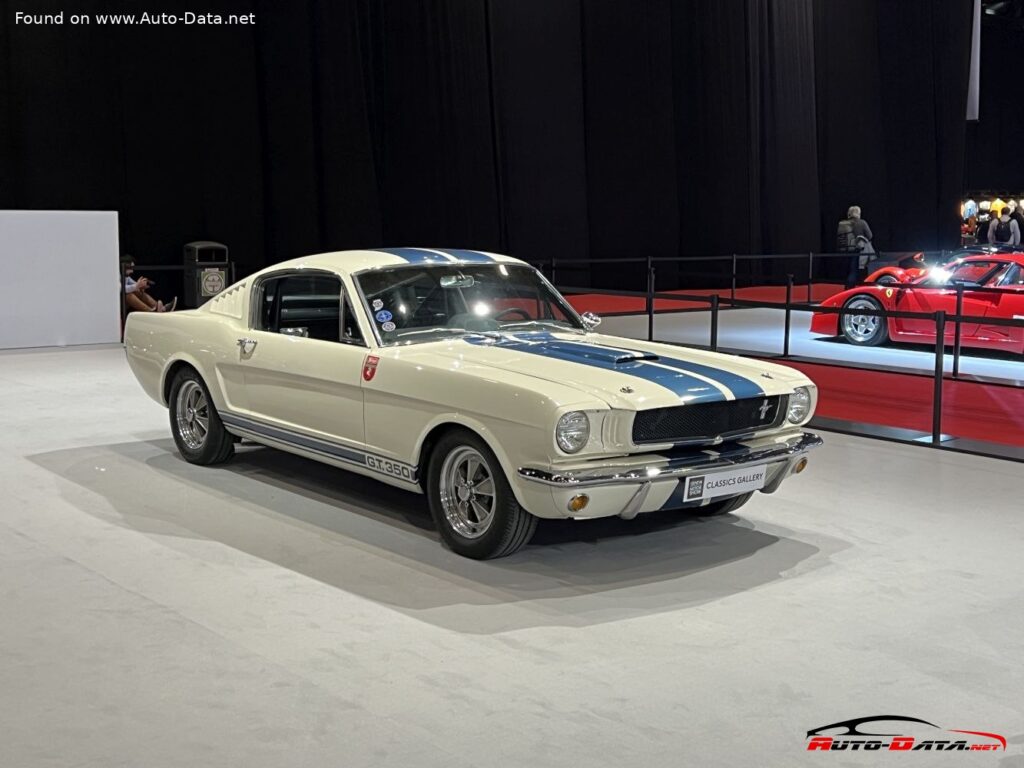
The Genesis of a Legend: Ford Shelby I GT 350 4.7 V8 (310 Hp)
The Ford Shelby I GT 350 4.7 V8 (310 Hp) stands as a monumental icon in American automotive history, representing the pinnacle of performance and a testament to the collaborative genius of Ford Motor Company and the legendary Carroll Shelby. Born in 1965, this first-generation Shelby Mustang was not merely a performance package; it was a homologation special, a street-legal race car designed to dominate the SCCA (Sports Car Club of America) B-Production class. Produced between 1965 and 1970, the Shelby GT350 transformed the already popular Ford Mustang into a formidable track weapon and a coveted high-performance street machine, carving out its own distinct segment within the burgeoning pony car market.
The original GT350, based on the fastback version of the early Mustang, was a radical departure from its more sedate sibling. Shelby American, under Carroll Shelby’s direction, took a standard 289 cubic inch (4.7-liter) K-Code Mustang and re-engineered it for competition. This transformation resulted in a vehicle that offered an unparalleled blend of raw power, agile handling, and distinctive styling, solidifying its place as one of the most desirable American muscle cars ever built. The 1965 model year, specifically, is often regarded as the purest expression of Shelby’s vision for the GT350, emphasizing lightweight construction and track readiness above all else.
Powertrain Prowess: The Heart of the Ford Shelby I GT 350 4.7 V8 (310 Hp)
At the core of the Ford Shelby I GT 350 4.7 V8 (310 Hp) lay a highly modified version of Ford’s 289 cubic inch (4.7-liter) Windsor V8 engine. While the standard K-Code 289 was already a performance-oriented unit, Shelby American took it to new heights. The engine, known for its robustness and responsiveness, received a series of enhancements that boosted its output significantly. These modifications typically included a high-rise aluminum intake manifold, a larger Holley four-barrel carburetor, improved exhaust headers, and a more aggressive camshaft profile. The result was a formidable power plant delivering a robust 310 horsepower at 6000 rpm, a remarkable figure for its era.
Torque delivery was equally impressive, with the engine churning out 328.95 lb.-ft. of torque at 4200 rpm. This potent combination of horsepower and torque, coupled with the car’s relatively light curb weight of 2799.87 lbs., translated into exhilarating performance. The GT350 could rocket from 0 to 60 mph in a blistering 5.6 seconds, a performance benchmark that few cars, even purpose-built sports cars, could match in the mid-1960s. The power-to-weight ratio stood at an impressive 244.1 Hp per tonne (or approximately 9 lbs per horsepower), underscoring its race-bred pedigree.
Power was transferred to the rear wheels via a robust 4-speed manual transmission, providing the driver with direct control over the engine’s output and contributing to the car’s engaging driving experience. The engine’s front, longitudinal layout and naturally aspirated induction system, fed by a carburetor, were characteristic of the era’s performance vehicles. With a compression ratio of 10.5:1 and an overhead valve (OHV) V8 configuration, the GT350’s engine was a masterpiece of American engineering, designed for both durability and high-revving excitement.
Iconic Design and Purpose-Built Features
The design of the Ford Shelby I GT 350 4.7 V8 (310 Hp) was a harmonious blend of the Mustang’s inherent style and Shelby’s performance-driven modifications. The car retained the iconic fastback coupe body style, featuring two doors and seating for four, though the rear seats were often replaced with a fiberglass shelf for weight reduction and to meet SCCA regulations in early models. Its dimensions, measuring 181.61 inches in length, 68.19 inches in width, and 51.18 inches in height, gave it a muscular yet agile stance on the road.
Shelby’s aesthetic and functional enhancements were immediately apparent. The GT350 featured distinctive racing stripes (Le Mans stripes) that ran over the top of the car, a signature element that quickly became synonymous with Shelby American. Functional scoops and vents were added to aid engine cooling and brake performance. The car also received unique badging, identifying it as a Shelby product rather than just a Ford Mustang. The drag coefficient, while not a primary focus in the 1960s, was recorded at 0.47, typical for a production vehicle of its time, prior to significant aerodynamic optimization becoming a mainstream design imperative.
Beyond the visual cues, the GT350 boasted significant mechanical upgrades. The suspension was heavily revised to improve handling, including larger anti-roll bars, Koni adjustable shock absorbers, and often a modified front suspension geometry. The braking system was substantially improved with disc brakes at both the front and rear, a cutting-edge feature for a production car in 1965, offering superior stopping power compared to the drum brakes found on most contemporary vehicles. These features, combined with a precise manual steering system and a minimum turning circle of 38.06 feet, ensured that the GT350 was not just fast in a straight line but also exceptionally capable on a road course.
Technical Deep Dive: Ford Shelby I GT 350 4.7 V8 (310 Hp) Specifications
Below is a detailed breakdown of the technical specifications for the Ford Shelby I GT 350 4.7 V8 (310 Hp), highlighting its engineering prowess and performance capabilities:
| Category | Specification | Value |
|---|---|---|
| General Information | Brand | Ford |
| Model | Shelby | |
| Generation | Shelby I | |
| Type (Engine) | GT 350 4.7 V8 (310 Hp) | |
| Production Years | 1965 – 1970 | |
| Body & Layout | Body Type | Coupe |
| Seats | 4 | |
| Doors | 2 | |
| Powertrain Architecture | Internal Combustion Engine | |
| Drivetrain Architecture | ICE drives rear wheels | |
| Performance Specs | Fuel Type | Petrol (Gasoline) |
| Acceleration 0-60 mph | 5.6 sec | |
| Acceleration 0-62 mph (0-100 km/h) | 5.9 sec | |
| Weight-to-power ratio | 4.1 kg/Hp (244.1 Hp/tonne) | |
| Weight-to-torque ratio | 2.8 kg/Nm (351.2 Nm/tonne) | |
| Drag coefficient (Cd) | 0.47 | |
| Engine Specs | Power | 310 Hp @ 6000 rpm |
| Power per liter | 65.6 Hp/l | |
| Torque | 446 Nm (328.95 lb.-ft.) @ 4200 rpm | |
| Engine Layout | Front, Longitudinal | |
| Engine Displacement | 4727 cm3 (288.46 cu. in.) | |
| Number of Cylinders | 8 | |
| Engine Configuration | V-engine | |
| Cylinder Bore | 101.6 mm (4 in.) | |
| Piston Stroke | 72.89 mm (2.87 in.) | |
| Compression Ratio | 10.5:1 | |
| Fuel Injection System | Carburetor | |
| Engine Aspiration | Naturally Aspirated | |
| Space, Volume & Weights | Kerb Weight | 1270 kg (2799.87 lbs.) |
| Fuel Tank Capacity | 61 l (16.11 US gal) | |
| Weight-to-power ratio | 4.1 kg/Hp | |
| Dimensions | Length | 4613 mm (181.61 in.) |
| Width | 1732 mm (68.19 in.) | |
| Height | 1300 mm (51.18 in.) | |
| Wheelbase | 2743 mm (107.99 in.) | |
| Front Track | 1435 mm (56.5 in.) | |
| Rear Track | 1448 mm (57.01 in.) | |
| Minimum Turning Circle | 11.6 m (38.06 ft.) | |
| Drivetrain, Brakes & Suspension | Drive Wheel | Rear Wheel Drive |
| Number of Gears & Gearbox Type | 4 gears, Manual Transmission | |
| Front Brakes | Disc | |
| Rear Brakes | Disc |
Enduring Legacy and Market Impact
The Ford Shelby I GT 350 4.7 V8 (310 Hp) left an indelible mark on the automotive landscape, establishing itself as a legend in its own right. Its reputation was built on a foundation of genuine racing success, particularly in the SCCA B-Production championship, which it dominated for several years. This track pedigree directly translated into its street credibility, making it one of the most respected and desired performance cars of the 1960s.
In the highly competitive American muscle car market, the GT350 faced rivals such as the Chevrolet Corvette, Pontiac GTO, and Plymouth Barracuda. However, the Shelby GT350 carved out a unique niche. While many muscle cars focused on raw straight-line acceleration, the GT350 offered a more balanced approach, emphasizing superior handling, braking, and overall track performance. It appealed to enthusiasts who sought a sophisticated, driver-focused machine rather than just brute force. This distinction positioned it as a more refined and specialized high-performance vehicle compared to some of its more mass-produced competitors.
The historical significance of the first-generation Shelby GT350 cannot be overstated. It cemented Carroll Shelby’s status as a visionary automotive engineer and racer, demonstrating his ability to transform a popular production car into a world-class performance vehicle. It also significantly influenced the perception of the Ford Mustang, showcasing its potential beyond its original “pony car” segment. The GT350 proved that American manufacturers could produce cars that excelled not only in power but also in agility and driving dynamics, challenging the European dominance in sports car engineering.
Today, the Ford Shelby I GT 350 4.7 V8 (310 Hp) is highly coveted by collectors and enthusiasts worldwide. Its rarity, historical importance, and thrilling driving experience have ensured its status as a blue-chip investment and a cherished piece of automotive heritage. The legacy of the GT350 continues to inspire modern performance vehicles, particularly subsequent generations of the Shelby Mustang, proving that its original formula of combining raw power with precision engineering remains timeless and universally appealing.