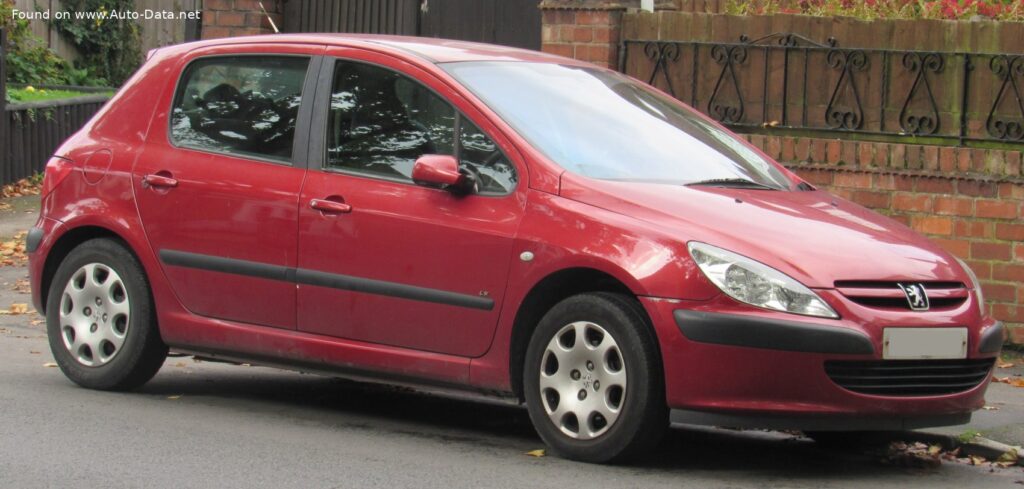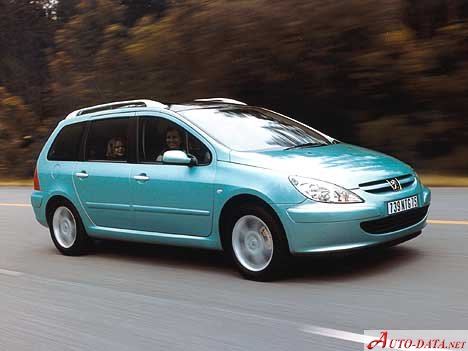
The Peugeot 307 Station Wagon 2.0 16V (136 Hp) Automatic: A European Family Workhorse
The Peugeot 307, launched in 2001, marked a significant evolution for the French automaker in the highly competitive C-segment. Building upon the success of its predecessor, the 306, the 307 adopted a “tall car” design philosophy, aiming to maximize interior space and improve visibility. Among its various body styles, the station wagon, often referred to as an “estate” in European markets, stood out for its enhanced practicality and versatility. This article focuses on a specific variant, the Peugeot 307 Station Wagon 2.0 16V (136 Hp) Automatic, produced between 2002 and 2005, which represented a well-equipped and capable option for European families and individuals prioritizing comfort and cargo capacity.
While never officially sold in the United States, the Peugeot 307 Station Wagon played a crucial role in Europe, competing against popular models like the Ford Focus Estate, Opel Astra Caravan, and Renault Mégane Estate. It offered a compelling blend of French design flair, a comfortable ride, and a spacious interior, making it a popular choice for those seeking an alternative to larger, less fuel-efficient vehicles. The 2.0-liter 16-valve engine paired with an automatic transmission provided a smooth and accessible driving experience, particularly suited for both urban commutes and longer highway journeys across the continent.
Engine and Performance of the Peugeot 307 Station Wagon
At the heart of this particular Peugeot 307 Station Wagon 2.0 16V (136 Hp) Automatic variant was Peugeot’s well-regarded EW10J4 engine, a naturally aspirated 2.0-liter (1997 cm3 or 121.86 cu. in.) inline four-cylinder unit. This engine featured a 16-valve configuration (four valves per cylinder) and multi-port manifold injection, technologies that were standard for efficient gasoline engines of its era. It delivered a respectable 136 horsepower at 6000 rpm, providing ample power for daily driving and highway cruising. Torque output stood at 190 Nm (140.14 lb.-ft.) at 4100 rpm, ensuring decent pulling power, especially when the vehicle was loaded with passengers or cargo.
Power was sent to the front wheels via a 4-speed automatic transmission, a common offering for convenience in European compact cars at the time. While modern automatics boast more gears, this unit provided a smooth, if not lightning-fast, power delivery. The combination allowed the 307 Station Wagon to accelerate from 0 to 60 mph in a reasonable 10.9 seconds, with a top speed of 124.27 mph (200 km/h). These figures positioned it as a capable performer within its class, suitable for the diverse driving conditions found across Europe.
Fuel economy for this configuration was rated at a combined 26.7 US mpg (8.8 l/100 km), with urban consumption at 18 US mpg (13.1 l/100 km) and extra-urban at 36.2 US mpg (6.5 l/100 km). These figures, while not groundbreaking by today’s standards, were competitive for a 2.0-liter gasoline engine with an automatic transmission in the early 2000s. The vehicle complied with the Euro 3 emission standard, reflecting the environmental regulations of its production period.
Design and Features
The Peugeot 307 Station Wagon adopted a distinct five-door, five-seat body style, prioritizing interior volume and cargo flexibility. Its design language was characterized by a tall greenhouse, large headlights, and a distinctive “lion’s paw” taillight design, hallmarks of Peugeot’s styling at the time. With a length of 173.98 inches (4419 mm), a width of 69.17 inches (1757 mm), and a height ranging from 60.39 to 60.79 inches (1534-1544 mm), the 307 Station Wagon offered substantial interior room without becoming unwieldy in urban environments. The generous 106.61-inch (2708 mm) wheelbase contributed significantly to passenger comfort and ride stability.
Practicality was a key selling point for the 307 Station Wagon. It offered a respectable minimum trunk space of 12.01 cu. ft. (340 liters), which could expand to an impressive 54.38 cu. ft. (1540 liters) with the rear seats folded down, making it highly adaptable for various cargo needs, from groceries to vacation luggage. The vehicle’s kerb weight stood at 3066.63 lbs (1391 kg), with a maximum permissible weight of 4358.54 lbs (1977 kg), allowing for a substantial payload of 1291.91 lbs (586 kg). Furthermore, its towing capabilities were notable, with a permitted trailer load of 3306.93 lbs (1500 kg) with brakes and 1609.37 lbs (730 kg) without.
Safety features for the era included an Anti-lock Braking System (ABS), which was becoming standard across the segment. The braking system comprised ventilated discs at the front and solid discs at the rear, ensuring confident stopping power. The suspension system featured a spring strut design at the front and a torsion beam at the rear, a common setup for front-wheel-drive compact cars balancing comfort and cost-effectiveness. Hydraulic power steering, coupled with a rack and pinion steering type, provided a direct and responsive feel. The car typically rode on 195/65 R15 tires mounted on 15-inch wheel rims.
Technical Specifications
| General Information | |
| Brand | Peugeot |
| Model | 307 |
| Generation | 307 Station Wagon |
| Type (Engine) | 2.0 16V (136 Hp) Automatic |
| Start of Production | 2002 year |
| End of Production | 2005 year |
| Powertrain Architecture | Internal Combustion Engine |
| Body Type | Station wagon (estate) |
| Seats | 5 |
| Doors | 5 |
| Performance Specs | |
| Fuel Consumption (Economy) – Urban | 13.1 l/100 km (18 US mpg) |
| Fuel Consumption (Economy) – Extra Urban | 6.5 l/100 km (36.2 US mpg) |
| Fuel Consumption (Economy) – Combined | 8.8 l/100 km (26.7 US mpg) |
| CO2 Emissions | 206 g/km |
| Fuel Type | Petrol (Gasoline) |
| Acceleration 0 – 60 mph | 10.9 sec |
| Acceleration 0 – 100 km/h | 11.5 sec |
| Maximum Speed | 200 km/h (124.27 mph) |
| Emission Standard | Euro 3 |
| Weight-to-Power Ratio | 10.2 kg/Hp (97.8 Hp/tonne) |
| Weight-to-Torque Ratio | 7.3 kg/Nm (136.6 Nm/tonne) |
| Engine Specs | |
| Power | 136 Hp @ 6000 rpm |
| Power per liter | 68.1 Hp/l |
| Torque | 190 Nm @ 4100 rpm (140.14 lb.-ft. @ 4100 rpm) |
| Engine Layout | Front, Transverse |
| Engine Model/Code | RFN EW10J4 |
| Engine Displacement | 1997 cm3 (121.86 cu. in.) |
| Number of Cylinders | 4 |
| Engine Configuration | Inline |
| Cylinder Bore | 85 mm (3.35 in.) |
| Piston Stroke | 88 mm (3.46 in.) |
| Compression Ratio | 10.8:1 |
| Number of Valves per Cylinder | 4 |
| Fuel Injection System | Multi-port manifold injection |
| Engine Aspiration | Naturally aspirated engine |
| Engine Oil Capacity | 4.25 l (4.49 US qt) |
| Coolant Capacity | 6.8 l (7.19 US qt) |
| Space, Volume and Weights | |
| Kerb Weight | 1391 kg (3066.63 lbs) |
| Max. Weight | 1977 kg (4358.54 lbs) |
| Max Load | 586 kg (1291.91 lbs) |
| Trunk (Boot) Space – Minimum | 340 l (12.01 cu. ft.) |
| Trunk (Boot) Space – Maximum | 1540 l (54.38 cu. ft.) |
| Fuel Tank Capacity | 60 l (15.85 US gal) |
| Permitted Trailer Load with Brakes (12%) | 1500 kg (3306.93 lbs) |
| Permitted Trailer Load without Brakes | 730 kg (1609.37 lbs) |
| Dimensions | |
| Length | 4419 mm (173.98 in.) |
| Width | 1757 mm (69.17 in.) |
| Height | 1534-1544 mm (60.39 – 60.79 in.) |
| Wheelbase | 2708 mm (106.61 in.) |
| Front Track | 1505 mm (59.25 in.) |
| Rear (Back) Track | 1510 mm (59.45 in.) |
| Front Overhang | 878 mm (34.57 in.) |
| Rear Overhang | 833 mm (32.8 in.) |
| Drivetrain, Brakes and Suspension Specs | |
| Drivetrain Architecture | The Internal combustion engine (ICE) drives the front wheels of the vehicle. |
| Drive Wheel | Front-wheel drive |
| Number of Gears and Type of Gearbox | 4 gears, automatic transmission |
| Front Suspension | Spring Strut |
| Rear Suspension | Torsion |
| Front Brakes | Ventilated discs |
| Rear Brakes | Disc |
| Assisting Systems | ABS (Anti-lock braking system) |
| Steering Type | Steering rack and pinion |
| Power Steering | Hydraulic Steering |
| Tires Size | 195/65 R15 |
| Wheel Rims Size | 15 |
Legacy and Market Impact
The Peugeot 307 Station Wagon, including the 2.0 16V Automatic variant, carved out a strong reputation in its primary European market as a practical, comfortable, and stylish family car. Its “tall car” architecture, which some critics initially found unconventional, proved to be a stroke of genius, offering a significantly more spacious and airy cabin than many of its contemporaries. This emphasis on interior volume and versatility helped it compete effectively against a wide array of rivals in the compact segment, which in Europe often included a strong contingent of station wagons. Key competitors included the Opel Astra Caravan, Ford Focus Estate, Renault Mégane Estate, and Volkswagen Golf Variant.
The 307’s success was also partly due to its perceived quality and sophisticated ride characteristics, traits that Peugeot had long cultivated. While not a performance leader, the 2.0-liter engine provided a good balance of power and efficiency for its time, and the automatic transmission offered a level of driving ease appreciated in congested European cities. Its robust cargo capacity and ability to handle a significant payload further cemented its status as a versatile workhorse for families, small businesses, and anyone needing more space than a typical hatchback.
Despite its popularity in Europe, the Peugeot 307, like most Peugeot models of its era, did not make it to the U.S. market. This was largely due to Peugeot’s withdrawal from North America in the early 1990s, a decision influenced by shifting market preferences and intense competition. However, its legacy lives on as a testament to Peugeot’s ability to create compelling and practical vehicles tailored to the specific demands of its core markets. The 307 series, and particularly its station wagon variant, remains a significant chapter in Peugeot’s modern history, showcasing its commitment to innovative design and functional engineering in the compact segment.