The Rover 800 Hatchback 827 Vitesse (XS) CAT (169 Hp): A British Executive with a Japanese Heart
The Rover 800 series, known as the “XX” project during its development, represented a pivotal moment for the British automotive manufacturer Rover Group. Launched in 1986, it was the successor to the venerable Rover SD1 and marked a significant collaboration with Honda, specifically sharing its platform and many mechanical components with the first-generation Honda Legend. While the Rover 800 sedan was the initial offering, the hatchback variant, introduced later, aimed to combine executive luxury with enhanced practicality. The focus of this expert review is on a particularly spirited iteration from this lineup: the Rover 800 Hatchback 827 Vitesse (XS) CAT (169 Hp), produced between 1988 and 1991. This model, not officially sold in the United States, played a crucial role in the European executive car market, offering a distinctive British flavor underpinned by reliable Japanese engineering.
The 800 series was Rover’s ambitious attempt to regain a foothold in the competitive executive segment, facing off against established German and emerging Japanese rivals. The collaboration with Honda was a strategic move, providing Rover with access to modern platforms, engines, and manufacturing processes that would have been cost-prohibitive to develop independently. The Vitesse trim, historically associated with sportier, higher-performance models within the Rover hierarchy, signified a more dynamic driving experience in the 800 range, particularly when paired with the potent 2.7-liter V6 engine. The “CAT” designation indicates the inclusion of a catalytic converter, a crucial component for meeting increasingly stringent emissions standards in Europe during the late 1980s.
Engine and Performance: The Heart of the Rover 800 Hatchback 827 Vitesse (XS) CAT (169 Hp)
At the core of the Rover 800 Hatchback 827 Vitesse (XS) CAT (169 Hp) was the Honda-derived C27A-V6 engine. This naturally aspirated, gasoline-powered 2.7-liter V6 unit was a testament to the Anglo-Japanese collaboration and a significant upgrade from the earlier 2.5-liter V6 found in some 800 models. Delivering a robust 169 horsepower, this engine provided the Rover 800 with competitive performance for its class and era. Honda’s C-series V6 engines were renowned for their smoothness, refinement, and reliability, characteristics that translated directly to the Rover application.
The C27A-V6 was a sophisticated engine for its time, featuring a single overhead camshaft (SOHC) design per bank and multi-point fuel injection. Its naturally aspirated nature meant a linear power delivery, free from the lag sometimes associated with turbocharged units of the period. The 169 HP output was sufficient to propel the executive hatchback with authority, offering brisk acceleration and comfortable cruising speeds on European motorways. The “CAT” (Catalytic Converter) was an essential addition, demonstrating Rover’s commitment to environmental regulations and ensuring cleaner emissions, a feature that was becoming increasingly standard across the industry.
For a large executive hatchback weighing in the typical range for its class, the 169 horsepower provided a good balance of performance and efficiency. While specific torque figures are not provided, the V6 configuration typically offers a broad torque band, contributing to flexible driving characteristics in both urban and highway environments. The engine’s reputation for longevity and minimal maintenance, inherited from its Honda lineage, was a significant selling point for buyers seeking a reliable and refined executive vehicle.
Design and Features: Executive Practicality
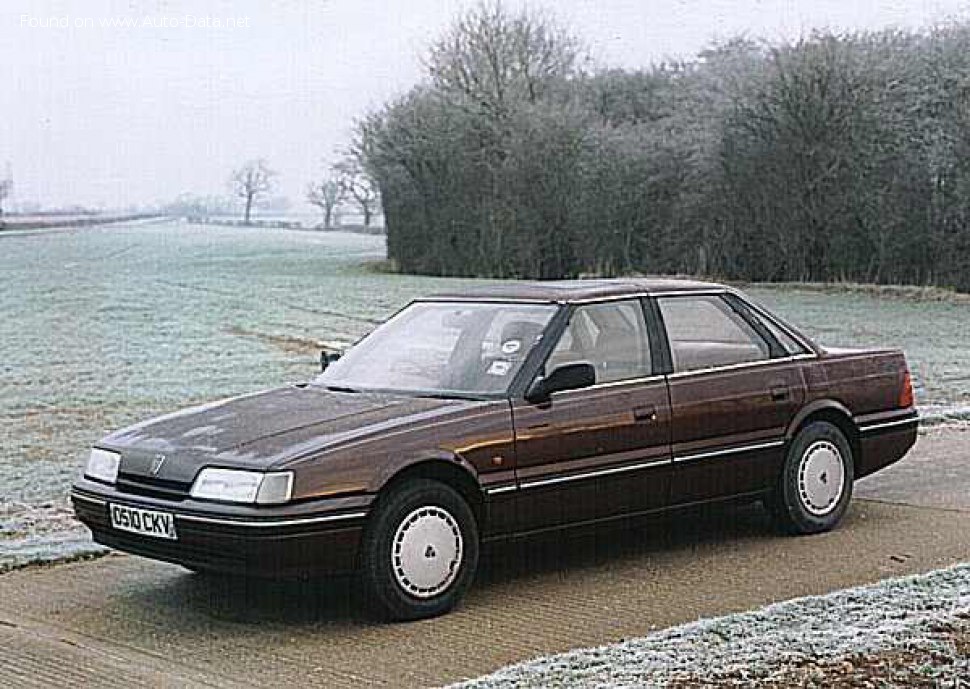
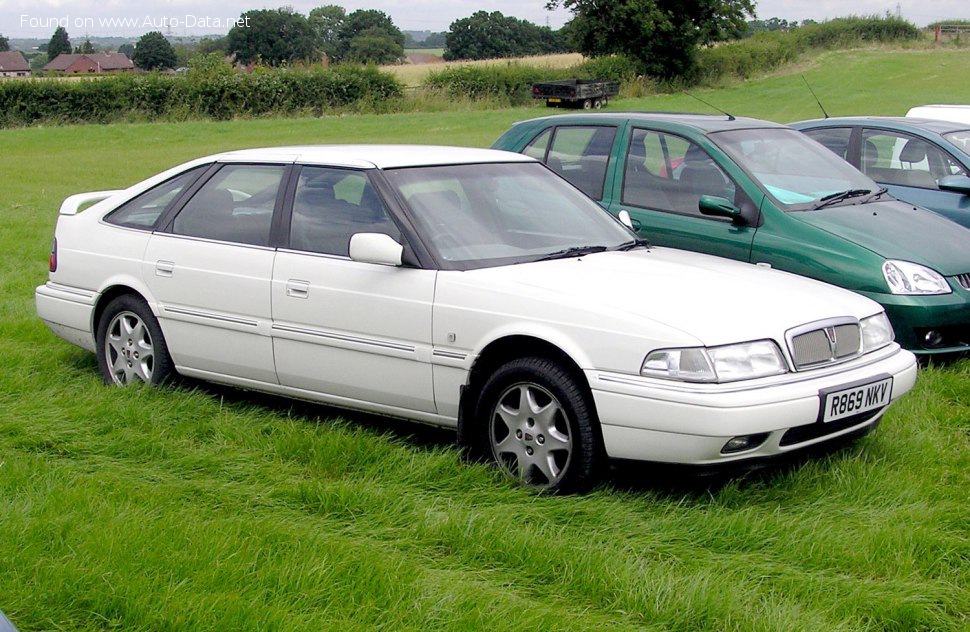
The Rover 800 Hatchback adopted a “fastback” or five-door hatchback body style, a less conventional choice for the executive segment, which was typically dominated by sedans. This design offered a distinct advantage in terms of practicality, providing a large, easily accessible cargo area thanks to the expansive tailgate. While the sedan prioritized a more traditional, formal aesthetic, the hatchback appealed to buyers who desired executive comfort and prestige but also required greater versatility for luggage or bulkier items. The 5-door, 5-seat configuration underscored its role as a practical family or business vehicle.
Aesthetically, the Rover 800 series, including the hatchback, presented a blend of contemporary 1980s styling with traditional British executive cues. The design was clean and aerodynamic for its time, featuring flush-fitting glass and a relatively low drag coefficient. The Vitesse trim typically included sportier exterior enhancements such as unique alloy wheels, subtle body kit elements, and specific badging, differentiating it from lesser models. Inside, Rover aimed for an opulent and comfortable cabin. While exact specifications for the “XS” trim are not detailed, Vitesse models were generally well-appointed, featuring amenities that were considered luxurious in the late 1980s. These would have likely included power windows, central locking, power-adjustable mirrors, a premium sound system, and often leather upholstery or high-quality velour.
Safety features for cars of this era were less advanced than modern vehicles, but the Rover 800 would have incorporated robust body construction and features like three-point seatbelts for all occupants. Anti-lock braking systems (ABS) were becoming more common on executive models during this period and would have likely been standard or an option on the Vitesse trim, enhancing active safety. The overall design language aimed to project an image of understated elegance and capability, a hallmark of British executive cars.
Technical Specifications
| Attribute | Specification |
|---|---|
| Brand | Rover |
| Model | 800 |
| Generation | 800 Hatchback |
| Type (Engine) | 827 Vitesse (XS) CAT (169 Hp) |
| Start of Production | 1988 year |
| End of Production | 1991 year |
| Powertrain Architecture | Internal Combustion engine |
| Body Type | Hatchback |
| Seats | 5 |
| Doors | 5 |
| Fuel Type | Petrol (Gasoline) |
| Power | 169 Hp |
| Engine Model/Code | C27A-V6 |
| Engine Aspiration | Naturally aspirated engine |
| Engine Oil Capacity | 4.5 liters (4.76 US qt) |
| Coolant Capacity | 8.6 liters (9.09 US qt) |
| Drivetrain | Internal Combustion engine |
Legacy and Market Impact
The Rover 800 series, and particularly the Vitesse hatchback, occupied a unique position in the European executive car market. It was an ambitious product for Rover, representing their attempt to compete directly with established players like the Ford Granada/Scorpio, Vauxhall Carlton/Omega, and the more premium offerings from BMW (5-Series, E34 generation) and Audi (100/A6). The Vitesse’s combination of British styling and Honda reliability often garnered praise, with many reviewers lauding the smoothness and performance of the C27A-V6 engine. It offered a compelling alternative to its rivals, particularly for those seeking something distinct from the German mainstream.
However, the Rover 800 also faced challenges. Despite the Honda underpinnings, some critics pointed to inconsistencies in build quality or interior finish compared to its German competitors, which had a reputation for Teutonic precision. Furthermore, Rover’s brand image, while attempting to be premium, sometimes struggled to compete with the long-established luxury perception of brands like Mercedes-Benz and BMW. The hatchback body style, while practical, was also somewhat unusual for the executive class, which might have limited its appeal to traditional sedan buyers.
The Rover 800 Hatchback 827 Vitesse (XS) CAT (169 Hp) stands as a significant marker in Rover’s history. It exemplified the benefits and complexities of international automotive collaborations. The car was generally well-received for its driving dynamics, comfort, and the inherent reliability brought by the Honda powertrain. It helped Rover maintain a presence in the executive segment during a challenging period for the British automotive industry. While the 800 series eventually gave way to subsequent models, the Vitesse hatchback, with its potent V6 engine and practical design, remains a testament to Rover’s efforts to blend performance, luxury, and utility in a distinctly British package, albeit with a vital Japanese heart. Today, these models are appreciated by enthusiasts for their historical significance and the robust engineering that underlies their classic British executive charm.