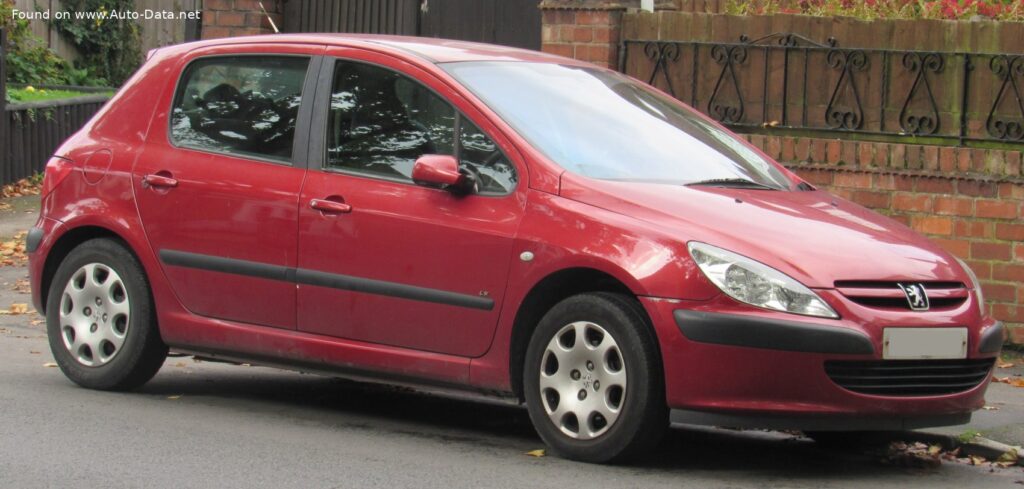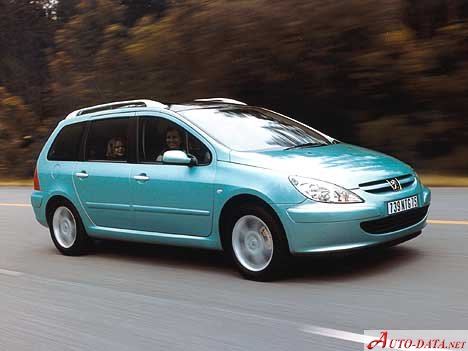
Introduction to the Peugeot 307 Station Wagon 2.0 HDi (107 Hp)
The Peugeot 307, a compact family car produced by the French automaker Peugeot, made its debut in 2001, succeeding the popular 306 model. This particular variant, the Peugeot 307 Station Wagon 2.0 HDi (107 Hp), represents the practical and fuel-efficient estate version of the first-generation 307, specifically manufactured between 2002 and 2004. While never officially sold in the United States, the 307 Station Wagon played a crucial role in the European market, offering a compelling blend of spaciousness, comfort, and economical diesel performance tailored for families and individuals prioritizing utility and low running costs.
The 307 Station Wagon was designed to compete in the highly competitive European C-segment, where versatility and efficiency were paramount. Its elevated roofline and extended rear section provided significantly more cargo capacity than its hatchback sibling, making it a popular choice for long-distance travel and daily family duties. Powered by Peugeot’s renowned HDi common-rail diesel engine, this model capitalized on the growing demand for diesel powertrains in Europe, known for their robust torque delivery and impressive fuel economy. This article delves into the technical specifications, design philosophies, and market impact of this significant European family hauler.
Powertrain and Performance of the Peugeot 307 Station Wagon 2.0 HDi (107 Hp)
At the heart of the Peugeot 307 Station Wagon 2.0 HDi (107 Hp) lies a sophisticated 2.0-liter (1997 cm3) inline four-cylinder diesel engine, designated by the code RHS DW10ATED. This powerplant was a testament to Peugeot’s expertise in diesel technology, featuring a common-rail direct fuel injection system, a turbocharger, and an intercooler. These technologies combined to deliver a potent yet refined performance package for a vehicle in its class during the early 2000s.
The engine produced a respectable 107 horsepower at 4000 revolutions per minute (rpm), making it adequately powered for highway cruising and city driving. More notably, its torque output was a substantial 250 Newton-meters (184.39 lb.-ft.), available at a low 1750 rpm. This characteristic low-end torque was a hallmark of modern diesel engines, providing excellent drivability, strong acceleration from a standstill, and effortless overtaking without constantly needing to downshift. Power was sent to the front wheels via a precise 5-speed manual transmission, a common and reliable setup for the segment.
In terms of acceleration, the 307 Station Wagon 2.0 HDi could reach 60 mph from a standstill in a calculated 12.1 seconds, with a 0-100 km/h sprint taking 12.7 seconds. Its maximum speed was approximately 113.71 mph (183 km/h). While not a performance-oriented vehicle, these figures were competitive for a family station wagon focused on practicality and economy. The engine’s efficiency was particularly impressive, boasting a combined fuel consumption of 5.4 liters per 100 kilometers, translating to an excellent 43.6 US miles per gallon. Urban consumption stood at 32.7 US mpg, while extra-urban driving could achieve an outstanding 53.5 US mpg. These figures underscored the HDi engine’s reputation for cost-effective motoring. Furthermore, the vehicle met the Euro 3 emission standard, with CO2 emissions rated at 142 g/km, reflecting its relatively clean operation for the era.
Design and Features
The Peugeot 307 Station Wagon adopted a distinct design philosophy for its time, characterized by a taller, more MPV-like stance compared to traditional wagons. This design choice, evident in its height ranging from 60.39 to 60.79 inches, contributed significantly to interior spaciousness and improved visibility for occupants. The body type is clearly a 5-door station wagon (or “estate” in European parlance), designed with practicality as a core principle.
Measuring 173.98 inches in length and 69.17 inches in width, with a generous 106.61-inch wheelbase, the 307 Station Wagon provided ample room for five occupants. The interior was configured with five seats, offering comfortable seating for adults and children alike. One of the most compelling features was its versatile cargo area. With the rear seats in place, the trunk offered a respectable 12.01 cubic feet (340 liters) of space. When the rear seats were folded down, this expanded dramatically to a cavernous 54.38 cubic feet (1540 liters), making it exceptionally capable of hauling luggage, sports equipment, or even small furniture items.
Safety features for the 307 Station Wagon included an Anti-lock Braking System (ABS), which was becoming standard across many segments, enhancing braking control in emergency situations. The vehicle utilized ventilated discs for the front brakes and solid discs for the rear, providing reliable stopping power. Suspension consisted of a spring strut setup at the front and a torsion beam at the rear, a common and cost-effective arrangement that balanced ride comfort with stable handling. Steering was managed by a hydraulic rack and pinion system, offering a direct and communicative feel to the driver. The car rode on 15-inch wheel rims fitted with 205/55 R15 tires, providing a good balance of grip and ride comfort.
Technical Specifications
| Category | Specification | US/Imperial Equivalent |
|---|---|---|
| Brand | Peugeot | |
| Model | 307 | |
| Generation | 307 Station Wagon | |
| Type (Engine) | 2.0 HDi (107 Hp) | |
| Production Years | 2002 – 2004 | |
| Body Type | Station wagon (estate) | |
| Seats / Doors | 5 / 5 | |
| Performance Specs | ||
| Fuel Consumption (Urban) | 7.2 l/100 km | 32.7 US mpg |
| Fuel Consumption (Extra Urban) | 4.4 l/100 km | 53.5 US mpg |
| Fuel Consumption (Combined) | 5.4 l/100 km | 43.6 US mpg |
| CO2 Emissions | 142 g/km | |
| Fuel Type | Diesel | |
| Acceleration 0-60 mph | 12.1 sec | |
| Acceleration 0-100 km/h | 12.7 sec | |
| Maximum Speed | 183 km/h | 113.71 mph |
| Emission Standard | Euro 3 | |
| Weight-to-power ratio | 13.3 kg/Hp | 75.3 Hp/tonne |
| Engine Specs | ||
| Power | 107 Hp @ 4000 rpm | |
| Torque | 250 Nm @ 1750 rpm | 184.39 lb.-ft. @ 1750 rpm |
| Engine Layout | Front, Transverse | |
| Engine Model/Code | RHS DW10ATED | |
| Engine Displacement | 1997 cm3 | 121.86 cu. in. (2.0 Liters) |
| Number of Cylinders | 4 | |
| Engine Configuration | Inline | |
| Compression Ratio | 17.6:1 | |
| Valves per Cylinder | 2 | |
| Fuel Injection System | Diesel Commonrail | |
| Engine Aspiration | Turbocharger, Intercooler | |
| Valvetrain | SOHC | |
| Engine Oil Capacity | 4.8 l | 5.07 US qt |
| Coolant Capacity | 8.3 l | 8.77 US qt |
| Space, Volume and Weights | ||
| Kerb Weight | 1421 kg | 3132.77 lbs. |
| Max. Weight | 2016 kg | 4444.52 lbs. |
| Max Load | 595 kg | 1311.75 lbs. |
| Trunk (boot) Space (min/max) | 340 l / 1540 l | 12.01 cu. ft. / 54.38 cu. ft. |
| Fuel Tank Capacity | 60 l | 15.85 US gal |
| Permitted Trailer Load (with brakes) | 1500 kg | 3306.93 lbs. |
| Permitted Trailer Load (without brakes) | 745 kg | 1642.44 lbs. |
| Dimensions | ||
| Length | 4419 mm | 173.98 in. |
| Width | 1757 mm | 69.17 in. |
| Height | 1534-1544 mm | 60.39 – 60.79 in. |
| Wheelbase | 2708 mm | 106.61 in. |
| Front Track | 1505 mm | 59.25 in. |
| Rear (Back) Track | 1510 mm | 59.45 in. |
| Drivetrain, Brakes and Suspension | ||
| Drivetrain Architecture | Front wheel drive, Internal Combustion engine | |
| Drive Wheel | Front wheel drive | |
| Gearbox | 5 gears, manual transmission | |
| Front Suspension | Spring Strut | |
| Rear Suspension | Torsion | |
| Front Brakes | Ventilated discs | |
| Rear Brakes | Disc | |
| Assisting Systems | ABS (Anti-lock braking system) | |
| Steering Type | Steering rack and pinion | |
| Power Steering | Hydraulic Steering | |
| Tires Size | 205/55 R15 | |
| Wheel Rims Size | 15 | |
Legacy and Market Impact in Europe
The Peugeot 307 Station Wagon, particularly with the 2.0 HDi engine, carved out a significant niche for itself in the European compact family car segment during its production run. In markets where diesel engines were highly favored for their fuel economy and robust torque, the 307 HDi was a natural fit. It competed fiercely with other established players like the Volkswagen Golf Variant, Ford Focus Estate, Opel Astra Wagon, and Renault Mégane Estate.
Peugeot leveraged its reputation for building comfortable and spacious family vehicles, and the 307 Station Wagon continued this tradition. Its elevated ride height and generous interior dimensions contributed to a perception of robustness and practicality, appealing to families seeking a versatile daily driver. The 2.0 HDi engine’s blend of efficiency and ample torque made it particularly well-suited for both urban commutes and long-distance highway journeys, often with a full load of passengers and luggage. The ability to tow a braked trailer of up to 3306.93 lbs (1500 kg) further enhanced its utility for European consumers who frequently utilized trailers for vacations or work.
The 307 series, including the station wagon, represented a pivotal moment for Peugeot. It was designed to offer more interior space and a higher driving position than its predecessor, aligning with a broader industry trend towards more versatile, MPV-like compact cars. While it faced some initial challenges with build quality and electronics, the 307 remained a strong seller throughout its lifecycle, contributing significantly to Peugeot’s market share in Europe. Its legacy is that of a practical, economical, and comfortable family car that adeptly met the demands of its primary market, particularly through the efficiency and performance offered by its advanced HDi diesel powertrain. The Peugeot 307 Station Wagon 2.0 HDi (107 Hp) stands as a testament to European automotive engineering focused on real-world utility and efficiency.